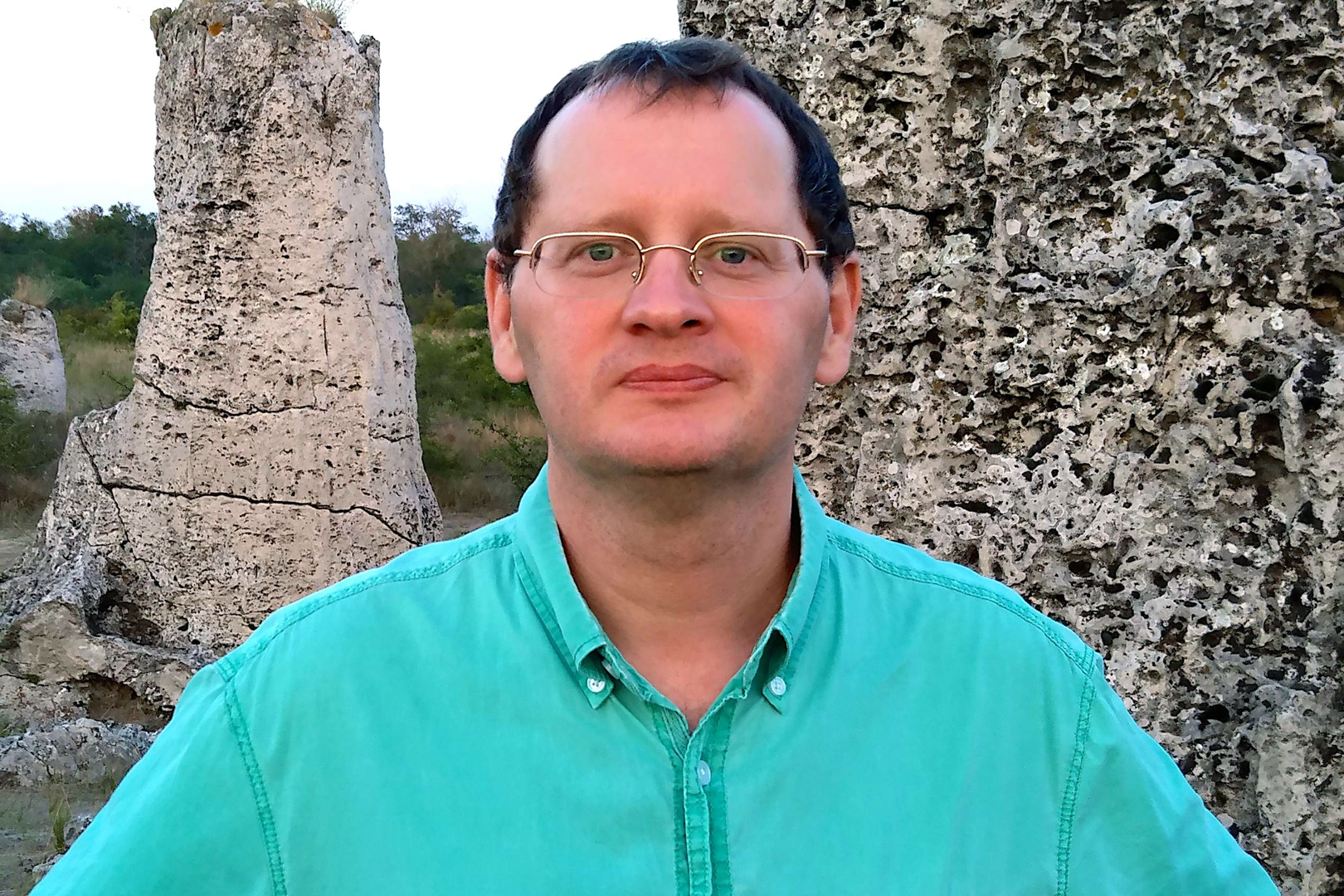
Kristian Hantkeمشاهده پروفایل
پژوهشگر ارشد
Kristian Hantke is a Senior Researcher in the Department of Dynamics of Complex Fluids at the Max Planck Institute for Dynamics and Self-Organization in Göttingen, Germany. His primary focus is on nonlinear laser spectroscopy, particularly the development and application of Coherent Anti-Stokes Raman Scattering (CARS) microscopy for non-invasive analysis of biological specimens and material science samples. Hantke received his academic training at the University of Marburg, Germany: 2000: BSc Honours Physics (First Class) 2002: Diploma in Physics with thesis on "Optical properties of (GaIn)(NAs)/GaAs" 2005: PhD in Physics with thesis on "Influence of nitrogen on the photoluminescence of metastable III-V nitrides" 2005-2007: Post-doctoral researcher at University of Marburg Since 2007: Senior researcher at Max Planck Institute for Dynamics and Self-Organization Hantke's research centers on designing and implementing advanced laser laboratory systems, with particular emphasis on CARS microscopy development. He has engineered a dual-CARS microscope system utilizing a Nd:Vanadate pump laser coupled with two optical parametric oscillators, enabling simultaneous detection of two chemical species or enhanced signal-to-noise ratios. His ps-CARS laser system employs picoTRAIN technology delivering approximately 6ps pulses with multiple wavelength outputs spanning from 532nm to 2300nm. This equipment allows for label-free, high-resolution imaging through vibrational Raman spectroscopy without requiring sample labeling. Analysis of Hantke's publication record from 2002-2012 reveals a clear research trajectory evolving from fundamental semiconductor physics toward applied optical techniques. His early work focused on quantum well structures, photoluminescence properties of nitrogen-containing III-V semiconductors, and carrier dynamics. The more recent publications demonstrate a strategic shift toward developing and applying CARS microscopy techniques. His publications span multiple disciplines including semiconductor physics, materials science, laser technology, and optical engineering, with consistent emphasis on quantum heterostructures, photoluminescence spectroscopy, and advanced imaging methodologies.