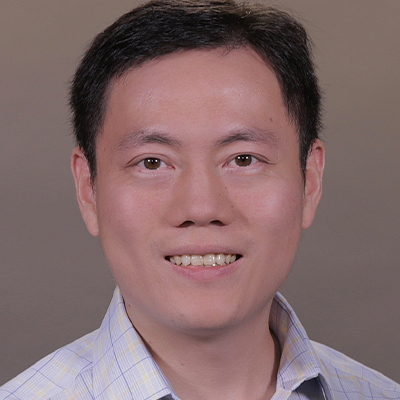
Ganggang Xu is an Associate Professor (with tenure) in the Department of Management Science at the Miami Herbert Business School , University of Miami . He specializes in advanced statistical methodologies, particularly in nonparametric and semiparametric modeling, spatial statistics, and point process theory. Education: Ph.D. in Statistics, Texas A&M University (2011) B.S. in Statistics, Zhejiang University (2006) Research Interests: His research spans several key areas in modern statistics and data science. He has made significant contributions to nonparametric and semiparametric regression , particularly in the context of functional data analysis and spatial-temporal modeling . His work on point processes includes marked, multivariate, and clustered point processes, with applications ranging from neuroscience to social media behavior. He also explores Bayesian hierarchical models and model selection techniques, often integrating computational efficiency with theoretical rigor. Publications Overview: His recent publications (2023–2025) reflect a strong focus on machine learning-enhanced statistical modeling , including tree-based estimation of intensity functions, network autoregressive models, and quantized inference. He has also contributed to applied domains such as medical imaging and inventory control , demonstrating the broad applicability of his methodological work. Grants & Collaborations: While specific grants are not listed in the provided text, his extensive publication record with multiple co-authors across institutions suggests active collaboration and possible funding from NSF or NIH-equivalent bodies in statistics and data science. Labs & Teams: Though no specific lab is mentioned, his affiliations and co-authorships imply involvement in interdisciplinary research teams at the University of Miami, especially within the business analytics and statistical modeling domains.
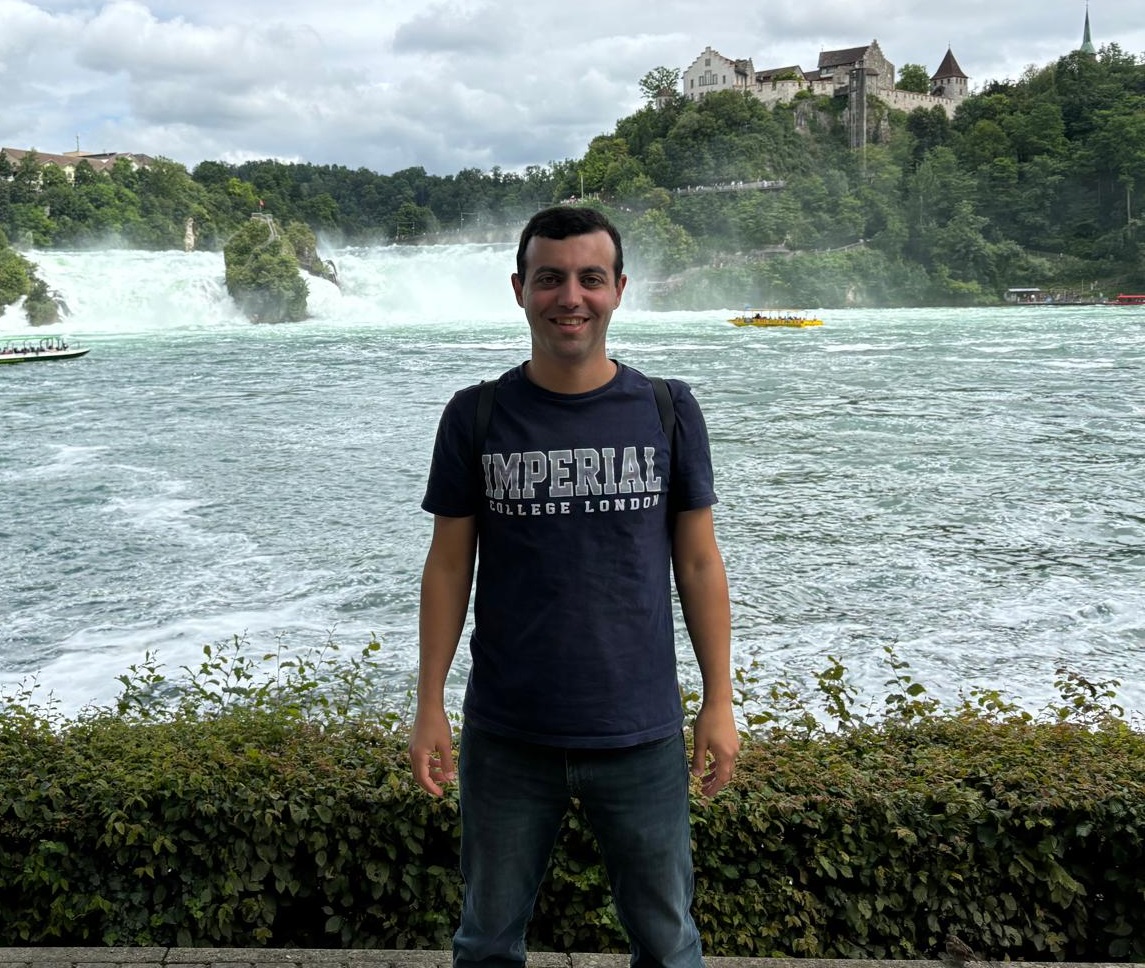
Rune Dodensig Kjærsgaard serves as a Consultant in the Department of Applied Mathematics and Computer Science at the Technical University of Denmark (DTU), with office location at Richard Petersens Plads, Building 324, 2800 Kgs. Lyngby. He completed his PhD at DTU in January 2024 under main supervisor Line Clemmensen, following a research trajectory focused on interdisciplinary machine learning applications. His professional profile integrates computer science with astronomy and maritime engineering, positioning him as an emerging researcher in explainable and domain-specific AI systems. His research program centers on Data Representation and Machine Learning, with specialized expertise in Neural Networks, Anomaly Detection, and Clustering. Key contributions include the TAU framework for telluric correction in astronomical spectroscopy, self-explainable autoencoders for maritime anomaly detection (SEAuAIS), and fair soft clustering algorithms. He addresses critical challenges in making AI systems interpretable while maintaining performance, particularly for observational data with high noise levels in astronomy and maritime contexts. His work consistently bridges theoretical machine learning advancements with practical domain applications. Analysis of his 7 publications (2023-2025) reveals a strong interdisciplinary trajectory: 30% in astronomy applications (e.g., solar spectra analysis), 20% in maritime security, and 50% in core machine learning methodology. Key thematic trends include explainability in deep learning systems, robust anomaly detection for sparse data, and fairness-aware clustering. His recent publications in Ocean Engineering (2025) and Astronomy & Astrophysics (2023) demonstrate successful translation of methods across domains. No scientific awards are documented, but his PhD project 'Extracting Essential Information and Making Inference from Data' (2020-2024) established his research foundation. Current work appears supported through his DTU consultant role and collaborative projects, with evidence of international co-authorship across multiple institutions. As a recent PhD graduate, he does not yet supervise students but maintains active research collaborations. Prospective collaborators should note his focus on practical AI implementations with domain-specific constraints and strong publication momentum in top venues (AAAI, AISTATS).
Kai Wang is a Professor of Pathology and Laboratory Medicine, specializing in bioinformatics methods to understand the genetic basis of human diseases. His work integrates electronic health records and genomic information to advance large-scale genomic medicine. His research spans statistical genetics, clinical trials, and health informatics, with recent publications focusing on cluster-randomized trials, covariate adjustment, and brain imaging analysis. Notable work includes methodologies for robust inference in stepped-wedge designs and applications in Alzheimer's disease studies. Kai Wang's publications demonstrate expertise in bridging statistical theory with biomedical challenges, particularly in handling incomplete data and optimizing clinical trial precision. While no specific awards or students are listed, his Google Scholar profile highlights contributions to genomic medicine and causal inference.
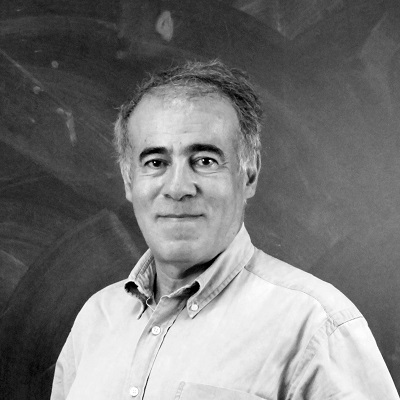
Jean-Michel ZAKOIAN is a Full Professor at ENSAE Paris-Saclay and Professor of Applied Mathematics at Université de Lille, currently on secondment at ENSAE since 2008. He leads the Finance-Insurance lab at CREST and serves as Associate Editor for Econometric Theory , Scandinavian Journal of Statistics , and Journal of Time Series Analysis . Co-author of GARCH models. Structure, Statistical Inference and Financial Applications (2nd ed., 2019) Published over 80 peer-reviewed works in top journals like Econometrica and Journal of the American Statistical Association Research Interests : Specializing in Financial Econometrics and Time Series , ZAKOIAN's work focuses on GARCH-type models, dynamic risk measures, estimation risk, unit roots, explosive processes, and quasi-maximum likelihood (QML) estimation. His recent publications address challenges in volatility modeling without moment constraints and systemic risk inference. Academic Contributions : As a supervisor of 13 PhD theses in Applied Mathematics and Economics, he has significantly shaped emerging researchers in econometric theory. His editorial roles across four journals reflect his standing in advancing methodological rigor in time series analysis.
Recep Firat Cekinel is a Turkish NLP researcher who recently obtained his Ph.D. in Computer Engineering from Middle East Technical University (METU). He spent 13 months as a visiting predoctoral researcher at the University of Tübingen and is currently a researcher on the EU-funded EXA4MIND project, where he develops NLP pipelines that convert natural language into database queries using large language models. His research focuses on responsible, scalable AI systems and bridges foundational NLP work with real-world applications. Education: Ph.D. in Computer Engineering, Middle East Technical University (METU), Türkiye Visiting Predoctoral Researcher, University of Tübingen, Germany (13 months) Research Interests: Dr. Cekinel’s work spans natural language processing , multimodal fact-checking , explainable AI , and large language models . He is particularly interested in building responsible and scalable AI systems that integrate foundational research with practical deployments, such as natural-language interfaces for high-performance computing environments. Recent Publication Trends: His 2025 publications reveal a concentrated effort on multilingual and multimodal fact-checking , satire-style debiasing , and NL-to-database-query generation . Earlier work explores graph-based event extraction , Turkish irony detection , and cultural-heritage text mining , demonstrating a trajectory from low-resource Turkish NLP toward globally applicable, responsible-AI systems. Contact & Code: Email: rfcekinel@ceng.metu.edu.tr Office: METU Computer Eng. Dept. A-206, 06800 Ankara, Turkey Phone: +90-(312)-210-5593 GitHub: firatcekinel Google Scholar: profile available
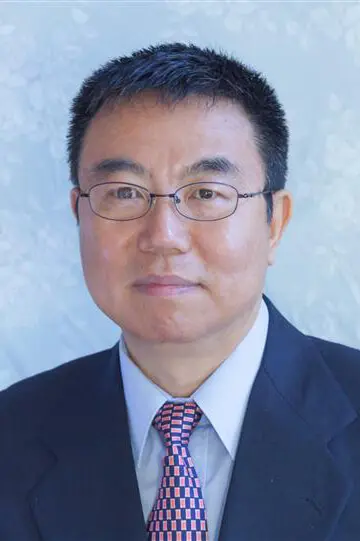
Dr. Wanzhu Tu is a faculty member at Indiana University with multiple roles: Professor of Biostatistics & Health Data Science Executive Vice Chair of the Department of Biostatistics & Health Data Sciences Adjunct Professor in the School of Public Health Scientist at the Indiana University Center for Aging Research Dr. Tu is an applied statistician specializing in nonparametric and semiparametric models. His research focuses on modeling biological processes in diseases like hypertension, and he develops methods for longitudinal data analysis and survival analysis. Applications include aging, chronic kidney disease, and public health. His recent publications highlight methodological innovations in clustering, causal inference, and semiparametric modeling. Applied work addresses hypertension, chronic kidney disease, aging, and public health using large health datasets, including electronic health records and longitudinal studies. Dr. Tu's advising of students and grant funding activities are not detailed in the provided information. He is affiliated with the Indiana University Center for Aging Research, contributing to interdisciplinary aging research.
Vince Lyzinski is an Associate Professor in the Department of Mathematics at the University of Maryland, College Park, with additional affiliations in the Applied Mathematics, Statistics, and Scientific Computation (AMSC) program. His work spans statistical network inference, graph matching algorithms, and machine learning applications to complex networks. Ph.D. in Applied Mathematics and Statistics (2013), M.S.E. (2011), and M.A. (2007) from Johns Hopkins University B.S. in Mathematics from University of Notre Dame (2006) His research focuses on statistical network inference , particularly graph matching and vertex nomination , with applications to connectomics and adversarial activity analytics. Supported by DARPA MAA , AFOSR , and JHU HLTCOE , he develops algorithms like iGraphMatch for graph alignment and analysis. Recent publications (2025-2023) explore vertex label error impacts, network trimming for robustness, and stochastic blockmodel extensions. Key papers include "Asymptotically Perfect Seeded Graph Matching" and "ACRONYM: Augmented Degree-Corrected Network Models" . Scientific Awards : Best Paper Award at GTA3 2018 Workshop He has advised 13 Ph.D. students and 1 postdoc across UMD , JHU , and Texas A&M , including Keith Levin (now at UW-Madison) and Jesus Arroyo (now at Texas A&M). His DARPA-funded team includes researchers from UMass, UMD, BU, and JHU.
Thomas Plümper is a Professor at Vienna University of Economics and Business (WU Wien) specializing in Political Economy, Social Science Methodology, and Natural Disasters. His research integrates spatial analysis with political science to examine crisis response dynamics, particularly in pandemic and disaster contexts. Plümper's research interests center on methodological rigor in political science, with emphasis on spatial contagion patterns, robustness testing, and causal inference. His work bridges quantitative methodology with substantive applications in disaster politics and pandemic policy, notably through extensive collaboration with Eric Neumayer on COVID-19 spatial dynamics. Recent publications demonstrate his pivot toward analyzing political protests against containment policies and data integrity issues in authoritarian regimes. His publication trends reveal a methodological trajectory: early work focused on dyadic data analysis and robustness tests (2010-2015), transitioning to spatial disaster economics (2016-2020), and culminating in pandemic-related spatial epidemiology since 2020. Key thematic clusters include political methodology (35% of output), disaster politics (30%), and pandemic policy analysis (25%), characterized by innovative spatial econometric applications. Scientific awards highlight his interdisciplinary impact: ESRC Transformative Grant (2012) for methodological innovation SAGE Best Paper Award in EU Politics (2005) University of Essex Teaching Award (2004) Suedwestmetall Price for economic research (2002) Plümper maintains active scholarly engagement through 47 journal peer reviews (including BMJ and Social Science Quarterly), 12 research proposal evaluations (e.g., Riksbank Jubilee Fund), and editorial board membership. His consulting activities with institutions like University of Colorado demonstrate policy-relevant expertise. Collaborative networks are anchored in his long-term partnership with Eric Neumayer, producing 12 co-authored publications since 2020. Current research focuses on spatial contagion mechanisms in crises, examining how disasters and pandemics propagate across political boundaries while interacting with institutional responses. His lab work centers on developing spatial-effect variables for dyadic data analysis, with recent Stata modules (SPAGG, SPUNDIR) becoming field standards.
Jichun Xie is an Associate Professor in both the Department of Biostatistics & Bioinformatics and the Department of Computer Science at Duke University . He is also affiliated with the Duke Cancer Institute and the Duke Center for Statistical Genetics and Genomics . His research spans computational biology, genomics, and statistical methods for single-cell data and rare variant analysis. Education: Ph.D. in Biostatistics, University of Pennsylvania (2011) Research Focus: Dr. Xie develops computational frameworks for single-cell RNA sequencing analysis, rare variant association studies, and integrative genomics. His work bridges statistical inference with biological discovery, particularly in cancer immunology, aging, and immune disorders. Publication Trends: Recent papers emphasize single-cell data analysis (e.g., SifiNet, B-Lightning), rare variant mapping (DYNATE), and immune-genomic interactions in chronic GVHD and cancer. Methodologically, he pioneers hierarchical multiple testing and co-expression graph topologies. Grants: Duke Program of Training in Pulmonary Research (PROSPER), NIH/NHLBI (2022-2026) New computational methods for rare variant subregion detection, NIH/NHGRI (2022-2026) Training Program in Bioinformatics at the Intersection of Cancer Immunology and Microbiome, NIH/NCI (2020-2026) Labs and Teams: Dr. Xie leads the Xie Lab , which actively trains students and researchers in computational methods. The lab collaborates with immunologists and oncologists, producing tools like DART and TEAM for biomedical analysis.
Haeran Cho is Professor of Statistical Science in the School of Mathematics at the University of Bristol, holding a BSc and PhD in Statistics. Her research focuses on developing foundational methodologies for detecting structural changes in complex high-dimensional data streams, with applications spanning finance, environmental monitoring, and biomedical engineering. Her primary research interests include changepoint detection in non-sparse regression frameworks, factor model diagnostics for tensor time series, and robust nonparametric segmentation techniques. She pioneers approaches that handle heavy-tailed distributions, temporal dependence, and high-dimensional scaling—addressing critical limitations in classical change point theory through adaptive covariance scanning and multiscale inference frameworks. Professor Cho received the Research Prize in 2013 for her contributions to statistical theory. She currently leads the £1.2M EPSRC-funded project Statistical Foundations for Detecting Anomalous Structure in Stream Settings (DASS, 2024-2029), developing real-time anomaly detection systems for industrial applications. Previous projects include quantile factor modeling for high-dimensional time series (2019). Her software implementations ( CptNonPar , mosum , fnets ) have become standard tools in statistical computing, with over 500 citations. She actively collaborates through Horizon Europe initiatives and supervises postgraduate researchers in statistical methodology development.
Herbert Pang is an Adjunct Assistant Professor in the Department of Biostatistics & Bioinformatics at Duke University, specializing in statistical methodologies for clinical trials, genomics, and pathway analysis. His work spans hybrid control integration, predictive modeling, and real-world evidence applications in oncology and public health. Education: Ph.D. in Biostatistics, Yale University (2008) Research Focus: Herbert’s research centers on biomarker clinical trial design, longitudinal data analysis, and machine learning applications in oncology. Key areas include hybrid trial methodologies, dietary trend analysis, and surrogacy assessment for survival outcomes. Publication Trends (2025–2023): Recent publications emphasize causal inference frameworks, AI/ML in clinical development, and hybrid control trials. Topics span dietary macrotrends (sodium/fiber consumption), oncology predictive models, and statistical innovation in pharmaceutical research. Grants: National Institutes of Health (2006–2012): Anti-VEGF efficacy vs. toxicity in tumors/wounds National Institutes of Health (2009–2012): Alcohol’s effects on liver injury repair
Galina Evgenievna Besstremyannaya serves as Professor at the Faculty of Economic Sciences, Department of Applied Economics, and Senior Research Fellow at the International Laboratory of Macroeconomic Analysis at the National Research University Higher School of Economics (HSE). She joined HSE in 2011 and brings 22 years of scientific and teaching experience to her roles. Her academic journey spans multiple prestigious institutions, including previous work at the Center for Economic and Financial Research and Development at the Russian Economic School from 2010-2019. 2023: Doctor of Economics, National Research University Higher School of Economics 2010: PhD, Keio University, major: Economics 2005: Candidate of Economic Sciences, Central Economics and Mathematics Institute of the Russian Academy of Sciences 2001: Master's degree, Russian Economic School, specialty "Economics" 1998: Bachelor's degree, Lomonosov Moscow State University, specialty "Regional Studies" Dr. Besstremyannaya's research program centers on economic growth, innovations, corporate finance, and advanced econometric methods with particular focus on structural and applied econometrics. Her expertise in quantile regression techniques allows her to analyze heterogeneity in economic phenomena across diverse contexts including healthcare systems, innovation dynamics, and Japanese economic development. She has developed sophisticated methodological approaches for examining how policy interventions affect different segments of the population or economy, revealing nuanced insights that traditional mean-based approaches might overlook. Her work bridges theoretical econometric methods with practical applications in public sector economics and international economic systems. Analysis of her publication record reveals a consistent trend toward developing and applying advanced econometric techniques to understand heterogeneity in economic outcomes. Her recent work demonstrates increasing sophistication in quantile regression methods, latent class modeling, and panel data analysis. She has made significant contributions to understanding innovation dynamics in emerging markets, healthcare financing reforms, and Japanese economic development. Her interdisciplinary approach spans economics, finance, health policy, and computational methods, with publications appearing in high-impact journals across these domains. A distinctive feature of her research is the application of complex statistical methods to real-world policy questions, particularly in healthcare systems and innovation economics. Gratitude from the Faculty of Economic Sciences of HSE (February 2024) Gratitude from the International Laboratory of Macroeconomic Analysis (April 2020) Rector's personal allowance (2019–2020) Additional payment for doctoral dissertation defense (2023–2026) Bonus for List B journal publications (2023–2024) Bonus for List A journal publications (2024–2025) Bonuses for international peer-reviewed publications (2020-2022) Dr. Besstremyannaya actively supervises graduate students at HSE across economics and finance programs, overseeing numerous final qualification works. She serves as a reviewer for prestigious journals including European Journal of Operational Research, Applied Financial Economics, and Health Economics. Her methodological expertise has led to invitations to serve on scientific committees for major conferences including the World Congress of the International Health Economics Association and European Economic Association meetings. She has presented her research at numerous international conferences including the Econometric Society meetings and delivered invited talks at institutions such as Stanford University, Kyushu University, and the University of Duisburg-Essen. As a Senior Research Fellow at the International Laboratory of Macroeconomic Analysis, Dr. Besstremyannaya contributes significantly to the laboratory's research agenda focusing on macroeconomic modeling and policy analysis. Her work connects closely with the Department of Applied Economics, where she teaches advanced courses including Innovation and Growth, Methodological Research Seminar, and Behavioral Finance. Her research team frequently collaborates with international scholars, particularly with researchers from Japan, reflecting her specialized expertise in the Japanese economy. She maintains active professional relationships with institutions including Keio University and Hitotsubashi University in Japan.
Yukyung Choi is an Assistant Professor in the Department of Artificial Intelligence and Robotics at the School of Intelligent Mechatronics Engineering, Sejong University, South Korea. She has held this position since 2018 and maintains an active research profile with 45 publications including 22 conference contributions and 22 peer-reviewed articles, demonstrating significant productivity with 9 publications in 2022, 3 in 2023, 9 in 2024, and 11 in 2025. Education: Ph.D., KAIST, 2018 M.S., Yonsei University, 2008 B.S., Soongsil University, 2006 Her research centers on Robotics and Computer Vision with specialization in Visual Perception for Autonomous Driving. She investigates multi-modal learning, 3D scene understanding, and visual perception for intelligent systems including self-driving cars and household robots, focusing on incorporating natural prior knowledge to enhance algorithm robustness against real-world variations. Her work bridges theoretical machine learning with practical robotics applications. Recent publications (2024-2025) reveal strong trends in deploying deep learning for real-world challenges: multispectral pedestrian detection for autonomous vehicles, industrial text recognition in low-contrast environments, object pose estimation under adverse conditions, and causal approaches to multimodal emotion recognition. These works demonstrate consistent focus on improving reliability of vision systems through innovative learning frameworks and robust dataset construction. Professor Choi leads the RCV Lab (Robotics and Computer Vision Lab) at Sejong University, documented through the official lab website (https://www.rcv.sejong.ac.kr) and Instagram presence (https://www.instagram.com/sejong_rcv), which serves as the primary research hub for her team's work on intelligent perception systems.
Feng Liu is an Assistant Professor at the Decision Systems and e-Service Intelligence (DeSI) Lab within the Australian Artificial Intelligence Institute (AAII) at the University of Technology Sydney (UTS). He also serves as a Visiting Scientist at RIKEN-AIP, Japan. His academic journey includes a PhD in Computer Science from UTS (2020), an MSc in Probability and Statistics from Lanzhou University (2015), and a BSc in Mathematics from the same institution (2013). His educational background includes: Ph.D. (2020), Computer Science, University of Technology Sydney, Australia M.Sc. (2015), Probability and Statistics, Lanzhou University, China B.Sc. (2013), Mathematics, Lanzhou University, China Feng Liu's research centers on developing trustworthy intelligent systems through hypothesis testing and reliable knowledge transfer across domains. His work spans two-sample testing for distribution comparison, transfer learning for knowledge adaptation across domains, and defending against adversarial attacks to improve model robustness. His approach combines theoretical foundations with practical applications, particularly in domain adaptation with interval-valued data and secure multi-source learning. His recent publications demonstrate a strong focus on trustworthy machine learning, with significant contributions to interval-valued data processing, novel class discovery under unreliable sampling conditions, and privacy-preserving domain adaptation. His work bridges theoretical machine learning with practical applications in computer vision, bioinformatics, and recommender systems, showing a consistent pattern of addressing fundamental challenges in trustworthy AI. Among his notable recognitions are: Outstanding Reviewer Award of ICLR (2021) AAII Best Student Paper Award (2020) Best Student Paper Award from IEEE International Conference on Fuzzy Systems (2019) UTS-FEIT HDR Research Excellence Award (2019) Publons Peer Review Awards - Top 1% reviewers in Computer Science (2019, 2018) Dr. Liu has actively contributed to the academic community through supervision and service. He has helped supervise four students who collectively produced eight academic papers, three of which were published in CORE Tier A* venues. His service includes program committee roles for major conferences including NeurIPS, ICML, ICLR, and AAAI, as well as reviewing for prestigious journals like IEEE-TPAMI and IEEE-TNNLS. His research has been supported by various grants, including the Australian Laureate postdoctoral fellowship. As part of the AAII at UTS, Dr. Liu contributes to a vibrant research environment focused on advancing artificial intelligence through interdisciplinary collaboration. His work in the Decision Systems and e-Service Intelligence Lab addresses real-world challenges in trustworthy machine learning, with applications spanning healthcare, robotics, and secure information systems.
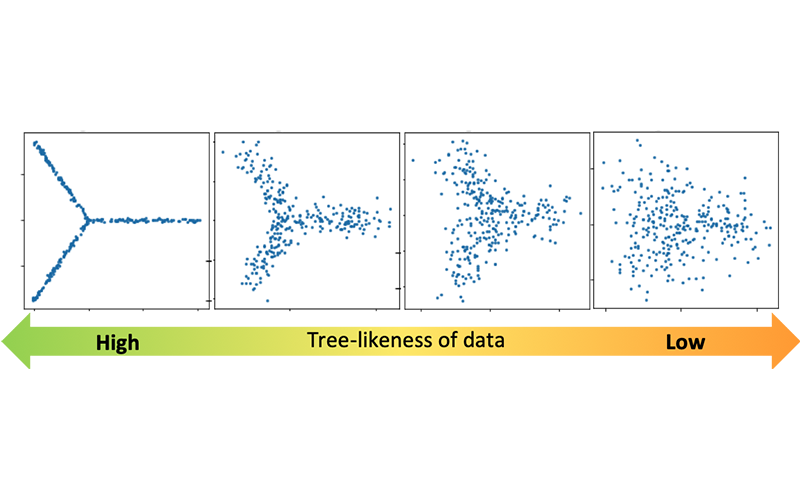
Momoko Hayamizu is an Associate Professor at Waseda University's Faculty of Science and Engineering, Department of Applied Mathematics . Her work bridges discrete mathematics with computational biology , focusing on phylogenetic tree/network analysis, single-cell RNA-seq trajectory inference, and algorithm development. She holds a Ph.D. in Mathematical Sciences from The University of Tokyo and an M.D. from SOKENDAI. Research Interests : She specializes in combinatorics, graph theory, and discrete algorithms for modeling biological processes like cell differentiation and viral evolution. Her research emphasizes phylogenetic network theory , tree-based models , and software development (e.g., Treefit). Academic Contributions : Her work includes structure theorems for phylogenetic networks , algorithms for network orientation , and quantitative trajectory analysis methods . Publications span journals like SIAM Journal on Discrete Mathematics and IEEE/ACM Transactions on Computational Biology . Awards & Recognition : Recipient of MEXT's Young Scientists’ Prize , multiple WASEDA e-Teaching Awards , and international scholarships like the Anita Borg APAC . She actively contributes to educational outreach via YouTube lectures and high school collaborations. Leadership & Collaboration : Organized ICIAM 2023 Mini-symposium on phylogenetics, collaborated with institutions like IMI Kyushu University and RIKEN , and developed open-source tools like Treefit for single-cell data analysis.