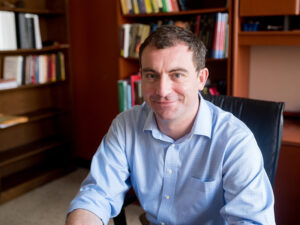
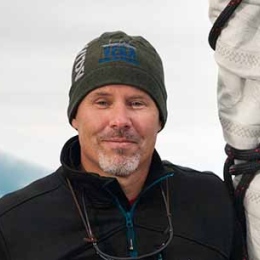
William Chueh is a Professor in the Departments of Materials Science and Engineering and Energy Science & Engineering at Stanford University. He serves as Director of the Precourt Institute for Energy and Faculty Director of the Energy Innovation and Emerging Technologies Program. His research focuses on redox-active materials for energy storage, conversion, and carbon-neutral energy cycles. Education: PhD, Materials Science, Caltech (2010) BS, Applied Physics, Caltech (2005) Research Interests: Energy storage and conversion systems (batteries, fuel cells, electrolyzers) Multi-scale electrochemical and chemical reaction dynamics Materials design rules for redox-active solids Thermodynamic frameworks for sustainable energy Publication Trends: His work spans fundamental materials synthesis, electrochemical characterization, and modeling of redox reactions. Key themes include solar thermochemical cycles, ceria-based systems for CO2/H2O conversion, and advanced battery technologies. Scientific Honors: Outstanding Young Investigator Award (MRS, 2018) Camille Dreyfus Teacher-Scholar Award (2016) Sloan Research Fellowship (2016) CAREER Award (NSF, 2015) Advising: He advises students in energy technologies, materials science, and electrochemistry, including doctoral and master’s candidates. Contact: wchueh@stanford.edu
Dr. James McDonald serves as a Lecturer and Research Fellow at the University of New South Wales (UNSW) within the School of Civil and Environmental Engineering's Water Research Centre (WRC). His work at the Vallentine Annexe (H22), Room 102, Kensington Campus focuses on advancing water treatment technologies and understanding contaminant behavior in water systems. His position bridges academic instruction with cutting-edge research in environmental engineering. McDonald's research spans multiple critical areas in water science and engineering, with particular emphasis on trace organic contaminants, membrane technologies, and advanced water treatment processes. His work investigates the fate and removal of pharmaceuticals, personal care products, and industrial chemicals in various water treatment systems. He has made significant contributions to understanding disinfection by-product formation, chiral inversion of pharmaceuticals, and the development of novel membrane technologies for improved water purification. His research combines experimental approaches with computational modeling to address complex water quality challenges. Analysis of McDonald's recent publications reveals a strong focus on emerging contaminants, particularly PFAS compounds and chiral pharmaceuticals, and their behavior in water treatment systems. His work demonstrates expertise in both conventional and advanced water treatment technologies, with increasing emphasis on sustainable approaches including green infrastructure and novel membrane processes. The interdisciplinary nature of his research connects environmental engineering, chemistry, microbiology, and materials science to address contemporary water quality challenges. McDonald actively collaborates with researchers across multiple institutions and has contributed to numerous significant studies on water quality and treatment. His work supports the development of more effective water recycling systems and safer drinking water supplies. While specific grant information isn't detailed in the available text, his extensive publication record suggests sustained research funding in water treatment technologies and contaminant fate studies. As part of UNSW's Water Research Centre, McDonald contributes to one of Australia's leading water research facilities. The WRC provides a collaborative environment for addressing complex water challenges through interdisciplinary research that integrates engineering, chemistry, and environmental science perspectives.
Prof. Dr. Jörg E. Drewes is a Full Professor and Chair at the Research Institute for Urban Water Management, Technical University of Munich (TUM), Germany. He also serves as Academic Program Director for Environmental Engineering at TUM and is a co-founder of Waterloop Solutions GmbH. His work spans advanced water treatment technologies, wastewater reuse, and environmental health surveillance. Affiliations : TUM, Colorado School of Mines, King Abdullah University of Science and Technology, UNSW Water Research Centre Research focuses on advanced oxidation processes , membrane fouling mitigation , micropollutant removal , and wastewater epidemiology for public health. His team develops integrated systems for water-energy-food nexus applications and graphene oxide-based treatment solutions. Recent publications address PFAS remediation , UVC-LED pre-treatment for biofouling control, and GIS-based wastewater surveillance models . Awards include the Bayerische Staatsmedaille (2023) and William Dunbar Medal (2022). 2023 : Bayerische Staatsmedaille 2022 : William Dunbar Medal 2018 : IWA Fellow He leads the Nexus@TUM initiative and contributes to EU water resilience strategies. Collaborations include projects in Germany, China, India, and Spain, focusing on climate-resilient water systems and resource recovery .
Diane E. Austin is a Professor and Director of the School of Anthropology at the University of Arizona. She also serves as a Research Anthropologist at the Bureau of Applied Research in Anthropology (BARA). Her work focuses on environmental anthropology, particularly community dynamics in industrial and environmental contexts, with a strong emphasis on social justice and collaborative research. She has over 25 years of experience leading interdisciplinary projects in the U.S., Mexico, and Gulf Coast regions. Austin's research spans diverse areas including Native American communities, U.S.-Mexico border sustainability, Gulf Coast oil industry impacts, and urban food systems in arid regions. She has pioneered long-term partnerships with tribal organizations, federal agencies, and community groups, earning recognition such as the University Distinguished Outreach Professor (2008) and Distinguished Director (2023). Her recent work highlights longitudinal studies on the Deepwater Horizon oil spill's social effects, binational environmental initiatives in Nogales, and community-based approaches to disaster resilience. She coordinates BARA's internship and post-baccalaureate programs, supporting hundreds of students in applied anthropological research. Awards: Partners in Conservation Award (2010), Border Research Partnership Award Finalist (2012) Leadership Roles: Chair of the Good Neighbor Environmental Board, Member of the Gulf Research Program Advisory Board Key Projects: Southern Paiute cultural preservation, Gulf Coast oil industry studies, Nogales reforestation initiatives Austin’s teaching includes courses on ethnographic methods, data analysis, and mixed-methods research. She actively engages in policy advocacy, contributing expert testimony in legal proceedings related to environmental disasters and labor rights.
Majid Ghayoomi is a Professor and Civil Engineering Undergraduate Coordinator in the Department of Civil and Environmental Engineering at the University of New Hampshire's College of Engineering and Physical Sciences. His research focuses on geotechnical engineering and geomechanics, particularly unsaturated soil mechanics and geotechnical earthquake engineering. He teaches courses such as Soil Mechanics, Engineering Behavior of Soils, and Geotechnical Modeling. Dr. Ghayoomi holds a Ph.D. from the University of Colorado at Boulder, an M.S. from Sharif University, and a B.S. from the University of Tehran. His research interests include bioremediation, hazards mitigation, soil-structure interaction, and materials testing. He leads the Geotechnical Modeling and Innovation lab, advancing bio-inspired solutions and remote sensing applications in geotechnical systems. His recent work emphasizes climate change impacts on seismic resilience, microbial stabilization of soils, and satellite-based soil moisture monitoring. Key contributions include studies on liquefaction mitigation, seismic site response, and infrastructure vulnerability in dynamic environments. His research spans theoretical, experimental (centrifuge modeling), and computational approaches to address complex geotechnical challenges.
California Institute of Technology (Caltech)United States
Tapio Schneider is the Theodore Y. Wu Professor of Environmental Science and Engineering at the California Institute of Technology. His research focuses on atmospheric dynamics across Earth and other planets, climate modeling innovations, and geophysical turbulence analysis. He contributes to the Climate Modeling Alliance (CliMA) and develops advanced computational tools for climate prediction. Albert-Ludwigs-Universität Freiburg (Vordiplom, 1993) Princeton University (M.Sc. 1997, Ph.D. 2001) University of Washington, Seattle (Visiting Graduate Student, 1994-1995) His research spans climate dynamics , atmospheric turbulence , and AI-enhanced climate modeling , addressing challenges in cloud dynamics, extreme weather patterns, and planetary climate systems. Current work emphasizes hybrid machine learning-physical models and computational acceleration for high-resolution simulations. Recent publications highlight trends in AI integration for climate science, with applications in hydrology , cloud microphysics , ocean circulation , snowpack modeling , and climate tipping points . His team develops open-source tools like ClimateMachine for GPU-accelerated simulations. Scientific Recognition: Fellow, American Geophysical Union (2022) Rosenstiel Award (2019) World Economic Forum Young Scientist (2012) David and Lucile Packard Fellow (2005-2010) Alfred P. Sloan Research Fellow (2004-2006) Tapio leads climate dynamics research at Caltech, directs the Linde Center for Global Environmental Science (2011-2012), and serves as Editor for the Journal of Advances in Modeling Earth Systems . His group collaborates with NASA Jet Propulsion Laboratory (2016-2024) and Google Research (2022-present).
Peter A. Raymond is the Oastler Professor of Biogeochemistry at Yale University's School of the Environment and Department of Geology and Geophysics. He serves as Senior Associate Dean of Research & Director of Doctoral Studies and is Co-Director of the Yale Center for Natural Carbon Capture. Raymond leads the Raymond Biogeochemistry Lab, which investigates the biogeochemistry of inland waters, enhanced weathering, methane cycling, and blue carbon systems through cutting-edge field, laboratory, and modeling approaches. Education B.S., Marist College Ph.D., College of William and Mary/Virginia Institute of Marine Science Research Focus Raymond's research fundamentally reshapes our understanding of carbon cycling in aquatic systems, demonstrating that rivers serve as dynamic conduits rather than passive pipes in the global carbon cycle. His work examines how biology and watershed variables alter carbon chemistry in streams, rivers, and estuaries, with particular emphasis on understanding global carbon cycles in relation to climate change. Raymond employs radiocarbon measurements to explore the age and turnover of carbon in aquatic ecosystems, revealing that rivers are variable sources of both old and young terrestrial dissolved organic carbon to oceans. The Raymond Lab is particularly known for developing the Pulse-Shunt Concept, which challenges traditional views of riverine biogeochemistry by emphasizing the episodic and dynamic nature of elemental fluxes. Current research directions include enhanced weathering and alkalinity studies for carbon removal, global greenhouse gas budgets through projects like RECCAP 2, natural methane cycling in aquatic systems, and blue carbon ecosystems such as mangroves and salt marshes. Publication Trends Raymond's recent publications (2023-2025) demonstrate a strong focus on global carbon and methane cycling, with particular attention to inland water systems' role in the Earth's climate system. His work increasingly integrates large-scale datasets with field measurements to understand how climate change and human activities affect greenhouse gas emissions from rivers and streams. A significant portion of his recent work contributes to international efforts like the Global Carbon Project, aiming to refine estimates of global carbon and methane fluxes. His research also shows growing emphasis on carbon removal strategies, particularly enhanced rock weathering through the Earthshot-funded GOAL-A project, and their potential for climate mitigation. Scientific Recognition Fellow of the American Association for the Advancement of Science Member of the Connecticut Academy of Science and Engineering Coastal and Estuarine Research Federations Cronin Award for Young Scientists ISI highly cited author Past Editor and Chief of the American Geophysical Union's journal Global Biogeochemical Cycles Mentorship and Funding Professor Raymond currently mentors four doctoral students (Jon Gewirtzman, Shou-En "Samuel" Tsao, Benjamin Saalidong, and Mingyu Zhang) and masters student Bella Garrioch. His research is supported by multiple grants from the National Science Foundation (NSF), including CAREER awards, and participation in the Earthshot-funded GOAL-A (Global Ocean And Land Alkalinization) project. Raymond has also been involved in significant collaborative projects with USGS data to research how climate and land use change alter carbon export from US watersheds, and with Lamont Doherty to develop methods for measuring air-sea gas exchange of CO2 in rivers and estuaries. Research Infrastructure The Raymond Biogeochemistry Lab at Yale is a dynamic research group comprising research scientists, postdocs, doctoral and masters students, and postgraduate researchers. The lab recently acquired a Mini Carbon Dating System (MICADAS) at Yale, significantly expanding their research capabilities in ecosystem carbon turnover and verification of natural climate solutions. The lab collaborates globally on projects in the Arctic, Hudson River, and middle Atlantic Bight, and is actively involved in the NASA Carbon Monitoring System BlueFlux field campaign to assess carbon exchange in coastal wetlands.
Gregg M. Garfin is a Professor and Specialist in Climate, Natural Resources, and Policy at the University of Arizona’s School of Natural Resources and the Environment, and Deputy Director for Science Translation and Outreach at the Arizona Institute for Resilience. He holds a Ph.D. in Geosciences from the University of Arizona (2003), an M.S. in Geology and Geography from the University of Massachusetts (1997), and a B.S. in Geology and Geography from the same institution (1993). His work bridges science and societal decision-making, focusing on climate adaptation, drought management, and climate services. He directs the Water, Society, and Policy M.S. Program and has led interdisciplinary projects on climate resilience, including contributions to the Fourth National Climate Assessment. Roles: Professor, Deputy Director, Program Director Affiliations: Arizona Institute for Resilience, School of Natural Resources and the Environment Research Interests His research emphasizes climate adaptation strategies, climate policy, and the co-production of knowledge between scientists and decision-makers. Key areas include: Climate impacts on water resources and ecosystems Extreme heat and drought resilience in urban and border communities Climate change communication and education Awards & Recognition Garfin has received multiple accolades, including AAAS Fellowship (2020), University of Arizona Service Awards (2020, 2015), and the Global Initiative for Academic Networks (GIAN) Visiting Fellowship (2018). His work has been featured in peer-reviewed journals and media outlets, emphasizing actionable science for climate resilience. Grants & Contributions He has led federal and transnational projects, including binational climate resilience initiatives in the U.S.-Mexico border region and flood risk assessments in Seoul, South Korea. His work integrates participatory governance approaches to enhance community preparedness.
Craig Davis is a Professor and holds the Bollenbach Chair in Wildlife Management at Oklahoma State University's Department of Natural Resource Ecology & Management. He has been a faculty member since 2001, advancing from Assistant Professor (2001-2007) to Associate Professor (2007-2012), and has served as Bollenbach Chair since 2014. Davis earned his PhD in Wildlife Science from Texas Tech University (1996), an MS from Iowa State University (1991), and a BS from Ohio State University (1988). He is also a Certified Wildlife Biologist through The Wildlife Society. His research focuses on avian ecology, wetland restoration, and gamebird management, with specific interests in fire-grazing interactions, invertebrate communities, and climate change impacts on ecosystems. Key areas include grassland bird survival, wetland classification systems, and the effects of anthropogenic development on wildlife habitats. Davis actively collaborates with conservation organizations and agencies, addressing challenges like invasive species management and water infrastructure resilience. Teaching responsibilities include undergraduate courses on Wildlife Management Techniques and Wetland Ecology, as well as graduate courses like Advanced Wetland Ecology. His grants emphasize wetland restoration outreach, climate adaptation strategies, and studies on northern bobwhite and wild turkey populations. Notable projects include evaluating cellular transmission technology in wildlife monitoring and assessing the impact of extreme weather on gamebird survival. Grants (Selected): Expansion of potential wetland restoration opportunities in Oklahoma (2024-2027) Linking Research and Stakeholder Engagement for Wetland Conservation (2024-2026) Effects of Extreme Weather and Hunting on Northern Bobwhite (2023-2025) Research Themes: Aligns with UN Sustainable Development Goals 15 (Life on Land), 13 (Climate Action), 6 (Clean Water), 11 (Sustainable Cities), 14 (Life Below Water), and 9 (Industry/Infrastructure).
Christopher Turbill is an Associate Professor in Animal Science at Western Sydney University's School of Science, where he maintains an active research program focused on animal physiological ecology. He is affiliated with the Hawkesbury Institute for the Environment and serves as a Principal Investigator on multiple research projects while accepting HDR candidates for supervision. PhD from University of New England (2006) Thesis: Thermoregulatory Ecology of Tree-roosting Bats Supervised by Prof. Fritz Geiser Postdoctoral fellowships from Austrian Science Fund and Australian Research Council (DECRA) Former ecologist with NSW Government Professor Turbill's research integrates thermal and metabolic physiology with behavioral ecology to understand animal-environment interactions. His work has revealed significant ecological consequences of controlled body temperature variation in mammals and birds, linking these processes with metabolic energy expenditure, activity patterns, and life-history strategies. He specializes in bat biology and investigates conflicts between human environmental change and animal conservation requirements. His research keywords include ecophysiology, thermoregulation, energy expenditure, life-history ecology, body temperature, torpor, hibernation, and wildlife conservation. Analysis of Turbill's recent publications reveals a strong focus on thermal biology and conservation physiology, particularly regarding bats and birds. His work examines how animals manage energy through torpor, respond to climate change through thermal regulation, and adapt to anthropogenic disturbances. The research spans field studies of flying-foxes, microbats, and passerine birds across Australian ecosystems, with increasing emphasis on conservation applications related to white-nose syndrome, fire impacts, and wind energy development. Turbill leads significant research projects including the Ecology of the eastern horseshoe bat and its sensitivity to fire impacts (2024-2027), Vulnerability of Australian bats to white-nose syndrome (2021-2026), and Torpor use and burrowing behaviour in an arid zone passerine (2024). His work attracts funding from diverse sources including the Australian Research Council, Department of Planning and Environment, and various conservation organizations. Professor Turbill directs the BatsLab research group, which maintains a virtual hub for bat research at Western Sydney University. His team employs advanced methodologies including thermal imaging, GPS tracking, and physiological monitoring to study animal responses to environmental challenges. Current work focuses on developing conservation interventions for heat-stressed flying-foxes and assessing vulnerabilities of Australian bat species to emerging diseases.
Ben Livneh is an Associate Professor at the University of Colorado Boulder , affiliated with both the Civil, Environmental, and Architectural Engineering Department and the Cooperative Institute for Research in Environmental Sciences (CIRES) . As Director of the Western Water Assessment , he bridges academic research with regional climate resilience initiatives. Ph.D. in Civil Engineering (Hydrology), University of Washington (2012) MESc in Civil Engineering, University of Western Ontario (2006) His research explores hydrologic responses to climate and land-cover changes , focusing on snowpack dynamics, wildfire impacts on water quality, sediment transport, and drought predictability. Key projects include simulations of montane snowpack for wolverine habitat preservation and post-fire landslide susceptibility analysis . Recent publications highlight continental-scale hydraulic geometry datasets , climate-energy nexus challenges , and global lake level reconstructions using satellite data. His work has been recognized by the AGU Hydrologic Sciences Early Career Award (2022) and NASA New Investigator Program (2018) . Scientific Awards AGU Hydrologic Sciences Early Career Award (2022) NASA New Investigator Award (2018) Symposium Scholar, DISCCRS VIII (2013) CIRES Visiting Fellowship (2012) Ben leads interdisciplinary collaborations with institutions like the University of Alaska Southeast and NOAA , addressing climate-water-energy-food nexus challenges through advanced modeling and remote sensing techniques.
Prof. Richard L. Peters is a Professor and Head of the Chair of Tree Growth and Wood Physiology at the Technische Universität München (TUM) since 2024. His research focuses on tree physiology, wood formation, and climate-forest interactions. He holds a doctorate summa cum laude from the University of Basel (2018) and has conducted postdoctoral research at the Swiss Federal Institute for Forest Science (WSL) and Ghent University. His work integrates forest ecology, dendrochronology, and ecophysiology to address climate change impacts on forests. Education: B.Sc./M.Sc. in Biology at Utrecht University, Ph.D. from University of Basel (2018). Key career steps include a Swiss National Science Foundation (SNSF) fellowship at Ghent University and coordination of the Swiss Canopy Crane II project (2021). Research Interests: Tree water-use strategies, drought tolerance mechanisms, carbon allocation dynamics, and the physiological basis of tree growth. He leads interdisciplinary projects to monitor forest responses to environmental stress using tools like the TreeNet network. Awards: Early Postdoc Mobility Fellowship (SNSF, 2019), Doctorate summa cum laude (2018). Contributions: Authored >180 publications, co-developed the datacleanr R package for ecological data processing, and pioneered methods linking tree-ring data with climate models. His work emphasizes the need for better observational data to improve vegetation models.
Michael Baldea is an Associate Professor in the Department of Chemical Engineering at the University of Texas at Austin . He holds a Ph.D. in Chemical Engineering from the University of Minnesota (2006), with prior degrees from 'Babeş-Bolyai' University in Romania (M.Sc. 2001, Diploma 2000). His research group develops theoretical and computational methods for Process and Energy Systems Engineering , focusing on integrated decision-making, performance optimization, and process intensification with industrial validation. Education: Ph.D., Chemical Engineering, University of Minnesota (2006) M.Sc., Interface Process Engineering, 'Babeş-Bolyai' University (2001) Diploma, Chemical Engineering, 'Babeş-Bolyai' University (2000) Research Thrusts: Integrated decision-making in chemical/energy supply chains Process performance monitoring and optimization Process integration and intensification Key applications include grid-responsive chemical plants, intensified distillation/column designs, and renewable energy integration for building systems. Scientific Awards: Frank A. Liddell, Jr. Fellowship NSF CAREER Award (2015-2020) Moncrief Grand Challenges Faculty Award (2014) AIChE Outstanding Young Researcher Award (2017) Implementation : His group has translated research into commercial tools through partnerships with industrial test beds and is working to integrate methods into commercial simulators. They explore predictive approaches for building energy management and strategic capital investment analysis in next-generation energy systems.
Martin Jakobsson is a Professor of Marine Geology and Geophysics at Stockholm University's Department of Geological Sciences. His career spans international research expeditions and leadership roles, including Dean of Earth Science (2021) and Head of Department (2012-2018). A key member of the Marine Geology group, he studies Arctic and Antarctic glacial history through sediment analysis and seafloor mapping. PhD from Stockholm University (2000) Academy Fellow, Royal Swedish Academy of Sciences (2004-2009) Professor II position at University Centre of Svalbard (2011-) His research focuses on marine geological archives to reconstruct glacial cycles, ice-ocean interactions, and bathymetric mapping. As GEBCO Vice-Chair (2013-2020), he led initiatives for global seabed mapping through the Seabed 2030 project. Recent publications reveal expertise in: Arctic Ocean paleocirculation Methane release from thawing permafrost Ice sheet sensitivity to oceanic warming High-resolution bathymetric analysis Scientific recognition includes: Election to Royal Swedish Academy of Sciences (2012) 1st Vice President, Royal Swedish Academy of Sciences (2016-2019) Membership in Norwegian Scientific Academy for Polar Research (2016) He leads international collaborations on polar research vessels, with over a year of cumulative ship time and multiple Co-Chief Scientist roles on Arctic expeditions.
Ruth Mostern is Associate Professor of History at the University of Pittsburgh and Director of the Institute for Spatial History Innovation (ISHI). She is Vice-President and President-Elect (2025-2026) of the World History Association and leads the award-winning World Historical Gazetteer project. Education Ph.D. in History, University of California, Berkeley, 2003 Research Interests Mostern is an interdisciplinary historian specializing in world, Chinese, environmental, and spatial history. She investigates long-term human–environment interactions at continental and millennial scales, focusing on how societies organize space, resources, and risk. Her work integrates GIS, digital gazetteers, and environmental science to reconstruct historical geographies of empire, water management, and ecological change. Current projects include: Place: A Global History – a study of itineraries, gazetteers, and databases as technologies of spatial knowledge. The Medieval Climate Anomaly and the Global Medieval Era – cultural adaptations to climate change c. 950-1250 CE. Research Trends Her recent publications span digital environmental humanities, historical GIS, Song-dynasty political economy, and pre-industrial Asian political ecology. A dominant theme is the coupling of state power with environmental transformation, exemplified by her 2021 book The Yellow River: A Natural and Unnatural History (Yale), winner of the 2023 Joseph Levenson Prize. Awards & Honors Joseph Levenson Prize, Association for Asian Studies, 2023 NEH Digital Humanities Advancement Grant, 2023-2025 Digital Humanities Awards 2021 – Best DH Tool (World Historical Gazetteer) Fudan University Fellowship for Studies of Chinese Civilization, 2019 NEH Humanities Connections Implementation Grant, 2018-2020 Chiang Ching-kuo Foundation Summer Institute Grant, 2015-2016 NSF Collaborative Research Grant, 2013-2015 ACLS Digital Innovation Fellowship, 2011-2012 Advising & Grants Mostern welcomes graduate students interested in environmental, global, Asian, or digital history. She has directed multiple externally funded projects, including the NSF-funded Center for Historical Information and Analysis and NEH-supported initiatives on water in Central Asia and global historical gazetteers. Labs & Teams She directs the Institute for Spatial History Innovation (ISHI) at the University of Pittsburgh, a hub for interdisciplinary research integrating spatial technologies with historical inquiry. ISHI hosts the World Historical Gazetteer , providing open tools and datasets that link knowledge about historical places across world regions.