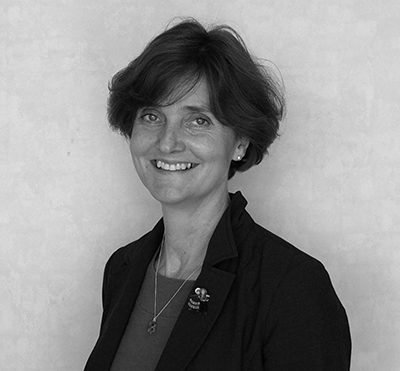
Sophia Tickell serves as Visiting Professor in Practice at the Grantham Research Institute on Climate Change and the Environment at London School of Economics. She specializes in sustainable finance and multi-stakeholder initiatives, working closely with Professor Nick Robins since 2018 to shape the Institute's financing the just transition programme through strategic advice, event facilitation, and policy development. Education: BA from University of Birmingham, MA from University of Oxford Leadership Roles: Founding Partner of Meteos Ltd, Chair/Co-Executive Director of SustainAbility Ltd (2004-2009), 10-year tenure at Oxfam Her research focuses on the just transition to net-zero economies, emphasizing the integration of social justice priorities in financial sector climate strategies. Key themes include: Aligning banking practices with net-zero targets Equitable financing for SMEs and housing sectors Multi-stakeholder dialogue frameworks Climate-resilient development with inclusive outcomes Recent publications analyze transition finance mechanisms across UK economic sectors, with a particular emphasis on banking sector responsibilities and policy implementation challenges. She actively contributes to the Institute's just transition research agenda through collaborative policy outputs.
Allison Adelle Hedge Coke is a Distinguished Professor of Creative Writing at the University of California, Riverside, where she leads the UCR Writers Week Festival and directs the VA National Cemetery Administration Legacy Program. She has held visiting or faculty positions at Hartwick College, University of Nebraska, Naropa University, and University of Hawai'i, Mānoa, including roles such as Fulbright Scholar in Montenegro and Dan & Maggie Inouye Chair in Democratic Ideals. Education: MFA from Vermont College (1995), AFAW from Institute of American Indian Arts, post-grad work at VCFA Her research and creative work intersects with Indigenous Studies, disability advocacy, and environmental poetics. She is known for mathematically encoding the prosody of her verse play Blood Run to mirror the Indigenous mound city it protects, and for multimedia projects like the Streaming album and Red Dust documentary. Her recent publications include the award-winning Look at This Blue and the curated anthology series Effigies , which spotlight emerging queer and Pacific Rim poets. Projects often blend community outreach, mental health advocacy, and Indigenous knowledge preservation. Major Awards: American Book Award, National Book Award Finalist, Pen Southwest Book Award, Texas Institute of Letters fellowship, NWCA Lifetime Achievement Hedge Coke’s mentorship spans juvenile facilities, reservations, and refugee communities. She founded the Literary Sandhill Cranefest Retreat and has secured grants for K-12 outreach programs integrating poetry with historical and ecological education.
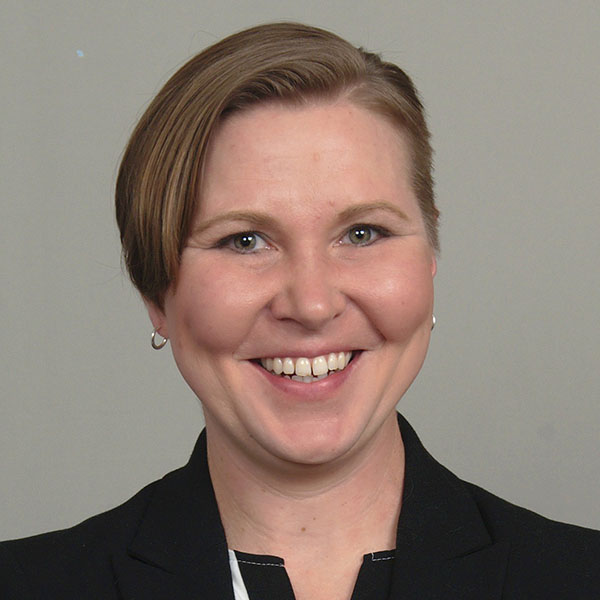
Kelly Searle, PhD, is an Associate Professor at the Division of Epidemiology & Community Health within the University of Minnesota . As an infectious disease epidemiologist, her research focuses on malaria transmission dynamics across endemic regions in central and southern Africa, integrating molecular biology, geographic information systems (GIS), spatial sciences, and ecological principles to inform control and elimination strategies. Education: PhD in Epidemiology, Johns Hopkins Bloomberg School of Public Health ScM in Epidemiology, Johns Hopkins Bloomberg School of Public Health BS in Pathobiology and Veterinary Science, University of Connecticut Postdoctorate, Johns Hopkins Bloomberg School of Public Health Research Interests span malaria transmission, vector-borne diseases, GIS, and global health. Her work aims to reduce malaria burden through efficient policy-driven interventions. Scientific Awards Louis I. and Thomas D. Dublin Award (2014) Contact: ksearle@umn.edu
Timothy Baldwin is a Professor at the University of Melbourne, School of Computing and Information Systems, with additional affiliation at Mohamed bin Zayed University of Artificial Intelligence in UAE. His research spans natural language processing, large language models, and multilingual AI systems. His research interests focus on the safety, reliability, and ethical aspects of large language models. He investigates bias evaluation and debiasing techniques, uncertainty quantification methods, fact-checking systems, and multilingual model safety. His work addresses critical challenges in making AI systems more transparent, reliable, and culturally aware, with particular attention to low-resource languages and cross-cultural differences. Baldwin's recent publications demonstrate a strong focus on evaluating and improving the safety of language models across diverse linguistic contexts, developing tools for fact verification, and understanding the internal mechanisms of large language models. His research shows increasing emphasis on practical applications with real-world impact, particularly in multilingual settings and safety-critical domains. His scientific contributions include foundational work on multilingual NLP, bias mitigation techniques, and frameworks for evaluating LLM safety across different cultural contexts. His research has been published in top-tier venues including ACL, NAACL, EMNLP, and ICLR. Baldwin actively mentors students and junior researchers, with frequent collaborations with Haonan Li, Xudong Han, and Fajri Koto, among others. His research group appears to focus on practical applications of NLP with strong ethical considerations, particularly regarding model safety and cultural sensitivity.
Vania Ceccato is a Professor at the Academy of Police Work, University of Borås, specializing in environmental criminology and situational crime prevention. She leads the international Nätverket Säkraplatser network, fostering collaboration between academia and practice for sustainable safety. Her research bridges urban design, rural criminology, and transit security, with a focus on inclusive safety measures. Her recent publications include studies on transit worker safety in Stockholm’s metro resilient urban design for climate and crime prevention LGBTQI+ safety in transportation rural-urban shooting patterns innovative survey methodologies Her work aligns with United Nations SDGs 9, 11, and 13, emphasizing how environmental criminology can drive sustainable, equitable urban development.
Matti Minkkinen is a Docent at the Turku School of Economics (University of Turku) and a Postdoctoral Researcher in Information Systems Science at the Department of Management and Entrepreneurship. His work bridges futures studies with ethics, privacy, and socio-technical systems in digital transformation. Recent roles focus on responsible AI governance and foresight methodologies. University: University of Turku School: Turku School of Economics Department: Department of Management and Entrepreneurship His research explores how digital technologies reshape organizational practices, emphasizing Futures Consciousness as a human capacity. Key themes include responsible AI , privacy protection , and causal layered analysis in scenario planning. Publications highlight ethical governance frameworks and EU policy debates. Recent articles address generative AI ethics , ML system integration , and AI auditing across journals like Communications of the Association for Information Systems and Information and Management . Topics cluster around socio-technical systems, digital ethics, and institutional adaptation to AI. Teaching and editorial roles include co-curating student research collections at Finland Futures Research Centre. No explicit scientific awards are listed, but his work contributes to foresight theory and practice.
Dr. Matt Castle is a Researcher affiliated with the University of Cambridge , specializing in interdisciplinary approaches to food security and plant sciences. He serves as the Head of Bioinformatics Training and Head of PSLS Biostatistics Initiative within the Department of Plant Sciences . His work spans multiple domains, including plant disease modelling, infectious disease dynamics, and global governance of food systems. Research Themes: Modelling for Food Security, Plant Disease Modelling, Food Landscapes, Political Economy of Hunger His recent publications highlight expertise in ecological and agricultural modelling, with a focus on: Aflatoxin contamination in maize Urban forest pest dynamics Climate-driven range expansions Size-structured ecosystem resilience While his work intersects with food supply chains, land resources, and health, no specific scientific awards or student advisement details were listed in available public records.
Peter D. Ditlevsen is a Professor at the Niels Bohr Institute , University of Copenhagen, specializing in Physics of Ice, Climate and Earth (PICE) . With a background in theoretical physics, he transitioned to climate dynamics and turbulence. Dr. Scient (2004), University of Copenhagen PhD (1991), Technical University of Denmark Research Interests : Focuses on Tipping Points in the Earth System , especially AMOC collapse , using stochastic dynamical systems , alpha-stable processes , and nonlinear climate modeling . His work bridges climate physics , dynamical meteorology , and time series analysis . Recent Publications : 2025 work on ice-core-based Dansgaard–Oeschger event modeling , 2024 studies on AMOC multistability and complex system predictability , and 2023 Nature Communications paper on AMOC collapse early warning (cited 4000+ times in media). Scientific Leadership : Leads CriticalEarth H2020 (2021-24) and contributed to TiPES (2019-23). Holds Carlsberg Fellowship and Ole Rømer Prize . Outreach : Produces weekly climate science podcast with David Trads, delivers 4-6 public lectures/year, and has appeared in 40+ media outlets. Teaches Electrodynamics , Thermodynamics , and Turbulence courses.
Felipe Pathé Duarte is an Assistant Professor at NOVA School of Law and Deputy Director of CEDIS, with expertise in Peace, Justice, and Security . He coordinates the Master's program in Law and Security and co-founded the NOVA War & Law Lab. His roles span academic, policy, and consultative domains, including positions at the European Commission's Knowledge Hub, UNODC, Council of Europe, and RTP television. PhD in Political Science and International Relations (Catholic University of Portugal) Master's in Cybersecurity and Governance (Catholic University of Portugal) Bachelor's in Political Science and International Relations (Catholic University of Portugal) Bachelor's in Philosophy (University of Coimbra) His research focuses on political violence , subversion , violent non-state actors , and the geopolitical implications of extremism . Recent articles address hybrid threats , disinformation campaigns , and social media radicalization . He has authored monographs on global jihadism and violent extremism in Portugal. Fulbright fellowship in the US National Security Policymaking program of the U.S. Department of State Duarte leads public policy reports on hybrid threats , radicalization , and international security , collaborating with institutions like CEPOL and the Higher Institute of Police Sciences and Internal Security.
Professor Şaban NAZLIOĞLU is a faculty member at Pamukkale University, Department of International Trade & Finance, Faculty of Economics and Administrative Sciences, Denizli-Turkey. He has been serving as a Professor since 2018, following previous roles as Associate Professor (2012-2018), Assistant Professor (2011-2012), and Research Associate (2010-2011) at the same institution. He has extensive experience in academic administration, having served as Chair of the Department of Econometrics (2011-2014, 2016-2018) and Coordinator of the Scientific Research Projects Unit (2016-2018). Dr. NAZLIOĞLU received his undergraduate education at Erciyes University, Faculty of Economics and Administrative Sciences, Department of Management (2002), followed by a Master's degree in Economic Policy (2006) and PhD in Economic Policy (2010), both from Erciyes University's Institute of Social Sciences. His research interests center on applied econometrics, panel data econometrics, agricultural economics, commodity prices, and international trade. He has developed innovative methodological approaches in panel stationarity testing with gradual structural shifts, contributing significantly to the field of econometrics. His work bridges theoretical econometric developments with practical applications in energy markets, agricultural economics, and international finance. Dr. NAZLIOĞLU's research has resulted in numerous publications in high-impact journals, with a focus on panel data methods, unit root testing, causality analysis, and their applications to energy, agricultural, and financial markets. His work demonstrates a consistent pattern of methodological innovation applied to substantive economic questions, particularly in emerging markets and international contexts. TÜBA (Turkish Academy of Sciences) "The Outstanding Young Scientists Award (GEBIP)-2015" TÜBİTAK (Scientific and Technological Research Council of Turkey) "Incentive Award-2015" Pamukkale University Social Sciences "Science Award-2016" Pamukkale University Social Sciences "Research Performance Award-2012" Dr. NAZLIOĞLU has supervised numerous graduate students and has been actively involved in research projects, including "A New Panel Unit Root Test with Gradual Structural Shifts" (TÜBİTAK-SOBAG 1001/Project No: 215K086) and "Are Commodity Price Shocks Temporary or Permanent? A New Perspective with Panel Unit Root Analysis" (TÜBA-GEBİP 2015). He has served as a referee for prestigious journals including Agricultural Economics, Economic Modelling, Energy Economics, and others. He is an active member of professional organizations such as the International Association for Applied Econometrics (IAAE), International Trade and Finance Association, and Society for the Study of Emerging Markets. He has developed the GAUSS TSPD Library for Time Series and Panel Data Methods, which is publicly available on GitHub. This library covers several unit root, co-integration & causality tests, demonstrating his commitment to sharing methodological tools with the broader research community.
Costa Samaras is the Trustee Professor of Civil and Environmental Engineering and Director of the Scott Institute for Energy Innovation at Carnegie Mellon University . He is also affiliated with the Department of Engineering and Public Policy and Heinz College of Information Systems and Public Policy . From 2021–2024, he served in the White House Office of Science and Technology Policy as Chief Advisor for the Clean Energy Transition. Education: Joint Ph.D. in Civil and Environmental Engineering and Engineering and Public Policy (Carnegie Mellon University), MPA (New York University), BS (Bucknell University) His research bridges engineering, systems analysis, and public policy to address climate change mitigation, electric and automated transportation, energy system decarbonization, and national security . He focuses on climate-resilient infrastructure, AI ethics, and policy frameworks for equitable energy transitions. Recent work with his students explores drone delivery systems, hydropower in Africa, and grid emissions tracking . The 15 most recent articles span decarbonization of transportation , climate-resilient infrastructure , AI applications in adaptation , home electrification equity , and power sector emissions . These appear in journals like Nature , Nature Climate Change , Environmental Research Letters , and Patterns . Scientific leadership includes founding the Center for Engineering and Resilience for Climate Adaptation and the Power Sector Carbon Index . His team has been recognized with dissertation awards at Carnegie Mellon University. He regularly advises federal agencies, utilities, automotive companies, and technology firms , and has been featured in The New York Times , NPR , PBS , and WIRED .
Tiffany Roberts Briggs serves as Chair and Associate Professor in the Department of Geosciences at Florida Atlantic University. Her academic foundation includes a Ph.D. (2012), M.S. (2008), and B.S. in Environmental Science with Honors (2006), all from the University of South Florida. Her research centers on coastal geomorphology and sedimentology , with critical focus on beach-dune-nearshore system responses to natural events like hurricanes and anthropogenic interventions including coastal engineering. Key specialties include beach morphology evolution, microplastics in coastal sediments, sea turtle habitat characterization, and coastal resilience strategies. Current projects involve Hurricane Ian impact analysis, regional sediment management, and decadal-scale inlet dynamics. Teaching portfolio spans undergraduate and graduate courses including Physical Geology, Coastal and Marine Science, Shore Erosion & Protection, and specialized topics in beach morphodynamics. She actively mentors graduate students through directed research courses and supervises thesis work evident in her co-authored publications with student researchers. Briggs directs research at the Coastal Studies Lab and leads field investigations across Southeast Florida coastlines. Her work integrates advanced methodologies including LiDAR, aerial imagery, and GIS modeling for coastal change assessment. Recent publications reveal strong collaboration with agencies like USACE and NOAA, particularly in post-hurricane damage evaluation and community resilience planning.
Priyanko Guchait is a tenured Full Professor and Program Director of the Doctorate in Global Hospitality Leadership (DGHL) at the Conrad N. Hilton College of Global Hospitality Leadership , University of Houston. His research focuses on organizational behavior, leadership, human resources, and service management in hospitality contexts, with over 75 peer-reviewed articles published. Education: B.E. in Mechanical Engineering, University of Pune, India M.S. in Hospitality Management, University of Missouri M.S. in Human Resources and Employment Relations Ph.D. in Hospitality Management, The Pennsylvania State University Research Interests include error management culture, psychological safety, service recovery performance, leader behavioral integrity, and AI’s impact on hospitality workers’ mental health. His work examines shame, forgiveness climate, and team dynamics in service environments. Article Trends show a focus on multi-level error management, human-robot collaboration in service recovery, diversity inclusion climates, and cross-cultural leadership studies. Recent papers explore AI ethics, pandemic response strategies, and emotional labor in hospitality roles. Awards & Honors Stephen Rushmore/HVS Research Excellence Award (2023, 2015) Donald Greenaway Excellence in Research, Teaching, and Service Award (2022) Best Paper Award, The Service Industries Journal (2023) ICHRIE Faculty Collegiality Award (2021) ICHRIE McCool Breakthrough Award (2021) Honored as 50-in-5 Scholar (2021) Provost’s Excellence Award (2015) Best Reviewer Awards (IJCHM 2016-2017) Committee & Editorial Roles include Associate Editor of IJCHM, Coordinating Editor of IJHM, and leadership positions at ICHRIE (President 2020-2021, Vice President 2019-2020). He has served on university curriculum, research, and Ph.D. selection committees.
Zakaria BABUTSIDZE is a Professor of Economics at SKEMA Business School in France, where he has been teaching since 2011, progressing from Assistant Professor to Associate Professor and finally to full Professor in 2021. His academic affiliations also include positions at Côte d'Azur University, Sciences Po Paris (where he serves as an Economist at OFCE since 2011), and previous visiting positions at institutions including Griffith University, North Carolina State University, and Maastricht University. His research interests span behavioral and environmental economics, with a particular focus on consumer decision-making in digital contexts, green consumer behavior, social networks, and agent-based modeling of economic phenomena. BABUTSIDZE has made significant contributions to understanding how digital environments shape consumer interactions, environmental attitudes, and trust formation. His recent publications demonstrate a strong trend toward interdisciplinary research combining economics with psychology, computer science, and environmental studies. His work frequently employs experimental methods, both laboratory and field-based, to examine consumer behavior in digital environments, the impact of social networks on market dynamics, and the relationship between media consumption and environmental attitudes. SMBG special prize for innovation 2015 (awarded to MSc Digital Business in capacity of Academic Director) The Best Young Scholar Paper Award 2011 (DIME final conference / DIME network of Excellence) The Outstanding PhD Paper Award 2009 (European Meeting on Applied Evolutionary Economics) As an academic advisor, BABUTSIDZE has supervised multiple doctoral students at SKEMA Business School and Université Côte d'Azur. His research has been supported by numerous grants from Université Côte d'Azur, the Sloan Foundation, and other institutions. He is also actively involved in conference organization and serves as a reviewer for numerous prestigious economics and interdisciplinary journals.
Mark Carey is a Professor in Environmental Studies and Geography at the University of Oregon , where he leads research at the Glacier Lab ( glacierlab.uoregon.edu ). His work bridges environmental history, glaciology, and climate justice, focusing on the intersections of glaciers, society, and climate change in the Andes and Arctic. Research Interests Environmental History Glaciology and Society Climate Change Adaptation Environmental Justice Latin American Environmental Policy Arctic and Andean Cryospheric Studies Mark Carey’s recent publications emphasize sociocryospheric systems, glacial lake outburst flood (GLOF) risks, and climate litigation. His interdisciplinary work combines historical analysis with contemporary climate science, highlighting vulnerabilities in mountain cryospheres and advocating for community-centered adaptation strategies. He has authored influential works like The Routledge Handbook of Environmental History (2023) and developed frameworks for analyzing climate justice in glacial regions. His Glacier Lab at the University of Oregon fosters collaborative research on global cryospheric changes, with a focus on Andean and Arctic regions. Carey’s career spans decades of CNH-funded research (2010) and leadership in integrating environmental history with climate policy, emphasizing the need for decolonized research methodologies and gender-inclusive adaptation strategies.