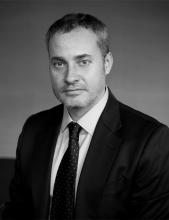
Nicolay Gausel is a Professor of Psychology at the University of Stavanger , affiliated with the Faculty of Social Sciences and Department of Social Sciences. His research spans social psychology, emotion psychology, and cultural studies. Research areas include morality, self-critical emotions, psychological defense, and stigma. Collaborates across disciplines: business, neuroscience, criminology, philosophy, and climate work. Methodological expertise in confirmatory designs, qualitative/quantitative methods, and applied statistics. His work explores interpersonal dynamics of shame, moral emotions, and cross-cultural selfhood. Articles highlight interdisciplinary applications, from family therapy to global personhood models. Current projects address identity, stigma, and social justice issues.
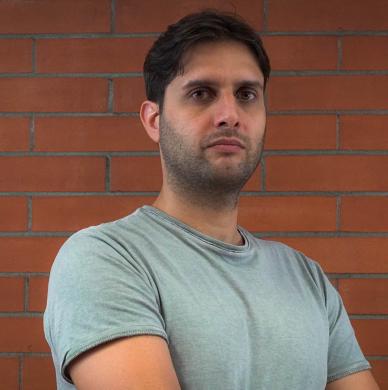
Dr. Felix Mezzanotte is an Assistant Professor of Law at Trinity College Dublin and Director of the MSc in Law and Finance Programme, a collaboration between Trinity Law School and Trinity Business School. He holds a PhD and advanced degrees from the University of East Anglia, SOAS (University of London), and the University of Warwick. His research focuses on the legal dimensions of sustainable finance, corporate sustainability reporting, investor protection, and compliance frameworks within financial markets. Academic Role: Assistant Professor of Law Affiliations: Trinity Law School, Trinity Business School (MSc Programme Director) Professional Experience: Former teaching at Hong Kong Polytechnic University, policy advisor for the World Bank, and visiting scholar at Columbia Law School and others. Dr. Mezzanotte's research interests span sustainable finance regulatory design, ESG compliance, blockchain applications in reporting, and cross-border enforcement challenges. His recent work emphasizes the legal accountability mechanisms linking corporate sustainability disclosures to investor rights under EU directives. Publications reflect a focus on EU sustainable finance policy, with analysis of regulatory complexity, blockchain innovations, and investor protection gaps. Recent articles address double materiality frameworks, impact reporting standards, and the role of robo-advisors in ESG integration. Key Award: Faculty of Business Award for Outstanding Teaching (Hong Kong Polytechnic University) Research Collaborations: European-China Law Studies Association, Columbia Center for Sustainable Investment He supervises doctoral candidates exploring topics like greenwashing prevention, non-financial disclosure obligations, and regulatory enforcement in sustainable finance contexts.
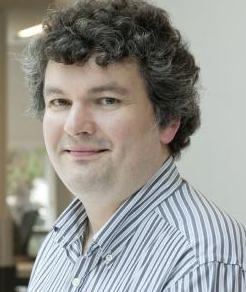
Andries Richter is an Associate Professor in Environmental Economics and Natural Resources at Wageningen University. His research focuses on interdisciplinary approaches to environmental and resource management, particularly in fisheries, climate change, and ecosystem services. He actively supervises PhD candidates and leads projects addressing marine conservation, sustainable agriculture, and policy design in regions like Indonesia and China. Education: Not explicitly mentioned in the provided texts. Key Research Areas: Fisheries management, climate change impacts, ecosystem service valuation, and behavioral economics applications in resource governance. Richter’s work emphasizes practical solutions for sustainable resource use, combining theoretical models with empirical field experiments. His recent studies explore stakeholder perspectives in agricultural landscapes (North China Plain), behavioral dynamics in threshold games (Cambodia), and the economic-trade-offs of mesopelagic fishing. He has contributed to media discussions on illegal fishing practices and marine conservation strategies. Current projects include financing tourism for marine protected areas and institutional frameworks for nutrient emissions control in the Netherlands. Grants/Projects: Innovative spatial planning mechanisms for nutrient emissions control Understanding Raja Ampat Marine Protected Area via system dynamics Marine conservation and food security in West Papua, Indonesia Richter collaborates internationally, with notable contributions to the valuation of ecosystem services and adaptive management strategies under climate change.
Maurizio Ramanzin is a Full Professor at the University of Padova , affiliated with the School of Animal Science and Department of Agronomy, Animals, Food and Natural Resources (DAFNAE) . His research focuses on Agricultural Sustainability , Environmental Impact Assessment , and Precision Livestock Farming . Academic Field : AGR/19 Email : maurizio.ramanzin@unipd.it Address : Agripolis - Viale dell'università, 16 - Legnaro (Padova) – ITALY His work explores the interactions between livestock systems and ecosystem services in mountainous regions, with emphasis on: Grazing Management and biodiversity conservation Life Cycle Assessment (LCA) of dairy and beef systems Climate Change Adaptation in Alpine ungulates Animal Welfare in small-scale farms Technological Tools (GPS, NIRS) for monitoring grazing behavior Key trends in his recent publications include: Quantifying environmental drivers of wolf predation on livestock Developing low-cost biologging systems for dairy cows Analyzing social-ecological trade-offs in mountain agriculture Assessing microbial dynamics in alpine soils
Karina Liechti is a Senior Research Scientist at the Centre for Development and Environment (CDE) of the University of Bern . Her work focuses on governance of natural resources , commons , traditional irrigation systems , and mountain agriculture , with field experience in the Swiss Alps , Kyrgyzstan , Tanzania , and Mongolia . She is multilingual in German , English , French , Italian , and Russian . Research Focus: Liechti examines societal transformation processes linked to land use , protected areas , and climate adaptation . Her recent publications analyze forest fire risk communication , traditional irrigation as cultural heritage , and future Swiss landscapes under +4°C warming scenarios . Network Affiliations: She collaborates with organizations like the International Centre for Traditional Irrigation in Europe (IZTB) , Swiss Landscape Protection Foundation , and Forum Landscape, Alps, Parks (FoLAP) . Methodological Expertise: Liechti employs interdisciplinary approaches, integrating social anthropology , conflict mediation , and field research to study cultural landscapes and resource governance .
Professor Jorge E. Vinuales holds the Harold Samuel Chair of Law and Environmental Policy at the University of Cambridge and is the founding Director of the Cambridge Centre for Environment, Energy and Natural Resource Governance (C-EENRG). He also serves as a Research Professor of International Law at LUISS, Rome, and holds multiple international roles, including Chairman of the UNECE/WHO-Europe Protocol on Water and Health Compliance Committee and member of ICSID's arbitrator panel. His research spans Public International Law, Environmental Law, Investment Law, and Human Rights , with a focus on energy transitions, climate policy, and sustainability governance. He has published extensively in journals like Nature Climate Change and Global Environmental Change , emphasizing interdisciplinary approaches blending legal theory with climate economics and systems modeling. Vinuales has received the Choice Outstanding Academic Title award for his co-edited volume on the UN Friendly Relations Declaration. His advisory and arbitration practice involves high-profile cases for states, investors, and international organizations, including landmark disputes like Green Power v. Spain . He is a member of the Institut de Droit International and contributes to global policy initiatives through the Hague Academy of International Law and UN courses.
Leigh S. Raymond is an Adjunct Professor in the Department of Political Science at Purdue University. His research focuses on environmental policy, particularly market-based approaches and the role of social norms in policy development. He holds affiliations with the Purdue Policy Research Institute, Purdue Climate Change Research Center, and Purdue Center for the Environment. Education: Ph.D. and M.S. in Political Science, University of California at Berkeley B.A. (Summa Cum Laude), Yale University His research explores how fairness, ownership, and environmental values influence policy creation and implementation. Key areas include climate change, renewable energy, and biodiversity protection. Raymond has received notable awards such as the 2017 Lynton Keith Caldwell Award for his book on emissions trading. Grants & Collaborations: Co-PI on a $3.58M NSF grant (2017-21) for energy-aware communities Co-PI on a $2.5M Canadian Greening Growth Partnership Grant (2018-24) Labs/Teams: Engaged with interdisciplinary research centers addressing environmental policy challenges.
Dhrubodhi Mukherjee , Ph.D., LCSW-S, is an Associate Professor in the Department of Social Work at the University of North Texas . His work focuses on the intersection of trauma and substance use disorder , emphasizing integrated care , community health workforce development , and healthcare system fragmentation . Program Director/Principal Investigator: $1.8M HRSA-funded CHW-OSUDS (Community Health Worker Program for Opioids/Substance Use Disorders) Co-Principal Investigator: BTIIC (Bilingual Trauma-Informed Integrated Care Project) Certified in EMDR , TfCBT , and Financial Social Work Dr. Mukherjee’s research explores: Challenges in rural-urban addiction responses Multidisciplinary workforce integration through community needs assessments Role of social capital and technology in aging populations and virtual volunteering His publications span trauma-informed care , climate change mental health impacts , elder abuse , and digital governance , with grants from SAMHSA and HRSA supporting innovative interventions in addiction recovery.
Donato Romano serves as Associate Professor at The BioRobotics Institute of Scuola Superiore Sant'Anna, Italy, where he coordinates the Bio-Robotic Ecosystems Lab and co-founded the spin-off company HUBILIFE srl. His interdisciplinary work bridges robotics, biology, and AI to develop biohybrid systems for biodiversity preservation, sustainable environmental management, and life support in extreme scenarios including space exploration. With over 90 publications and an H-index of 27 (Scopus, March 2025), he has established significant academic leadership through editorial roles across 12+ international journals. Romano's educational foundation includes advanced degrees with honors: an M.Sc. in Agriculture Science and Technologies (2014) and a PhD in BioRobotics (2018), both from Scuola Superiore Sant'Anna. His academic journey includes visiting scholar positions at Khalifa University and substantial industry-academia collaboration through HUBILIFE srl, which commercializes bioinspired devices for human daily life improvement. His research program focuses on bioinspired and biomimetic robotics with particular emphasis on animal-robot interaction, biohybrid systems, and natural intelligence. Key projects address critical global challenges: SENSORBEES develops biohybrid environmental surveillance for ecological monitoring; REGOLIFE investigates lunar soil-terrestrial organism interactions for space agriculture; and OCEAN ROBOCTO explores marine ecosystem solutions. This work demonstrates a strategic progression from fundamental behavioral studies toward applied ecological and extraterrestrial systems. Analysis of his recent publications reveals strong trends in AI-driven behavioral analysis, with deep learning increasingly applied to entomological studies and pest management. The research spans agricultural applications (precision monitoring traps, larval detection systems), ecological conservation (biodiversity surveillance), and extreme-environment adaptation (lunar regolith studies). A distinctive feature is the consistent integration of biohybrid approaches where living organisms and robotic systems create synergistic capabilities exceeding either component alone. Romano's scientific recognition includes election as Junior Fellow of the Italian Academy of Engineering and Technology (2025), the Lucani fuori dal Comune award (2024), and multiple best-thesis prizes. His editorial leadership spans high-impact journals including IEEE Transactions on Medical Robotics and Bionics and Pest Management Science, where he serves as Associate Editor. As principal investigator, Romano coordinates major international projects totaling over €15M in funding: HORIZON-EIC's SENSORBEES (2024-2029), ASI's REGOLIFE (2024-2027), National Geographic's OCEAN ROBOCTO (2024-2026), and PRIN's COSMIC (2023-2025). His teaching portfolio includes PhD courses in Biosystems for Biorobotics and M.Sc. instruction in Bionics Engineering at Scuola Superiore Sant'Anna and University of Pisa. The Bio-Robotic Ecosystems Lab under Romano's direction pioneers biohybrid technologies where living organisms and robotic systems create integrated solutions. Current initiatives include SENSORBEES' environmental monitoring swarms, REGOLIFE's moonworm colonization systems, and HUBILIFE's commercial vector-control devices. The lab maintains active collaborations with space agencies, agricultural institutes, and conservation organizations, positioning biohybrid systems as next-generation tools for planetary-scale challenges.
Professor Mark Levine is a leading figure in social psychology at Lancaster University , affiliated with the Department of Psychology and multiple interdisciplinary research centers including Security Lancaster (Behavioural Science) , Cyber Security Research Centre (Psychology) , Data Science Institute , and Social Processes . His research lies at the intersection of psychology and technology, focusing on social identity, group dynamics, and prosocial behavior in public and digital environments. His research interests include bystander intervention, violence prevention, urban resilience, cybersecurity, emergency response, public safety, and the role of technology in shaping human behavior. He employs diverse methodologies such as virtual reality, CCTV analysis, smartphone data collection, and computational text analysis. His work is highly applied, informing policy and practice in policing, emergency services, and community safety. The trends in his recent publications reflect a strong interdisciplinary focus, combining social psychology with computer science, criminology, and urban studies. His articles frequently analyze real-world behavioral data from public spaces and digital environments, emphasizing the protective role of group identity in emergencies and the feasibility of technological interventions for societal challenges. Scientific grants and projects he has led include: REASON: Resilient Autonomous Socio-cyber-physical agents (£3.3M, EPSRC) RBOC Network+: Urban resilience in 2050 (£2.25M, EPSRC) Challenging the Bystander Effect via Documentary Film (A$356K, ARC) STRETCH: Technology-enhanced support for older adults (£1.3M, EPSRC) “Being There”: Humans and Robots in Public Space (£2.4M, EPSRC) Advising and grants : He supervises 7 postgraduate research students and has secured over £15 million in research funding from EPSRC, ESRC, DSTL, NCSC, Home Office, and international bodies. He advises government departments, police forces, and city councils on public safety and prosocial behavior. His collaborative work extends to creative industries and third-sector organizations like AGE-UK Exeter. Research groups and collaborations : He is deeply embedded in interdisciplinary networks, contributing to projects involving computer scientists, roboticists, software engineers, and HCI researchers. His affiliations with Security Lancaster and the Data Science Institute reflect his central role in socio-technical research at Lancaster.
Jean-Michel Bonvin is a Full Professor of Social Policies and Vulnerabilities at the Faculty of Social Sciences, University of Geneva . He holds a PhD in Sociology from the University of Paris Sorbonne and leads a robust research agenda funded by the Swiss National Science Foundation and the European Union. He is actively involved in major research initiatives including SocIEtY (EU-FP7), RE-InVEST (H2020), and the National Research Center LIVES (NCCR-SNF), as well as past EU projects such as WorkAble , EduWel , and Eurocap . He also contributes to COST actions on social protection reform and gender well-being. His academic focus lies at the intersection of social and employment policies , organizational innovation , the sociology of work , and theories of justice , with a special emphasis on Amartya Sen’s capability approach . His research critically examines themes such as activation policies, social inclusion, the gig economy, and the socioeconomics of inequality. His recent publications reflect a strong trend toward integrating the capability framework into analyses of social protection, labor regulation, youth transitions, and digital work. He explores how institutional structures shape individual agency and voice, particularly among vulnerable populations. His work often bridges normative theory with empirical research, contributing to debates on social justice, democratic participation, and the future of the welfare state. Bonvin has received recognition through sustained research funding and leadership roles. He is a member of editorial boards for journals such as Negotiations , Swiss Journal of Social Work , and Finance & the Common Good . He has also served as President of the Swiss Association for Social Policy since 2008 and is a founding member of CESCAP . He advises on public policy evaluations for cantonal and federal institutions, including studies on social assistance, housing, pandemic impacts, and labor regulations. His teaching includes governance of social security, socioeconomics of inequalities, and social policy analysis. He contributes to academic discourse through edited volumes, policy reports, and interdisciplinary collaborations. Bonvin is affiliated with research groups focused on social vulnerability, life course studies, and social dialogue. His work is central to the LIVES network and projects like INVOLVE (2023–2026), which promotes inclusive public policies. He leads research on the gig economy, social investment, and participatory capability, often in collaboration with European and Swiss institutions.
Rick Horan is a Professor in the Department of Agricultural, Food, and Resource Economics at Michigan State University (MSU), part of the College of Agriculture & Natural Resources. He holds a Ph.D., M.A. from Pennsylvania State University, and dual B.S. degrees from Appalachian State University. His research focuses on environmental and natural resource economics, particularly the interplay between economic and ecological systems. Key areas include endangered species management, invasive species control, wildlife disease dynamics, and agricultural pollution policy. He has published in top journals like PNAS, American Economic Review, and the American Journal of Agricultural Economics. Horan has served as Managing Editor of Resource and Energy Economics (2010–13), Associate Editor roles for American Journal of Agricultural Economics and Natural Resource Modeling , and contributed to a National Academy of Sciences report on environmental policy. His teaching includes Advanced Natural Resource Economics and Microeconomic Theory analysis. Research highlights include modeling ecological thresholds, bioeconomic approaches to species management, and integrating human behavior into epidemiological models. His work has been featured in media outlets like The Economist and Forbes. Horan’s advising and grants focus on interdisciplinary solutions for environmental challenges. His labs and research teams address complex issues like agri-environmental service coordination and sustainable land-use strategies. Current research explores policy mechanisms for balancing economic activities with ecosystem preservation.
David J. Connell is a Professor at the University of Northern British Columbia (UNBC), affiliated with the School of Environmental Planning. His work bridges environmental planning, agricultural policy, and community sustainability, with a strong emphasis on farmland protection, local food systems, and the conservation of British Columbia’s inland rainforest ecosystems. He has led national and provincial research initiatives and is recognized for excellence in both research and teaching. University: University of Northern British Columbia School: School of Environmental Planning Academic Rank: Professor Email: david.connell@unbc.ca Education and Professional Background: While specific educational credentials are not detailed in the provided texts, Dr. Connell’s extensive research, publications, and leadership in policy-oriented projects indicate a strong academic foundation in environmental planning, community development, and policy analysis. His professional experience includes work in business development, economic development, and nonprofit management, which he integrates into his teaching and research. Research Interests: Dr. Connell’s research centers on agricultural land use planning, farmland protection, and the socio-economic dynamics of local food systems. He investigates how legislative frameworks at local, regional, provincial, and federal levels influence farmland conservation. He also explores the role of farmers markets in community economic development and the non-timber values of ancient cedar ecosystems in BC’s inland rainforest. His interdisciplinary approach combines social science, policy analysis, and environmental studies to promote sustainable community development. Publication Trends: His recent publications focus on evaluating the strength of legislative frameworks for farmland protection across Canadian jurisdictions, analyzing federal policy roles, and assessing the quality of agricultural planning. He also contributes to understanding ecotourism, forest values, and the business models of farmers markets. His work is published in high-impact journals such as the Journal of Planning Education and Research , Canadian Planning and Policy , and Society and Natural Resources , reflecting a consistent scholarly trajectory in environmental and planning policy. Scientific Awards: UNBC Award of Excellence in Research (2017) UNBC Award of Excellence in Teaching (2014) Advising and Grants: Dr. Connell has supervised numerous graduate students in the Natural Resources and Environmental Studies program, focusing on topics such as farmland protection, food sovereignty, ecotourism, and beginner farming. His research has been supported by major funding bodies including SSHRC (Insight Grant), Agriculture and Agri-Food Canada, and the Investment Agriculture Foundation of British Columbia. He has led projects on farmland policy integration, farmers market impacts, and the conservation of ancient forests, demonstrating strong grant acquisition and project management capabilities. Labs and Research Teams: While no formal lab is mentioned, Dr. Connell leads a research program on Agricultural Land Use Planning and Farmland Protection, including collaborative work with the BC Association of Farmers Markets and government agencies. His work involves interdisciplinary teams and knowledge mobilization through workshops and policy briefs, contributing to practical outcomes in community planning and sustainability.
Charles J. Russo serves as the Joseph Panzer Chair in Education in the School of Education and Health Sciences and Research Professor of Law at the University of Dayton. He directs the Ph.D. program in Educational Leadership and also holds affiliation with the School of Law and College of Arts and Sciences (Prelaw). Russo is a leading scholar in education law, with particular expertise in constitutional law as it applies to educational settings, religious freedom in education, special education law, and student rights. His research has significantly shaped understanding of the intersection between legal principles and educational practice, with a global perspective gained through international collaborations. His extensive publication record shows a consistent focus on emerging legal issues in education, with recent work examining religious freedom cases, special education law developments, student safety concerns including vaping, and First Amendment rights in educational settings. His articles demonstrate how Supreme Court decisions directly impact educational practice and policy. McGhehey (Achievement) Award from Education Law Association (2002) Joseph Panzer Chair in Education Russo has directed the Ph.D. program in Educational Leadership at the University of Dayton since his appointment. He has served as editor for multiple academic journals and sits on more than a dozen editorial boards. His international speaking engagements have taken him to 34 U.S. states and 31 countries across six continents. He has held visiting professorships at numerous international institutions including universities in Australia, Bosnia and Herzegovina, South Africa, Malaysia, Brazil, Turkey, China, and Macedonia.
Caroline Garaway is Professor of Human Ecology in the Department of Anthropology at University College London (UCL), serving as Head of Department since September 2022. She previously held leadership roles as Vice Dean of Education for Social & Historical Sciences (2018-2022) and Head of Teaching for Anthropology (2014-2018). Her qualifications include a PhD and MSc from Imperial College London, Senior Fellowship in Higher Education (SFHEA), and recognition for teaching excellence. Her research employs anthropological and political ecological approaches to study livelihoods in natural-resource-dependent communities, with emphasis on: Small-scale fisheries and floodplain/estuarine ecosystems across Asia (Mekong Basin), East Africa, and the UK Conservation-development tradeoffs in Marine Protected Areas Impacts of agricultural intensification and infrastructure development Integration of local ecological knowledge with scientific frameworks Fisheries enhancement and adaptive co-management systems Publications (1998-2021) demonstrate consistent focus on human-environment interactions in fisheries contexts, with recent work examining food security linkages, livelihood adaptation, and market networks in African/Asian floodplains. Research aligns with UN Sustainable Development Goals (Climate Action, Life Below Water). Awards: Provost Teaching Award for Teaching Excellence (2011) Research Supervision includes PhD candidates studying eel fisheries sustainability (Thames), socio-ecological systems (Peru), and completed projects on Tanzanian floodplain governance, West African marine fishing, and Kenyan marine conservation-tourism dynamics. She leads the Cities Aquatic Resources Project (CARP), integrating student research with urban aquatic resource studies. Additional roles include grant assessment, consultancy, and community engagement.