Emily Hannum is a Professor of Sociology and Education at the University of Pennsylvania's College of Arts & Sciences, where she also serves as Associate Dean for Social Sciences. She is affiliated with the Population Studies Center, Center for the Study of Contemporary China, Graduate School of Education, and Penn Development Research Initiative. Education: PhD in Sociology from University of Michigan (1998) Research Focus: Poverty and child welfare, gender and ethnic stratification, sociology of education Projects: Gansu Survey of Children and Families, climate-environment-childhood inequalities in LMICs Workshops: Co-organizer of Penn Education and Inequality Workshop Her research explores childhood poverty in China, demographic impacts on education systems, and climate risks affecting children's welfare. She investigates environmental hazards, educational disparities, and family separation effects across China, India, and low/middle-income countries. Recent publications analyze educational expansion in East Asia, climate crisis impacts on child health, and gender disparities in Latin America. She directs longitudinal studies on rural poverty and collaborates on cross-national projects related to environmental and educational equity. Scientific awards include the Stanley I. Sheerr Term Professorship in Social Sciences.
Katherine Brickell is Professor of Human Geography at Royal Holloway, University of London (RHUL), where she serves as Research Lead for the Department of Geography. She is editor of the journal Gender, Place and Culture and former Chair of the RGS-IBG Gender and Feminist Geographies Research Group. Her work spans social, political, development, urban and legal geography with a feminist orientation. Brickell's research centers on three interconnected themes: home and home unmaking, labor precarity, and feminist legal geographies. Her longstanding interest in the domestic sphere and home unmaking aims to reaffirm the home as a political entity. Her monograph Home SOS: Gender, Violence and Survival in Crisis Ordinary Cambodia brings together 15 years of research on domestic violence and forced eviction. Since 2017, she has conducted collaborative work in London and Dublin on modular housing for homeless families. She has also led significant research on labor conditions in Cambodia, including the ESRC-DFID funded 'Blood Bricks' project (2016-2019) studying climate change impacts on rural families migrating to brick kilns. Her recent publications reveal a strong focus on debt, microfinance, and climate vulnerability in Cambodia, with multiple 2022-2024 articles examining how over-indebtedness intersects with social reproduction and climate adaptation. Her work consistently applies feminist lenses to understand spatial dimensions of power, particularly in Southeast Asia. Brickell has published in top journals including Transactions of the Institute of British Geographers , Progress in Human Geography , Antipode , and Annals of the American Association of Geographers . Gill Memorial Award (2014) Philip Leverhulme Prize (2016) Times Higher Education Research Project of the Year (2020) Brickell has supervised numerous doctoral students and mentored postdoctoral fellows working on topics including remittances during COVID-19, climate mobilities, moral geographies of garment work, and women's experiences with domestic violence. Her research has been funded by ESRC-DFID, UKRI GCRF, and the Urban Studies Foundation, among others. She collaborates extensively with colleagues in Cambodia and across Europe, with current projects examining climate resilience, credit-taking, and nutrition in Cambodia and South India, as well as the economic impacts of the pandemic on Cambodian garment workers.
Professor Amy Maguire is a leading academic in human rights and public international law at the University of Newcastle, Australia. She holds roles as Deputy Head of the School of Law and Justice (2021-2024) and co-founder Director of the Centre for Law and Social Justice. Her research focuses on human rights accountability, Indigenous rights, climate change displacement, and refugee rights. She has secured over $2.7 million in grants, including an ARC Mid-Career Industry Fellowship (2024-2028) for national human rights reform initiatives. Maguire advises the Queensland Parliament on human rights compliance and collaborates with global institutions like the Australian Human Rights Commission. Her work has influenced policy, including Australia’s death penalty abolition strategy and Indigenous rights frameworks. She has been awarded multiple accolades for research and teaching excellence, including the 2020 Leadership Excellence Award and 2016 Early Career Researcher of the Year. Maguire’s education includes a BA, LLB (Hons), and PhD from the University of Newcastle. Her interdisciplinary approach bridges law and social justice, addressing issues like climate migration and legal responses to global crises. She leads projects such as the Hunter Region climate displacement study and the Human Rights Measurement System. Maguire’s public engagement includes over 70 articles for The Conversation, reaching 920,000+ readers, and expert media commentary globally. She advocates for inclusive education through initiatives like early entry programs for Indigenous and refugee students, earning a 2021 Senior Fellowship from Advance HE. Her research outputs span 60+ publications, with key works on MH17 litigation, climate justice, and Indigenous legal frameworks. Grants include a 2021 stimulus grant to establish the Centre for Law and Social Justice, supporting postdoctoral research and international collaborations. Maguire’s leadership extends to global networks, including the UN Human Rights Council evaluation project and the Human Rights for NSW Alliance. She remains committed to translating research into policy, education, and community impact through clinics, youth forums, and law reform advocacy.
Diane E. Austin is a Professor and Director of the School of Anthropology at the University of Arizona. She also serves as a Research Anthropologist at the Bureau of Applied Research in Anthropology (BARA). Her work focuses on environmental anthropology, particularly community dynamics in industrial and environmental contexts, with a strong emphasis on social justice and collaborative research. She has over 25 years of experience leading interdisciplinary projects in the U.S., Mexico, and Gulf Coast regions. Austin's research spans diverse areas including Native American communities, U.S.-Mexico border sustainability, Gulf Coast oil industry impacts, and urban food systems in arid regions. She has pioneered long-term partnerships with tribal organizations, federal agencies, and community groups, earning recognition such as the University Distinguished Outreach Professor (2008) and Distinguished Director (2023). Her recent work highlights longitudinal studies on the Deepwater Horizon oil spill's social effects, binational environmental initiatives in Nogales, and community-based approaches to disaster resilience. She coordinates BARA's internship and post-baccalaureate programs, supporting hundreds of students in applied anthropological research. Awards: Partners in Conservation Award (2010), Border Research Partnership Award Finalist (2012) Leadership Roles: Chair of the Good Neighbor Environmental Board, Member of the Gulf Research Program Advisory Board Key Projects: Southern Paiute cultural preservation, Gulf Coast oil industry studies, Nogales reforestation initiatives Austin’s teaching includes courses on ethnographic methods, data analysis, and mixed-methods research. She actively engages in policy advocacy, contributing expert testimony in legal proceedings related to environmental disasters and labor rights.
Stephen Billings is an Associate Professor of Finance at the Leeds School of Business, University of Colorado Boulder, where he holds the Global Real Estate Capital Markets Chair position. He serves as the faculty director of the MS in Real Estate program and research director for the CU Real Estate Center. His work spans multiple research centers including the Center for Research on Consumer Financial Decision Making and the Michael A. Klump Center for Real Estate. Billings received his PhD in Economics from the University of Colorado, a MS in urban planning from the University of North Carolina, and a BS in economics from Georgetown University. Prior to joining CU Boulder in 2016, he was faculty at the University of North Carolina Charlotte with appointments in both economics and public policy, where he also served as faculty director for the real estate center. His research focuses on the intersection of housing, schools, neighborhoods and crime, addressing critical policy issues including the impact of public investment in light-rail transit on neighborhoods, school segregation's influence on academic achievement and crime, neighborhood gentrification causes, lead-based paint in low-income housing, and the effects of sea level rise and natural disasters on neighborhood sorting and household finances. Billings employs sophisticated analysis of large micro-datasets with studies based on data and policies in Charlotte, NC and Denver, CO. His work connects urban economics with public policy, demonstrating how neighborhood environments shape individual outcomes across multiple dimensions. Billings' recent publication record demonstrates a consistent focus on neighborhood effects, school choice impacts, crime economics, and housing market dynamics. His work frequently examines the intersection of race, housing, and economic outcomes, with particular attention to policy implications. He has developed innovative methodological approaches to studying residential amenities and neighborhood spillovers, with increasing attention to climate change impacts on housing markets. His research appears in top journals including The Quarterly Journal of Economics, American Economic Review: Insights, and Journal of Urban Economics. As an educator, Billings teaches undergraduate and masters classes in real estate finance and economics, as well as doctoral and masters level courses on cost-benefit analysis and statistical methods. He has extensive consulting experience conducting economic impact studies, including assessments of North Carolina's public higher education system, affordable housing needs in Colorado communities, and the economic effects of marijuana legalization on property markets. His practical policy work complements his academic research, creating a bridge between theoretical insights and real-world applications. Billings leads significant research initiatives through the CU Real Estate Center, where he directs studies examining the impact of business improvement districts and other urban development policies. His work bridges academic research with practical policy applications, making substantial contributions to our understanding of how housing, education, and neighborhood environments shape individual outcomes and community development. His December 2023 memo on the HUD Officer Next Door Program exemplifies his engagement with current housing policy issues.
Angelika Sjöstedt serves as Professor and Chair of Gender Studies within the Department of Humanities and Social Sciences at Mid Sweden University. Her academic leadership spans teaching across Bachelor's, Master's, and PhD programs in Gender Studies and Sociology, while actively contributing to institutional discourse through roles such as delivering the 2024 academic celebration lecture. She maintains significant engagement with contemporary academic freedom debates, notably co-organizing the 2024 seminar series addressing responsible internationalization amid the Gaza conflict. Her research profile reveals deep expertise in intersectional analysis of gender, settler colonialism, and labor precarity, particularly examining how chronic crises manifest in peripheralized regions. Recent work demonstrates acute responsiveness to geopolitical emergencies, with 2024 publications directly confronting academic complicity in genocide. Her methodological approach bridges ethnographic rigor with activist scholarship, evident in long-term collaborations like the Båskoes Sámi research network and Forum for Gender Research. Sjöstedt's scholarly trajectory shows consistent thematic development from early work on flexible knowledge-work subjectivity (2012) through nuanced examinations of rural resilience (2017-2020) to current urgent interventions in academic freedom. Her publications reveal distinctive geographic focus on Norrland's inland regions while maintaining transnational theoretical relevance, particularly regarding mining resistance movements and crisis management frameworks. The 2021-2024 output demonstrates accelerated engagement with acute political emergencies, signaling scholarly adaptation to escalating global crises. Professional networks constitute a critical dimension of her work, with sustained involvement in the Forum for Gender Research since at least 2015 and leadership in the Båskoes network advancing Indigenous research methodologies. Her editorial work on critical anthologies like Aktivism: En antologi om arbete för social och politisk förändring (2022) demonstrates commitment to bridging academic and activist knowledge production.
Sascha van Schendel is an Assistant Professor in Data Protection & Cybersecurity at the Department of Law & Markets, Erasmus School of Law, Erasmus University Rotterdam. She is affiliated with the Erasmus Centre of Law and Digitalization and contributes to the Sectorplan SSH-Breed research initiative on the influence of digitalization on work, prosperity, and entrepreneurship. Her research lies at the intersection of law, technology, and fundamental rights, with a focus on data protection, privacy, algorithmic governance, and the regulation of emerging technologies in public and environmental domains. She has published widely on topics including GDPR compliance, privacy by design, smart energy systems, AI in criminal justice, and the legal implications of predictive policing. The recent publications reflect a strong trend toward the regulation of data in public infrastructure (e.g., energy grids), algorithmic accountability in law enforcement, and the integration of legal and technical perspectives in privacy-preserving systems. Her work spans environmental law, criminal procedure, and digital constitutionalism, demonstrating interdisciplinary reach. Scientific Awards: No awards explicitly mentioned in the provided text. Advising and Grants: While no formal PhD or Master’s students are listed, Dr. van Schendel has been involved in significant research projects such as the NWO-funded Megamind project on smart energy grids, indicating experience with competitive grant funding. She actively collaborates with legal scholars and contributes to public policy debates, including responses to national legislation like the Dutch Cybersecurity Bill. Labs and Teams: She is a core member of the Erasmus Centre of Law and Digitalization, a research hub focusing on the legal challenges of digital transformation. Her work is embedded in interdisciplinary collaborations involving law, technology, and public policy experts.
Mauro Barelli is Professor of International Law at The City Law School, City, University of London. He holds a PhD from Cardiff University and an LLM from the University of Bristol, and has been a faculty member at City since 2009, progressing from Lecturer to Professor in 2024. He teaches Advanced Issues of International Law, International Human Rights Law, and a course on Minority and Indigenous Peoples' Rights. He has held visiting positions at the University of Cambridge (Lauterpacht Centre), Nanjing University, the University of Iceland, and the University of Trento. His research focuses on: Rights of ethno-cultural and indigenous peoples Law on the use of force Chinese perspectives on international law Soft law and normative development Minority rights and litigation His publications include four books and numerous articles in leading journals such as Journal of Conflict and Security Law , Human Rights Quarterly , and Asian Journal of International Law . His recent work analyzes China’s engagement with international law, the UK’s relationship with the ICJ, and the synchronization of biodiversity protection with indigenous rights. Key scientific recognitions include: Higher Education Academy Fellow (since 2012) He is an experienced PhD supervisor, having chaired and served on numerous doctoral committees, including as PhD Programme Director. His advisee Engin Firat is currently a research student at City. He has also served in administrative roles such as Assistant Dean (Research). His expertise has been sought by national governments, parliaments, and international NGOs. He is an active participant in international academic events, particularly through the European China Law Studies Association.
Michael R. Dove is the Margaret K. Musser Professor of Social Ecology and Professor of Anthropology at Yale University, where he also serves as Curator of Anthropology at the Peabody Museum and Co-Coordinator of the Combined YSE/Anthropology Doctoral Program. With over forty years of research experience, his work focuses on environmental anthropology, particularly the environmental relations of local communities in South and Southeast Asia. Dove earned his B.A. from Northwestern University and his M.A. and Ph.D. from Stanford University. His academic journey has spanned decades of field research in Asia, including more than a dozen years conducting long-term studies on human ecology in Borneo and Java, developing government research capacity in Indonesia, and advising the Pakistan Forest Service on social forestry policies. Professor Dove's research interests encompass the anthropology of climate change, cultural and political aspects of natural hazards and disasters, indigenous environmental knowledge and practice, environmental institutions and movements, history of environment-related sciences, and multispecies ethnography. His work often examines how local environmental systems interact with national and global markets, politics, and ideologies, with a focus on problematizing orthodox approaches to conservation and development. He has made significant contributions to understanding human-environment relations through both theoretical frameworks and practical applications. Dove's recent scholarly output demonstrates a progression toward more integrated approaches to environmental challenges, blending historical perspectives with contemporary issues. His publications increasingly focus on the intersections of climate change, social justice, and indigenous knowledge systems, while maintaining his longstanding interest in Southeast Asian environmental relations. The work shows a growing emphasis on post-humanist approaches and multispecies ethnography, reflecting broader trends in environmental anthropology while maintaining his distinctive focus on political ecology and institutional analysis. As an educator, Professor Dove has supervised numerous doctoral and master's students, many of whom have gone on to win research awards and secure prestigious positions. He organizes separate research labs for doctoral students from Yale School of the Environment and other departments, as well as for joint YSE/Anthropology doctoral students. His advisees typically conduct international research and have excellent records of obtaining research support both within and beyond Yale. The Dove Lab at Yale School of the Environment serves as a hub for environmental anthropology research, focusing on topics including natural resource management, property rights, power struggles, household energy transitions, and human-wildlife interactions. The lab fosters a collaborative environment with 30-50 students working on related issues each year, characterized by supportive peer dynamics rather than competition. It also contributes to policy and social change through its research and the work of its alumni.
Kati Kulovesi is Professor of Law at the University of Eastern Finland , specializing in International Environmental Law , EU Climate Law, and the intersection of climate change law with international economic law. She works closely with the 3E Center at the Brussels School of Governance, Vrije Universiteit Brussels , and Earth Negotiations Bulletin , with multidisciplinary collaborations in the Atmospheric and Climate Competence Center . Education: LL.M. from University of Helsinki and London School of Economics; PhD from LSE Research Focus: EU Climate Policy, Legitimacy in Climate Governance, Arctic Environmental Regulation, Carbon Market Mechanisms Professional Experience: Legal adviser for Finnish Government, World Bank, UN FAO, European Commission, Nordic Council of Ministers, IUCN, and World Resources Institute Publications span EU Climate Law, WTO-Environmental Disputes, Arctic Governance, and Short-Lived Climate Pollutants, with recent work on the European Green Deal and Fit for 55 Package . Her scholarship integrates legal theory with empirical analysis of climate policy implementation.
Professor Wei Cui is a distinguished scholar at the Peter A. Allard School of Law at the University of British Columbia, where he joined the faculty in 2013. His expertise spans tax law and policy, international taxation, and Chinese legal studies, with significant contributions to understanding the intersection of tax policy, climate change, and global economic governance. Professor Cui's educational background includes a BA from Harvard College, an MA in Philosophy from Tufts University, a JD from Yale Law School, and an LLM in Taxation from New York University School of Law. He maintains strong institutional affiliations with the Centre for Asian Legal Studies, Centre for Chinese Research, and Centre for Business Law at UBC. Professor Cui's research focuses on tax law and policy with particular emphasis on international taxation, carbon pricing mechanisms, Chinese fiscal systems, and the relationship between tax policy and development. His work bridges theoretical insights with practical applications in tax administration, examining how tax systems function in different political and economic contexts. He has made significant contributions to understanding China's tax system and its implications for developing countries, as well as analyzing innovative approaches to carbon pricing and digital taxation. His recent publications demonstrate a clear trajectory toward addressing contemporary challenges in tax policy, particularly the intersection of taxation with climate change mitigation and digital economy regulation. Professor Cui's research on carbon contracts for difference, output-based pricing systems, and digital services tax reflects his engagement with pressing policy questions facing Canada and the international community. Insight Grant from the Social Sciences and Humanities Research Council of Canada Insight Grant from the Social Sciences and Humanities Research Council of Canada Professor Cui has engaged in significant scholarly supervision and research collaboration, with his work supporting numerous graduate students and research projects. His professional background includes over 10 years of tax law practice with global law firms in New York and Beijing, service as Senior Tax Counsel at the China Investment Corporation (2009-2010), and consultancy roles with China's National People's Congress, Ministry of Finance, State Administration of Taxation, and the United Nations. Professor Cui maintains active research laboratories and teams focused on comparative tax systems, with particular attention to China's fiscal development and its implications for global tax governance. His current research projects examine the evolution of international tax design as part of the post-WWII international economic order and tax/subsidy policies designed to combat climate change and support innovation.
Professor Emma Lees serves as Professor of Environmental and Property Law at the University of Cambridge, based in the Department of Land Economy with affiliation to the Law Faculty. She is a Fellow of Downing College and maintains connections with the Conservation Research Institute and Land Economy department at the David Attenborough Building, Cambridge. Her educational background includes an undergraduate Law degree (with French Law) from Brasenose College, Oxford (2009), an LLM by Research from the University of Dundee, and a PhD in Land Economy from the University of Cambridge (2013) supervised by Professor Martin Dixon. Lees' research spans environmental and property law with particular emphasis on biodiversity protection, contaminated land regulation, waste management, and planning law. Recent work explores the use of scientific information in environmental adjudication and transnational climate litigation. Her scholarship demonstrates a clear trend toward interdisciplinary analysis connecting legal theory with practical environmental governance challenges, especially regarding the precautionary principle and climate accountability. Richard Macrory Prize for Best Paper in the Journal of Environmental Law (2016) Emerald Literati Network Awards for Excellence Highly Commended (2016) She actively supervises PhD candidates including Farhana Hamid Butt and Gonzalo Vial Forcade, with recent graduates Giulio Corsi and Douglas Maxwell. Her teaching portfolio covers Land Law, Contract Law, Landlord and Tenant Law, and Environmental Law. Lees contributes to research centers CEENRG (Centre for Environment, Energy and Natural Resource Governance) and CCPL (Cambridge Centre for Property Law), focusing on property rights in environmental contexts.
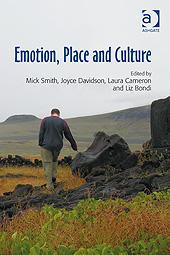
Mick Smith is a Professor and Queen's National Scholar at Queen's University, holding joint appointments in the Department of Philosophy and the School of Environmental Studies within the Faculty of Arts and Science. He earned his Ph.D. in Environmental Values from the University of Stirling (1993), following earlier degrees in Ecology and European Thought. His research integrates environmental ethics, social theory, and phenomenology to explore nature-culture intersections, including emotional geographies, ecological sovereignty, and tourism ethics. Education: Ph.D. (1993): University of Stirling, UK M.Phil (1988): North Staffordshire Polytechnic, UK M.A. (1988): Thames Polytechnic, UK B.Sc. H. (1982): University of York, UK Research Focus: Smith investigates how humans interpret and value environments through hermeneutics, ethics, and emotion. His six key areas include environmental hermeneutics, ethics, social-theoretical frameworks, emotional mediation of environmental responses, political theory, and tourism ethics. Advising & Grants: Supervises graduate students in Philosophy and Environmental Studies. His grants and collaborative projects focus on ecological ethics and sustainability. He co-edits Emotion, Space and Society and contributes to interdisciplinary environmental studies. Affiliations: Founding Editor of Emotion, Space and Society ; contributor to the Center for Humans and Nature.
Remko Van Hoek serves as Professor of Practice in the Department of Supply Chain Management at the Sam M. Walton College of Business, University of Arkansas. He teaches Sourcing and Procurement courses across undergraduate, master's, and doctoral programs. Prior to joining the University of Arkansas, Dr. Van Hoek held academic positions in Europe and served as a visiting professor at Cranfield School of Management, complemented by extensive industry experience as a supply chain and procurement executive at global corporations including Nike, PwC, and The Walt Disney Company. He currently serves on the Council of Supply Chain Management Professionals (CSCMP) Board of Directors and acts as executive director of the CSCMP Supply Chain Hall of Fame hosted by the Walton College. Dr. Van Hoek's research centers on digital transformation in procurement and supply chain management, with particular focus on blockchain implementation, artificial intelligence applications, and sustainable sourcing practices. His work investigates how emerging technologies reshape procurement processes, supplier relationship management, and risk mitigation strategies. He explores innovative approaches to supplier diversity programs, ethical sourcing frameworks, and the strategic evolution of procurement from cost reduction to value creation. His research consistently bridges academic theory with industry practice through case studies from major corporations, developing actionable frameworks for practitioners facing digital disruption and sustainability challenges. Analysis of his 15 most recent publications (2023-2025) reveals dominant themes in AI-driven supply chain risk prevention, blockchain implementation for transparency, and sustainable supplier engagement. His work demonstrates consistent industry collaboration, drawing from case studies at Walmart, Moet Hennessy, and Bayer to address post-pandemic resilience challenges. A significant portion examines procurement's strategic evolution beyond transactional functions, with recurring emphasis on ethical considerations in digital transformation and the practical implementation barriers for emerging technologies in global supply networks. As a Professor of Practice, Dr. Van Hoek integrates executive-level industry experience into curriculum development and student mentorship. His industry-engaged teaching model includes guest lecturer programs connecting students with supply chain practitioners, as evidenced by his co-authored work on integrating industry insights into supply chain education. While specific grant funding details are not publicly documented, his leadership in the CSCMP Supply Chain Hall of Fame demonstrates commitment to professional development and industry-academia knowledge transfer. Dr. Van Hoek directs the CSCMP Supply Chain Hall of Fame initiative, which documents transformative contributions to supply chain management through interviews with industry pioneers and historical case studies. This platform serves as both an educational resource for Walton College students and a professional development tool for supply chain practitioners globally. The Hall of Fame preserves critical industry knowledge while highlighting contemporary innovations in supply chain strategy and technology implementation.
Christine Mahoney is a Professor of Public Policy and Politics and Chief Innovation Officer at the Frank Batten School of Leadership and Public Policy at the University of Virginia. She also serves as Director of the Tadler Program in Impact Investing in Appalachia, the UVA Environmental Institute-funded Climate Collaborative on Appalachian Renewable Energy & Resilience, and the EPA-funded Community Change project for economic development in Appalachia. Previously, she was an Assistant Professor at the Maxwell School of Syracuse University and Director of the Center for European Studies and the Maxwell EU Center. Dr. Mahoney earned her Ph.D. in Political Science from Pennsylvania State University in 2006, with fields of study in American politics, Comparative politics, and Research Methods & Statistical Analysis. She also completed her M.A. (2003) and B.A. (2001) in Political Science and International Politics, respectively, at Pennsylvania State University. Professor Mahoney specializes in social justice advocacy, activism, and direct action through social entrepreneurship. Her research focuses on how advocates shape public policy, with particular attention to lobbying strategies in powerful political systems like the United States and the European Union. She has conducted extensive fieldwork in seven conflict zones across Asia, Africa, Eastern Europe, and Latin America, studying the rights of forcibly displaced people and proposing innovative solutions through social entrepreneurship. Her work bridges political science with practical applications in impact investing and refugee integration, creating tangible pathways for social change through entrepreneurial approaches. Professor Mahoney's scholarly output reveals an evolution from comparative studies of advocacy systems to practical applications of social entrepreneurship for forcibly displaced populations. Her early work established foundational knowledge about lobbying in transatlantic political systems, while her more recent research has shifted toward actionable solutions for global displacement crises and sustainable community development. This trajectory demonstrates her commitment to translating academic insights into real-world impact, particularly through the lens of social entrepreneurship and impact investing. Fulbright Fellow Visiting Scholar at Oxford National Science Foundation grant recipient Emerging Scholar award from the American Political Science Association UVA's Public Impact-Focused Research Award Through Social Entrepreneurship at UVA (SE@UVA), which she founded and led for a decade (2011-2021), Professor Mahoney has mentored over 80 student social enterprise teams and supported more than 100 social entrepreneurs with over 38,400 hours of pro-bono consulting. She has secured $37.7 million in funding for programs addressing social and environmental challenges, including the Tadler Program in Appalachia that has made significant strides in advancing rural policy and economic development. Her work demonstrates a consistent commitment to connecting academic research with practical applications that address pressing social problems. Professor Mahoney leads several significant initiatives including the Refugee Investment Network, where she serves as fellow and advisor, and multiple UVA-based programs focused on social entrepreneurship, impact investing, and community development. Her interdisciplinary approach brings together policy experts, social entrepreneurs, impact investors, and community stakeholders to develop innovative solutions to complex social problems, particularly in the areas of refugee integration and rural economic development in Appalachia.