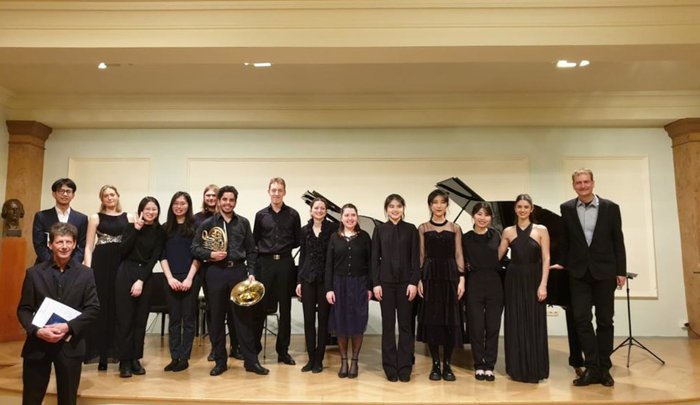
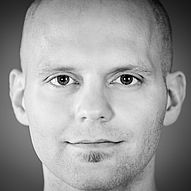
Susanne Moldenhauer is a faculty member at the University of Music Würzburg , specializing in Vocal Music, Opera Performance, and Song Interpretation . She is affiliated with the Department of Vocal Music, Opera School, and Song Interpretation , where she contributes to teaching and advising in classical voice disciplines. Her research and instructional focus centers on classical vocal pedagogy, opera training, and interpretive techniques for art song. She maintains an email contact at susanne.moldenhauer@hfm-wuerzburg.de and offers consultation by appointment.
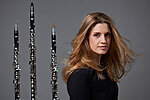
Prof. Nicola Jürgensen is a distinguished German clarinetist and Professor of Clarinet at Faculty 1 of Folkwang University of the Arts in Essen, Germany. She also serves as Dean of Faculty 1 and is a Confidential Lecturer for the German Academic Scholarship Foundation. Her career seamlessly integrates performance, education, and artistic leadership. She is the Artistic Director of WDR 3 Campus Concerts and a board member of the Folkwang University Foundation. Professor of Clarinet, Folkwang University of the Arts (2018–present) Dean, Faculty 1 Artistic Director, WDR 3 Campus Concerts Board of Directors, Folkwang University Foundation Principal Clarinet (former), WDR Symphony Orchestra Cologne (2001–2018) Regular coach, German National Youth Orchestra (2020–present) Nicola Jürgensen's research and artistic interests center on clarinet performance, chamber music, and contemporary repertoire. She is deeply committed to historical performance practice, evidenced by her recordings on basset clarinet, and to expanding the global reach of classical music through international masterclasses and festivals. Her work bridges traditional European repertoire and modern experimental works, including performances in avant-garde operatic productions. She has collaborated with leading orchestras and ensembles worldwide, from Berlin and Leipzig to New York, Bangkok, and Auckland. Her recent artistic output reveals a strong focus on rediscovered works (e.g., Wilms' concerto), contemporary compositions (e.g., Kancheli, Zwilich), and cross-cultural collaborations (e.g., German Masters Music Festival in Thailand). She emphasizes pedagogical innovation and performance excellence, mentoring students who now hold principal roles in Germany’s top orchestras. Her recordings and performances consistently highlight expressive depth, technical mastery, and scholarly engagement with historical instruments and arrangements. Scientific and Artistic Awards: Mozart Prize, Wiesbaden Mozart Society German Music Competition Soloists' Prize (1999) Germany Radio Promotion Prize (2002) Nicola Jürgensen has been instrumental in guiding numerous students into prestigious orchestral positions and leads the ensemble 'Folkwang Clarinets' with her students. She holds multiple leadership roles in academic and artistic institutions and continues to perform as a guest principal clarinetist with major orchestras like the Mahler Chamber Orchestra and NDR Elbphilharmonie Orchestra. Her involvement in grants and funding appears indirect through institutional roles and festival organization. She is actively involved with several artistic initiatives, including the 'Spannungen' festival, WDR 3 Campus Concerts, and international masterclass programs. Her ensemble collaborations and educational outreach reflect a sustained commitment to excellence, innovation, and accessibility in classical music.
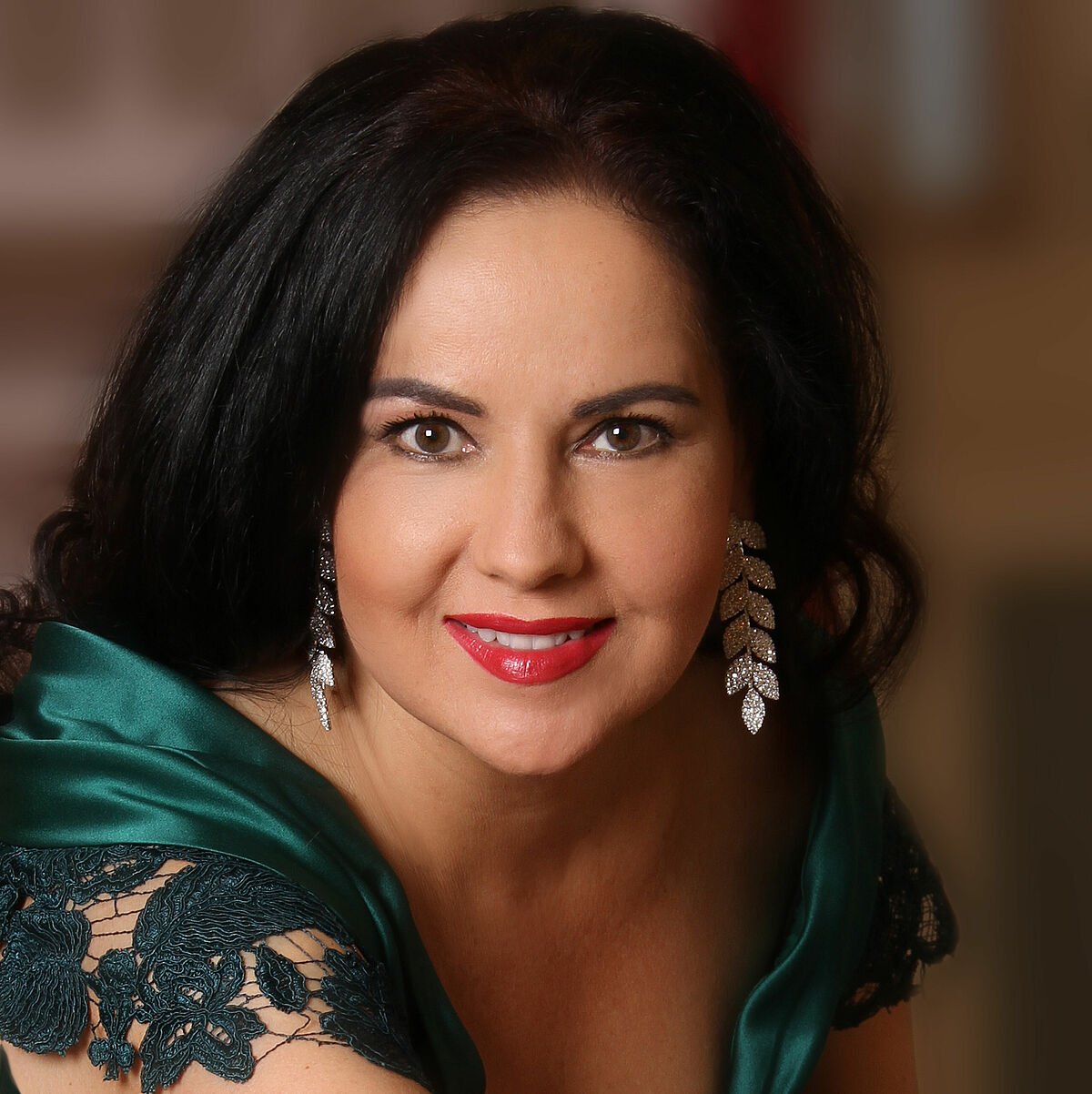
Hermine May is a Romanian-born mezzo-soprano and faculty member at the University of Music and Drama in Rostock since 2020. She has established herself internationally through performances in dramatic opera repertoire, notably portraying roles like Carmen, Amneris, and Ortrud at prestigious venues such as La Scala di Milano and opera houses in Copenhagen and Shanghai. Her artistic collaborations include work with renowned conductors like Zubin Mehta, Raffael Frühbeck de Burgos, and Teodor Currentzis. She has achieved significant success on the concert platform, performing works by Mahler, Verdi, Brahms, and Wagner. Specializes in dramatic mezzo-soprano roles Active in international opera and concert stages Teaches vocal performance at the university level Collaborated with major orchestras and conductors
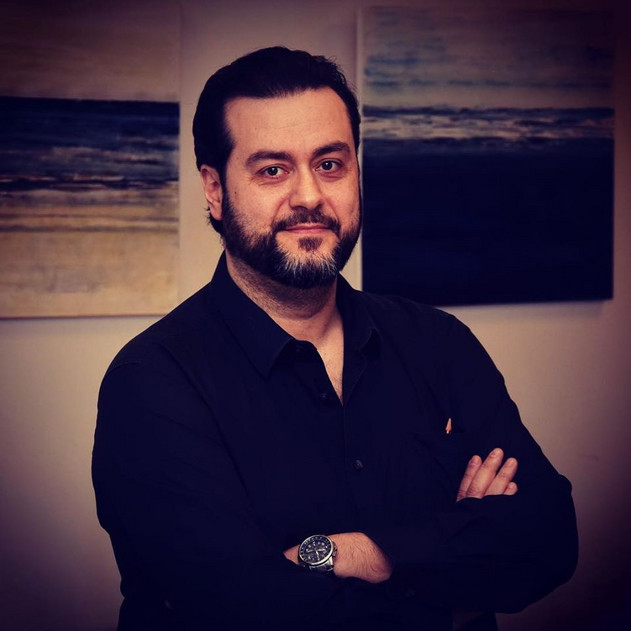
Christof Weiß is a Professor for Computational Humanities at the CAIDAS / Institute of Computer Science, Julius-Maximilians-Universität Würzburg (JMU), Germany. He serves as Head of the DFG-funded Emmy Noether group on Computational Analysis of Music Audio Recordings: A Cross-Version Approach. His academic journey includes previous positions as Visiting Researcher at University Télécom Paris (2021), Visiting Lecturer at Karlsruhe University of Music (2020, 2021), and Research Assistant at International Audio Laboratories Erlangen (2015-2022) and Fraunhofer Institute for Digital Media Technology (2012-2015). His educational background encompasses a PhD in Media Technology from University of Technology Ilmenau (2017), Concert Diploma in Composition from Würzburg University of Music (2012), Physics Diploma from University of Würzburg (2012), and Music Diploma in Composition from Würzburg University of Music (2011). This unique combination of technical and artistic training forms the foundation of his interdisciplinary research approach. Weiß's research operates at the critical intersection of computer science and musicology, developing novel computational methods for analyzing musical structures in audio recordings. His work bridges technical audio processing with musicological insights, creating methodologies for tonal analysis, key estimation, and cross-version comparison of musical performances. His approach combines deep learning techniques with music theory to extract meaningful patterns from large music corpora, enabling new forms of musicological corpus studies that were previously impossible. His recent publications reveal a clear research trajectory toward integrating advanced machine learning with fundamental musicological questions. The consistent theme across his work involves analyzing classical music structures through computational lenses, with particular emphasis on cross-version consistency in performances, tonal complexity measurement, and developing datasets that support computational musicology. His publications span both highly technical audio processing journals and musicology-focused venues, demonstrating his commitment to bridging these disciplines. Best paper award at the 4th conference on Computational Humanities Research (CHR), 2023 KlarText award for science communication of the Klaus Tschira Foundation, 2018 2nd prize at Festival Pablo Casals composition competition, Prades (France), 2013 Youth Cultural Advancement Award (Kulturförderpreis) of the city of Amberg, Germany, 2011 As principal investigator of the DFG Emmy Noether group, Weiß leads a multidisciplinary research team investigating computational analysis of music audio recordings through a cross-version approach. His research has secured significant funding including the prestigious Emmy Noether program, supporting doctoral and postdoctoral researchers working on various aspects of music information retrieval and computational humanities. His collaborative network spans institutions across Europe, including University Télécom Paris, Queen Mary University of London, and multiple German research centers. Weiß leads the Computational Humanities research group at CAIDAS, which focuses on developing computational methodologies for music analysis with particular emphasis on classical repertoire. The lab creates specialized datasets (including the Wagner Ring Dataset and Schubert Winterreise Dataset), develops algorithms for structural music analysis, and applies these tools to address musicological questions that require computational scale and precision. Their work bridges the gap between technical audio processing capabilities and humanities research questions, creating new pathways for understanding musical structure and evolution.
Prof. Dr. Florian Freitag is a Professor of American Studies at the University of Duisburg-Essen (Germany) since 2019, specializing in Transnational American Studies, Canadian Studies, and Theme Park Studies. His academic journey includes a PhD in North American literatures from the University of Constance (Germany) in 2011, followed by postdoctoral research at the Obama Institute, JGU Mainz. His educational background includes: 1998-2005: Student of English and French, University of Konstanz, Germany 2002-2003: Exchange student, Department of American Studies, Yale University 2006-2011: Doctoral Student, Department of Literature, University of Konstanz 2009: Visiting Scholar, University of British Columbia, Vancouver, Canada 2015-2016: Visiting Scholar, CityTech (CUNY), New York, USA Freitag's research interests span Transnational American Studies, Canadian Studies, Popular Culture, Theme Park Studies, Periodical Studies, Performance Studies, and Hurricane Katrina studies. His work explores the intersections of cultural representation, spatial theory, and transnational flows, with particular attention to how American culture travels and transforms in global contexts. He has made significant contributions to understanding theme parks as cultural spaces that negotiate national identity, transnational influences, and historical narratives through spatial design, narrative construction, and visitor experience. His publications reveal a strong focus on how themed spaces mediate cultural understanding across national boundaries. His scholarship demonstrates how popular culture forms like theme parks serve as important arenas for cultural work that often goes unrecognized in more traditional academic contexts. His work examines the political dimensions of themed environments, the adaptation of classical mythology in global theme parks, and how cities like New Orleans are represented across different media forms. Among his notable scientific contributions are his books The Farm Novel in North America: Genre and Nation in the United States, English Canada, and French Canada, 1845-1945 (Camden House 2013), Popular New Orleans: The Crescent City in Periodicals, Theme Parks, and Opera, 1875-2015 (Routledge 2021), and Key Concepts in Theme Park Studies: Understanding Tourism and Leisure Spaces (Springer 2023), which established him as a leading scholar in interdisciplinary theme park studies. Freitag has also been active in academic service, including co-editing special issues and volumes on intersectionality, Chinese theme parks, and transnational approaches to North American regionalism. His work demonstrates a commitment to interdisciplinary approaches that bridge literary studies, cultural geography, and media studies, with significant contributions to understanding cultural representation in themed environments.
Michael Symmons Roberts is Professor of Poetry at Manchester Metropolitan University, within the Department of English, Faculty of Arts and Humanities. A renowned poet, librettist, and broadcaster, he holds a degree in Philosophy and Theology from Oxford University and was formerly Executive Producer at BBC Religion & Ethics. Full Name: Michael Symmons Roberts Position: Professor of Poetry Institution: Manchester Metropolitan University Department: Department of English Field: Poetry and Creative Writing His research interests center on modern and contemporary poetry, with a particular focus on intersections between poetry and theology, science, music, and broadcast media. He is deeply engaged in exploring how poetic form interacts with spiritual, scientific, and ethical questions, often through collaborative and interdisciplinary projects. Michael’s recent publications and creative works reflect a sustained exploration of spiritual and existential themes. His poetry collections such as Drysalter and Ransom , radio dramas like Paradise Lost and Utopia , and choral works including Quickening and The Birds of Rhiannon demonstrate a consistent engagement with religious symbolism, myth, and the human condition. His works are frequently shortlisted for major literary prizes, highlighting their critical acclaim. Among his many honors are the Forward Poetry Prize (twice), the Costa Poetry Prize, the T.S. Eliot Prize shortlist (five times), the Jerwood Award for Non-Fiction, and the Sandford St. Martin Award. He is a Fellow of the Royal Society of Literature and a trustee of the Royal Literary Fund. Forward Poetry Prize for Best Collection (2013, 2004) Costa Poetry Prize (2013) T.S. Eliot Prize Shortlist (2001, 2004, 2013, 2017, 2021) Fellowship of the Royal Society of Literature (2014) Whitbread Poetry Award (2004) Eric Gregory Award (1988) BBC Audio Drama Awards (2013, 2014) He supervises PhD students in poetry and creative writing, teaches campus and online workshops, and is active in public engagement through performances, radio broadcasts, and commemorative poetry projects. His collaborations with composer James MacMillan have resulted in major commissions for the BBC Proms, Royal Opera House, and Welsh National Opera, underscoring his impact across literature and music. He has not been associated with any formal research lab but leads creative teams in interdisciplinary performance and literary projects.
Prof. Katharina Thoma is a renowned opera director currently serving as Head of the Opera School at the University of Music Würzburg . She also holds the positions of Deputy Chair of the Music Academy and Dean of Studies . With a career spanning major European opera houses including the Royal Opera House Covent Garden and Glyndebourne Festival, she specializes in blending historical accuracy with modern theatrical innovation. Studied piano at Lübeck University of Music Resident director at Dortmund Opera (2011-2014) Visiting professor at Graz University of Music (2018) Freelance director since 2008 Katharina Thoma's research and practice focus on opera stage direction , scenic training for singers , and historical opera interpretation . Her work spans from Baroque masterpieces to contemporary political operas, emphasizing: Contextual authenticity in period-specific productions Modern reinterpretation of classical works Interdisciplinary approaches to staging Integration of visual and musical elements Training of next-generation opera performers Exploration of war-related themes in opera Notable productions include: 2024: Johann Strauss' The Bat (University of Music Würzburg) 2023: De Falla's El retablo de Maese Pedro 2022: Britten's The Rape of Lucretia 2019: Schönberg's Pierrot lunaire 2007: European Opera Directing Competition Finalist Her artistic contributions have been recognized with: Second Prize at the European Opera Directing Competition 'Camerata Nuova' (2007) Katharina Thoma actively mentors young singers and develops innovative opera productions at the University of Music Würzburg's Opera School. Her recent work includes: Wagner operas debut (2019/20 season) Collaboration with composers like Richard Jones and Christof Loy Participation in renowned festivals (Munich Biennale, Glyndebourne) The Opera School under her leadership focuses on comprehensive training combining: Historical performance practices Contemporary staging techniques Technical vocal training Interdisciplinary collaboration
Ann-Katrin Zimmermann is an apl. Professor (non-tenured professor) at the Musicological Institute within the Faculty of Philosophy at the University of Tübingen. She has held this position since 2018, following her time as a private lecturer from 2012-2018. In addition to her academic work, she serves as a dramaturg at the Gewandhaus Leipzig since 2013 and has teaching assignments at LMU Munich, Felix Mendelssohn Bartholdy University of Music and Theatre, and Leipzig University since 2012. Her educational background includes: Habilitation (2012) on "Forms of slow movements in the classical cycle" Promotion/PhD (2006) on "Studies on medieval three-part harmony" Master's degree in musicology, philosophy and art history from University of Tübingen and University of Oxford (1998-2003) Professor Zimmermann's research spans multiple eras and aspects of music history and theory. Her work focuses particularly on polyphony of the 12th and 13th centuries, keyboard music from the 15th-18th centuries, early German-language music terminology, and the works of Heinrich Schütz, composers of the Viennese classics, and Richard Strauss. She has made significant contributions to the fields of organology, instrumentation, music iconography, and 19th-century symphonies, with particular interest in cross-temporal aspects of genre, form, and composition. Her extensive publication record shows a consistent focus on historical music analysis, particularly examining compositional strategies across different periods. Her recent work has increasingly focused on Richard Strauss and Mozart, while maintaining her longstanding interest in early music traditions and terminology. She has published numerous articles in prestigious journals and contributed to important edited volumes in musicology. Professor Zimmermann is actively involved in the academic community: Member of the Society for Music History in Baden-Württemberg since 2009 Member of the DHV since 2012 Throughout her career, Zimmermann has balanced academic research with practical musical experience. She has been a bassoonist and leader of various vocal and instrumental ensembles since 1998, and served as a church musician from 1997-2014. Her work as a dramaturg at the Gewandhaus Leipzig since 2013 demonstrates her commitment to connecting scholarly research with contemporary musical practice.
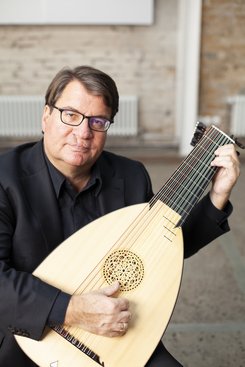
Joachim Held is a Professor of Historical Lute Instruments at the Bremen University of the Arts (Hochschule für Künste Bremen) since 2010. He also teaches at the Royal Conservatory in The Hague since September 2007. Born in Hamburg in 1963, Held received his musical training at the Schola Cantorum Basiliensis under Eugen Dombois and Hopkinson Smith, graduating in 1988 with a Diploma in Early Music. His educational background includes studies with Jürgen Hübscher at the Karlsruhe University of Music from 1988 to 1990, where he completed his artistic final examination. In 1990, he won second prize at the Concours Musica Antiqua of the Flanders Festival in Bruges, launching his international career. Joachim Held is renowned for his expertise in historical lute instruments and early music performance. His research interests span across: Historical Lute Performance Practice Baroque Music Repertoire Renaissance Music Historical Performance Techniques Early Music Instrumentology Lute Musicology Held has built an impressive discography of solo recordings focusing on lute music from various historical periods and regions. His recordings show a particular focus on German, Italian, French, Austrian, Polish, and English lute repertoire from the Renaissance and Baroque periods. His 2006 CD "Erfreuliche Lautenlust" with works by Austrian Baroque composers for Baroque lute earned him the prestigious Echo Klassik 2006 award for the best solo recording in the 17th/18th century category. His notable awards include: Echo Klassik 2006 for the best solo recording in the 17th/18th century category Second prize at the Concours Musica Antiqua of the Flanders Festival in Bruges (1990) As an active performer, Joachim Held has maintained a vibrant international career since the early 1990s. He has performed regularly under the direction of Nikolaus Harnoncourt since 1993 and with Il Giardino Armonico (Milan) since 1992. He has participated in productions of major operas including Francesco Cavalli's "La Calisto" and Monteverdi's "L'Incoronazione di Poppea." His concert activities span across Europe, Africa, Japan, and South America, with performances at major festivals and venues. Held is also involved in academic activities including symposia on early music topics, such as the symposium "John Dowland's Activities on the Continent" held at the HfK Bremen in April 2022. He is scheduled to participate in a Lute Symposium at the Bremen University of the Arts on September 22nd-23rd, 2025.
Ari Rasilainen is a Professor of Orchestra Conducting at the University of Music Würzburg (HfM Würzburg) , where he teaches and mentors students in the art of orchestral conducting. He is renowned as one of the outstanding conductors of his generation, with a distinguished international career spanning decades. His expertise includes classical music, opera, and chamber music performance. Current role: Professor at HfM Würzburg Email: ari.rasilainen@hfm-wuerzburg.de Location: Hofstallstraße, Room H 003 Rasilainen studied under legendary conductors such as Jorma Panula at the Sibelius Academy in Helsinki and Arvid Jansons in Berlin. His early career included positions as concertmaster of the Helsinki Philharmonic Orchestra's second violins (1980–1986) and chief conductor roles with orchestras in Finland, Norway, and Germany, including the Lappeenranta City Orchestra, Tampere Philharmonic Orchestra, Norwegian Radio Orchestra Oslo, and German State Philharmonic Orchestra of Rhineland-Palatinate. He has collaborated extensively with leading German radio orchestras (e.g., Berlin Radio Symphony Orchestra, Frankfurt Radio Symphony Orchestra) and international ensembles like the Slovenian Philharmonic, Orchestre de la Suisse Romande, and Tonkünstler Orchestra of Lower Austria. His discography includes over 50 recordings, highlighting works by composers such as Kurt Atterberg, Aulis Sallinen, and Siegmund von Hausegger.
Prof. Andreas Hotz serves as Music Director of the Opera School at the University of Music Würzburg since the summer semester of 2021. He is recognized as one of the outstanding conductors of his generation with an impressive career spanning major opera houses and orchestras across Europe and beyond. His professional trajectory includes: General Music Director at Theater Osnabrück (2012/2013 season onwards) First Kapellmeister at Staatstheater Mainz and Pfalztheater Kaiserslautern Lecturer in orchestral conducting at Frankfurt University of Music and Performing Arts (2005-2013) Extensive guest conducting engagements across Germany, Israel, Australia, Poland, Russia, and Korea Prof. Hotz's artistic focus centers on both preserving classical traditions and rediscovering neglected works. His repertoire spans from Mozart to contemporary compositions, with particular emphasis on bringing forgotten masterpieces back to contemporary audiences. His conducting portfolio includes major productions such as Elektra, Otello, Tannhäuser, Idomeneo, Così fan tutte, and Tristan und Isolde, alongside numerous opera premieres including Lohengrin, Falstaff, Dr. Faust (Busoni), Tosca, La Bohème, and Fidelio. His commitment to musical recovery is exemplified through projects like the excavation of Albéric Magnard's French opera GUERCOEUR, named 'Rediscovery of the Year 2019' by the opera world, and his recordings of works by Christian Westerhoff and Hans Gál's 'Lied der Nacht' (nominated for 'Opus Klassik'). His major recognitions include: Prizes at Sir Georg Solti International Conducting Competition and German Conductors' Competition Young Conductor of the Year nomination by Opernwelt (2015) German Record Critics' Prize for 'Beethoven in Stalingrad' DVD recording Multiple nominations for excellence in musical recovery and performance Prof. Hotz has collaborated with prestigious orchestras including the Bremen Philharmonic, Düsseldorf Symphony, Melbourne Victoria Symphony Orchestra, and Israel Sinfonietta. His 2015 concert tours with the Osnabrück Symphony Orchestra through Volgograd, Moscow, Kyiv, and Minsk promoted international understanding through music. Mentored by figures including Pierre Boulez, he continues to influence the next generation of musicians through his position at the University of Music Würzburg while maintaining an active international performance schedule.
Aris Argiris is a Professor at the University of the Arts in Berlin, Faculty of Performing Arts, where he has been teaching since 2016. Born in Athens, he is a distinguished baritone opera singer with an international career spanning major opera houses across Europe, North America, and Asia. His educational background includes studies in marketing and languages, saxophone and music theory, as well as singing with Kostas Paskalis, Frangiscos Voutsinos, and Despoina Kalafati in Athens. In 1999, he received the Maria Callas scholarship and continued his vocal studies in the master class of Prof. Daphne Evangelatos at the University of Music and Theater in Munich. As a performer, Argiris has appeared at prestigious venues including the Royal Opera House Covent Garden, Arena di Verona, Semperoper Dresden, and Theatre de la Monnaie. His repertoire spans dramatic Italian and German works including roles such as Wotan in Wagner's Ring cycle, Scarpia in Tosca, Rigoletto, Amonasro in Aida, and Escamillo in Carmen (which he performed in the first 3D opera film). His notable awards include: Maria Callas scholarship in Athens (1999) International Singing Competition of the Chamber Opera Schloss Rheinsberg winner (2002) Best Young Artist of Greece by the Greek Association of Music and Theatre Critics (2007) Professor Argiris maintains an active performance schedule alongside his teaching responsibilities, with engagements planned through 2026 at major opera houses including Staatstheater Darmstadt, Landestheater Linz, and Tiroler Landestheater Innsbruck. He has worked with renowned conductors such as Zubin Mehta, Christian Thielemann, and Kurt Masur and continues to be a significant figure in both the performance and educational aspects of opera.
Christian Günther is a Lecturer in Ensemble Leadership at the Hochschule für Künste Bremen. He conducts the Ensemble 'piano possibile' and leads courses such as Ensembleleitung für Kompositionsstudierende and Ensemble-/Chorleitung (KPA). Since 2008, he has served as Deputy Chorus Director at the Hamburg State Opera and assisted at Bayreuther Festspielen (2017) and Opernhaus Zürich (2018). His expertise spans contemporary music, opera direction, and ensemble training. Education: Studied orchestral conducting at the Munich University of Music and Performing Arts (1994–2000) Research & Roles: Specializes in new music performance, having premiered student operas like 'Unterwegs' (2002–2007). Maintains active roles with the NDR-Chor and Atelier Neue Musik ensemble. His work bridges classical training with contemporary artistic innovation. Grants & Collaborations: Regular guest conductor engagements and festival participations highlight his industry connections. Current teaching focuses on practical ensemble leadership for composition students.
Dr. Patrick Ehrich, born in 1976, is a Senior Academic Councillor at the University of Regensburg's Institute of Musicology and Chair of Music Education and Music Didactics since 2019. His career spans music education, composition, and research, with a focus on classroom management, 20th-century music, and speech training. He has held teaching positions at the University of Regensburg since 2006 and is active in teacher training. Education: MA in Music/English (University of Regensburg, 2001); Double Subject Teaching Qualification in Music (University of Regensburg & Catholic Church Music Regensburg, 2005) Dr. Ehrich's research explores music education quality, cognitive activation in teaching, and pop/rock genre pedagogy. His work includes empirical studies on classroom singing and interdisciplinary assessments of teaching standards. Recent publications analyze teaching quality dimensions across six school subjects and aesthetic-emotional learning integration. He contributes to journals like Zeitschrift für Erziehungswissenschaft and mip-journal , covering topics from Taylor Swift to classical works by Handel and Wagner. Awards: Finalist in national "School-Practical Composing and Arranging" competition (2011); Siemens Arts Program Fellow (2004) Dr. Ehrich supervises teacher training internships and participates in national conferences including the German Association for Research in Music Education and Society for Empirical Educational Research. He co-authors textbooks like Tonart: Musik erleben - reflektieren - interpretieren (2024).
Polina Nazaykinskaya is an Adjunct Lecturer in Composition at the Conservatory of Music, Brooklyn College, and a teaching artist at the New York Philharmonic Composers Bridge Program. Born in Togliatti, Russia, she began formal music studies at age four and composed her first large-scale work at 14. Doctoral studies in composition at CUNY Graduate Center with Tania León Mus.M. at Yale School of Music with Christopher Theofanidis and Ezra Laderman B.M. at Tchaikovsky Conservatory College in Moscow (composition under Konstantin Batashov and violin) Her compositions span chamber, orchestral, art songs, film music, musical theater, opera, and symphony, including her recent work April Song . Her music has been performed by prestigious ensembles like the Russian National Orchestra, Minnesota Orchestra, and Yale Philharmonia Orchestra. Collaborations with conductors such as Osmo Vänskä and Teodor Currentzis highlight her professional standing. Award recipients include the Charles Ives Scholarship and the Paul & Daisy Soros Fellowship . Her work has received critical acclaim in The New York Times and other major publications.