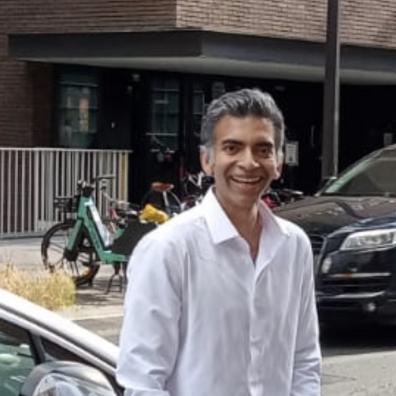
Mustafa Aksu is a Professor at Istanbul University's Faculty of Law, Department of Civil Law. His research spans Civil Law , Intellectual Property Law , Information Law , and EU Legal Harmonization . He has advised 26 theses and published extensively on digital rights, family law, and obligations law. Research Interests: Focus on AI and law, copyright exhaustion in digital markets, EU-Turkey legal alignment, domain name regulation, and protection of computer programs. Publications: Recent works include AI's legal frameworks (2023), medical informatics law (2021), and digital exhaustion doctrine (2016). His research emphasizes cross-border IP enforcement and EU court precedents. Contact: Email aksum@istanbul.edu.tr | Office: Hukuk Fakültesi Binası, İkinci Kat, Oda No: 38, Beyazıt, Istanbul, Turkey.
Tatsuhiro Ueno serves as Professor at Waseda University's Faculty of Law and School of Law, specializing in Intellectual Property Law, Copyright Law, and Information Law. He currently holds leadership positions as Director of the Institute of Comparative Law (since 2024) and President of SARLIB (Society for Administration of Remuneration for Public Transmission by Libraries or Similar Facilities). With extensive international experience including visiting scholar positions at Ludwig Maximilian University of Munich and the Max Planck Institute for Intellectual Property and Competition Law, Professor Ueno has established himself as a leading authority in copyright law reform and international intellectual property matters. Professor Ueno earned his Master of Law from Kyoto University following undergraduate and graduate studies there. His academic career includes teaching positions at Rikkyo University College of Law and Politics and Seijo University Faculty of Law before joining Waseda University in 2013, where he now contributes to shaping Japan's legal education landscape. His research focuses on the critical intersection of intellectual property law with emerging technologies, particularly artificial intelligence systems and digital platforms. Professor Ueno has pioneered work on text and data mining exceptions, copyright limitations in digital environments, and creator-oriented copyright frameworks. His scholarship bridges theoretical analysis with practical policy development, influencing both domestic legislation and international copyright discourse. His recent publications demonstrate a concentrated focus on AI and copyright law, with numerous articles examining the legal challenges posed by generative AI systems, text and data mining exceptions, and the evolving landscape of copyright protection in the digital era. Professor Ueno's work consistently addresses the balance between protecting creators' rights and ensuring public access to knowledge. KDDI Foundation Book Publishing Grant (January 2025) for "Creator-Oriented Copyright System" Professor Ueno actively participates in numerous government committees shaping Japan's copyright law, including serving as Chairman of the Law and Computers Society and as a longstanding member of the Copyright Subcommittee of the Council for Cultural Affairs. His research is supported by multiple grants from the Japan Society for the Promotion of Science, including ongoing projects examining human portraits and voices in the AI age (2025-2029) and AI and intellectual property rights systems (2024-2029). He regularly presents at international forums including WIPO Summer Schools, ATRIP conferences, and copyright forums worldwide, establishing his reputation as a key thought leader in global copyright policy development.
Bruno Deffains serves as Professor of Economic Sciences at Paris-Panthéon-Assas University, where he directs the Master's program in Law and Economics, the Center for Research in Economics and Law (CRED), and the Digital Transformation of Law and Legaltech University Diploma. His academic leadership extends to the Yale-ESSEC-Paris 2 Summer School in Law and Economics and the Legal Security Index initiative. Affiliated with the Faculty of Law, he bridges economic theory with legal practice through extensive research and institutional engagement. Doctor of Economic Sciences (1991) Accreditation to Supervise Research (Habilitation à Diriger des Recherches, 1993) Deffains' research centers on the Economics of Law, examining how legal frameworks influence economic outcomes across diverse domains. His work in Public Economics investigates tax compliance and redistribution mechanisms, while Industrial Economics research analyzes competition policy and market regulation. Recent scholarship explores digital transformation's impact on legal practice, compliance systems, and the cognitive functions of law. He employs rigorous economic modeling to dissect liability rules, dispute resolution mechanisms, and the comparative performance of legal traditions, consistently linking theoretical insights to real-world policy challenges in antitrust, corruption, and judicial efficiency. His publication trajectory reveals deepening engagement with contemporary legal-economic intersections, evolving from foundational work on liability and legal origins toward cutting-edge analysis of digitalization and compliance. The consistent thread across his oeuvre is the application of microeconomic principles to institutional design, with increasing emphasis on behavioral dimensions and technological disruption in legal systems. Institut Universitaire de France Fellowship (2013) As academic director of the Law and Economics Master's program and CRED research center, Deffains oversees numerous doctoral theses and research initiatives. His role in the trilateral Summer School with Yale Law School and ESSEC cultivates international scholarly exchange, while leadership in the French Association of Law and Economics and European Association of Law and Economics demonstrates sustained commitment to field-building. External responsibilities include chairing the Commercial Practices Examination Commission and advising the National Consultative Commission on Human Rights, reflecting policy-relevant scholarship grounded in empirical economic analysis. Deffains leads the Center for Research in Economics and Law (CRED), a prominent research unit specializing in institutional analysis of legal systems. Through the Summer School in Law and Economics and Digital Transformation initiatives, he fosters interdisciplinary collaboration between economists, legal scholars, and practitioners. His directorship of the Legal Security Index project connects academic research with practical legal metrics development, while involvement with the Club des Juristes' digital pole positions him at the forefront of technology-law convergence debates.
Mathias Risse is the Berthold Beitz Professor in Human Rights, Global Affairs and Philosophy at Harvard Kennedy School (HKS), where he also directs the Carr-Ryan Center for Human Rights and the Program on the Ethics of Emerging Technologies. He teaches at HKS, Harvard College, and the Harvard Extension School, and is affiliated with the Philosophy Department and the Weatherhead Center for International Affairs. Education & Career: Risse earned his PhD from Princeton University (2000) and previously taught at Yale University. He has held visiting roles at the National University of Singapore, NYU Abu Dhabi, and Leuphana University (Germany). He joined Harvard in 2002 and currently resides in Somerville, MA. Research Focus: His work bridges political philosophy and technology ethics, addressing global justice, human rights, climate change, and the societal impacts of AI. Key themes include Indigenous philosophies, digital governance, and ethical trade frameworks. Recent books include Political Theory of the Digital Age (2023) and On Trade Justice (2019). Awards & Leadership: Risse organizes international conferences fostering cross-cultural collaboration, directs the McCloy Fellowship program for German students, and co-hosts the Carr Center’s Justice Matters podcast. His writings on race, protest, and technology ethics have shaped public discourse. Grants & Outreach: He advises on AI ethics, climate policy, and global governance. Recent projects include analyses of solar geoengineering, Indigenous rights frameworks, and the societal implications of advanced AI systems. Labs/Teams: Central roles in the Edmond J. Safra Center for Ethics, the Carr Center for Human Rights Policy, and interdisciplinary initiatives on emerging technologies.
Cynthia Horne is a Professor in the Political Science Department at Western Washington University, where she has been since 2006. Her research focuses on Transitional Justice, Post-Soviet Politics & Economics, and International & Comparative Political Economy. She holds a Ph.D. from the University of Washington and an M.S. in Foreign Service from Georgetown University. Prior to academia, she worked in international development with the U.S. Agency for International Development and the European Bank for Reconstruction and Development, focusing on banking and financial reforms in the Former Soviet Union. Research Highlights: Analysis of lustration policies and their impact on democratization in post-communist states. Fieldwork Experience: Extensive engagement in Hungary, Indonesia, Poland, and Romania. Teaching & Advising: Teaches courses on International Political Economy, Globalization, and Comparative Political Economy. Serves as faculty advisor for joint majors in Political Science/Economics and Philosophy, Politics & Economics. Advises students considering professional Master’s programs in international relations. Research Trends: Her work examines how states address historical injustices post-authoritarian transitions, with a focus on lustration mechanisms, institutional trust, and policy effectiveness. Recent studies explore informal justice mechanisms in Eastern Europe and the temporal dynamics of transitional justice measures. Grants & Collaborations: Conducted research during a 2012-2013 sabbatical as a visiting scholar at the University of Bucharest and the Center for the Study of Democracy in Bulgaria. No specific grants mentioned, but her work is supported by institutional affiliations and academic collaborations. Labs/Teams: Engaged in interdisciplinary projects with political economists and legal scholars focused on transitional justice, though no dedicated lab is explicitly noted.
E. Lea Johnston is the Clarence J. TeSelle Professor and Professor of Law at the University of Florida Levin College of Law. She is a leading expert in mental health law, criminal law, and criminal procedure, with her work appearing in top law reviews and peer-reviewed interdisciplinary journals. Her scholarship has been widely cited by legal scholars, appears in leading treatises, and has received attention from courts and social scientists. Her theory of sentencing forms part of the theoretical framework for the standard textbook for forensic psychiatry fellowship programs. Professor Johnston earned her A.B. from Princeton University and her J.D. (cum laude) from Harvard Law School. Before entering academia, she worked as a litigation associate at Arnold & Porter LLP in Washington, D.C., served as director of the Maryland Public Interest Research Group, and clerked for Judge Richard Tallman of the U.S. Court of Appeals for the Ninth Circuit. Johnston's research primarily focuses on the intersection of mental health and criminal justice. Her work examines how mental illness impacts criminal responsibility, competence to stand trial, sentencing, and diversion programs. She has made significant contributions to understanding diminished responsibility doctrines, insanity defenses, mental health courts, and assisted outpatient treatment. Her scholarship often employs interdisciplinary approaches, integrating legal analysis with insights from psychology, psychiatry, and behavioral sciences to develop more humane and just approaches to mentally ill offenders within the criminal justice system. Her publications demonstrate consistent scholarly output with significant impact across multiple disciplines. The trajectory of her work shows an evolution from foundational analyses of legal standards for mentally ill defendants toward more comprehensive reform proposals addressing systemic issues in how the criminal justice system handles mental illness. Elected to American Law Institute (2020) Former Chair of Criminal Justice Section, American Association of Law Schools Former Chair of Law and Mental Disability Section, American Association of Law Schools Member of Legal Scholars Committee, American Psychology-Law Society Professor Johnston has significantly influenced both legal scholarship and practice through her theoretical contributions and practical recommendations. Her work on sentencing theory for mentally ill offenders has been incorporated into forensic psychiatry training materials, demonstrating real-world impact beyond academia. While specific grant information isn't detailed in the provided text, her extensive publication record and leadership roles suggest substantial research support throughout her career. Her scholarship serves as a critical bridge between legal doctrine and clinical mental health practice, offering frameworks that balance therapeutic needs with justice considerations.
Robin D. Muhammad is an Associate Professor and Chair of the Department of African American Studies at Ohio University's College of Arts and Sciences. He is based in Bentley Annex 315 on the Athens Campus and contributes significantly to both teaching and research in African American history and labor studies. Education: Ph.D. in History, Carnegie Mellon University M.S. in History and Social Policy, Carnegie Mellon University B.A. in History and Spanish, University of California at Davis Dr. Muhammad is a labor historian whose research focuses on African American industrial workers, particularly in 20th-century California. His work explores the intersections of race, labor, federal policy, and technological change, with a special emphasis on shipbuilding communities and political movements like Garveyism. He teaches foundational courses such as Introduction to African American Studies , African American History I and II , and specialized topics including History of the Black Worker and The Black Press in North America . His recent publications reflect a strong trajectory in African American labor history, civil rights movements, gender and work, and transnational Black politics. Themes across his articles include racial segregation in wartime industries, Black women's labor activism, the Double V Campaign, and the global reach of Garveyism. His forthcoming book, Arsenal of Liberation , synthesizes much of this research into a comprehensive study of African American workers in the San Francisco Bay Area. Scientific Awards and Honors: Special 1804 Library Endowment, Ohio University (2007) Arts and Humanities Junior Faculty Endowment, Ohio University (2007) Goldman Award for Excellence in Graduate Teaching, Carnegie Mellon University (2004) Carnegie Scholar, Carnegie Mellon University (1996–2000) Dr. Muhammad is actively involved in university service, having co-chaired the MLK Celebration Committee and served on the University Curriculum Council, the Advisory Board for the Global Studies Program, and the Black Alumni Reunion Advisory Committee. He has secured research grants and contributed extensively to academic encyclopedias and journals, establishing himself as a key scholar in African American labor and political history. No information is available about advisees or laboratory/team affiliations.
Professor Jamie Wilson serves in the Department of History at Salem State University, teaching courses including African American history, U.S. history, and specialized seminars on jazz culture and civil rights movements. His academic credentials include: PhD in History from New York University MA in History from New York University BA in History from the University of Delaware Wilson's research centers on Black History, Race and Ethnicity Studies, and United States History, with particular emphasis on 20th-century African American experiences. His work examines civil rights activism, cultural expressions like jazz, religious practices in Harlem, and health politics in Black communities, revealing systemic inequalities and community resilience. His publication trajectory from 1999-2023 shows consistent scholarly engagement with African American history through diverse formats. Books address foundational movements like the Civil Rights era and Black Panther Party, while journal articles explore nuanced topics including magico-religious practices, student protests, and health disparities in Harlem, demonstrating methodological range across social, cultural, and political history. No scientific awards are documented in available sources. While specific grant funding isn't cited, his extensive publication record and course development in African American history suggest sustained research activity. The absence of student listings or lab descriptions indicates either unpublicized mentorship or primary focus on independent scholarship.
Charles E. Jones is a Professor at the University of Cincinnati, specializing in African-American studies. He has held academic roles at Old Dominion University and Georgia State University, where he developed programs in Black studies and served as founding chair of the Department of African-American Studies. His research focuses on the Black Panther Party and African-American political thought, with a forthcoming book on the Party's history. Jones is a board member of the National Council of Black Studies (NCBS) and has received numerous awards for his scholarship and service. Education : Ph.D. (Washington State University, 1985), M.A. (University of Idaho, 1979), B.A. (Fayetteville State University, 1976) Grants : PI of NCBS grants including #SRS 007770 ($201,748) and #NCBS 2018-2020 ($80,133) His teaching includes courses on Black Politics and Intro to Africana Studies. Jones has conducted extensive archival research and interviews for his work on the Black Panther Party, aiming to publish a comprehensive history by 2016. Awards : Ford Foundation Fellow, Outstanding Faculty Awards (ODU, 1992), Fulbright-Hays Fellow (1989)
Aili Mari Tripp is Vilas Research Professor of Political Science at the University of Wisconsin-Madison, with a joint appointment in Gender & Women's Studies. She serves as director of the Women's Studies Research Center and has held prestigious professorships including the Wangari Maathai Professorship and Evjue-Bascom Professorship. Education: Ph.D. in Political Science, Northwestern University, 1990 M.A. in Middle East Studies, University of Chicago, 1985 B.A. in Political Science, University of Chicago, 1983 Professor Tripp's research focuses on gender and politics, women's movements in Africa, transnational feminism, African politics (particularly Uganda and Tanzania), autocracies in Africa, and the informal economy. Her current projects examine women's political leadership in African autocracies and women's political citizenship and conflict globally. She takes a comparative approach to understanding why some countries advance women as political leaders and promote women's rights more effectively than others. Tripp's scholarly work demonstrates consistent thematic development across her publications, moving from examinations of the informal economy in Tanzania to comprehensive studies of women's movements across Africa, and most recently to analyses of women's rights in Arab autocracies. Her research combines extensive fieldwork across multiple African countries with theoretical contributions to comparative politics and gender studies. Major Awards and Honors: L. Carl Brown Book Prize (2021) for Seeking Legitimacy: Why Arab Autocracies Adopt Women's Rights African Politics Conference Group best book award (2016) for Women and Power in Postconflict Africa Victoria Schuck Award from the American Political Science Association African Studies Association Public Service Award (2014) Axel Springer Prize from the American Academy in Berlin Professor Tripp has received significant research funding from the National Science Foundation, Carnegie Corporation, Social Science Research Council, Fulbright Program, and other major funders. She has served as president of the African Studies Association and vice president of the American Political Science Association. As part of the editorial team for the American Political Science Review and co-editor of Politics & Gender , she has significantly influenced scholarly discourse in her fields. Her leadership extends to directing the Women's Studies Research Center and co-editing the University of Wisconsin Press book series Women and Gender in Africa .
Lee C. Bollinger is Columbia University's President Emeritus and Seth Low Professor of the University, holding full-time faculty status. He earned a B.S. from the University of Oregon (1968) and J.D. from Columbia Law School (1971). His career spans over five decades in academia and legal leadership, marked by transformative initiatives in higher education. As Columbia's longest-serving Ivy League president (2002–2023), he spearheaded projects like the Manhattanville campus expansion, the Columbia Climate School, and global engagement through the Columbia Global Centers. A renowned First Amendment scholar, Bollinger authored influential works on free speech and affirmative action, notably leading the landmark Grutter v. Bollinger case. His academic contributions are complemented by institutional innovations, including the Knight First Amendment Institute and the Data Science Institute. Bollinger has received prestigious awards for his advocacy in civil rights and educational equity, including the Clark Kerr Award and Alexander Hamilton Medal. Education B.S., University of Oregon, 1968 J.D., Columbia Law School, 1971 His research focuses on constitutional law, free speech, and higher education policy. He has pioneered interdisciplinary academic programs and global partnerships while championing affordability and diversity in university admissions. Bollinger’s leadership extended to infrastructure development, including award-winning sustainable buildings like the Manhattanville campus and the Vagelos Education Center at Columbia’s Medical Center. His recent writings explore the intersection of universities, free speech, and authoritarianism, reflecting his ongoing commitment to academic freedom. Major grants and initiatives under his tenure include the Columbia World Projects and the revival of Columbia’s intercollegiate athletics program. His legacy encompasses over 10 authored/co-edited books and extensive media engagement, addressing contemporary legal and societal challenges. Bollinger currently teaches courses on free speech at Columbia Law School while maintaining roles in public policy and governance.
Han-Ru Zhou is an Associate Professor of Public Law at the Université de Montréal's Faculty of Law and an Associate Research Fellow at the Institute of Commonwealth Studies in London. He teaches constitutional law courses to students across various programs including the Bachelor of Law, Master of Law, and interdisciplinary programs in international studies and industrial relations. Education: DPhil in Law, University of Oxford (2013) LLM, Harvard Law School (2005) LLB, Université de Montréal (2001) Han-Ru Zhou's research focuses on constitutional law, comparative law, and legal theory. His work examines constitutional principles, judicial review, unwritten constitutional norms, and the historical development of constitutional systems. He has made significant contributions to understanding Canadian constitutional law within the broader Commonwealth context, with particular attention to the legacy of the Judicial Committee of the Privy Council. His scholarly approach bridges theoretical legal scholarship with practical constitutional challenges facing contemporary societies. Zhou has published extensively in leading international journals including The Law Quarterly Review, International Journal of Constitutional Law, American Journal of Comparative Law, and American Journal of Legal History. His publications reveal consistent engagement with comparative constitutional analysis, particularly examining Canadian constitutional development in relation to other Commonwealth jurisdictions. His scholarly work demonstrates expertise in constitutional interpretation, judicial review standards, and the theoretical foundations of constitutional governance. Scientific Recognition: Sproul Research Fellow at the University of California at Berkeley Boulton Fellow at McGill University Continuous research funding since 2014 from major Canadian research councils Co-Editor-in-Chief of the Review of Constitutional Studies Han-Ru Zhou has supervised multiple graduate students through their thesis work, including Beurrier, Baptiste (LL.M. on transitional justice in Sri Lanka) and Boucher, Marc-André (LL.D. on municipal authority and immunity). His research has been supported by significant grants from major Canadian research councils. Zhou also serves on the Independent Advisory Board for Supreme Court of Canada Judicial Appointments, demonstrating his standing in the Canadian legal community. Before his academic career, Zhou served as a law clerk to Justice Marie Deschamps at the Supreme Court of Canada (2006-2007) and practiced as a corporate lawyer at a national law firm. He is a member of the Québec Bar. From 2018 to 2020, he served as President of the Harvard Club of Québec.
Rachel F. Moran is a Professor of Law and Director of the Education Law Program at Texas A&M University School of Law. Her work focuses on civil rights, education law, and legal policy affecting Latino communities. She has contributed extensively to constitutional and property law scholarship. Expertise: Civil Rights, Education Law and Policy, Latino Legal Policy Institutional Roles: Director of Education Law Program (Texas A&M University School of Law) Rachel's research explores intersections between race, immigration, and political representation, with a focus on marginalized communities' legal rights. Her work also addresses challenges in legal education stemming from privatization, polarization, and technological change. Recent articles like The Perennial Eclipse (2024) and A Perfect Storm for Legal Education (2023) demonstrate her cross-cutting analysis of societal forces impacting law and education. These publications span topics including property law's influence on education equity and structural challenges in legal pedagogy. Notable Honors: Fellow, Hagler Institute (2021–Present) Albert Nelson Marquis Lifetime Achievement Award (2018) Hispanic Business Magazine's 100 Most Influential Hispanics (2011) Distinguished Teaching Award, UC Berkeley (pre-2021)
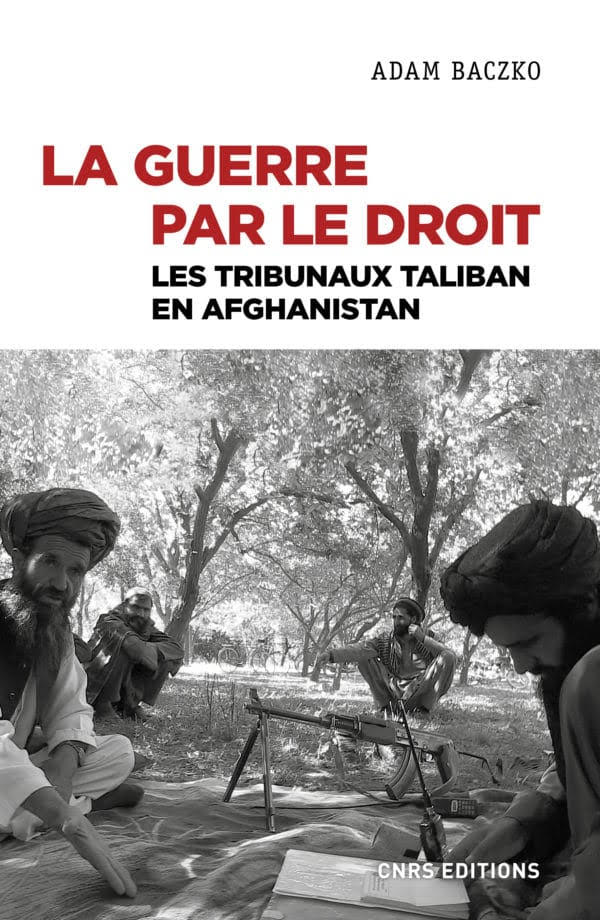
Adam Baczko is a Research Fellow at CNRS (Centre National de la Recherche Scientifique) affiliated with Sciences Po's Center for International Studies (CERI) in Paris. His work focuses on the formation of legal institutions by armed movements in contexts of armed conflict, with particular expertise on Afghanistan and Syria. Baczko has conducted extensive fieldwork in conflict zones across Afghanistan, Syria, Iraq, and the Democratic Republic of Congo, examining how non-state actors establish judicial systems during civil wars. His research interests include the sociology of civil wars, Taliban tribunals in Afghanistan, armed conflict in Syria, and Western military interventions. Baczko approaches these topics through a comparative lens, analyzing how legal institutions function in multiple conflict settings to identify patterns and variations in how armed movements establish governance structures. His fieldwork methodology emphasizes direct observation and interviews in dangerous environments, which he argues provides epistemological privilege over desk-based research on conflict zones. Baczko's publications reveal a consistent focus on how legal systems operate in civil wars, particularly examining the Taliban's judicial apparatus in Afghanistan as a case study of how armed movements use law as a strategic tool. His work demonstrates how the Taliban's courts contributed to their eventual victory by providing accessible, reliable justice that contrasted with the failures of the Western-backed government system. His comparative approach extends to Syria, where he has documented similar dynamics of competing legal orders. Order, Conflict and Violence Fellow at Yale University Visiting Fellow at the Institut für die Wissenschaften vom Menchen (IWM) Trajectories of Change Fellow at the Zeit-Stiftung Ebelin und Gerd Bucerius Baczko has been actively involved in the ERC program 'Social Dynamics of Civil Wars' since 2016, working under Gilles Dorronsoro at the University of Paris 1 Panthéon-Sorbonne. His multilingual capabilities (French, English, Spanish, Polish) facilitate his comparative research across multiple conflict zones. He has been a vocal advocate for the importance of fieldwork in conflict zones despite security challenges, arguing that direct observation provides irreplaceable insights into how civil wars function.
Haque Shahzaman is an HDR lecturer specializing in Urdu language at the Institut National des Langues et Civilisations Orientales (INALCO) in Paris, France. He serves as Program Director for Master and Bachelor programs in Urdu and is Co-Head of AXIS 1 "Linguistic policies, representation, multilingualism" within the PLIDAM research team. Previously, he held leadership positions including Co-Director of the South Asia and Himalayan Department (2019-2022), Deputy Director (2016-2019), and Head of International Relations (2016-2020). His research focuses on family language policies, sociolinguistics of Urdu, Urdu-speaking diaspora in Europe, and Urdu as a language of Islam in the Indian subcontinent. He has conducted extensive research on language transmission in immigrant families, particularly examining how Urdu-speaking communities maintain their linguistic heritage in European contexts. His work also explores linguistic landscapes in refugee camps, Urdu journalism in France, and the sociopolitical context of Urdu in India. Dr. Shahzaman's recent publications demonstrate a strong focus on the intersection of language, migration, and identity. His research reveals how emotional factors, religious practices, and spatial contexts shape family language decisions among Urdu-speaking immigrants. He has documented the challenges of Urdu language maintenance in France, analyzed linguistic invisibility in multilingual environments, and examined the role of Urdu in clandestine labor markets. His scholarly work consistently addresses the tension between language preservation and adaptation in diaspora communities. As an active academic, Shahzaman participates in numerous international conferences, regularly publishes in peer-reviewed journals, and has edited significant volumes on family language policy. He serves on the Inalco Press Committee and has contributed to the ANR LIMINAL research project on linguistic and intercultural mediations in international migration contexts. His work bridges theoretical linguistics with practical applications for language education and policy.