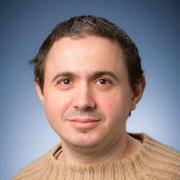
Dr. Emanuele Pelucchi is a Research Professor and Head of the Epitaxy and Physics of Nanostructures (EPN) group at Tyndall National Institute, University College Cork. His research focuses on quantum technologies, epitaxial growth (MBE/MOVPE), quantum dot physics, and photonic integration. He leads a world-class MOVPE facility, pioneering developments in site-controlled quantum dots and entangled photon emitters. Pelucchi's work has resulted in over 129 international publications with an h-index of 28 (Scholar), including contributions to Nature Photonics and NanoLetters. He has held a Science Foundation Ireland Principal Investigator grant since 2006, establishing his group at Tyndall in 2007. His expertise spans semiconductor nanostructures, including III-V materials and quantum optics. Pelucchi actively reviews for top journals and chairs international conferences, contributing to the field's academic discourse. His MOVPE laboratory is recognized as a key resource for III-V materials, serving as a secondary supplier to the UK National Centre for III-V Materials. Pelucchi's research bridges fundamental physics and applied photonics, driving advancements in quantum information processing and optoelectronic devices.
Alaa Alameldeen is an Associate Professor in the School of Computing Science at Simon Fraser University (SFU), part of the Faculty of Applied Sciences. Previously, he worked as a Research Scientist at Intel Labs (2006–2020) and held an Adjunct Faculty position at Portland State University (2008–2018). He earned a PhD in Computer Sciences from the University of Wisconsin-Madison (2006), and earlier degrees from Alexandria University, Egypt. His research focuses on computer architecture, including memory systems (processing-in-memory, cache/memory compression, security), energy-efficient architectures, and hardware-software co-design for machine learning. He advises PhD and MSc students in these areas and teaches advanced computing science courses. Key contributions include innovations in memory hierarchies, cache compression techniques, and mitigating hardware vulnerabilities. His work has been published in top conferences (e.g., ISCA, MICRO, HPCA) and patented in areas like near-memory processing and error correction. Alameldeen currently leads a research group exploring secure and high-performance memory architectures. He has supervised multiple graduate students, with many progressing to roles at leading tech companies and academic institutions.
Fred A. Kish is the MC Dean Distinguished Professor and Director of the NC State Nanofabrication Facility at North Carolina State University. He holds a Ph.D. in Electrical Engineering from the University of Illinois at Urbana-Champaign (1992). His research focuses on Photonics, Optoelectronic Devices, and Compound Semiconductor Materials , with emphasis on photonic integrated circuits (PICs), quantum information science, and semiconductor material engineering. He has co-invented foundational technologies for LEDs, VCSELs, and large-scale PICs, contributing over $7B in commercialized products. His leadership includes roles at Hewlett-Packard, Agilent Technologies, and Infinera Corporation, where he pioneered optical communication systems. Dr. Kish is a Fellow of the National Academy of Inventors, Optica, and IEEE, and a member of the National Academy of Engineering. His awards include the IEEE David Sarnoff Award and the John S. Risley Entrepreneur of the Year Award. He has authored 170+ peer-reviewed publications, 135+ patents, and 5 book chapters. His current work drives advancements in wide bandgap semiconductors and photonic integration for next-generation communications and sensors. Labs/Teams: Directs the NC State Nanofabrication Facility, a hub for semiconductor innovation. Collaborates on the CLAWS Hub, a $39.4M CHIPS Act-funded regional semiconductor innovation initiative.
Donald Lie is a Professor and the Keh-Shew Lu Regents Chair in Electrical and Computer Engineering at Texas Tech University's Whitacre College of Engineering. His research focuses on low-power RF/analog integrated circuits, System-on-a-Chip (SoC) design, and interdisciplinary applications in medical electronics, biosensors, and biosignal processing. PhD, Electrical Engineering, California Institute of Technology (1995) MS, Electrical Engineering, California Institute of Technology (1990) BS, Electrical Engineering, National Taiwan University (1987) Donald Lie's research bridges RF/analog circuit design with biomedical engineering, emphasizing millimeter-wave power amplifiers for 5G systems and non-contact vital signs monitoring using software-defined radio (SDR). His work explores CMOS FD-SOI, GaN HEMTs, and SiGe technologies for high-efficiency, linear RF front-end modules and wearable biosensors. His 15 most recent publications focus on 5G communication systems , millimeter-wave power amplifier design in CMOS FD-SOI and GaN , digital predistortion techniques, and non-contact biosensors . These works highlight advancements in wideband amplifiers for 5G FR2 bands and wireless power transfer for medical devices. Institute of Electrical and Electronics Engineers (2017) Excellent Paper Award Winner (2019) Best Student Poster Paper Award Winner (2019) Donald Lie has secured NSF Student Travel Grants for conferences like RFIC 2022 and 2020. He leads the RF/Analog System-on-a-Chip (SoC) Design Lab , which develops innovative solutions for 5G RF front-ends and biomedical sensing systems.
Rachee Singh is an Assistant Professor of Computer Science at Cornell University, leading the sysphotonics research group. She concurrently serves as an Amazon Scholar within the SageMaker Hyperpod teams, specializing in large-scale machine learning infrastructure development for cloud environments. Her research focuses on photonic interconnect systems for server-scale, rack-scale, and long-haul communication networks, targeting performance optimization for distributed machine learning and planet-scale cloud workloads. Key specialties include optical network design, fault-tolerant WAN architectures, and energy-efficient datacenter interconnects, with strong emphasis on practical deployment in real-world systems. Her group bridges theoretical networking principles with applied AI infrastructure challenges. Recent publications demonstrate concentrated innovation in photonic network optimization for ML workloads, particularly in wavelength management, collective communication algorithms, and chip-to-chip photonic fabrics. This work spans optical physics, distributed systems, and machine learning, revealing a trajectory toward sustainable, high-performance AI infrastructure. Scientific recognition includes: Amazon Research Award (2023) Cisco Research Award Dr. Singh actively mentors graduate researchers including Jonathan Aimuyo, Byungsoo Oh, and Arjun Devraj, whose co-authored publications form the core of her group's output. Research funding is secured through competitive grants from the NSF (including a $1M award for chip-to-chip photonic fabrics), SRC/DARPA JUMP 2.0 program, Cisco, and Cornell's Atkinson Center for Sustainability. The sysphotonics group operates as Cornell's hub for photonic network systems research, developing programmable integrated photonics solutions and collaborating with Amazon on SageMaker Hyperpod for next-generation ML infrastructure.
Muhannad S. Bakir is the Dan Fielder Professor in the School of Electrical and Computer Engineering at Georgia Institute of Technology, and Director of the 3D Systems Packaging Research Center . His research focuses on heterogeneous integration , electrical/photonic interconnects , thermal modeling , and electronics for healthcare , with over 180 publications and 12 U.S. patents. Research areas include: Advanced cooling and power delivery for emerging systems Biosensor-CMOS integration 2.5D/3D IC packaging Polylithic integration technology Nanofabrication for microsystems Scientific accolades include: 2018 IEEE EPS Exceptional Technical Achievement Award 2013 Intel Early Career Faculty Honor Award 2012 DARPA Young Faculty Award 2011 IEEE CPMT Outstanding Young Engineer Award Best paper awards at IEEE ECTC, IITC, and CICC 2020 Georgia Tech Doctoral Thesis Advisor Award His lab explores integrated 3D systems with emphasis on co-design of thermal, power, and electrical networks for machine learning and healthcare applications.
Saugata Ghose is an Assistant Professor in the Siebel School of Computing and Data Science at the University of Illinois Urbana-Champaign (UIUC), with affiliate appointments in the Coordinated Science Laboratory and the Department of Electrical and Computer Engineering. His research focuses on data-centric computing, processing-in-memory architectures, memory systems, and hardware-software co-design. He holds a Ph.D. and M.S. in Computer Engineering from Cornell University and dual B.S. degrees in Computer Engineering and Computer Science from SUNY Binghamton. His academic positions include roles at Carnegie Mellon University (2016–2020) and postdoctoral research at CMU (2014–2016). Ghose has received notable awards such as the 2024 HPCA Hall of Fame, 2023 Intel Rising Star Faculty Award, and the 2019 CMU Wimmer Faculty Fellowship. His work has been supported by grants from NSF, Samsung, and Sandia National Laboratories. Research Interests: His group (ARCANA) explores data-centric architectures, processing-in-memory (PIM), and emerging memory technologies. Key areas include architectures for smart cities, autonomous systems, and genomics. He teaches courses on computer architecture and systems organization. Awards: HPCA Hall of Fame (2024) Intel Rising Star Faculty Award (2023) CMU Wimmer Faculty Fellow (2019) Cornell ECE Teaching Assistant Award (2013) Grants & Projects: NSF $2M for semiconductor advancements Samsung/Sandia grants for PIM programming models UIUC/ZJU DREMES collaboration on neuromorphic PIM Labs/Teams: Leads the ARCANA Research Group, focusing on reimagining computing around new applications. Collaborates with ASAP and HYBRID centers for co-design tools and neuromorphic architectures.
Suresh K. Sitaraman is a Regents' Professor and Morris M. Bryan, Jr. Professor in Mechanical Engineering at the Georgia Institute of Technology's George W. Woodruff School of Mechanical Engineering. His primary research focuses on Computer-Aided Engineering (CAE) and Design, manufacturing processes, micro/nano engineering, and mechanics of materials. He leads the Computer-Aided Simulation of Packaging Reliability (CASPaR) Lab and is involved in flexible hybrid electronics research through the Flexible Electronics Center . Dr. Sitaraman holds a Ph.D. from The Ohio State University (1989), M.A.Sc. from the University of Ottawa (1985), and B.E. from the University of Madras (1982). His research includes developing novel techniques like fixtureless magnetic actuation for interfacial fracture testing, compliant micro-scale interconnects for stress mitigation, and synchrotron X-ray diffraction analysis for through-silicon vias (TSVs). He has pioneered studies on carbon nanotube forests' mechanical properties and reliability challenges in 3D microsystems. His awards include the NSF CAREER Award (1997-2002), ASME Fellow designation (2004), and Sigma Xi Sustained Research Award (2008). He has authored over 150 publications and holds multiple patents on compliant interconnect technologies and packaging reliability solutions. Key Research Themes: Micro/nano-scale material characterization, physics-based predictive modeling, flexible electronics, 3D integration, and thermal management. Labs/Initiatives: CASPaR Lab ( caspar.gatech.edu ), Flexible Hybrid Electronics Center. Industry Impact: Contributions to semiconductor packaging, wearable electronics, and advanced manufacturing techniques.
Eleonora Vacca is a PhD student and Research Fellow in the Department of Automatic Control and Computer Science (DAUIN) at the Polytechnic University of Turin. She holds a B.S. in Electronic Engineering from the University of Palermo (2018) and an M.S. in Electronic Engineering-Embedded Systems from Politecnico di Torino (2021). Her research focuses on digital hardware design, reliability engineering, reconfigurable devices, and AI applications in aerospace and safety-critical systems. She is a member of the Aerospace and Safety Computing Lab and the CAD - Electronic CAD & Reliability Group (DAUIN). Her work addresses challenges such as radiation effects mitigation in space missions, fault-tolerant AI accelerators, and real-time anomaly detection in satellite telemetry. She has contributed to projects like the RAMSES CubeSat-1 Development (2025-2026), funded by commercial contracts. In 2024, she won the Best Student Paper Award at the NEWCAS Conference for her research on radiation effects in space missions. Vacca collaborates on teaching, including assisting in the course 'Electronic Calculators' for Computer Engineering students. Her recent publications explore AI resilience in RISC-V ecosystems, radiation environment analysis for space missions, and gesture recognition systems for smart cities. She actively contributes to conferences such as the ACM International Conference on Computing Frontiers and the IEEE International Smart Cities Conference.
Abdullah Muzahid is an Associate Professor in the Department of Computer Science and Engineering at Texas A&M University (since August 2024), previously serving as an Assistant Professor there since August 2018. Prior, he held an Assistant Professor role at the University of Texas at San Antonio (2012-2018). He earned his Ph.D. from the University of Illinois at Urbana-Champaign (2012), focusing on architectural support for debugging concurrency bugs under Prof. Josep Torrellas. Education: Ph.D., Computer Science, University of Illinois at Urbana-Champaign (2012) M.S., Computer Science, University of Illinois at Urbana-Champaign (2009) B.S., Computer Science and Engineering, Bangladesh University of Engineering and Technology (2005) Research Interests: His work spans Computer Architecture , Systems , and Artificial Intelligence , with focus on multiprocessor architecture, parallel programming, debugging, and applying machine learning to system optimization. Recent projects include cache indexing via entropy estimation, DNN training acceleration, and hardware-software co-design for security. Awards: NSF CAREER Award (2017) Excellence in Research Award (UTSA, 2015 & 2017) W. J. Poppelbaum Award (UIUC, 2012) Intel Ph.D. Fellowship (2011) Grants & Advising: He leads NSF-funded projects on robust deep learning and stream processing systems. Advised 5 PhD graduates and currently mentors 4 PhD students. Served on program committees for ISCA, HPCA, MICRO, and as NSF panelist. Labs/Teams: Active in Texas A&M’s Computer Architecture group, collaborating on machine programming, hardware security, and AI-driven systems optimization.
Nicola Nicolici is a Professor in the Department of Electrical and Computer Engineering at McMaster University. His research focuses on methods and algorithms for the design of digital integrated circuits and systems, with significant contributions in manufacturing test, post-silicon validation and debug. His work has expanded to include embedded systems, low-energy computing, and custom hardware-accelerated computing systems. Professor Nicolici's research interests span multiple areas of digital system design and validation. His early work focused on manufacturing test methodologies and power-aware testing strategies for integrated circuits. More recently, he has made significant contributions to post-silicon validation techniques, including constrained-random stimuli generation, trace signal selection, and bit-flip detection. His research has evolved to address emerging challenges in embedded computing systems, low-energy design, and specialized hardware acceleration for various applications including deep neural networks and signal processing. His recent publications reveal a strong trend toward hardware acceleration for specialized computing tasks. The research spans matrix multiplication algorithms (Strassen and Karatsuba), memory system optimization (DDR5 calibration), FPGA-based radar processing, and neural network acceleration. His work consistently bridges theoretical algorithm development with practical hardware implementation considerations, particularly focusing on precision analysis, fault tolerance, and energy efficiency. The research demonstrates a clear progression from traditional digital circuit testing to more complex system-level validation and acceleration techniques. Professor Nicolici has been actively involved in teaching courses related to system-on-chip design and test, digital systems, and embedded systems. His teaching portfolio includes advanced courses such as System-on-Chip (SOC) Design and Test and Digital Systems Design , reflecting his expertise in the field. While specific grant information isn't detailed in the provided text, his extensive publication record suggests ongoing research funding support. His research has contributed significantly to the fields of digital circuit testing, post-silicon validation, and hardware acceleration. The work has practical applications in semiconductor manufacturing, embedded systems design, and specialized computing architectures. His recent focus on neural network acceleration and memory system optimization reflects the evolving landscape of computer architecture research.
Wenjing Rao is an Associate Professor at the Department of Electrical and Computer Engineering, College of Engineering, University of Illinois at Chicago (UIC). Her research focuses on VLSI test, fault-tolerance, reliability, and hardware security in emerging nanoelectronic systems. Education: Ph.D. in Computer Science from University of California, San Diego (2008) B.S. in Computer Science from Peking University (2001) Her work explores novel computation paradigms through physical unclonable functions (PUFs), defect-tolerant logic implementation, and scalable fault tolerance in many-processor arrays. Publications emphasize hardware security, reconfiguration strategies, and reliability challenges in nanoscale architectures. Notable honors include the 2017 Harold A. Simon Award for Excellence in Teaching and the 2012 NSF CAREER Award. She has contributed to key journals like IEEE Transactions on Computer-Aided Design and conferences including DATE, ASPDAC, and NANOARCH.
Klas Hjort is a Professor of Materials Science at Uppsala University's Ångström Laboratory , specializing in Microsystems Technology . He leads the microsystems technology program and has pioneered research in heterogeneous microsystems on stainless steel, flexible foils, and elastic substrates for biomedical applications and wireless sensor/actuator systems . Key projects: SSF robotic textiles , PERSIMMON smart patches Research themes: Microfluidic actuation , Liquid metal patterning , Stretchable electronics His recent publications focus on soft robotics , smart patches , and high-pressure microfluidic systems , with keywords spanning Microfluidics , Biomedical Engineering , and Stretchable Electronics . He collaborates extensively in robotic textiles , microvalve design , and liquid metal composites . Contact: klas.hjort@angstrom.uu.se
Jeff Zhang is an Assistant Professor in the School of Electrical, Computer and Energy Engineering at Arizona State University. He joined ASU in January 2023 after completing a postdoctoral fellowship at Harvard University. His research spans deep learning, computer architecture, embedded systems, and EDA, with particular emphasis on energy-efficient and fault-tolerant design for AI/ML systems and hardware accelerators. Education: Ph.D., New York University M.Eng., B.Eng., Hunan University Dr. Zhang's research bridges theoretical machine learning with practical hardware implementation, developing novel architectures that optimize performance, power consumption, and reliability. He has pioneered approaches for hardware acceleration of large language models, efficient sparse matrix operations, and novel memory technologies for AI workloads. His work has received multiple awards including IEEE Top Picks in Test and Reliability (2023) and IEEE Micro Best Paper Award (2022). His recent publications demonstrate a strong trend toward heterogeneous computing, with significant work in chiplet-based AI accelerators, photonic computing for AI, and 2.5D/3D integration techniques. The research spans from high-level compiler frameworks to circuit-level innovations, with a consistent theme of co-designing algorithms and hardware for optimal AI performance. His work on the SODA toolchain has been particularly influential in bridging Python to silicon. Scientific Awards: IEEE Top Picks in Test and Reliability, IEEE ITC, 2023 Best Paper Award, IEEE Micro, 2022 Best Paper Award Candidate, IEEE DATE, 2022 Best Presentation Award Nomination, ACM SIGDA DATE PhD Forum, 2020 Best Paper Award Nomination, IEEE VLSI Test Symposium, 2018 Ernst Weber Ph.D. Fellowship, New York University, 2015, 2016 Dr. Zhang actively mentors a diverse group of graduate and undergraduate students, with several alumni now working at leading technology companies including Apple, TSMC, and Ansys. His research is supported by prestigious grants from NSF, Sandia National Labs, and industry partners. He serves on technical program committees of numerous top conferences and has organized special sessions on emerging topics like Gen AI for Chip Design and LLM-Aided Design. Dr. Zhang leads a vibrant research group that collaborates extensively with industry partners and national laboratories. Current projects focus on next-generation AI hardware, including chiplet-based systems, photonic accelerators, and novel memory technologies for large language models. His group has developed several open-source tools and frameworks, including the SODA toolchain for bridging Python to silicon.
Daniel J. Sorin is a Professor of Electrical and Computer Engineering at Duke University's Pratt School of Engineering, where he also serves as Associate Chair of Education. He holds joint appointments in both the Electrical and Computer Engineering department and Computer Science department, and is recognized as a Bass Fellow for his contributions to education and research. His research focuses on computer architecture with specific expertise in memory systems, cache coherence protocols, fault tolerance, and verification-aware design. Dr. Sorin's work bridges theoretical computer architecture with practical implementations, often incorporating coding theory to solve architectural challenges. His research group has made significant contributions to automated protocol generation, hardware acceleration, and robot motion planning systems. Dr. Sorin's publications reveal a consistent focus on memory consistency models, cache coherence protocols, and verification techniques. His recent work has expanded into robot motion planning acceleration, FPGA resource management, and novel error correction techniques for emerging memory technologies. The trend shows increasing interdisciplinary work connecting computer architecture with robotics and machine learning applications. Program Chair of HiPEAC 2017 Co-chair of IEEE Micro's Top Picks selection committee (2016) Lois and John L. Imhoff Distinguished Teaching Award (2011) NSF CAREER Award recipient IEEE Micro Top Pick awards (2011, 2015) ACM Senior Member As an advisor, Dr. Sorin has mentored numerous PhD students who have gone on to successful careers at leading technology companies including Google, Microsoft, Oracle, and Nvidia. His research group maintains strong industry connections and has produced influential work in cache coherence protocols, memory systems, and fault-tolerant architectures. He has also authored the widely-used textbook 'A Primer on Memory Consistency and Cache Coherence' (2nd edition). Dr. Sorin leads an active research laboratory focused on next-generation computer architecture challenges, with ongoing projects in hardware acceleration, memory systems, and robot motion planning. His group collaborates with researchers across multiple disciplines including robotics, coding theory, and semiconductor design.