Joy S. Kaufman is a Professor in the Department of Psychiatry at Yale School of Medicine. She serves as Deputy Chair for Career Development, Director of the Yale Consultation Center, and Director of YaleEVAL. Her work focuses on large-scale evaluations of health service delivery systems in under-resourced communities, emphasizing community-based participatory research and stakeholder training. Education: PhD in Clinical and Community Psychology, DePaul University (1994) Postdoctoral Fellow, Yale University (1993) MA in Psychology, DePaul University BA in Psychology, Assumption College Dr. Kaufman specializes in health equity , trauma exposure in children , and program evaluation . Her research bridges public health , social justice , and behavioral health policy through rigorous methodologies. Recent publications highlight her work on opioid use disorder in obstetric care , perinatal substance use reporting , and system-level mental health evaluations . She employs latent class analysis and CBPR frameworks to address disparities. Scientific Awards: Fellow, American Psychological Association Fellow, Society for Community Research and Action Gold Medal, Substance Abuse and Mental Health Services Administration Exemplary Evaluation, American Evaluation Association As principal investigator, she has secured funding from the National Institute of Justice , PCORI , and Connecticut state agencies . Her leadership extends to training community members in evaluation methods and developing trauma-informed healthcare systems .
Terje Andreas Eikemo is a Professor at the Department of Sociology and Political Science , Norwegian University of Science and Technology (NTNU) , and Head of the CHAIN research center . His work focuses on the intersection of social inequality , public health , and global policy , emphasizing how socioeconomic factors like education , income , and welfare systems influence mortality , chronic diseases , and mental health . He combines theories from sociology , epidemiology , and medicine to address health disparities across diverse contexts, including pandemics , climate change , and migration . 2009: Prize for Young Researchers in the Humanities 2010: SINTEF Prize for Outstanding Research 2014: NTNU Star Program Eikemo has published extensively in top journals like The Lancet and BMJ Open , with research themes spanning social determinants of health , policy interventions , and global health equity . His work includes GBD studies , European Social Survey analyses , and refugee health assessments. He serves as Editor-in-Chief of the Scandinavian Journal of Public Health and collaborates with international bodies like WHO and UNESCO .
Santiago Barreda is an Associate Professor in the Department of Linguistics at the University of California, Davis, specializing in speech perception and phonetic analysis. His research examines how acoustic properties of speech convey speaker characteristics including age, gender, and physical attributes. Education: Ph.D. in Linguistics (Phonetics), University of Alberta, 2013 M.A. in Hispanic Studies (Language and Linguistics), University of Western Ontario, 2008 B.A. in Linguistics and Spanish Language and Literature, University of Western Ontario, 2006 Research Focus: Dr. Barreda employs behavioral experiments and statistical modeling to investigate perceptual mechanisms in speech recognition. His work bridges theoretical phonetics with practical applications, particularly in vowel normalization techniques and formant tracking algorithms. Key questions address how listeners extract speaker identity from acoustic cues and interpret social characteristics through vocal signals. Publication Trends: Recent publications (2020-2025) reveal three dominant themes: computational phonetic tools (FastTrack, phonTools), perception of social/physical speaker characteristics from children's voices, and interdisciplinary public health research on speech-related aerosol transmission. His work demonstrates strong methodological consistency in combining acoustic analysis with perceptual validation. Scientific Awards: No scientific awards were mentioned in the source material. Advising and Grants: The provided documentation does not specify graduate student advising roles or external grant funding. Technical Contributions: Dr. Barreda develops open-source phonetic analysis software including FastTrack (Praat-based formant tracking) and the phonTools R package, which have become standard resources in acoustic phonetic research.
Andreas Langfeld serves as a Researcher in the Department of Social Pedagogy within the Faculty of Philosophy at the University of Rostock. His academic work focuses on socio-educational frameworks with emphasis on family dynamics, child welfare, and institutional systems. His core research interests include: Socio-educational family research Biographical research methodologies Child protection frameworks Youth development systems Institutional analysis in social pedagogy Dr. Langfeld maintains speaking hours on Thursdays from 1:30 pm to 3:00 pm by prior registration via Stud.IP. Contact is available through his university email at andreas.langfeld@uni-rostock.de, with office location at August-Bebel-Str. 28, Room 4014, and phone +49 (0) 381 498 2644.
Guy Hoffman is Associate Professor and Associate Director of Undergraduate Affairs at Cornell University's Sibley School of Mechanical and Aerospace Engineering. He holds faculty appointments in Aerospace Engineering, Computer Science, Information Science, and Mechanical Engineering. Hoffman earned his Ph.D. in Human-Robot Interaction from MIT and M.Sc. in Computer Science from Tel Aviv University. His research explores computational, design, and social aspects of Human-Robot Interaction (HRI), with focus areas including: Embodied cognition for social robots Anticipation and timing in HRI Nonverbal behavior in human-robot collaboration Robotics for performing arts Non-anthropomorphic robot design Publications demonstrate interdisciplinary work spanning social robotics, adaptive interfaces, inclusive design, and AI education. Recent articles explore shadow-based interaction privacy, emotional conveyance through shape-changing interfaces, and cultural aspects of robot morphology. Major recognitions include: Andrew P. Sage Best Transactions Paper Award (IEEE, 2020) Dennis G. Shepherd Teaching Award (Cornell, 2019) Best Paper Award, IEEE/ACM HRI Conference (2015) His research group develops robotic platforms like Blossom and investigates human-robot collaboration in workspaces, inclusive play for children with mixed abilities, and open-source educational tools for AI literacy.
Konrad Kollnig is an Assistant Professor at Maastricht University’s Faculty of Law, specializing in the intersection of law and technology. He leads the RegTech4AI project, which combines legal and technical methods to address challenges in the AI and digital platforms sector. His academic background includes a PhD and MSc from the University of Oxford and a BSc from RWTH Aachen, with his PhD thesis winning the prestigious Stefano Rodotà Award 2024. Research focuses on market power analysis in digital platforms, ethical AI governance, and privacy-preserving technologies. He developed the TrackerControl app (200,000+ downloads) to expose app tracking practices. His work has influenced EU, OECD, US FTC, and other regulatory bodies, and been featured in Forbes, Wired, and New Scientist. Key achievements include winning the United Nations Privacy Competition 2022 and the Best Student Privacy Paper Award 2022. He holds a five-year RegTech4AI project grant (€2.1M) funding six researchers. Talks and collaborations span institutions like Georgetown University, CNIL, and the Council of Europe. His interdisciplinary approach bridges computer science, law, and policy to address systemic risks in digital ecosystems.
Besa Kadriu is an Associate Professor at the Contemporary Social Sciences Faculty of South East European University in Tetovo, North Macedonia. With a Doctor of Sciences in Public Governance and Administration (2015-2019), her work focuses on policymaking in multiethnic states, public administration reforms, and governance challenges. Native Albanian, C2 Macedonian, C1 English, and A2 German speaker Her research interests span public governance frameworks, integration challenges in Western Balkans, pension system sustainability, and youth migration dynamics. She has published extensively on policy implementation in post-conflict societies and institutional development. Recent publications demonstrate expertise in multiethnic governance (2016-2021), educational reforms (2015), and social inclusion policies (2019). Her work combines theoretical analysis with practical case studies from North Macedonia's political and administrative landscape.
Dr. Erin Ash is an Associate Professor in the Department of Communication at Clemson University , where she also serves as a Faculty Scholar in the Clemson University School of Health Research (CUSHR) and an Embedded Faculty Scholar at the South Carolina Department of Public Health. Ph.D. in Mass Communications, Pennsylvania State University (2013) M.A. in Media Studies, Pennsylvania State University (2010) B.A. in Communication, College of Charleston (2008) Her research focuses on media’s role in shaping public perceptions of social issues , particularly health behaviors and policies. Recent work examines reproductive health attitudes , racial stereotypes in sports media , and narrative persuasion for health policy support . She also explores intersectional representation in gaming and media-induced elevation for intergroup connectedness . Dr. Ash’s recent publications (2024–2025) emphasize social media’s impact on health communication , including teen pregnancy prevention , cross-cultural communication norms , and maternal health disparities . Earlier studies (2023–2015) analyze racialized athlete portrayals , binge drinking prevention , and media framing of public health crises . Award for Excellence in Service, Clemson University (2025) Top Faculty Paper, AEJMC (2011) Doctoral Award for Excellence in Communications, Penn State (2012)
Frank Chan is a Professor of Information Systems at ESSEC Business School in France, where he currently serves as Department Head of Information Systems, Decision Sciences and Statistics (2022-2025). He has been with ESSEC since 2013, progressing from Assistant Professor to Associate Professor and now Professor. His academic career focuses on the intersection of information systems, public administration, and organizational behavior. Dr. Chan earned his Ph.D. in Information Systems from Hong Kong University of Science and Technology (HKUST) in 2010 and completed his BBA in Information Systems and Finance from the same institution in 2003. His educational background provided the foundation for his research in technology implementation and electronic government. His research interests span electronic government, technology implementation, agile methodologies, and internet privacy. Dr. Chan's work examines how digital technologies transform public services, organizational processes, and citizen experiences. He investigates the human aspects of technology adoption, including leadership dynamics in agile teams, citizen satisfaction with e-government services, and privacy concerns in digital environments. His multidisciplinary approach combines insights from information systems, public administration, and organizational behavior. Analysis of Dr. Chan's publication record reveals a consistent focus on e-government systems and technology implementation, with increasing attention to agile development methodologies in recent years. His work demonstrates a progression from foundational technology adoption studies to more nuanced investigations of leadership dynamics, privacy concerns, and the societal impacts of digital initiatives. The interdisciplinary nature of his research bridges business, public administration, and technology domains. Pacific Asia Conference on Information Systems Best Associate Editor Award (2022) International Conference on Information Systems Outstanding Associate Editor Award (2019) MIS Quarterly Reviewer of the Year Award (2019) MIS Quarterly Reviewer of the Year Award (2018) Journal of Operations Management Ambassador Award (2017) Finalist for Journal of Operations Management Jack Meredith Best Paper Award (2012) As a Senior Editor for Information Systems Journal since 2021 (previously Associate Editor 2016-2020), Dr. Chan has significantly contributed to the academic community. He has served as Track Co-Chair for major conferences including International Conference on Information Systems and Pacific Asia Conference on Information Systems. His consulting work with United Nations ESCAP on digitalization of tax administrations in Asia demonstrates the real-world impact of his expertise. Dr. Chan teaches courses in Research Design, Quantitative Research Methods, and Digital Business at ESSEC.
Dr. Holly Doel-Mackaway is an Associate Professor at Macquarie Law School and a leading expert in children's rights, Indigenous studies, and international law. She co-leads the Children’s Rights, Participation and Protection Research Stream in Macquarie’s Faculty of Arts and serves as Co-Editor-In-Chief of the Australian Journal of Human Rights. Her interdisciplinary research focuses on advancing children’s rights globally, with a particular emphasis on Indigenous children’s participation in law and policy development. Dr. Doel-Mackaway holds a PhD in Law from Macquarie University and has extensive international experience with organizations like UNICEF and Save the Children. She teaches courses on Child and Elder Law, International Human Rights Law, and Research Methodologies. Recognized for her teaching excellence, she won the Vice-Chancellor's Learning & Teaching Award in 2021 and was nominated again in 2024. Her research includes groundbreaking work such as the 2022 book Indigenous Children's Right to Participate in Law and Policy Development , which provides a framework for involving Indigenous youth in policy decisions. She leads major grants like the 2024 ARC Linkage Grant on child-centered evidence for social change and collaborates with NGOs and governments across five continents. Key awards include the Macquarie University Executive Dean’s Higher Degree Research Excellence Award (2017) and the Erasmus+ Mobility Grant (2023). She actively participates in international committees like LAWASIA’s Human Rights Committee and advises on child rights in Australia, the Pacific, and beyond. Current research projects include exploring intergenerational policymaking, child protection in the Pacific, and the impact of the Voice to Parliament referendum on Indigenous rights.
Elisa Morgera is a Professor of Global Environmental Law at the University of Strathclyde and the UN Special Rapporteur on Climate Change and Human Rights (2024–present). She previously directed the UKRI GCRF One Ocean Hub (2019–2024), a transformative ocean governance initiative spanning 22 institutions globally. Her research focuses on international environmental law, human rights, equity, and oceans governance, with particular attention to Indigenous peoples, small-scale fishers, and climate justice. Education includes a PhD in International Law from the European University Institute and an LLM in Environmental Law from University College London. She also holds an adjunct professorship at the University of Eastern Finland. Research interests integrate environmental law with human rights, equity, and sustainability, addressing topics like benefit-sharing in natural resources, marine biodiversity, and corporate accountability. She has advised UN agencies, governments, and NGOs, and contributed to Scottish human rights frameworks, including recommendations for a legal right to a healthy environment. Key awards include election to the Royal Society of Edinburgh (2022). Her work spans over 180 publications, including articles on climate governance, ocean defenders' rights, and BBNJ Agreements. She leads interdisciplinary projects funded by UKRI, the EU, and global partnerships. Elisa has advised on over 30 international initiatives, including contributions to the UN Special Rapporteur on Human Rights and the Environment. Her advisory roles include the Scottish Government’s Human Rights Leadership Task Force (2018–2020), shaping national human rights legislation. Her One Ocean Hub and other collaborations emphasize equity and inclusion in ocean policy, involving communities in decision-making processes.
Dr. Rishita Nandagiri is a feminist researcher and academic currently serving as a Lecturer (Assistant Professor) in the Department of Global Health & Social Medicine at King's College London. She previously held research and teaching positions at the London School of Economics (LSE), including an ESRC Postdoctoral Fellowship and an LSE Fellow in Health and International Development. Her work is deeply rooted in reproductive justice, gender, and global health, with a focus on the Global South. PhD in Social Policy, London School of Economics (2019) ESRC Postdoctoral Fellow, LSE Department of Methodology (2020-2021) LSE Fellow in Health and International Development (2019-2020) Research Assistant, LSE Department of Media and Communications (2018-2019) Dr. Nandagiri’s research centers on reproductive (in)justices, interrogating how power and politics shape abortion access, self-managed abortion, care trajectories, and reproductive governance. Her work is interdisciplinary, drawing on feminist theory, qualitative and participatory methods, policy analysis, and co-production with communities and organizations. She has extended her research to examine the impact of the COVID-19 pandemic on abortion and the role of lay health providers in care delivery. Her methodological interests include multi-method designs that integrate interviews, archival research, and community engagement. The 15 most recent articles reflect a strong trajectory in reproductive justice, with increasing engagement with feminist economics, carceral systems, and global policy. Themes include structural violence, legal pluralism, care ethics, and transnational advocacy. Her publications span high-impact journals in public health, social policy, gender studies, and media, indicating a broad interdisciplinary reach. Scientific awards and recognitions include: ESRC Postdoctoral Fellowship (2020-2021) LSE Class Teacher Award (2020) LSE Research Investment and Infrastructure Funds (2020) Best PhD Poster Prize, British Society for Population Studies (2018) LSE PhD Studentship (2015-2019) Dr. Nandagiri has advised on and contributed to numerous research grants, particularly those related to reproductive health, digital privacy, and pandemic response. She has collaborated with major institutions such as UNFPA, the Women’s Global Network for Reproductive Rights, and FRIDA. She co-founded the Abortion Book Club and serves on editorial and advisory boards, including BMJ Sexual & Reproductive Health and the International Union for the Scientific Study of Population’s Abortion Research panel. She also co-convenes the Development Studies Association’s Women and Development Study Group, demonstrating strong leadership in academic and advocacy networks. She is actively involved in public engagement, contributing to LSE blogs, media outlets like Women's Health Magazine UK, and platforms such as the Oxford Human Rights Hub and Harvard’s Bill of Health. Her lab and team affiliations are not explicitly named, but her collaborative projects suggest strong ties to interdisciplinary research groups focused on global health, reproductive justice, and digital rights.
Dr. Angelique Jenney is an Associate Professor and the Wood’s Homes Research Chair in Children’s Mental Health at the Faculty of Social Work, University of Calgary. With over 25 years of experience in gender-based violence, child protection, and children’s mental health sectors, she specializes in trauma-informed approaches and simulation-based learning methodologies. Doctor of Philosophy (PhD), Social Work – University of Toronto (2011) Master of Social Work (MSW) – Wilfrid Laurier University (1998) Bachelor of Arts (BA), Psychology Co-op Program – University of Guelph (1995) Her research focuses on child mental health , gender-based violence , trauma across the lifespan , and simulation-based learning . She develops tools to enhance clinical competencies through experiential training, addressing gaps in child protection responses to violence and trauma. Dr. Jenney’s publications highlight innovative practices such as virtual simulations for interdisciplinary education, narrative shelter models for resilience, and trauma-informed interventions with perpetrators. Her work bridges academic research and frontline practice, emphasizing practical knowledge dissemination to parents and policymakers. Faculty Publication Award (2017–2022) Faculty of Social Work Early Career Researcher Award (2021) Teaching Experiential Learning Initiatives Teaching Award (2023) She collaborates with agencies like the Hotchkiss Brain Institute and Mathison Centre for Mental Health Research and Education, contributing to policy development and training frameworks in child welfare.
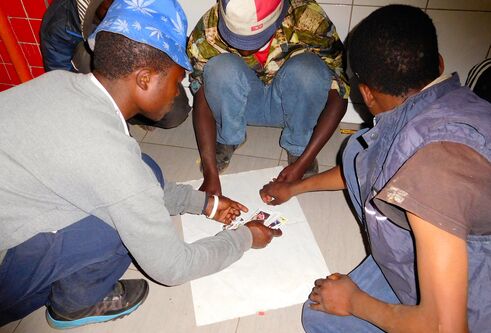
Lorraine van Blerk is a Professor of Human Geography at the University of Dundee's School of Humanities, Social Sciences and Law. She serves as Chair of Human Geography and leads the Research Centre for Transformative Change: Educational & Life Transitions (TCELT) in Education and Society. Her work focuses on street children/youth, refugees, and global inequalities. Academy of Social Sciences Fellow (2021) Stephen Fry Awards - Public Engagement Project of the Year (2017) Market Research Society President’s Medal (2015) Research interests include: Street youth resilience mapping Intergenerational partnerships Transitions to adulthood in crises Policy development for marginalized groups Coastal socio-ecological systems Cultural geographies of homelessness Recent publications address global street youth resilience frameworks (2REST project) and cinema's role for Harare street youth. Key collaborations include universities in Pretoria, Cape Town, Makerere, and Ryerson University. Scientific contributions recognized through: 6 major research prizes 16 funded projects 149+ research outputs International visiting appointments (Toronto Metropolitan University, National University of Singapore)
Nando Sigona is Professor of International Migration and Forced Displacement and Director of the Institute for Research into Superdiversity (IRiS) at the University of Birmingham, UK. He serves within the School of Geosciences Human Geography and Spatial Planning in the Urban Geography department, where he leads significant research on migration policy and forced displacement. His research spans critical areas including undocumented migration, the migration-citizenship nexus, naturalisation and denaturalisation processes, Romani politics and anti-Gypsyism, EU asylum systems, Brexit impacts on European mobility, and child and youth migration. Sigona's work is characterized by its policy relevance and theoretical innovation in understanding contemporary migration governance. His recent publications demonstrate a clear trend toward examining the intersection of migration enforcement, digital platforms, and labor markets, particularly evident in his 2025 research on migrant food delivery riders in Birmingham. His scholarly output spans foundational theoretical works like The Oxford Handbook of Superdiversity (2022) to urgent contemporary analyses of migration enforcement in the gig economy. Sigona has received significant research funding including Horizon Europe support for the I-CLAIM project (Improving the living and labour conditions of irregularised migrant households in Europe), where he serves as co-Investigator and Scientific Director. His work has been published across leading journals including Sociology, Social Anthropology, Antipode, Journal of Ethnic and Migration Studies, and Ethnic and Racial Studies. Founding editor of Migration Studies (Oxford University Press) Lead editor for Global Migration and Social Change book series (Bristol University Press) Director of the Institute for Research into Superdiversity (IRiS) His recent blog posts and media commentary reveal active engagement with contemporary policy debates, particularly regarding Labour's immigration enforcement strategies targeting migrant workers in the gig economy. Sigona's research team has documented a 79% increase in immigration raids in Birmingham since Labour came to office, based on Freedom of Information data (FOI2025 07429).