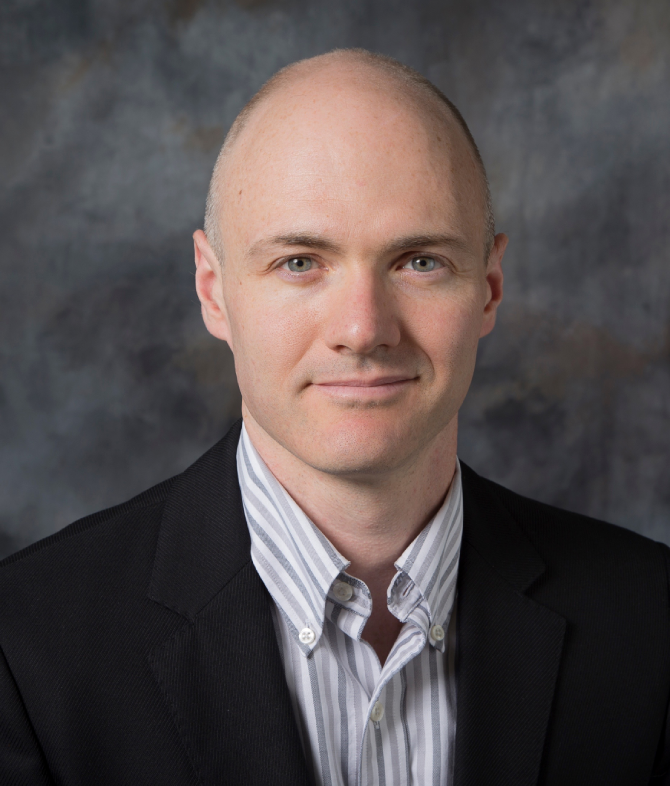
Professor Timothy Bertram is a faculty member in the Department of Chemistry at the University of Wisconsin–Madison and holds an affiliate appointment in Atmospheric and Oceanic Sciences. His research focuses on atmospheric and environmental chemistry, leveraging advanced mass spectrometry techniques to investigate chemical processes at ocean-atmosphere interfaces and urban air pollution. Alma Mater: B.A. (2000) from Colby College, Ph.D. (2006) from UC Berkeley, Postdoctoral Fellowship (2007–09) at University of Washington His work spans three primary areas: marine volatile organic compound (VOC) emissions , nocturnal nitrogen oxide chemistry , and bacteria-mediated sulfur compound production . Projects integrate laboratory experiments, field campaigns, and instrumental development for high-resolution atmospheric measurements. Recent publications highlight expertise in sea spray aerosol dynamics, DMS oxidation, PFAS emissions, and urban VOC speciation. Collaborations with NSF CCI CAICE, NOAA, and NASA support field deployments and instrument innovation. The Bertram Group trains graduate students and engages in K-12 outreach via sensor development.
Biao Huang is a Professor at the University of Alberta's Faculty of Engineering, Department of Chemical and Materials Engineering. He holds the Senior University of Alberta Engineering Research Chair in Smart Automation and has previously held the NSERC Senior Industrial Research Chair in Control of Oil Sands Processes (2011-2022) and AITF Industry Chair in Process Control (2013-2018). His research focuses on Process Control, Machine Learning, and Data Analytics with applications in industrial processes, particularly oil sands development. Research Priorities : Control Performance Assessment, State Estimation, Fault Detection, Soft Sensing, Bayesian Inference, and Data-Based Optimization Industrial Collaborations : Partnerships with Cenovus, Emerson, Suncor, Syncrude, Shell, and Spartan Controls Technical Challenges Addressed : High-dimensionality data, irregularities in modern datasets, and sustainable oil sands development through advanced control systems His work emphasizes solving fundamental problems in process identification and fault detection while training highly qualified personnel for Canada's energy sector. Notable research outcomes include innovative estimation, monitoring, and data-mining technologies for industrial applications. Scientific Honors : Fellow of the Canadian Academy of Engineering IEEE Fellow Fellow of the Chemical Institute of Canada Fellow of the Asia-Pacific Artificial Intelligence Association Fellow of the Industry Academy, International Artificial Intelligence Industry Alliance (AIIA) He has served as Editor-in-Chief of Control Engineering Practice (2018-2023) and currently holds editorial roles at multiple journals.
Dr. Richard J. Darton is a Senior Lecturer in Physical Chemistry at the Lennard-Jones School of Chemical and Physical Sciences, Keele University. He previously held postdoctoral positions at the University of British Columbia and the University of Warwick, focusing on materials chemistry. MChem (University of St Andrews, 2001) PhD in Structural Studies of Zeolites (University of St Andrews, 2005) His research centers on materials chemistry, particularly hydrothermal synthesis and structural characterization of porous materials like zeolites and metal-organic frameworks (MOFs) for catalysis, sensors, and gas storage applications. He employs solid-state NMR, X-ray, and neutron diffraction techniques to analyze synthesis mechanisms. Recent publications highlight his work on catalyst design (doped perovskites for biogas reforming), porous materials (mesoporous zeolites), and educational initiatives (international group work for sustainable chemistry). Collaborations span synthesis, characterization, and sustainable applications.
Mark Taylor is a Professor in the Department of Chemistry at the University of Toronto, where he conducts research at the intersection of organic synthesis and supramolecular chemistry. His work focuses on noncovalent and reversible covalent interactions, with applications in designing chemical sensors and catalysts. Expertise: Catalyst development, mechanistic elucidation, receptor design, host-guest interactions Key research areas: Stereo- and regioselective catalysis, carbohydrate transformations, molecular recognition, sensory molecules, computational mechanistic studies His recent publications highlight innovations in organoboron/transition metal cocatalysis for carbohydrate functionalization, site-selective glycosylation methods, and halogen bonding applications in materials science. The majority of his work explores how organoboron compounds enable precise control over reaction regioselectivity and stereoselectivity, particularly in sugar chemistry. While no formal awards are listed, his administrative role as Associate Chair, Graduate Studies, underscores his institutional leadership.
Dr. Paul Anandan is a Researcher in the Department of Chemical Engineering at Loughborough University. His work focuses on AI-driven control systems, robotics, and modular manufacturing systems. He holds a PhD in Manufacturing Engineering (2014–2018) from Loughborough, following a Master’s in Mechanical Engineering (University of Greenwich, 2010) and a Bachelor’s in Electronics & Instrumentation (Anna University, 2008). His research integrates artificial intelligence with industrial processes, including reinforcement learning for crystallization control and automated robotic manufacturing cells. Key projects include replacing traditional PID/MPC controllers with AI methods and developing reliable modular assembly systems. Current work emphasizes dynamic reconfiguration of robotic cells using multi-sensor inputs and safety constraints, funded by EPSRC (EP/V051180/1 and EP/R032858/1). His publications span robotics, control theory, and modular systems, with a focus on practical applications in manufacturing. Research collaborations include industry partnerships to enhance process efficiency and automation.
Madeline E. Schreiber serves as Professor of Hydrogeosciences in the Department of Geosciences within Virginia Tech's College of Science. Her research program develops quantitative predictions of solute behavior in natural waters to address critical questions about release mechanisms, transport processes, and fate of contaminants, with a practical focus on protecting water quality through integrated field, laboratory, and modeling approaches. Her work is published in leading hydrogeology and environmental science journals and supported by diverse funding sources including NSF, federal agencies, industry, and non-profits. Dr. Schreiber's educational foundation includes: Ph.D. in Geology from University of Wisconsin-Madison (1999) M.S. in Geology from University of Wisconsin-Madison (1995) B.S. in Geology from Yale University (1991) Her research spans chemical hydrogeology with emphasis on solute transport dynamics, groundwater chemistry, and environmental contamination. Key investigations address metal cycling in reservoirs, arsenic mobilization in aquifers, and biogeochemical processes controlling contaminant fate. She employs advanced methodologies including high-frequency sensor networks, laboratory experiments on mineral-water interactions, and numerical modeling to resolve complex hydrogeochemical systems across temporal and spatial scales. Recent publications (2023-2025) demonstrate concentrated expertise in reservoir management, particularly examining hypolimnetic oxygenation effects on iron/manganese removal, drawdown impacts on reservoir ecosystems, and arsenic contamination mechanisms. Her work increasingly integrates real-time forecasting systems for water quality management under climate change, leveraging extensive time-series data from Virginia reservoirs. This research bridges fundamental hydrogeochemistry with practical water resource protection needs. Dr. Schreiber actively mentors graduate students in hydrogeology and related disciplines while securing competitive funding from multiple sectors. Her research group maintains strong industry and agency partnerships focused on solving pressing water quality challenges. The VT Hydrogeosciences lab conducts field studies across southwestern Virginia reservoirs (Falling Creek, Beaverdam, Carvins Cove), utilizing cutting-edge instrumentation for high-frequency water quality monitoring. Current projects examine metal cycling dynamics, sediment-water interactions, and biogeochemical responses to oxygenation management, directly informing drinking water protection strategies.
Ashraf El-Hamalawi is an Associate Professor and Group Leader of the Geotechnical and Geomatics Group, specialising in engineering modelling and geotechnical systems. He holds a PhD from the University of Cambridge and is a Fellow of the Higher Education Academy (FHEA). His research focuses on numerical methods (FEM, BEM, DDA) for geotechnical challenges, soil-structure interaction, and infrastructure sustainability. Key areas include weather-driven deterioration of clay embankments, adaptive mesh refinement, and SCADA systems for construction monitoring. Education: BEng (Hons) in Engineering, PhD (Cambridge) Professional Affiliations: MASCE, MCGS, PE Research interests span geotechnical engineering, computational mechanics, and infrastructure asset management. He develops predictive models for slope stability, clay embankment degradation, and wear analysis in offshore structures. His work integrates advanced sensing technologies for non-destructive testing and environmental monitoring, including ammonia detection and landmine identification. Publications emphasize long-term infrastructure deterioration, numerical modelling frameworks, and sustainable retrofitting. His contributions to converged network systems and mobile collaboration tools in construction enhance industry practices.
Bruce Norris is a Research Fellow and Lecturer in the Department of Chemical Engineering within the School of Engineering at the University of Western Australia (UWA), Faculty of Engineering and Mathematical Sciences. His work bridges academic research and industry applications, focusing on subsea oil and gas developments with emphasis on gas hydrate risk management and flow assurance optimization for deepwater operations. Education: PhD in Chemical Engineering, University of Western Australia (2019) Bachelor of Engineering (Chemical Engineering), University of Western Australia (2014) Bachelor of Science (Physics), University of Western Australia (2014) Research Focus: Norris specializes in quantifying gas hydrate risks through coupled hydrodynamic-hydrate modeling, with primary applications in subsea tieback systems. His research integrates experimental validation using high-pressure flowloops with predictive modeling to address hydrate formation severity and probability. Key contributions include developing tools for rheological analysis of hydrate slurries , regenerated inhibitor systems , and cage-specific thermodynamic models that enhance industry decision-making for safer, more cost-effective operations. His work directly supports UN Sustainable Development Goal 7 (Affordable and Clean Energy). Publication Trends: Recent publications (2021-2025) demonstrate a strategic shift toward integrated experimental-theoretical frameworks for hydrate management. Over 60% of his work addresses transient flow conditions and rheological behavior of hydrate systems, while emerging research focuses on emissions monitoring and renewable inhibitor technologies . His 2024-2025 publications reveal increasing industry collaboration, particularly with energy majors on deepwater tieback challenges. Research Funding: Norris actively leads multiple industry-funded projects including: Australian Technology Testbed for Fugitive Emissions Sensors (FEnEX CRC, 2025-2026) Static Hydrate Formation (Woodside Energy, 2024-2026) Hydrate Detection System for LNG Plants (FEnEX CRC, 2024-2025) Collaborative Infrastructure: Works within UWA's Fluid Science and Resources group utilizing specialized facilities including high-pressure flowloops, Joule-Thomson expansion apparatus, and hydrate formation simulators. Maintains strong industry partnerships with Woodside Energy, FEnEX CRC, and international research networks focused on advancing subsea production technologies through experimental validation and predictive modeling.
Heidi Salonen is an Associate Professor and Head of the Department of Civil Engineering at Aalto University. She holds a Doctoral degree in Natural Sciences from the University of Kuopio (now part of University of Eastern Finland). Her research focuses on indoor air quality, building material emissions, and their health impacts, contributing to UN Sustainable Development Goals related to health and sustainable cities. She leads projects such as SustainSchool (2024–2026) and TSR/LAIVA (2023–2025), addressing school air quality and ship cabin environments respectively. Her expertise spans microbiology measurement methods, material emissions analysis, and multi-professional collaboration in indoor environment assessments. Notable achievements include three major awards for research excellence and supervision. She actively participates in international conferences and collaborates across Europe on environmental health issues. Salonen's work integrates building physics, chemistry, and public health, emphasizing practical solutions for sustainable indoor environments. Recent studies explore cleaning product impacts, real-time aerosol monitoring, and fungal contamination risks in buildings. Education: Doctoral degree in Natural Sciences (University of Kuopio, 2009) Key Projects: SustainSchool: Sustainable school air quality frameworks TSR/LAIVA: Ship interior environmental design Awards: Best paper award at ICCBE 2017 Supervision award for DI Tuomas Alapietin thesis
Maria Dimaki is a Senior Researcher at the Technical University of Denmark (DTU), affiliated with the Department of Biotechnology and Biomedicine. Her research focuses on microfabrication, dielectrophoresis, microfluidics, and biosensing, with contributions to nanotechnology and biomedical engineering. She holds a PhD in Dielectrophoretic Assembly of Carbon Nanotube Devices from DTU (2004), preceded by studies in Engineering and Physical Science at Imperial College London (2001) and Electrical Engineering at the National Technical University of Athens (2000). Her research interests include developing advanced microfluidic systems for biomedical applications, such as pathogen detection, milk analysis, and neural studies. She has supervised multiple PhD students, including projects on photonic sensors, bacterial viability classification, and milk contaminant detection. Her work aligns with UN SDGs, particularly addressing sustainable health and innovation. Recent publications emphasize microfluidic platforms for PCR, impedance-based cytometry, and nanoscale sensor technologies. She has co-invented methods for improving milk sample analysis and has participated in international conferences on microfluidics and analytical miniaturization. Her lab integrates nanotechnology, biosensors, and biomedical engineering for innovative diagnostic solutions.
Dr. Sanda Andrada Maicaneanu is an Associate Professor in the Madia Department of Chemistry, Biochemistry, and Physics at Indiana University of Pennsylvania (IUP), within the John J. and Char Kopchick College of Natural Sciences and Mathematics. Her research focuses on developing eco-friendly materials for water and wastewater treatment, particularly through non-catalytic and catalytic processes. She teaches foundational chemistry courses such as CHEM 101 and CHEM 111. Dr. Maicaneanu holds a BS and MS from Babeș-Bolyai University, a PhD from Cranfield University, and completed a postdoctoral fellowship at the University of Connecticut. Her work integrates material science with environmental applications, emphasizing adsorption mechanisms for heavy metal removal, dye degradation, and sustainable nanomaterial synthesis. Recent studies include low-cost composites derived from agricultural waste and clays for wastewater remediation. Her publications span over two decades, with a focus on advancing adsorption technologies, catalyst development for phenol oxidation, and evaluating natural materials like zeolites and montmorillonite. Though no specific awards are listed, her contributions reflect innovative approaches to environmental challenges. She maintains an active research program, collaborating on projects related to mine drainage remediation and low-cost sensor technologies for environmental monitoring.
Carolyn Ross is a Regents Professor and Director of the WSU Sensory Science Center at Washington State University's School of Food Science. She holds a PhD in Food Science/Environmental Toxicology from Michigan State University and has been with WSU since 2004. Her research focuses on sensory perception of foods, particularly texture in children and older adults, and applies analytical techniques to correlate sensory attributes with chemical properties. She has authored over 150 peer-reviewed articles and been recognized with awards including the Tanner Award and Fulbright Senior Scholar Award. Education: PhD in Food Science/Environmental Toxicology, Michigan State University (2001) MSc in Food Science, University of Guelph (1997) Bachelor of Human Ecology in Foods and Nutrition, University of Manitoba (1995) Research Interests: Sensory science, food texture, consumer perception, and product development for special populations. Her work bridges sensory analysis with analytical chemistry, addressing challenges such as texture preferences in children with Down syndrome and optimizing meals for older adults. Awards & Grants: Recipient of multiple grants and awards, including the WSU President’s Faculty Excellence Award and three Tanner Awards for highly cited papers. She leads interdisciplinary projects on sensory evaluation and food quality. Labs & Teams: Directs the WSU Sensory Science Center, collaborating with industry and academia to advance food science through sensory and instrumental methods.
Abigail N. Koppes is an Associate Professor of Chemical Engineering at Northeastern University, with affiliations in Bioengineering and the Cross-College Magnetics Center. Her Advanced Biomaterials for NeuroEngineering Laboratory (ABNEL) focuses on bioelectric medicine, nerve regeneration, and organ-on-a-chip systems for gut-brain axis modeling. She holds a B.S., M.S., and Ph.D. in Biomedical Engineering from Rensselaer Polytechnic Institute (2007-2013). Research interests include developing biomaterials and biophysical interventions (e.g., optogenetics, magnetic stimulation) to engineer neural therapies and recapitulate complex biological systems like the enteric nervous system. Notable projects involve neural-guided repair of spinal injuries, gut-on-a-chip platforms for drug discovery, and chronic inflammation modeling. Koppes has secured NIH Trailblazer and NSF CAREER awards, alongside the Rita Schaffer Young Investigator recognition. Her lab integrates techniques from chemical engineering, materials science, and molecular biology to address disorders such as irritable bowel diseases and neurodegenerative conditions. She mentors PhD students (e.g., Bryan Schellberg, Kyla Kaiser) and leads interdisciplinary grants, including NASA-funded neurovascular systems. Recent work includes modeling Sjögren’s syndrome gut-brain axis dysfunction and exploring long-COVID impacts through organ-chip platforms. Koppes collaborates on PEAK undergraduate research programs and has been featured in media for her contributions to bioelectric medicine and personal insights on long-COVID challenges in academia. The ABNEL lab’s innovations span neural engineering, gut-organoid systems, and magnetic stimulation therapies.
Dirk Thißen is a Postdoctoral Researcher at RWTH Aachen University, affiliated with the COMSYS research group. His work focuses on distributed systems, web services, and quality of service (QoS) management. He has contributed to interdisciplinary projects like SensorCloud, aiming to develop trustworthy platforms for interconnected sensors and actuators. His research spans service-oriented architectures, network protocols (e.g., SIP/IMS), and middleware solutions for collaborative engineering and distributed systems. Key areas: Sensor networks, cloud computing, QoS optimization, and service composition Notable projects: SensorCloud, electronic service markets, and IMS service validation Thißen's publications address challenges in distributed systems, including service replication for reliability, multimedia integration in design processes, and protocol validation for next-generation networks. His work often bridges theoretical concepts with practical implementations in telecommunications and collaborative environments. His research consistently emphasizes performance evaluation and scalability, with contributions to both academic conferences and industry-relevant applications. While no specific awards are noted in the provided text, his extensive publication record reflects sustained engagement in high-impact fields.
Professor Daniel Söderberg is affiliated with KTH Royal Institute of Technology, where he holds the position of Professor of processes from fibre-based materials from forest raw materials. His research focuses on understanding natural material formation processes, particularly using cellulose nanofibrils as building blocks, to develop scalable industrial methods for creating high-performance bio-based materials. He employs advanced experimental techniques such as synchrotron X-ray imaging and neutron scattering to study material behavior at the nanoscale, contributing to sustainable, renewable material innovations. His research interests revolve around the development of bio-based materials and industrial processes inspired by natural mechanisms. Key areas include: Nanofibril assembly and self-organization in fluid systems Cellulose nanofibril-based composites and thin films Scalable production of high-performance bio-based materials Advanced characterization techniques (e.g., synchrotron X-ray imaging, neutron scattering) Material dynamics under various environmental conditions (e.g., humidity, compression) Integration of renewable materials into electronic and structural applications Recent research trends emphasize the application of machine learning for analyzing material dynamics, optimization of spray deposition techniques for scalable production, and exploration of lignin and cellulose nanocomposites for renewable materials. Collaborations with facilities like the MAX IV synchrotron highlight his focus on advanced imaging and structural analysis for material innovation. In advising and grants, Dr. Söderberg has contributed to research projects involving pilot-scale manufacturing processes and collaborations with advanced facilities like the MAX IV synchrotron. While specific student names or detailed grant information are not provided here, his work reflects a strong emphasis on team-based research in nanomaterials and sustainable technologies. He is also involved in academic ceremonies at KTH, including the 2021 Professorial Inauguration. Dr. Söderberg collaborates with the ForMAX beamline at MAX IV synchrotron in Lund, focusing on multiscale structural characterization of hierarchical materials. His research also involves the pilot-scale Experimental Paper Machine (XPM) for material production studies, examining fire retardant composites and nanopaper fabrication.