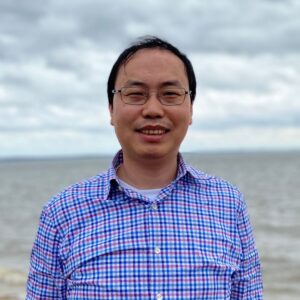
Huiwang Ai is a Professor at the University of Virginia School of Medicine , affiliated with the Department of Molecular Physiology and Biological Physics . His research focuses on protein engineering for molecular biosensors and spatiotemporal regulation of biological signaling , with applications in imaging , diagnostics , and therapeutics . BS in Chemistry, Tsinghua University PhD in Chemical Biology, University of Alberta Postdoc in Chemical Biology, The Scripps Research Institute Research interests include molecular biosensors for cellular signaling , redox biology , and metabolism . The Ai Lab develops fluorescent and bioluminescent probes for neuronal activity , diabetes , and cancer . Recent publications highlight advancements in bioluminescence imaging , redox-sensitive proteins , and fluorescent biosensors for UDP-GlcNAc and zinc ions . Techniques include directed evolution , fluorescence imaging , and synthetic chemistry . No scientific awards or students are explicitly mentioned in the provided data. Ai Lab integrates biophysics , chemical biology , and synthetic biology to create innovative imaging tools for pathophysiology and therapeutic development .
Professor Eddy Sotelo Perez is a faculty member at the Faculty of Pharmacy, University of Santiago de Compostela, leading the ComBioMed research group at the Research Center in Biological Chemistry and Molecular Materials ( CIQUS ). His work bridges Medicinal Chemistry and Chemical Biology, focusing on G protein-coupled receptors (GPCRs) and innovative multicomponent synthetic strategies. Ph.D. in Organic Chemistry, University of Santiago de Compostela (2000) The group pioneers 3D-printed heterogeneous catalysts for eco-friendly drug synthesis and develops biased ligands targeting adenosine, dopamine, and cannabinoid receptors. Recent publications highlight their expertise in GPCR modulation for conditions like Parkinson’s disease, cancer, and neuropathic pain. Key article trends include: GPCR ligand discovery (adenosine, CB2, dopamine) 3D-printed catalytic systems Multicomponent reaction (MCR) applications in heterocycle synthesis Anti-inflammatory and anticancer multitarget agents Students supervised : Claudia Gioe-Gallo (Ph.D. 2023), discovered CB2 agonists with anti-inflammatory/anticancer effects Rubén Prieto-Díaz (Ph.D. 2023), studied A2B antagonists for cancer immunotherapy Labs/teams : ComBioMed: Industrial collaboration platform for drug discovery CIQUS: Singular research center for chemical biology Collaboration with Galician Ceramic Institute for 3D-printed catalysts
Dr. Angel Luis Fuentes de Abriba is a researcher affiliated with the Department of Organic Chemistry at the University of Salamanca through the Research Center in Biological Chemistry and Molecular Materials (CIQUS) . His work focuses on the development of supramolecular systems and organocatalysts that mimic enzymatic active sites, with applications in enantioselective synthesis, molecular recognition, and confined catalysis. His research interests include: Organocatalysis for asymmetric synthesis (e.g., oxyanion hole mimics) Supramolecular chemistry in artificial receptors and catalytic capsules Biocatalytic models replicating hydrolase and protease activity Molecular recognition mechanisms for amino acids and neurotransmitters Green chemistry applications in biodiesel production Photocatalysis for reverse-polarity reaction engineering Recent publications highlight trends in protective group development (e.g., naphthoic acid derivatives), supramolecular capsule design for confined catalysis, and enantioselective extraction systems using chiral receptors. Collaborative projects span chemical biology, medicinal chemistry, and sustainable energy solutions. Dr. Fuentes de Abriba was part of the SupraNanoBioMol group , which integrates supramolecular chemistry with bioinspired nanomaterials research. His doctoral thesis (2014) specifically addressed organocatalysts simulating oxyanion holes through innovative molecular architectures.
Alex Manicardi is an Associate Professor in the Department of Chemical, Life and Environmental Sustainability Sciences at the University of Parma's Faculty of Chemistry. His academic responsibilities span multiple degree programs including Biotechnology, Materials Science, Chemistry, and Environmental and Resource Sciences, where he teaches core courses in organic chemistry, bio-organic chemistry, materials-focused chemistry, and chemical safety across undergraduate and graduate levels. Professor Manicardi's research program centers on peptide nucleic acid (PNA) engineering for nucleic acid targeting and therapeutic applications. His laboratory develops innovative chemical tools including furan-modified PNAs, photo-inducible crosslinking systems, and proximity-triggered ligation methodologies. This work bridges synthetic organic chemistry with biomedical challenges in cancer therapy (particularly colorectal cancer and glioblastoma) and genetic disorders like cystic fibrosis, focusing on microRNA modulation and sequence-specific DNA/RNA targeting. Analysis of his 15 most recent publications reveals a clear trajectory from fundamental chemical methodology development toward biomedical translation. Key trends include red light-triggered DNA alkylation for G-quadruplex targeting, microRNA-inhibiting PNAs that induce cancer cell apoptosis, and furan-based systems enabling bio-orthogonal ligation. The research demonstrates strong interdisciplinary integration across organic chemistry, chemical biology, and molecular oncology with significant therapeutic implications.
Dr. Angela Maria Fala serves as Research Staff at the Institute of Food Chemistry within Leibniz University Hannover's Faculty of Natural Sciences. Her laboratory is located in Building 2501, Room 363 at Callinstraße 3-9, 30167 Hannover, with direct contact via +49 511 762 4585 or angela.fala@lci.uni-hannover.de. Research expertise spans: Biochemistry & Drug Discovery: Development of kinase inhibitors (PKN2/PRK2, CAMKK2) and antiparasitic agents Structural Biology: Mechanistic studies of enzyme-ligand interactions using biophysical methods Metabolic Regulation: Hypoxia-inducible factors and mitochondrial transport mechanisms Translational Applications: Chemical tool development for cancer and infectious disease targets Publications (2010-2023) demonstrate progression from foundational studies in hypoxia signaling and science education to advanced drug discovery platforms. Recent works focus on kinase inhibitor design against parasitic and human diseases, employing structural and biochemical approaches. Early publications include contributions to educational methodology in genetics.
Lisa Kelly is a Professor in the Department of Chemistry & Biochemistry at the University of Maryland, Baltimore County (UMBC), where she has established a robust research program in photochemistry and photophysics. Her laboratory develops synthetic organic and inorganic molecules as structural probes of DNA and proteins, as well as stimuli-responsive polymers for smart materials applications. Professor Kelly's research interests focus on two primary areas: photochemical probes of macromolecular structure and stimuli-responsive polymers. In the first area, her group develops naphthalimide derivatives that recognize and bind to specific DNA sequences or protein residues, using UV or visible light activation to initiate chemical events leading to macromolecule cleavage. In the second area, they build functionalized polymers that respond to external stimuli like temperature and pressure through fundamental photophysical phenomena. Her recent publications demonstrate strong activity across multiple domains including naphthalimide chemistry, polymer nanocomposites, sensor development, and macromolecular photochemistry. Professor Kelly has received significant recognition including serving as President of the American Society for Photobiology (2005-2006) and winning the R&D 100 Award for "The Fluorescence Omnilyzer" in 1997. Elected President American Society for Photobiology 2005 – 2006 "The Fluorescence Omnilyzer" R&D 100 Award 1997 DOE Distinguished Post-Doctoral Fellow Department of Energy – ORISE 1993 – 1996 Professor Kelly has secured substantial research funding including a $150,000 grant from the U.S. Army Combat Capabilities Development Command (2020-2023) and a $450,000 National Science Foundation grant (2019-2023). She has organized multiple symposia at major conferences including the American Society for Photobiology meetings. Her teaching portfolio includes Physical Chemistry courses, Molecular Spectroscopy, and specialized topics in photochemistry. Her laboratory, located in the Meyerhoff Chemistry Building (Room 549A), actively mentors undergraduate and graduate students, with recent graduates like Johnathan Ragazzo receiving university-wide research awards. The lab maintains strong collaborations across multiple disciplines including materials science, biomedical engineering, and environmental chemistry.
Minjoung Kyoung is an Associate Professor in the Department of Chemistry & Biochemistry at the University of Maryland, Baltimore County (UMBC), where she leads interdisciplinary research at the chemistry-biology-physics interface. Her work focuses on developing advanced bioanalytical tools to study 4D (spatiotemporal) interactions between signaling and metabolic pathways in cancer cells, including Advanced nano-reaction chambers for transient protein-protein interactions Super-resolution imaging techniques for live-cell biological networks . Her research has been recognized through grants such as the NIGMS R01 Award (2019) and prior fellowships including the Dalalian Fellowship and SPIE Research Excellence Travel Award . She trains students in cutting-edge microscopy, nano-fabrication, and biomolecular interaction analysis, with former advisees like PhD candidate Erin Kennedy and graduate student Tao Zhang . Her publications, including in eLife and Nature Protocols , highlight mechanistic insights into calcium-triggered fusion, neurodegenerative protein interactions, and metabolic enzyme clustering. Recent projects aim to construct the first 4D map of cellular metabolic networks, bridging optical and biochemical approaches to anticipate disease mechanisms.
Sandrine Tusseau-Nenez is a Research Engineer and Head of the X-ray diffraction platform (DIFFRAX) at École Polytechnique's Department of Physics, within the Condensed Matter Physics Laboratory. With a PhD in Chemistry and Physics from the University of Dijon, she has developed extensive expertise in materials characterization, particularly X-ray diffraction techniques for both polycrystalline and thin film materials. Member of the PANalytical Users Club office since 2010 Member of the Reciproqs professional network Member of the French crystallography association Competent person in radiation protection since 2005 Her educational background includes a Professional License in Materials Analysis from Paris-Diderot University and specialized courses at CNAM-entreprises, focusing on metallurgy, metallography, and X-ray diffraction. Her technical expertise spans X-ray diffraction, thermodynamic analyses (ATD-ATG, DSC), material characterizations (SEM-EDX, BET), and phase diagram calculations using the Calphad method. Dr. Tusseau-Nenez's research focuses on applications of powder diffraction techniques for analyzing materials microstructure, with recent expansion into XRD thin film analysis. Her publication record shows consistent output across materials science, nuclear physics, and chemistry, with particular emphasis on uranium carbide targets for radioactive beam production, cement chemistry, and nanomaterials characterization. The analysis of her 15 most recent publications reveals a strong interdisciplinary approach connecting materials characterization with applications in nuclear physics, energy production, and civil engineering. 64 total publications with 874 citations Research spanning nuclear target materials, cement chemistry, and nanomaterials Active collaboration across physics, chemistry, and engineering disciplines As a research supervisor, she has co-supervised multiple PhD theses and numerous internships, demonstrating her commitment to training the next generation of materials scientists. Her leadership of the DIFFRAX platform provides critical characterization capabilities for researchers across École Polytechnique and collaborating institutions.
Amanda Garner is a Professor in the Department of Medicinal Chemistry at the University of Michigan , focusing on RNA biology and cancer therapeutics. Her work centers on targeting RNA-binding proteins (RBPs) and translation regulation mechanisms, particularly eIF4E, which plays a critical role in oncogenic protein synthesis. Research Themes: eIF4E inhibition, RNA-protein interactions, mRNA cap analogs, and translational control in cancer. Collaborations: Active partnerships with researchers like Emilio L Cárdenas, Jeanne Stuckey, and Vibha Lama. Recent studies explore CRISPR-based screening for RNA-protein interactions, second-generation prodrugs for cancer therapy, and neuroprotective roles of αA-crystallin. She also contributes to diversity initiatives in medicinal chemistry through the ACS Division.
Dr. Tomás Torroba Pérez is a researcher in the Department of Chemistry at the University of Burgos, Spain. His work focuses on the design and application of luminescent materials and fluorescent probes for environmental monitoring, chemical warfare agent detection, and biomedical research, particularly targeting DNA structures like G-quadruplexes. He collaborates extensively on projects involving metal complexes (ruthenium, rhenium, iridium) and nanostructured materials for catalysis and sensing. Key Research Areas : Fluorescent probes, CO2 reduction catalysis, G-quadruplex targeting, environmental toxin detection, nanostructured materials. He has co-authored numerous high-impact publications and supervised doctoral theses in these fields. His recent work emphasizes AIE luminogens for explosive detection and fluorogenic sensors for improvised explosives like TATP.
Pedro Martín-Acosta serves as a Visiting Assistant Professor of Chemistry within the Chemistry Department of Reed College's Division of Mathematical and Natural Sciences. His one-year appointment for the 2025-26 academic year focuses on teaching general and organic chemistry courses while maintaining an active research program. Dr. Martín-Acosta's research program integrates organic, medicinal, and biological chemistry with emphasis on designing, synthesizing, and optimizing bioactive molecules targeting infectious diseases and cancer. His laboratory specializes in efficient synthetic strategies including multicomponent and domino reactions, combined with molecular modeling techniques to investigate structure-activity relationships (SAR) and develop chemical tools for disease biology exploration. His work bridges fundamental chemical synthesis with therapeutic applications, particularly in antimalarial and anticancer compound development. B.S. and Ph.D. in Chemistry from University of La Laguna (Spain), specializing in Organic and Medicinal Chemistry Postdoctoral research at Oregon Health & Science University (OHSU) focusing on molecular probes, PROTACs, and prodrug development Former Open Lab Scientist at GSK leading collaborative research on antimalarial compounds His scholarly approach combines computational methods with experimental synthesis to address critical challenges in drug discovery, with particular expertise in molecular optimization strategies for bioactive natural product derivatives.
Prof. Dr. Mahmut GÜR is a Professor at Kastamonu University's Faculty of Forestry, Department of Forest Industry Engineering. He currently serves as the Dean of Kastamonu University (2025-) and has held various academic and administrative positions since 2012, including Associate Professor (2019-) and Department Chair (2016-2017). His academic career spans multiple roles in research center management and faculty administration. Education: PhD in Chemistry, Ondokuz Mayıs University, Institute of Science (2004-2011) Master's Degree in Chemistry, Ondokuz Mayıs University, Institute of Science (2002-2004) BA in Mathematics and Science Education, Gazi University, Gazi Faculty of Education (1989-1993) Prof. GÜR's research focuses on organic chemistry with emphasis on thiadiazole compounds, spectroscopy, and polymer chemistry. His work bridges fundamental chemical research with practical applications in forest products, antimicrobial agents, and renewable energy. He investigates the synthesis and characterization of heterocyclic compounds, particularly 1,3,4-thiadiazole derivatives, Schiff bases, and azo compounds, examining their spectral properties, antimicrobial activities, and potential applications in hydrogen production and heavy metal adsorption. His recent publications (2023-2025) demonstrate a strong focus on developing novel polymeric materials for hydrogen production catalysis, heavy metal removal, and antimicrobial applications. The research shows a clear progression from fundamental synthesis and characterization of heterocyclic compounds toward applied materials science with environmental and energy applications. Key thematic areas include thiadiazole-based fluorescent compounds, azo polymers for catalysis, and natural product chemistry for antimicrobial applications. Prof. GÜR has successfully supervised seven Master's students to completion, with thesis topics spanning forest products, chemical analysis, and antimicrobial research. He has led and participated in numerous research projects funded by Kastamonu University's Scientific Research Projects Unit (BAP), focusing on forest product chemistry, polymer science, and natural product applications. His research group maintains strong collaborations with other Turkish universities and researchers internationally. The Kastamonu University Central Research Laboratory Application and Research Center, which Prof. GÜR directed (2019-2020), serves as a key facility supporting his research in spectroscopy, chromatography, and polymer characterization. His work integrates multiple analytical techniques including UV-Vis spectroscopy, HPLC, and various chromatographic methods to characterize novel compounds and assess their biological activities.
Professor Joe B. Gilroy is a faculty member in the Department of Chemistry at The University of Western Ontario , specializing in inorganic and materials chemistry. His research bridges synthetic chemistry with applications in alternative energy, medical imaging, and advanced materials. Education: B.Sc. (University of Victoria, 1999-2003), Ph.D. (University of Victoria, 2003-2008, Prof. Robin Hicks), NSERC Postdoc (2008-2012, Prof. Ian Manners, University of Bristol). Research Interests focus on designing inorganic and polymeric materials with optoelectronic, redox, and magnetic properties. Key projects include: Development of fluorescent dyes for medical imaging and organic electronics. Pi-conjugated polymers for charge transport and sensing. Polymer coatings for metal protection and energy storage. His work leverages collaborations with industry partners via MITACS and NSERC grants, emphasizing sustainability and real-world applications. Recent publications highlight advancements in boron-based dyes , radical polymers , and phosphorus-nitrogen heterocycles . Scientific Awards include: UWO Edward G. Pleva Award for Excellence in Teaching (2022) STREM Chemicals Award for Inorganic Chemistry (2020) Ontario Early Researcher Award (2014) NSERC Postdoctoral Fellowship (2008) His students transition to industry , academia , and government roles, reflecting the group’s strong training environment. The Gilroy Group is part of the Carbon to Metal Coating Institute , advancing coatings for corrosion protection and energy technologies.
Sophie van Vreeswijk is a researcher at Utrecht University's Faculty of Science within the Inorganic Chemistry and Catalysis group. Her work focuses on advanced characterization of zeolite-based materials for catalytic applications, particularly in the methanol-to-hydrocarbons process and CO2 hydrogenation. Her research interests include Nanoscale imaging of catalyst heterogeneity Coke formation mechanisms Operando catalyst regeneration Zeolite structure analysis Multi-modal analytical techniques The 12 most recent publications (2020–2024) highlight trends in Zeolite characterization (Atom Probe Tomography, fluorescence microscopy) CO2 utilization and bifunctional catalysis Coke dynamics in methanol conversion In situ analysis of iron carbides Nanoscale chemical mapping Sustainable catalysis methods She has not received any publicized awards or grants. Her affiliations and lab work center on Utrecht University's Inorganic Chemistry and Catalysis group, collaborating on zeolite-based catalysts and sustainable chemical processes.
Kathy Fange Liu, Ph.D., is an Associate Professor with tenure at the University of Pennsylvania Perelman School of Medicine. She serves as Co-Director of the Penn Center for Genome Integrity and Group Lead at the Penn Institute for RNA Innovation. The lab combines deep mechanistic studies with innovative therapeutic development across four major research directions: X-Y paired homologous proteins, cancer fusion proteins, ribosome biology, and cross-RNA modification coregulation. Research highlights include pioneering the concept of RNA modification coregulation (DOI:10.1073/pnas.1913448117), where enzyme-mediated modifications across RNA species demonstrate interconnected networks. Current projects investigate rRNA-modifying enzymes' dual roles in ribosome assembly and genome organization, while developing targeted therapies for fusion oncoproteins like TRIM24-ERG (US patent 63/797,545). 2025 Damon Runyon-Rachleff Innovator Award Stage 2 2024 St. Baldrick's Research Grant 2023 Linda Pechenik Montague Investigator 2022 Damon Runyon & ACS Scholar awards 2019 NIH MIRA R35 award Lab members include 6 postdocs (Praneeth Bommisetti, Yanze Jian, Sarai Mendoza, Yulia Gonskikh, Hyojeong Hwang, Sheetal Tushir) and 3 graduate trainees. Former lab members Hui Shen (now professor at China Pharmaceutical University), Julian Stoute (Ph.D. 2023), and Jordan Ontiveros (Ph.D. 2022) received multiple fellowships during their tenure. Key grants include NIH/NHLBI R01 (2022), CZI Multi-Institutional Collaboration (2024), and continuous support from private foundations like CURE Childhood Cancer and Alex's Lemonade Stand. The lab actively develops technologies for RNA modification analysis while maintaining strong collaborative ties across Penn's epigenetics and structural biology programs.