Lisa Kelly
استاد · Photochemical probes of macromolecular structure
University of Maryland, Baltimore Countyمعرفی
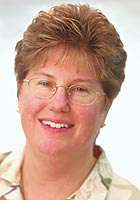
Lisa Kelly is a Professor in the Department of Chemistry & Biochemistry at the University of Maryland, Baltimore County (UMBC), where she has established a robust research program in photochemistry and photophysics. Her laboratory develops synthetic organic and inorganic molecules as structural probes of DNA and proteins, as well as stimuli-responsive polymers for smart materials applications.
Professor Kelly's research interests focus on two primary areas: photochemical probes of macromolecular structure and stimuli-responsive polymers. In the first area, her group develops naphthalimide derivatives that recognize and bind to specific DNA sequences or protein residues, using UV or visible light activation to initiate chemical events leading to macromolecule cleavage. In the second area, they build functionalized polymers that respond to external stimuli like temperature and pressure through fundamental photophysical phenomena.
Her recent publications demonstrate strong activity across multiple domains including naphthalimide chemistry, polymer nanocomposites, sensor development, and macromolecular photochemistry. Professor Kelly has received significant recognition including serving as President of the American Society for Photobiology (2005-2006) and winning the R&D 100 Award for "The Fluorescence Omnilyzer" in 1997.
- Elected President American Society for Photobiology 2005 – 2006
- "The Fluorescence Omnilyzer" R&D 100 Award 1997
- DOE Distinguished Post-Doctoral Fellow Department of Energy – ORISE 1993 – 1996
Professor Kelly has secured substantial research funding including a $150,000 grant from the U.S. Army Combat Capabilities Development Command (2020-2023) and a $450,000 National Science Foundation grant (2019-2023). She has organized multiple symposia at major conferences including the American Society for Photobiology meetings. Her teaching portfolio includes Physical Chemistry courses, Molecular Spectroscopy, and specialized topics in photochemistry.
Her laboratory, located in the Meyerhoff Chemistry Building (Room 549A), actively mentors undergraduate and graduate students, with recent graduates like Johnathan Ragazzo receiving university-wide research awards. The lab maintains strong collaborations across multiple disciplines including materials science, biomedical engineering, and environmental chemistry.