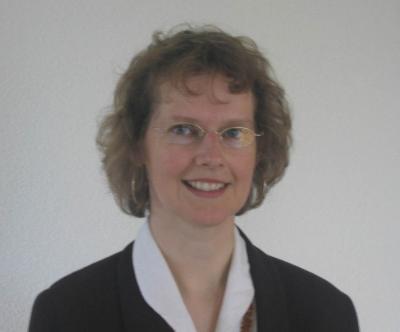
Maarten Renkema is an Assistant Professor at the University of Twente, specializing in Artificial Intelligence (AI) and its intersection with Human Resource Management (HRM) , Healthcare , and Organizational Innovation . His research explores how AI transforms work design, employee autonomy, and HRM practices in formalized contexts. Key Research Themes: Algorithmic HRM and Digitalization Human-AI Collaboration in Healthcare Self-Managing Teams and Organizational Structures AI Literacy in Education Scientific Awards: Best Dissertation Award (2019) from the Dutch HRM Network Research Trends: His recent work focuses on AI adoption in HRM, ethical implications of algorithmic management, and redefining professional roles in AI-integrated environments. Articles from 2024-2025 highlight practical applications of AI in healthcare workflows, employee-driven innovation, and the evolving responsibilities of HR professionals. Collaborations: Active in cross-sector partnerships, including projects on AI literacy frameworks and talent management in sports. Regularly contributes to professional discourse through invited talks and media commentary on AI's societal impact.
Peter A. Lloyd is a Professor of Integrated Design Methodology at the Faculty of Industrial Design Engineering, Delft University of Technology. He is a leading figure in design research, serving as Editor-in-Chief of Design Studies and former Chair of the Design Research Society. His work bridges design theory, ethics, and artificial intelligence. Doctorate in Psychological Investigations of the Conceptual Design Process, University of Sheffield (1994) His research focuses on design thinking, methodology, and the cognitive processes in design. He explores how designers and AI can collaborate, emphasizing ethical considerations and reflective practice. His work contributes to the UN Sustainable Development Goals, particularly in education and responsible innovation. The recent publications highlight a strong trend in integrating AI into design processes, examining designer-AI dialogue, synthetic users, and the role of reflection in design practice. His research spans cognitive science, human-computer interaction, and organizational transformation through creative practices. Editor-in-Chief, Design Studies (2017–present) Chair, Design Research Society (2017–2022) Vice President, IASDR (2021–present) Prof. Lloyd has supervised research students and contributes extensively to editorial and peer-review activities. He has been involved with Delft University of Technology’s Faculty of Industrial Design Engineering since at least 2001 in editorial and academic roles. His work is supported through academic leadership and collaborative research networks. He is actively involved in the Design Research Society and contributes to major conferences such as DRS and IASDR, often in organizational and editorial capacities. His research group or network includes collaborators from various institutions, focusing on interdisciplinary design innovation.
Dr. Peter Lloyd is a Professor of Integrated Design Methodology at Delft University of Technology's Industrial Design Engineering department. He specializes in design process, design ethics, and AI collaboration in design. His recent work explores human-AI interaction in creative processes. He chairs the Design Research Society and is Editor-in-Chief of Design Studies . Lloyd teaches courses like 'Design Processes and...' and 'Exploring Design...'. He leads the Designing Intelligence Lab, focusing on human-AI collaboration in complex design challenges. His research spans design methodology, ethical AI, and interdisciplinary innovation. Key contributions include advancing design thinking frameworks, co-chairing the Design Thinking Research Symposium since 1994, and publishing influential articles on AI-driven design practices. He collaborates with industry on projects like BMW car interiors and aircraft seat design.
Dr. Karin van Es is an Associate Professor in the Department of Media and Culture Studies at the Faculty of Humanities, Utrecht University. She serves as project lead for the Humanities at Data School and is an affiliate and impact liaison at the Centre for Digital Humanities. Her work bridges academic research and practical applications in the digital society, with a focus on collaborating with external parties on interdisciplinary projects. She is also part of the GenAI in Education Humanities taskforce at Utrecht University. Her research is situated at the intersection of television studies, software studies, and critical data and algorithm studies, with a particular focus on streaming video culture and industries. Her notable publications include the book The Future of Live (Polity Press, 2016) and co-edited volumes such as The Datafied Society (AUP, 2017), Situating Data (AUP, 2023), Collaborative Research in a Datafied Society (AUP, 2024), and Governing the Digital Society (AUP, 2025). She has published extensively in journals including Television & New Media , Media, Culture and Society , Critical Studies in Television , Social Media + Society , Big Data and Society , and First Monday . Dr. van Es's recent publications reveal a strong focus on the governance of digital platforms, AI ethics, and the impact of streaming services on media consumption. Her work increasingly examines the societal implications of datafication, with particular attention to educational contexts, public values, and methodological innovations for studying digital phenomena. She has pioneered approaches like "data walking" and "data donations" as research methods for understanding how people interact with digital platforms in everyday contexts. Her scholarship demonstrates a consistent commitment to critical technical practice that bridges theoretical insights with practical interventions in the datafied society. Editor of special issue "Critical Technical Practice(s)" for Convergence Organizer of "Innovative Methods for Video-on-Demand Research" workshop (2024) Speaker at ECREA 2024 conference on "Netflix Uncovered: Insights from Data Donations" Member of editorial board for Convergence journal Her media contributions include appearances on WORT 89.9 FM discussing "The Meaning of Live" (2022), participation in the "De Maatschappelijk Betrokken Docent" program (2022), and earlier contributions on topics like "Wat is beeldradio?" (2016) and "Live liveness in realtime" (2015). She leads the Media and Performance Studies research group and is deeply involved with the Data School at Utrecht University. Her work with the GenAI in Education Humanities taskforce focuses on understanding and shaping the integration of generative AI in educational contexts. Through her role at the Centre for Digital Humanities, she helps bridge academic research with practical applications in society, particularly around issues of data governance, digital literacy, and the societal impact of emerging technologies.
Dr. Emmelyn Croes is an Assistant Professor at Tilburg University's School of Humanities and Digital Sciences, affiliated with the Department of Communication and Cognition and the Academic Collaborative Center for Digital Health & Mental Wellbeing. Her work focuses on digital communication's role in health promotion, self-disclosure behaviors, and the impact of social media influencers on health-related attitudes. She teaches courses in methodology, digital media sociology, and social media marketing. Research interests center on chatbot interactions, health communication strategies via influencers, and sexual health advocacy through digital platforms. Her recent studies explore how chatbots affect emotional well-being through self-disclosure and how influencers shape safe sex attitudes among young adults. Key collaborations include projects on influencer misinformation and YouTube health vlog engagement strategies. She actively participates in academic events such as the European Communication Science Event and the Etmaal van de Communicatiewetenschap conference.
Prof. Rineke Verbrugge is a Professor in Artificial Intelligence at the University of Groningen's Faculty of Science and Engineering, affiliated with the Bernoulli Institute. Her research focuses on computational theory of mind, multi-agent systems, hybrid intelligence, and logical frameworks applied to social networks and legal reasoning. She holds additional roles on the Institute Advisory Board of CWI (Dutch National Research Institute for Mathematics and Computer Science) and several ERC/NWO selection committees. Her work bridges cognitive science and AI, emphasizing human-agent collaboration, belief formation in groups, and ethical AI design. Recent projects include developing computational models for theory of mind in negotiations and scenario-based Bayesian networks for legal evidence analysis. She has authored over 220 publications and supervised multiple PhD candidates in AI and logic. Key research themes include higher-order theory of mind applications, zero-one laws in provability logic, and agent-based policy evaluation for sustainable technologies. Her contributions span conferences like AAMAS, ICAIL, and HHAI, addressing topics from lie detection mechanisms to privacy conflicts in multi-user systems.
Dr. Martijn Goudbeek is an Associate Professor at Tilburg University's Tilburg School of Humanities and Digital Sciences (TSHD), specifically within the Department of Communication and Cognition. His research focuses on the intersection of emotion, language, and cross-cultural communication, with a strong emphasis on vocal and linguistic expression of affect. He has contributed significantly to understanding how emotional states influence language production and perception, particularly across cultural and linguistic boundaries. His work spans experimental psychology, computational linguistics, and human-robot interaction. He is affiliated with the Communication and Cognition department and teaches courses like 'The Emotional Brain' and 'Statistics and Experimental Methods.' Key research themes include vocal emotion recognition in multilingual contexts, the role of rhythm and acoustic cues in affective communication, and the reproducibility of language evaluation methods. He has led projects such as the Multilingual Emotional Football Corpus (MEmoFC) and explored how cultural factors shape nonverbal expressions like smiles and gestures. His studies often combine empirical experiments with computational modeling, addressing topics ranging from politeness in mood-influenced communication to the design of socially intelligent chatbots and robots. Dr. Goudbeek’s interdisciplinary approach bridges cognitive science, linguistics, and digital technologies. While no specific grants or awards are listed, his extensive publication record reflects sustained contributions to understanding human emotion expression and its technological applications. His work frequently engages with questions of reproducibility in NLP and dialogue systems, emphasizing methodological rigor in computational linguistics.
Maartje de Graaf is an Associate Professor of Human-Computer Interaction in the Department of Information and Computing Sciences at Utrecht University. Her research investigates human perceptions of robots in scenarios involving errors, aiming to develop strategies for improving human-robot collaboration. With expertise in social cognition and interaction design, she explores how anthropomorphic attributions influence long-term technology acceptance. Her work is driven by the societal imperative to understand affective, behavioral, and cognitive responses to robots. Prior to Utrecht, she held postdoctoral positions at the University of Twente and Brown University, focusing on communication science and human-centered robotics.
Gwenn Englebienne is an Assistant Professor at the Digital Society Institute and Human Media Interaction group of Utrecht University. Their research focuses on Artificial Intelligence, Computer Vision, and Human-AI Interaction, with applications in robotics, health, and social computing. They have contributed to over 80 research outputs since 2007, emphasizing embodied AI, social robotics, and explainable machine learning. Research interests span activity recognition, teleoperation systems, and ethical AI design. Notable work includes developing GNN-based group detection algorithms and evaluating chatbot reliability through automated question-answering frameworks. Their studies often bridge technical innovation with human-centered design, such as measuring embodiment via pupil dilation or addressing asymmetry in video-conferencing interactions. Key collaborations include work on social robotics, telepresence systems, and health monitoring using ambient sensors. Publications span conferences like IDA, CogMI, and LREC-COLING, reflecting interdisciplinary impact. A dataset on robot social positioning behavior is publicly accessible via 4TU.Centre for Research Data. Current work explores semi-supervised domain adaptation, spiking neural networks, and the psychological dimensions of AI trustworthiness. They lead initiatives in the Digital Society Institute to align technological advancements with societal needs.
Ayushi Rastogi is an Assistant Professor at the University of Groningen, affiliated with the Software Engineering group in the Bernoulli Institute under the Faculty of Science and Engineering. She holds a PhD from IIIT-Delhi and has conducted postdoctoral research at TU Delft and the University of California, Irvine, with additional experience as a visiting researcher at Microsoft Research. Her research focuses on data analytics and AI-driven solutions for software engineering challenges, particularly in open-source ecosystems and developer communities. Key interests include psychological safety in OSS, pull request dynamics, and fairness in software practices. She actively contributes to EDI initiatives through Informatics Europe and the Netherlands' IPN EDI committee. Her work combines empirical software engineering and repository mining to address real-world software challenges. Notable contributions include analyzing fork sustainability in developer communities and exploring code review velocity. She has received the MSR Rich Holt Early Career Achievement Award 2025 and serves as an Associate Editor for IEEE Software. Her GitHub repository 'fsoc' investigates fork impact on developer community sustainability, and she leads projects like OpenDataology for AI dataset compliance. Awards include the 2022 Best Disruptive Paper Award (ISSRE) and supervision of the MSR 2024 Distinguished Doctoral Award-winning thesis by Dr. Gunnar Kudrjavets. She chairs MSR 2025 and frequently presents on topics like gender equality in tech and burnout prevention. Her research spans compiler analysis, memory management, and EDI policy design in ICT sectors.
Dr. Michal Klincewicz is an Assistant Professor at Tilburg University's Department of Cognitive Science and Artificial Intelligence, affiliated with the Tilburg School of Humanities and Digital Sciences. He also holds a part-time position as an Assistant Professor at Jagiellonian University. His research focuses on AI ethics, cognitive science, and the intersection of video games with well-being and decision-making. Klincewicz completed his PhD in Philosophy at the CUNY Graduate Center and conducted postdoctoral research at the Berlin School of Mind and Brain. His work addresses ethical challenges in AI applications, including mental healthcare chatbots, generative AI's societal impacts, and consciousness theories. He leads projects like 'Moral Video Games Collaboration' and 'Understanding the associations between online video games and well-being.' Klincewicz is also involved in serious games development, such as 'The Sustainable Port,' to study real-world decision-making dynamics. Key collaborations include MindLabs and the Port of Rotterdam Authority. His research spans over 47 publications, with recent focus on AI ethics, cognitive neuroscience, and video game expertise analysis using eye-tracking and machine learning. He actively participates in conferences and networks like the Netherlands Research School for Information and Knowledge Systems (SIKS).
Christine Liebrecht is an Assistant Professor at Tilburg University's Department of Communication and Cognition within the Tilburg School of Humanities and Digital Sciences. Her research focuses on conversational agents, chatbots, webcare strategies, and language use in digital communication. She holds a PhD from Radboud University (2015) and has extensive experience in both academic and professional communication roles. Education: PhD in Communication Science, Radboud University (2015) MSc in Communication Science, Radboud University Research Interests: Her work explores how organizations use conversational agents and social media to build sustainable relationships. Key areas include chatbot design, webcare effectiveness, political communication via AI tools, and healthcare access for vulnerable groups through inclusive virtual assistants. Grants & Collaborations: Principal Investigator for projects like 'Smooth Operator' (NWO-funded) and 'Sensitive Virtual Assistant' (Health~Holland/ZonMw) Collaborates with scholars and practitioners in chatbots, content marketing, and AI ethics Awards: Recognized with Best Paper Awards for chatbot research and thesis nominations. Labs/Teams: Leads projects on conversational AI, webcare strategies, and inclusive technology design.
Jan de Wit is an Assistant Professor at Tilburg University's Tilburg School of Humanities and Digital Sciences (Department of Communication and Cognition). His research focuses on human-robot interaction, conversational agents, and the ethical evaluation of AI systems. He is affiliated with the Academic Collaborative Center for Digital Health & Mental Wellbeing. Key research interests include social robotics, NLP evaluation methodologies, and the psychological impacts of digital interactions. Recent work explores mood contagion in human-robot collaboration and the use of LLMs for simulated user testing. He has organized workshops like EduCUI 2024 and contributed to projects such as the scoping review on intersectionality in technology design. Notably, he received a Best Paper Award in 2019 and has collaborated with institutions on interdisciplinary research.
Baptist Liefooghe is an Associate Professor in the Social, Health and Organisational Psychology department at Utrecht University's Faculty of Social and Behavioural Sciences. His research bridges cognitive psychology with human-centered artificial intelligence, focusing on how humans interact with and trust AI systems while examining fundamental cognitive processes like task switching and instruction-based learning. His primary research interests include Cognitive Psychology , Experimental Psychology , Applied Data Science , and Human-centered Artificial Intelligence . Dr. Liefooghe investigates how humans process instructions, switch between tasks, and develop trust in artificial intelligence systems. His work demonstrates how cognitive processes influence human-AI interactions, particularly examining how people judge AI morality and competence, how social presence affects trust in algorithms, and how cognitive control mechanisms operate during task switching. Analysis of his recent publications reveals a strong trend toward interdisciplinary research combining cognitive psychology with AI applications. His work spans from fundamental cognitive processes (task switching, instruction implementation) to applied human-AI interaction research (trust in AI, facial perception of artificial agents, health behavior change through AI). This integration of basic cognitive research with practical AI applications represents a distinctive feature of his scholarly contributions. Dr. Liefooghe has published extensively in top-tier journals including Journal of Cognition, Cognitive Research, Cortex, and Frontiers in Artificial Intelligence. His research has garnered significant attention in the field, with multiple highly cited publications examining the cognitive mechanisms underlying human interaction with technology. His methodological expertise includes experimental design, statistical analysis using R programming language, and cognitive modeling. This technical proficiency enables him to conduct rigorous investigations into complex cognitive phenomena while applying these insights to real-world human-AI interaction scenarios.
Suzanne Groothuijsen is an Education Development Officer and postdoctoral researcher at the Eindhoven School of Education, Eindhoven University of Technology. She holds a PhD from Utrecht University (2021) focusing on quality and impact of practice-oriented educational research, with current work centered on evidence-based educational innovation in higher engineering education, particularly innovative labs and lab didactics. Her educational background includes: PhD in Educational Research, Utrecht University, 2021 Dr. Groothuijsen's research integrates educational innovation, engineering pedagogy, and artificial intelligence to bridge theory and classroom practice. She investigates teacher implementation of evidence-based methods in lab settings, emphasizing active learning, student engagement, and technological integration to enhance engineering education outcomes through challenge-based frameworks. Her publication trends reveal concentrated exploration of practice-oriented research impact, AI applications in programming education, and lab experiment design within engineering contexts, consistently addressing practical innovation adoption in technical curricula. With over 68 Scopus citations but no documented scientific awards, her work demonstrates significant scholarly influence through research on educational technology and pedagogical advancement in engineering disciplines. Dr. Groothuijsen collaborates with teaching staff on developing evidence-based lab didactics, supporting sustainable educational innovation implementation across engineering programs at Eindhoven University of Technology.