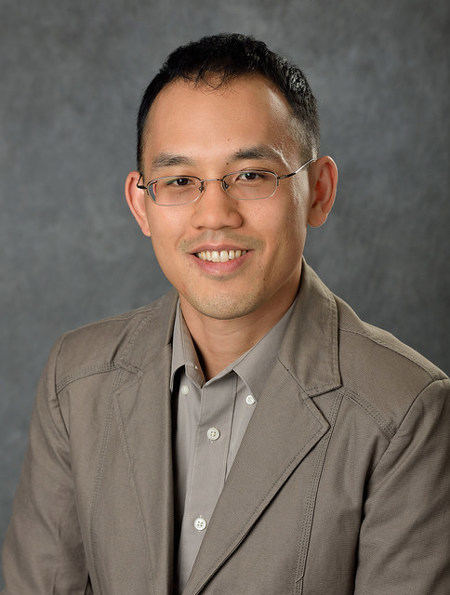
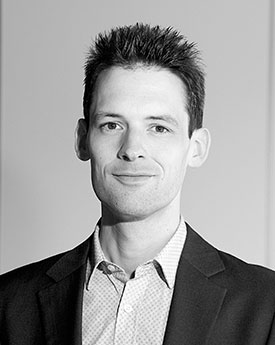
Kevin Liu is an Associate Professor at Michigan State University, affiliated with the Genetics & Genome Sciences Program and the Ecology, Evolution & Behavior Program . His research focuses on computational biology, phylogenetics, and genomics, particularly developing statistical methods for evolutionary analysis. Institution: Michigan State University Programs: Genetics & Genome Sciences Program, Ecology, Evolution & Behavior Program Kevin Liu’s work centers on advancing phylogenetic reconstruction techniques, addressing challenges in species tree estimation, multiple sequence alignment, and handling non-tree-like evolutionary histories. He employs coalescent-based models, hidden Markov models, and resampling methods to improve accuracy in genomic data analysis. Recent trends in his research include developing scalable algorithms for phylogenetic network inference, integrating statistical resampling techniques, and exploring the impact of alignment and tree estimation errors on evolutionary studies. His publications highlight collaborations in computational method development for large-scale genomic datasets.
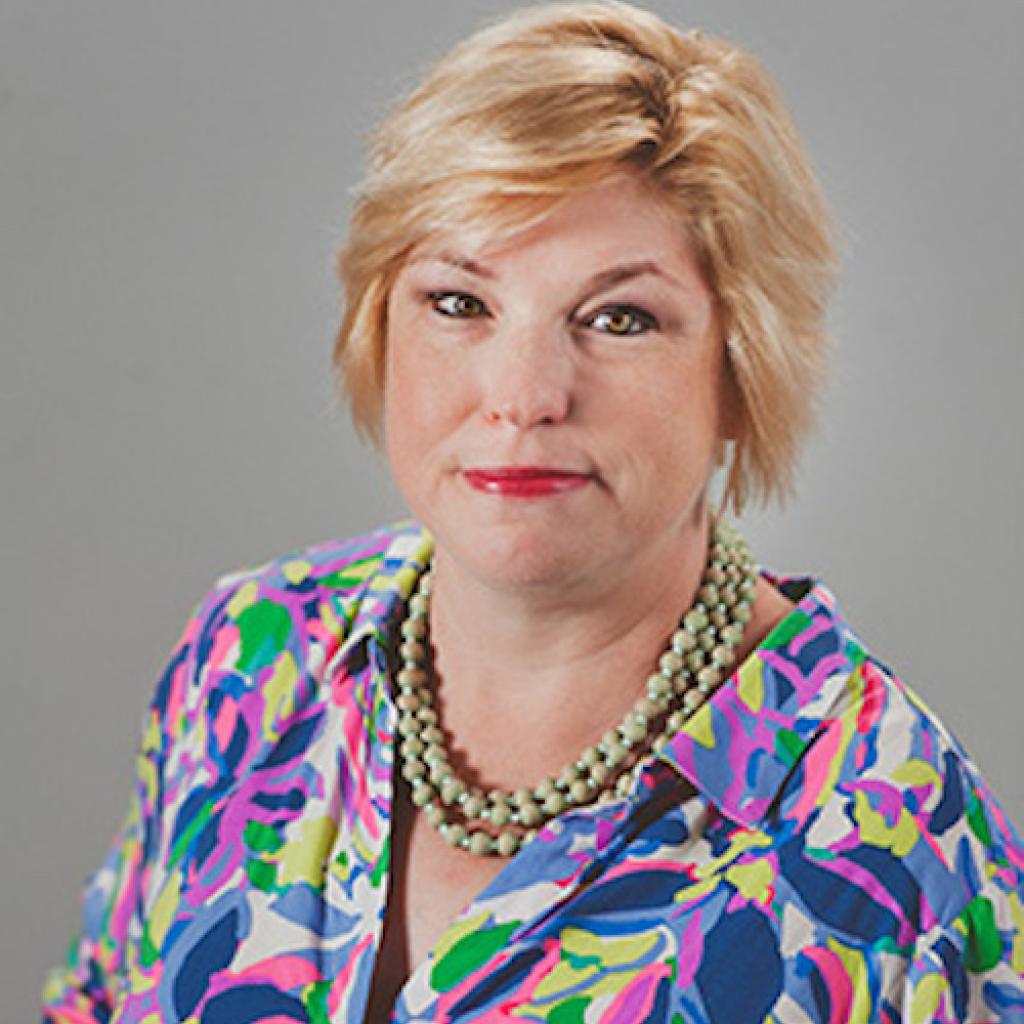
Amy Clements serves as Professor of Writing and Rhetoric and Chair of the Department of Literature, Writing and Rhetoric within St. Edward's University's School of Arts and Humanities. She teaches writing for advertising and public relations, content and social media strategy, and creative writing while coordinating WRIT program internships and advising Arete, the award-winning student research journal. Her leadership oversees the BA in Writing & Rhetoric and BA in English Literature programs. Her academic credentials include: Ph.D. in English with Concentrations in Rhetoric and Bibliography, University of Texas at Austin, 2010 M.F.A. in Creative Writing, The New School for Social Research, New York City, 2001 B.A. in English, University of Texas at Austin, 1990 B.S. in Advertising, University of Texas at Austin, 1989 Dr. Clements' research bridges historical publishing analysis and contemporary rhetorical practice. Her scholarship focuses on Knopf publishing history, examining transatlantic connections, brand strategy evolution, and design innovation during modernism's formative years. Simultaneously, she explores creative writing pedagogy, social media rhetoric, and women's studies applications. Her work demonstrates how historical publishing practices inform current digital communication challenges while maintaining literary excellence. Publication trends reveal dual scholarly trajectories: historical studies of 20th century publishing (particularly Knopf's transatlantic operations and brand development) and contemporary applications of rhetoric in writing program sustainability, alumni engagement, and digital strategy. Her creative fiction consistently explores human relationships through precise language and psychological depth, appearing in prestigious literary journals. As internship coordinator for the WRIT program and faculty advisor for Arete, Dr. Clements directly mentors students in professional writing contexts. Her presentations address curriculum development challenges, including "Surviving and Thriving Through Academic Program Review" and "Empathy, Worldbuilding, and Rhetoric" in writing studies. She manages the Community Service program for the Women's and Gender Studies minor, connecting academic work with practical social applications. Her professional activities include directing student publications, developing community service initiatives for gender studies, and maintaining active involvement in publishing history research through organizations like the Bibliographical Society of America. Current projects continue exploring transatlantic modernism's legacy and innovative approaches to writing program development in fiscal constraint environments.
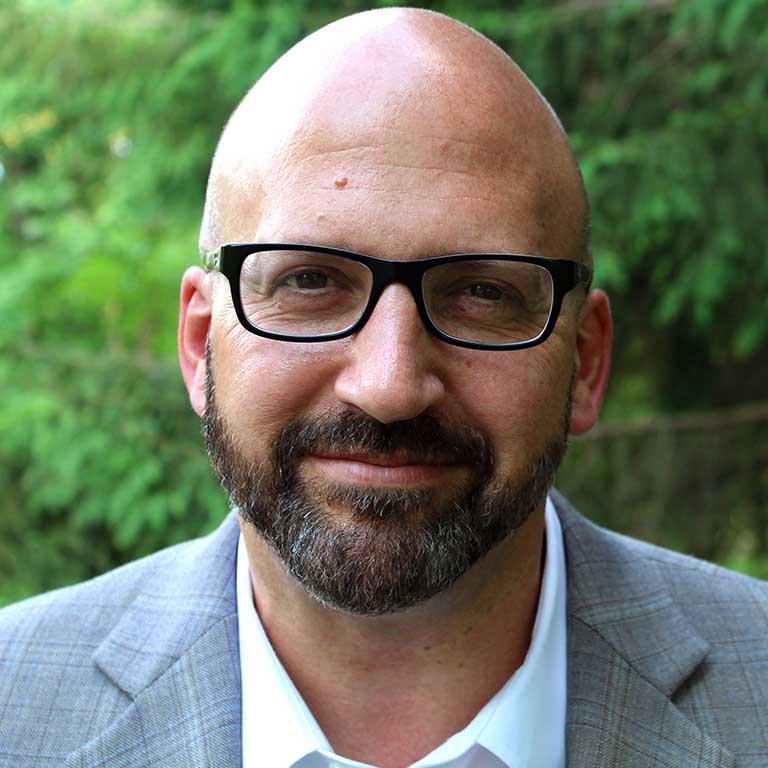
Steven Wagschal is a Professor in the Department of Spanish and Portuguese at Indiana University Bloomington and Director of the Hispanic Literature Program. His work bridges early modern Spanish literature with cognitive science and animal studies. Education: Ph.D., Columbia University (1999); M.A., Columbia University (1992); B.A., Concordia University (1991) Affiliations: Center for Latin American and Caribbean Studies, Cognitive Science Program, Renaissance Studies Program Wagschal’s research explores textual expressions of mental phenomena, including emotions (disgust, jealousy), sensory perception, and non-human animal cognition. He examines works by Cervantes, Calderón, De Zayas, Garcilaso, and visual artists like Velázquez. His recent publications focus on cognitive approaches to literature and sensory experiences in Iberian cultures. Awards include the IDAH Faculty Fellowship (2021), MIND Award for Teaching (2020), and multiple grants for interdisciplinary projects. Key Research Themes: Intersections of literary studies, cognitive science, and animal studies Emotion theory in Golden Age prose and theater Sensory perception in early modern Iberian literature He has taught graduate seminars on Cervantes, madness, and cognitive theory, alongside undergraduate courses on Don Quixote and Hispanic literature.
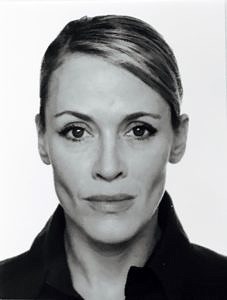
Riho Grünthal is Professor of Finnic languages at the University of Helsinki, working within the Department of Finnish, Finno-Ugrian and Scandinavian Studies in the Faculty of Arts. He serves as Supervisor and Head of the Study Programme for the Doctoral Programme in Language Studies (HELSLANG) and is President of the Finno-Ugrian Society. His academic work spans teaching in the MA program of Finnish language and Finno-Ugric Studies and the BA program for Finnish and Finno-Ugrian languages and literatures. Professor Grünthal's research focuses on language change both past and present, with particular emphasis on western Uralic languages in the northern Baltic Sea area and Central Russia. His work encompasses Finnic languages, language typology, language contacts, language sociology, and language history, with special attention to Veps, Livonian, Erzya, and Mari languages. His research approach combines historical linguistics with typological and sociolinguistic perspectives to understand language evolution and contact phenomena. Analysis of his recent publications reveals a strong focus on diachronic linguistics, particularly examining grammatical change in Uralic languages. Key themes include the evolution of case systems (especially partitive), causative alternation, language contact phenomena, and the historical spread of Finnic languages. His work often bridges linguistic research with archaeological and historical evidence to reconstruct language histories. Honorary Doctor of the University of Tartu (2019) Maarjamaa Risti neljanda klassi orden (2011) Tuglas-seuran kunniajäsen (2013) As Supervisor for the Doctoral Programme in Language Studies, Grünthal guides numerous doctoral candidates in linguistic research. He has secured significant funding for projects including HEI-SAMI (Sami Language in higher education), The (Re-)Making of a Discipline: Digital, and UrCaus (Grammatical characters in computational phylogeny). His research has been supported by EU funding and Finnish research councils, enabling extensive fieldwork and international collaboration across the Uralic language area. Professor Grünthal actively participates in the Finno-Ugrian Society and collaborates with researchers across Europe, particularly in Estonia, Russia, and other regions with Uralic language communities. His work contributes significantly to understanding endangered Uralic languages and preserving linguistic diversity in Northern Europe.
Linda Bisello is a Research Professor at the Institute of Italian Studies (ISI), affiliated with the Faculty of Communication, Culture and Society at the University of Italian Switzerland. Her work bridges literary analysis, cultural history, and interdisciplinary studies, particularly focusing on the intersection of literature and medicine. Research Interests: Rhetorical and stylistic dimensions of literary genres, silence in modern literature, historiography in literary discourse, and the pedagogy of Italian literature. Recent Trends: Publications increasingly explore medico-literary intersections (anatomy, contagion, health narratives) and historical-critical analyses of Baroque and early modern texts. She contributes to academic discourse through edited Renaissance/Baroque texts and essays in journals like Lettere Italiane and Testo , though no formal awards or student advisement details are listed.
Karin Hoepker is an Associate Professor at the Department of English and American Studies, Friedrich-Alexander University Erlangen-Nürnberg (FAU), with a focus on American Literature, Narrative Theory, and Economic Criticism. She is currently serving as a Guest Professor of American Literature at the University of Konstanz (2025) and has held guest positions at institutions including Freie Universität Berlin (2023-2024) and Bonn University (2021/22). Her research explores intersections between literature, economics, science, and urban culture. Research Interests : Literature and the Public Sphere, Economic Criticism, Biomedicalization in Fiction, Ecocriticism, Popular Culture, and Posthumanism. Academic Roles : Principal Investigator for DFG Research Training Group 2806 “Literature and the Public Sphere in Differentiated Contemporary Cultures”; Editor of the New American Studies Journal; Coordinator of FAU’s Master’s Program in North American Studies. Research Trends : Recent articles analyze speculative finance in 19th-century fiction, biomedical ethics in TV series like Homecoming , and posthuman themes in Margaret Atwood’s work. Her projects connect economic theory with literary risk narratives and examine urban space in contemporary media. Scientific Awards : Habilitationspreis 2018 Postdoctoral Fellowship for Prominent Female Scholars (DFG), 2008/09 Grants : Leading DFG-funded projects on literature and public spheres (2022-present) and the epistemology of gossip in 19th-century U.S. literature (2018-present).
María Aboal López is a researcher at the International University of La Rioja (UNIR) , specializing in Spanish Literature with a focus on 19th-century realism and naturalism. Her work examines themes of gender, death, and educational innovation through literary analysis. Key Affiliations : International University of La Rioja (UNIR) Research Themes : 19th-century Spanish novels, gender roles, death symbolism, educational pedagogy Her research interests include the intersection of gender and medical discourse in Spanish literature, the representation of women in realism, and pedagogical strategies using digital tools like Padlet. She has extensively analyzed authors such as Benito Pérez Galdós , Emilia Pardo Bazán , and Clarín , often linking literary themes to broader sociocultural contexts. María's recent publications span topics like early childhood education innovations, hysteria in naturalist fiction , and stigmatization of the female body . Her work bridges literary analysis with educational applications , reflecting a commitment to interdisciplinary research. Academic Collaborations include co-authored studies on digital journalism and its business models. She has directed PhD theses on contemporary authors like Rosa Montero and Geling Yan , as well as analyses of Emilia Pardo Bazán 's dramatic narratives.
Neo McAdams is an Assistant Professor in the Department of Geosciences at Texas Tech University, where he specializes in Micropaleontology and Biostratigraphy. His research focuses on paleontological and stratigraphic methods for geological correlation, with expertise in conodont and trilobite analysis. Education B.A. Geoscience, University of Iowa (2007) M.S. Geoscience, University of Iowa (2010) Ph.D. Geoscience, University of Iowa (2016) Research Focus Dr. McAdams leads research in micropaleontological methods, biostratigraphic zonation, and integrated geochemical approaches for high-resolution geological correlation. His work emphasizes Ordovician-Silurian systems, utilizing conodonts and trilobites as key paleontological proxies for reconstructing paleoenvironments and calibrating geologic time scales. Research Trends His publications demonstrate evolving methodologies from taxonomic revisions (2007-2012) toward integrated biochemostratigraphic approaches (2016-present). Recent work incorporates nanomechanical analysis, high-precision geochronology, and redox condition reconstructions during carbon isotope excursions, reflecting cross-disciplinary approaches to paleoenvironmental questions. Student Advising Current PhD advisee Emily Hauf continues research in the McAdams Lab, which undertook field expeditions to Nevada in 2021. Lab renovations were completed in 2021 to support advanced micropaleontological research.
Matt Hodge is an Associate Professor and Program Director of Interdisciplinary Arts at William Peace University. His work bridges music composition, popular culture studies, and arts education. He holds an MFA in Composition (Media Scoring Emphasis) from Vermont College of Fine Arts, alongside degrees from Campbellsville University. Education: BA in Theory and Composition, Campbellsville University MA in Music, Campbellsville University MFA in Composition (Media Scoring Emphasis), Vermont College of Fine Arts Research Interests: Hodge explores intersections between music and interdisciplinary arts, focusing on topics like film soundtracks, game music design, Broadway trends, and the cultural impact of Disney. His work often critiques how music shapes identity, spirituality, and global narratives in media. Awards & Recognition: Amazon Bestseller for Cool Cats and a Hot Mouse: A History of Jazz and Disney Four national writing awards Dozen award nominations as a writer/composer/educator International competition finalist in six categories Advising & Grants: While no formal advisees are listed, Hodge has collaborated on five undergraduate degree programs and contributed to interdisciplinary arts initiatives across multiple universities. His professional memberships include BMI, NFAA, and AEA. Labs & Teams: Involved in Gravy Italian Restaurant collaborations, NYC celebrity events, and international music projects spanning 30+ countries. Active in theatre productions, game prototype scoring, and music entrepreneurship ventures.
Dr. Josiah Townsend is a Professor of Biology at Indiana University of Pennsylvania (IUP), affiliated with the John J. and Char Kopchick College of Natural Sciences and Mathematics. He holds a PhD in Interdisciplinary Ecology (2011) from the University of Florida, alongside advanced degrees in Latin American Studies and Wildlife Ecology. His research focuses on Systematics, Evolutionary Biology, Conservation, and Herpetology, particularly in Neotropical amphibians and reptiles. He leads the Townsend Lab, which investigates biodiversity patterns and conservation strategies in Central America and the Appalachian Mountains. His work emphasizes taxonomic inventory, phylogenetics, and landscape ecology to address habitat fragmentation and species conservation. Dr. Townsend has described over two dozen new species from Central America and mentors graduate students in ecological and taxonomic research. Education: PhD in Interdisciplinary Ecology, University of Florida (2011) MA in Latin American Studies (Tropical Conservation and Development), University of Florida (2006) BSc in Wildlife Ecology and Conservation, University of Florida (2004) AA in Biology, Miami-Dade Community College (2000) Research Interests: Dr. Townsend’s work integrates field and lab-based approaches to study biological diversity, with a focus on amphibians and reptiles in threatened ecosystems like Central America’s cloud forests and the Appalachian salamander habitats. His projects address species delimitation, phylogenetic relationships, and conservation challenges arising from habitat fragmentation and anthropogenic pressures such as energy industry development. Advising & Grants: He has mentored multiple graduate students, including notable alumni like Thomas Firneno (PhD candidate at UT Arlington) and Erich Hofmann (PhD candidate at Clemson University). His research has led to impactful publications on species discovery and conservation strategies. The Townsend Lab collaborates extensively in Honduras and the U.S. to document biodiversity and promote conservation initiatives. Labs/Teams: The Townsend Lab at IUP focuses on herpetological research, with fieldwork in Central America and the Appalachians. Collaborations include international institutions like the University of Texas and Clemson University, emphasizing applied conservation and taxonomic discovery.
Stephanie Russo is an Associate Professor of Literature at Macquarie University's School of Humanities, affiliated with the Department of Media, Communications, Creative Arts, Language, and Literature. She specializes in historical fiction across film, television, theatre, and literature, with a focus on anachronisms, temporal representation, and early modern women's writing. Her research bridges eighteenth-century studies with contemporary media, analyzing how historical narratives engage with politics, gender, and power. Education: Holds a Postgraduate Certificate in Higher Education from Macquarie University (2015). Teaching includes courses on historical fiction, literary analysis, and research methodologies. Research interests span historical fiction's anachronistic turn, biofiction, and counterfactual narratives. Notable works include *The Afterlife of Anne Boleyn* (2020) and *The Anachronistic Turn* (2023). Upcoming projects explore counterfactual historical novels and global historical fictions. She guest edits journals like *Clio* and *Parergon*, and edits the *Journal of Historical Fictions*. Awards: 2020 Faculty of Arts Research Excellence Award. Grants/Projects: Leads research on eighteenth-century women's novels and queenship representation. Active in editorial roles for Brill's Global Historical Fictions series. Labs/Teams: Collaborates internationally on historical fiction networks and contributes to interdisciplinary research on temporal storytelling.
Frank Rudzicz is a Professor at the University of Toronto with appointments in the Faculty of Medicine and Department of Computer Science. His research bridges machine learning, natural language processing, and healthcare applications, with a particular focus on developing AI solutions for medical diagnostics, surgical assistance, and patient care. He leads several research initiatives in medical AI and collaborates extensively with clinicians and healthcare institutions. Rudzicz's research interests span multiple critical areas in healthcare AI. He has pioneered work in speech-based detection of neurological conditions including Alzheimer's and Parkinson's diseases, developing algorithms that analyze linguistic patterns to identify early signs of cognitive decline. His work in surgical AI has led to systems that provide real-time decision support during operations and analyze surgical performance. He also investigates ethical AI implementation in healthcare, addressing privacy concerns and developing frameworks for trustworthy clinical AI systems. More recently, his research has expanded into large language models for medical applications, focusing on privacy preservation, fairness, and explainability in clinical contexts. His publication record shows a clear evolution from foundational work in speech processing and dysarthria recognition toward increasingly sophisticated medical AI applications. Early work focused on improving speech recognition for impaired speakers, which naturally led to applications in neurological disorder detection. Over the past decade, his research has expanded to encompass broader healthcare applications, with recent work heavily featuring transformer models, multimodal data integration, and ethical considerations in medical AI deployment. His current research demonstrates strong emphasis on practical implementation challenges including model security, privacy preservation, and clinical integration of AI systems. Rudzicz has received recognition for his work, including best paper awards at major conferences like ICLR 2025. His research has been supported by numerous grants focusing on AI in healthcare, though specific grant details aren't provided in the available text. He has mentored numerous graduate students who have gone on to contribute significantly to medical AI research. As a leader in medical AI, Rudzicz contributes to major collaborative efforts including the Delphi consensus statement for digital surgery. His work frequently appears in top-tier AI and medical journals, demonstrating his ability to bridge the technical and clinical domains. Through his research group at the University of Toronto, he continues to advance the frontier of AI applications in healthcare while addressing the practical and ethical challenges of implementing these technologies in real clinical settings.
Sina Zarrieß is a Professor of Computational Linguistics at the University of Bielefeld, affiliated with the Faculty for Linguistics and Literature Studies. His research focuses on computational models of language use, with applications in natural language generation, dialogue systems, and language-vision integration. He leads the Computational Linguistics Bielefeld group and collaborates on interdisciplinary projects in ecology, hate speech analysis, and multimodal interaction. Research interests include language model architecture optimization, pragmatic reasoning in generation, and ethical NLP. He actively contributes to workshops such as ACL, EMNLP, and NLP4Ecology, publishing on topics like character-based LMs, gaze-driven hate speech detection, and visualization-oriented dialog systems. His work bridges theoretical linguistics with applied machine learning, emphasizing interpretability and real-world impact. Notable projects include developing BabyLM character-based models, studying gender-inclusive language benchmarks (SlayQA), and creating tools like VIST5 for adaptive visualization dialog. He explores how LMs encode linguistic principles like Maximize Presupposition! and investigates zero-shot learning for novel object categories. Current research trends show a focus on model efficiency (e.g., sentence selection for classification), multimodal grounding (e.g., scene context in visual tasks), and human-AI interaction dynamics (e.g., explanation effects on user perception). Despite prolific publishing, no specific scientific awards are mentioned in the provided materials. Advising and grants are not explicitly detailed, though his extensive co-authorship network indicates active mentoring. The Computational Linguistics Bielefeld group maintains open research directions in visual question answering, poetry generation diversity, and historical hate speech evolution studies.
Wendy Melillo is an Associate Professor of Journalism at American University's School of Communication in Washington, DC. She teaches advanced journalism courses including COMM-425 Advanced Reporting, COMM-462 Journalism Capstone, and COMM-270 How News Med Shape Hist, with courses scheduled through Spring 2025. Education: BA in Print Journalism/International Relations from American University MA in History of Ideas from Johns Hopkins University MA in International Communications from American University Professor Melillo's research centers on strategic communication's societal impact, with special expertise in public service advertising history and effectiveness. Her work examines how campaigns like Smokey Bear and the Crying Indian have shaped cultural narratives while revealing tensions between corporate interests, government messaging, and public welfare. She explores how advertising language bridges political objectives with cultural myths, particularly in campaigns like the Peace Corps that masked geopolitical goals behind adventure narratives. Her publications reveal consistent themes across decades of research: the complex relationships between government, corporations and advertising in shaping public perception; the evolution of PSA campaigns from traditional media to digital platforms; and the ethical tensions in social marketing campaigns addressing issues from environmental protection to LGBTQ+ inclusion. Her work demonstrates how seemingly simple advertising characters often carry profound cultural and political significance. Scientific Awards: Pulitzer Prize nomination for coverage of the United Way scandal Raymond Clapper Memorial Association Congressional Award (1992) Penney-Missouri Newspaper Award for Health and Nutrition Reporting (1986) Award from the White House Correspondents' Association presented by President Clinton Before joining academia, Professor Melillo had a distinguished journalism career as a staff writer for The Washington Post and Washington, D.C. bureau chief for Adweek. Her media appearances include NPR, NBC4, and CBS Evening News where she has provided expert commentary on Super Bowl advertising, corporate marketing decisions, and PSA effectiveness. She continues to contribute contemporary analysis of political communication, as evidenced by her recent commentary on Trump's mug shot as a political commodity.
Dr. Gary Bettinson is a Senior Lecturer in the Lancaster Institute for the Contemporary Arts at Lancaster University. His research focuses on film aesthetics, Hong Kong/Asian cinema, and American film traditions. He teaches courses such as Contemporary Hong Kong Cinema, Film Theory, and Media Studies. As Editor-in-Chief of Asian Cinema journal, he actively contributes to scholarly discourse on East Asian film. His work explores neoformalism, historical poetics, and film authorship. Notable publications include The Sensuous Cinema of Wong Kar-wai (2025) and edited volumes on Stephen Chow and Hong Kong horror cinema. Bettinson has supervised four postgraduate students and regularly engages in invited talks and interviews on cinematic topics. His academic contributions span over 70 publications, including books, journal articles, and interviews. He is affiliated with research groups focusing on film cultures and contemporary arts.