Gianluca Iaccarino is a Professor of Mechanical Engineering at Stanford University and the Robert Bosch Chairholder. He serves as Director of the PSAAP Center and leads large-scale computational research initiatives in uncertainty quantification, exascale computing, and multiphysics simulations. His academic journey includes a PhD in Mechanical Engineering from Politecnico di Bari (2005), postdoctoral work at Stanford's Center for Turbulence Research, and progression from Research Engineer to full Professor. Education : PhD (Politecnico di Bari), MS/BS in Aeronautical Engineering (University of Naples) Research : Computational engineering, turbulence modeling, uncertainty quantification, biomedical fluid dynamics, and exascale-ready algorithms Publications : 15+ recent articles focus on turbulence modeling, data-driven simulations, and uncertainty quantification across diverse applications in aerospace, biomedical, and energy systems Awards : PECASE (2010), APS Fellow (2019), multiple best paper awards (AIAA, ASME), Terman Fellow (2007) Students : Advises doctoral and master's students in mechanical engineering and computational methods Leadership : Director of PSAAP Center (2014-present), Chair of Mechanical Engineering Department (2024-present)
Sriram Subramaniam is a Professor in the Department of Biochemistry and Molecular Biology at the University of British Columbia (UBC) and holds the Gobind Khorana Canada Excellence Research Chair in Precision Cancer Drug Design. His research leverages cryo-electron microscopy (cryo-EM) to advance structural biology and drug design, focusing on protein dynamics and therapeutic target identification. Education: PhD in Physical Chemistry (1987) from Stanford University; MSc in Chemistry (1981) from Indian Institute of Technology, Kanpur. Subramaniam's interdisciplinary work combines cryo-EM with computational tools and molecular biology to study protein structures at atomic resolution. His lab has pioneered cryo-EM applications in precision medicine, including mapping small molecule drugs on patient-specific cancer mutants. Recent publications (2024-2022) highlight his contributions to understanding SARS-CoV-2 immune evasion, structural mechanisms of ATPases, and AI integration in structural biology. His research spans viral entry mechanisms, CRISPR systems, and neurodegenerative disease pathways. Scientific Awards: Gobind Khorana Canada Excellence Research Chair NIH Director’s Award for Scientific Excellence Fellow of the Biophysical Society Breakthrough Prize nomination Based at the Djavad Mowafaghian Center for Brain Health, Subramaniam leads the Program in Cryo-EM Guided Drug Design, contributing to over 177 peer-reviewed publications with a career h-index of 58 and citations exceeding 12,340.
Deian Stefan is an Associate Professor in the Department of Computer Science and Engineering at the University of California, San Diego (UCSD). His research focuses on building secure systems through interdisciplinary approaches spanning security , programming languages , and systems . Key areas include WebAssembly security , JavaScript JITs , constant-time programming , memory safety , information flow control , and program analysis tools. He co-founded Intrinsic , a web-security startup later acquired by VMWare, and contributed to standards like W3C WebAppSec and Node.js Security Working Groups. Education: PhD in Computer Science from Stanford University (2015), advised by David Mazières, John C. Mitchell, and Alejandro Russo BE and ME in Electrical Engineering from Cooper Union (2011) Research Trends: His work targets secure systems (Web frameworks, sandboxing, runtime systems), language-based security (constant-time programming, memory safety), and verification for security . Recent publications focus on mitigating speculative execution attacks, hardware-assisted sandboxing, and WebAssembly security. Awards & Recognition: Distinguished Paper Award at POPL 2021 and IEEE MICRO Top Picks 2024 Best Paper Award at CollaborateCom 2010 2010.01 Prize by Daniel J. Bernstein (DJB) Most Influential Paper Award at ICFP 2022 Teaching: He has taught graduate and undergraduate courses including Graduate Computer Security (CSE 227) , Building Secure Systems with Rust , and Programming Languages: Principles and Paradigms at UCSD since 2018. Prior teaching experience includes Stanford and Cooper Union.
Dr. Sezgin Ayabakan is an Associate Professor in the Department of Management Information Systems at the Fox School of Business and Management, Temple University . He holds a PhD in Management Science from the University of Texas at Dallas, with a focus on Management Information Systems (MIS), an MS in Industrial and Systems Engineering from the University of Florida, and a BS in Industrial Engineering from Bilkent University in Turkey. His research focuses on healthcare analytics , particularly exploring how health information technology (HIT) impacts healthcare costs, quality, and utilization. Key research interests include data analytics applications in healthcare and social media, the business value of information systems, and open-source production strategies. He has examined topics such as telehealth efficacy, electronic health record (EHR) adoption challenges, hospital readmission reduction programs, and the interplay between healthcare IT and clinician well-being. Dr. Ayabakan teaches undergraduate and graduate courses in information systems, including MIS 2101: Digital Systems and SBM 3586: Diamond Peer Teachers - Internship II . His work has been published in top-tier journals like MIS Quarterly and Health Services Research and Management Epidemiology , with recent studies addressing telehealth utilization, EHR strategy impacts, and the role of organizational routines in clinician satisfaction. While no formal awards are listed, his contributions to healthcare IT research demonstrate significant academic impact. His advisory and grant activities are not detailed in the provided text, but his research often intersects with practical healthcare system challenges, suggesting potential collaborations with healthcare institutions and policy organizations.
Mungo Wilson is a Professor of Finance at the Saïd Business School , University of Oxford, and an associate member of the Oxford-Man Institute of Quantitative Finance. He holds a PPE degree from Oxford, an MSc in Economics from LSE, and a PhD in Economics from Harvard. His research focuses on asset pricing, credit risk, mutual funds, and macroeconomic influences on financial markets. He has published extensively in top journals and engages actively with industry through board roles and advisory work. Education : Bachelor's in Philosophy, Politics & Economics (PPE), University of Oxford MSc Economics, London School of Economics PhD in Economics, Harvard University Research Interests : Assesses how macroeconomic conditions and credit risk shape asset prices Analyzes mutual fund behavior and market information transmission mechanisms Explores political dynamics' impact on financial markets His professional engagements include board memberships with funds like EA Asia Absolute Return Master Fund and advisory roles at Broadwell Capital. Teaching focuses on microeconomics for MBA programs, covering game theory, market structures, and price discrimination. Advisory & Grants : Supervises doctoral students at Saïd Business School and serves on programme committees for major finance conferences (e.g., European Finance Association, CEPR Annual Spring Symposium). Awards : While no specific prizes are listed, his impactful research has been widely cited and presented globally.
Prof. Matthias Nießner is a Professor at the Technical University of Munich , where he leads the Visual Computing Lab . Prior to this, he held a Visiting Assistant Professor position at Stanford University . His work bridges computer vision , graphics , and machine learning , focusing on 3D reconstruction , semantic scene understanding , and AI-driven video synthesis . Prof. Nießner has published over 150 works in top venues like SIGGRAPH , CVPR , and ECCV , with several receiving best paper awards (SIGCHI’14, HPG’15, SPG’18, SIGGRAPH’16 Emerging Tech). His research has garnered international media attention, including features in the New York Times , Wall Street Journal , and MIT Technological Review , as well as TV demonstrations (e.g., Jimmy Kimmel Live for Face2Face technology). Awards : TUM-IAS Rudolph Moessbauer Fellowship (2017–ongoing) Google Faculty Award (2017) Nvidia Professor Partnership Award (2018) ERC Starting Grant (2018, €1.5M) Eurographics Young Researcher Award (2019) Research Trends : 3D Gaussian Splatting for real-time rendering Neural Radiance Fields (NeRF) with mesh supervision Audio-driven facial animation via diffusion models Latent space diffusion for 3D scenes Self-supervised and zero-shot methods for 3D and image analysis As a co-founder and director of Synthesia Inc. , he drives democratization of synthetic media. His YouTube channel has over 5 million views, reflecting his impact beyond academia.
Ben Livneh is an Associate Professor at the University of Colorado Boulder , affiliated with both the Civil, Environmental, and Architectural Engineering Department and the Cooperative Institute for Research in Environmental Sciences (CIRES) . As Director of the Western Water Assessment , he bridges academic research with regional climate resilience initiatives. Ph.D. in Civil Engineering (Hydrology), University of Washington (2012) MESc in Civil Engineering, University of Western Ontario (2006) His research explores hydrologic responses to climate and land-cover changes , focusing on snowpack dynamics, wildfire impacts on water quality, sediment transport, and drought predictability. Key projects include simulations of montane snowpack for wolverine habitat preservation and post-fire landslide susceptibility analysis . Recent publications highlight continental-scale hydraulic geometry datasets , climate-energy nexus challenges , and global lake level reconstructions using satellite data. His work has been recognized by the AGU Hydrologic Sciences Early Career Award (2022) and NASA New Investigator Program (2018) . Scientific Awards AGU Hydrologic Sciences Early Career Award (2022) NASA New Investigator Award (2018) Symposium Scholar, DISCCRS VIII (2013) CIRES Visiting Fellowship (2012) Ben leads interdisciplinary collaborations with institutions like the University of Alaska Southeast and NOAA , addressing climate-water-energy-food nexus challenges through advanced modeling and remote sensing techniques.
Michele Zorzi is a Professor of Telecommunications at the School of Engineering, University of Padova, Italy, where he has held a faculty position since 2003. He leads the SIGNET (Signal processing and Networking) Research Group, focusing on cutting-edge wireless networking challenges including mmWave communications and underwater networks. His extensive publication record exceeds 600 papers in top-tier journals and conferences, reflecting significant contributions to the field through both theoretical and experimental work. He received his Laurea Degree (1990) and Ph.D. (1994) in Electrical Engineering from the University of Padova. Prior academic appointments include Politecnico di Milano (1993-1996), University of California San Diego (1995-1998), and University of Ferrara (1998-2003), where he progressed from Associate Professor to full Professor. His educational trajectory demonstrates deep roots in Italian academia with international exposure. Professor Zorzi's research spans wireless communications and networking, with current emphases on mmWave networking for vehicular systems, underwater acoustic/optical communications, non-terrestrial networks, and AI-driven networking solutions. His group conducts experimental validations including at-sea trials for underwater systems and testbeds for vehicular networks. Key projects include PRATA for predictive QoS in autonomous driving and IoT-based environmental monitoring of the Venice Lagoon, demonstrating practical applications of theoretical work. Analysis of his 2022-2025 publications reveals strong trends in applying artificial intelligence to networking challenges across diverse environments. There is significant emphasis on vehicular networks (predictive QoS, teleoperated driving), underwater systems (acoustic/optical communications, AUV swarms), and satellite networks (Starlink integration, NTN security). Experimental validation in real-world scenarios like the Venice Lagoon monitoring project and underwater sea trials characterizes his applied research approach. His scientific accolades include: IEEE Fellow (2007) IEEE Communications Society Best Tutorial Paper Award (2008, 2019) Stephen O. Rice Best Paper Award (2018) Multiple best paper awards at IEEE conferences (2005-2020) As principal investigator for numerous European and US research projects plus 20+ industry-funded initiatives, Professor Zorzi has mentored over 35 PhD students and post-docs. Graduates now hold prominent positions at institutions including Stanford, UCSD, CTTC, and Huawei. His SIGNET group maintains active international collaborations and contributes to open-source networking tools via GitHub, demonstrating commitment to community engagement. The SIGNET Research Group, housed within the Department of Information Engineering, operates specialized experimental facilities for mmWave and underwater communications. Current initiatives include AI-based predictive QoS frameworks for vehicular networks, underwater optical communication systems using ultraviolet light, and large-scale IoT deployments for environmental monitoring. The group's GitHub presence indicates strong open-science practices, while recent sea trials confirm hands-on experimental capabilities beyond theoretical work.
Florian Kerschbaum is a Professor and NSERC/RBC Industrial Research Chair in Data Security at the Cheriton School of Computer Science, University of Waterloo. His research focuses on data security and privacy, applied cryptography, and confidentiality in data science. Research interests span data collection/preparation management, secure multi-party computation, homomorphic encryption, differential privacy, and machine learning robustness/privacy. His work develops cryptographic solutions for practical data management challenges in distributed systems.
Kaveh Razavi is an Assistant Professor at ETH Zurich in the Department of Information Technology and Electrical Engineering, supervising the Computer Security Group. He is also affiliated with the Department of Computer Science. Research focuses on commodity hardware and operating systems security Teaching: Computer Engineering (BSc 2022–2025), Hardware Security (MSc 2016–2025), Advanced Operating Systems (MSc 2016–2019) Research Interests: Razavi's work bridges computer systems and security, emphasizing microarchitectural vulnerabilities, hardware exploitation, and security verification. His group develops tools for analyzing hardware-software interactions and mitigating memory attacks like Rowhammer. Scientific Awards: Distinguished/Best Paper Awards at IEEE S&P, USENIX Security, MICRO Five Pwnies Awards for innovative research Dutch Veni Grant, ERC Starting Grant Jochen Liedtke Young Researcher Award Golden Owl Teaching Award (2022) ETH Medal, Intel Bounty Reward, BlackHat USA Recognition
Dr. Akhilesh Jaiswal serves as Assistant Professor of Electrical and Computer Engineering at the University of Wisconsin-Madison, where his research pioneers device-circuit co-design for next-generation computing systems. His work focuses on enabling extreme-edge intelligence through processing-in-pixel technology, in-memory computing architectures, and bio-inspired neuromorphic systems. His academic credentials include: PhD in Nano-electronics from Purdue University (2019) MS from the University of Minnesota (2014) Bachelor of Technology from Shri Guru Gobind Singhji Institute of Engineering and Technology (2011) Dr. Jaiswal's research program centers on revolutionizing edge computing through hardware innovations that integrate sensing and processing. His device-circuit co-design approach leverages alternate state variables to create energy-efficient systems for real-time applications, with particular emphasis on retina-inspired sensors and photonic memory architectures. This work bridges semiconductor physics with AI acceleration needs, targeting applications from autonomous systems to biomedical devices. Analysis of his 2023-2025 publications reveals dominant themes in photonic SRAM-based in-memory computing (40% of output), retina-inspired motion processing (30%), and secure hardware architectures (20%). His team consistently develops novel bitcell designs that enable XOR logic execution within memory arrays while maintaining compatibility with CMOS fabrication processes. Recent work shows increasing focus on biomedical applications of processing-in-pixel technology. His distinguished recognition includes: Three consecutive ISI Exploratory Research Awards (2020-2023) IEEE Brain Community Best Paper Award (2022) 27 issued US patents with multiple pending applications Nomination for USC Moore Inventor Fellowship (2022) Dr. Jaiswal actively mentors graduate researchers through ECE 790/890/990 courses while securing exploratory funding through ISI and Keston Foundation awards. His patent portfolio demonstrates exceptional translational impact, with industry game-changer classifications from USPTO. The 2022 VLSI-SoC nomination and multiple research highlights in major outlets validate his contributions to hardware security and neuromorphic vision sensors. His laboratory develops integrated hardware platforms combining magnetic tunnel junctions, photonic memory, and CMOS image sensors to create unified processing-in-sensor systems. Current projects include retina-inspired motion segmentation for event cameras and electro-optic frequency transducers for quantum computing interfaces, with strong industry collaboration through patent licensing.
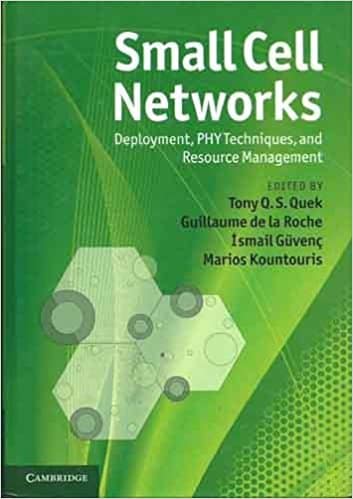
Dr. Ismail Guvenc is a Full Professor in the Department of Electrical and Computer Engineering at North Carolina State University. He holds an IEEE Fellowship and is a Senior Member of the U.S. National Academy of Inventors. His research focuses on 5G/6G wireless systems, UAV communications, heterogeneous networks, and spectrum management. He leads the NSF AERPAW project and serves as the NC State Site Director for the NSF BWAC I/UCRC center. Dr. Guvenc has authored/co-edited four books and holds over 30 U.S. patents. Education: Ph.D. in Electrical Engineering, University of South Florida (2006) Master's in Electrical and Computer Engineering, University of New Mexico (2003) Bachelor's in Electrical Engineering, Bilkent University, Turkey (2001) Research Interests: Dr. Guvenc’s work spans UAV communication systems, 5G/6G networks, spectrum sensing, and machine learning for network optimization. He emphasizes experimental validation through platforms like AERPAW, focusing on drone-based networks, radio dynamic zones, and testbed-driven innovation. His contributions address challenges in UAV localization, interference management, and energy-efficient networks. Grants & Leadership: PI and Director of NSF AERPAW (2019–Present) NC State Site Director for NSF BWAC I/UCRC (2019–Present) Recipient of NSF CAREER Award (2015) and NC State Faculty Scholar Award (2021) Publications & Awards: He has authored over 130 peer-reviewed papers and contributed to standardization efforts. His awards include the R. Ray Bennett Faculty Fellow Award (2019) and the USF Outstanding Dissertation Award (2006). Labs & Teams: Dr. Guvenc directs research in the ECE’s wireless communications group, leveraging AERPAW’s experimental capabilities to advance UAV networks and 6G technologies. His team collaborates with industry and government on spectrum policy and autonomous systems.
Xiaojing (Ruby) Fu is an Assistant Professor of Mechanical and Civil Engineering at the California Institute of Technology and a William H. Hurt Scholar (2024-present). Her research focuses on multiphase fluid mechanics in porous media, integrating theory, computation, experiments, and field observations to address geoscience and engineering challenges. Her educational background includes: B.S. in Engineering from Clarkson University (2011) M.S. from Massachusetts Institute of Technology (2015) Ph.D. from Massachusetts Institute of Technology (2017) Professor Fu's research centers on cryosphere hydrology, subsurface engineering, and phase transitions in porous media. She investigates multiphase flow dynamics in contexts like permafrost thaw, snow metamorphism, and carbon sequestration using phase-field modeling and experimental techniques. Her work bridges fundamental physics with applications in environmental resilience and energy systems, emphasizing predictive capabilities for large-scale phenomena through simplified multiscale theories. Analysis of her 15 most recent publications reveals intense focus on cryosphere processes (snow, permafrost) using advanced phase-field modeling and fiber-optic sensing. Key trends include freezing infiltration patterns, meltwater transport in layered snow, and seismic monitoring of soil moisture. Her work increasingly integrates field validation with computational models for environmental applications like drought monitoring and carbon sequestration. Her scientific recognition includes: William H. Hurt Scholar (2024) Professor Fu actively mentors graduate students, as evidenced by qualified students in her research group. She teaches core courses including Thermal Science (ME 11 abc) and Computational Methods for Flow in Porous Media (ME/CE/Ge/ESE 146), training students in both theoretical foundations and applied techniques for subsurface flow problems. She leads the Fu Research Group on Mechanics and Physics of Porous Media Flow, which develops multiscale theories to predict large-scale environmental and energy system behaviors. The group combines mathematical modeling, laboratory experiments, and field observations to address problems in geologic carbon storage, cryosphere dynamics, and subsurface resource management, with recent emphasis on climate change impacts and monitoring technologies.
Deian Stefan is an Associate Professor at the University of California San Diego (UCSD) in the Department of Computer Science and Engineering . His research spans security , programming languages , and systems , with a focus on building principled and practical secure systems. He has served as a co-founder and Chief Scientist at Intrinsic (acquired by VMWare) and contributed to standards bodies like the W3C WebAppSec and Node.js Security Working Groups . His research interests include: Secure Systems : Web frameworks, browser designs, sandboxing, runtime systems Language-Based Security : Constant-time programming, memory safety, information flow control Verification : Security verification, static/symbolic analysis tools WebAssembly and JavaScript JITs security Deian Stefan has received multiple scientific awards , including several Distinguished Paper Awards at venues like POPL, ICFP, and USENIX Security, as well as the IEEE Cybersecurity Award for Practice (2022) and CSAW 2020 First Place for Applied Research. He has taught courses on Computer Security (CSE 127, CSE 227) and advanced topics in Building Secure Systems (CSE 291) using Rust, WebAssembly, and blockchain security. His work has been supported by collaborations with industry and academia, including projects like RLBox and COWL .
Elliott Ash is an Associate Professor of Law, Economics, and Data Science at ETH Zurich's Center for Law & Economics. He holds a Ph.D. in Economics and J.D. from Columbia University, a B.A. in Economics, Government, and Philosophy from the University of Texas at Austin, and an LL.M. in International Criminal Law from the University of Amsterdam. His research focuses on empirical legal studies using econometrics, NLP, and ML, examining topics like judicial behavior, legislative impact, and AI-driven governance. He has been funded by the ERC, Swiss NSF, and others. Research Interests: Elliott explores automation of legal decisions, text-as-data analysis in law, and the intersection of AI with legal systems. He develops tools like BallotBot and LePaRD to enhance legal transparency and public understanding. His work bridges law, economics, and computer science, with publications in top journals like the American Economic Journal and Review of Economics and Statistics . Teaching: Courses include Building a Robot Judge , Natural Language Processing for Law , and Big Data for Public Policy . He co-organizes the Zurich Workshop in AI+Economics and Monash-Warwick-Zurich Text-as-Data Workshops. Awards: European Research Council Starting Grant, Swiss National Science Foundation Grant, and multiple grants from U.S. and Swiss institutions. His work has been featured in NPR , VoxEU , and Georgetown Law Journal . Labs/Teams: Leads the Swiss AI Initiative's Human-AI Alignment team, collaborates with the CEPR on Political Economy research, and serves as an Economic Journal Associate Editor.