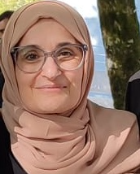
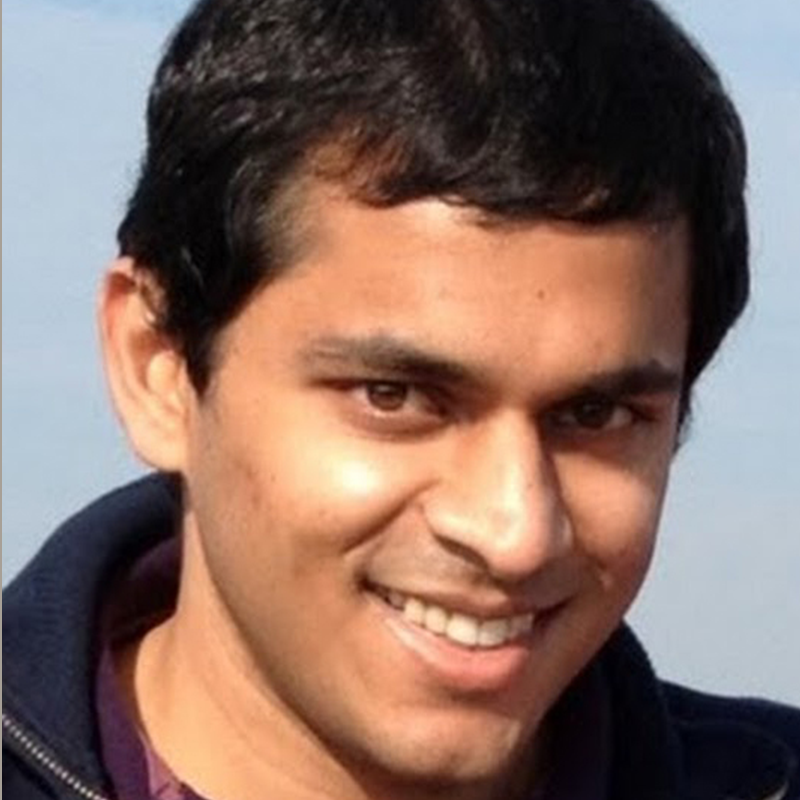
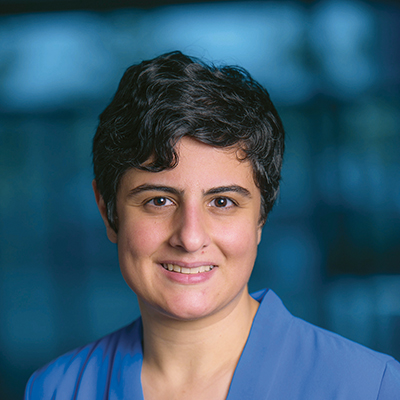
Moritz Wiese is a Researcher at the Chair of Theoretical Information Technology within the Department of Electrical and Computer Engineering at Technische Universität München (TUM) . His work focuses on information-theoretic security, quantum communication, and wireless networks, with significant contributions to interference modeling and secure coding schemes. Research Interests : Information-Theoretic Security, Quantum Wiretap Channels, MIMO Systems, 5G/6G Technologies, Physical Layer Security, and Network Coding. Key Grants : Involved in DFG-funded projects (Gottfried Wilhelm Leibniz Prize, UKoloS) and BMBF initiatives (6G-life, QuaDiQua). Collaborations : Worked with Prof. Holger Boche, Christian Deppe, and Rami Ezzine on secure communication and randomness generation. Labs : Active in the ACES Lab and 6G-life research hub, focusing on joint communication/sensing and neuromorphic computing. Publications : Over 20 papers on secure estimation, wiretap channels, and quantum secrecy, including top-tier journals like IEEE Transactions on Information Theory and Journal of Mathematical Physics .
Seth Lloyd is a Professor in the Department of Mechanical Engineering at the Massachusetts Institute of Technology (MIT), with adjunct appointments at the Santa Fe Institute since 1988 and as a Fellow at the Institute for Scientific Interchange since 2000. His research spans quantum information science, quantum control theory, and complex systems analysis. His educational background includes: B.A. from Harvard University (1982) M. from the University of Cambridge (1984) Ph.D. from Rockefeller University (1988) Lloyd's work focuses on quantum computation, quantum communications, and quantum limits to control and sensing. He has pioneered research in quantum algorithms, quantum metrology, and applications of quantum information to complex biological and physical systems. His research bridges theoretical physics, computer science, and engineering, with over 200 publications and two patents in quantum information processing. Analysis of his recent publications reveals dominant trends in quantum machine learning, quantum metrology, and quantum communication protocols, with increasing interdisciplinary applications in quantum biology and quantum gravity. His work consistently explores fundamental limits of quantum information processing. His scientific awards include: Lindbergh Fellow (1994) Finmeccanica Professorship (1996) Edgerton Prize (2001) Fellow of the American Physical Society (2007) Quantum Communication, Measurement, and Computation Prize (2012) Lloyd serves on the editorial board of Quantum Information Processing and holds significant MIT service roles including Course 2 Undergraduate Committee coordinator and membership on the Institute Foreign Scholarships Committee. He teaches advanced courses in quantum information, dynamics, and computational methods, shaping the next generation of quantum scientists and engineers. As a member of the American Physical Society, he maintains active research collaborations across quantum information science, with ongoing work in quantum algorithms and quantum-enhanced sensing technologies.
Oussama Damen is a Professor at the University of Waterloo's Department of Electrical and Computer Engineering. His research focuses on advanced wireless communication systems, particularly in MIMO (Multiple-Input Multiple-Output) systems, signal processing, and machine learning applications in telecommunications. He is actively involved in developing innovative solutions for beamforming, hybrid precoding, and distributed decoding in massive MIMO and millimeter-wave networks. Damen's work also extends to optical fiber communication, federated learning in wireless systems, and optimization of resource allocation in next-generation networks like 5G/6G. His research interests include wireless communication theory, antenna system design, channel modeling, and algorithm development for improving spectral and energy efficiency. He has contributed extensively to the theoretical foundations of MIMO detection, lattice reduction techniques, and statistical signal processing methods. Notable trends in his publications emphasize bridging theoretical performance limits with practical implementations, particularly in scenarios involving channel impairments, limited backhaul capacity, and multi-core fiber transmission. His work often addresses fairness and optimization in distributed systems, including federated learning frameworks and hybrid beamforming architectures. No scientific awards or grants are explicitly mentioned in the provided information. Damen has advised no listed students, and no specific lab affiliations are noted.
Halim Yanikomeroglu is a Full Professor and Chancellor's Professor at Carleton University's Department of Systems and Computer Engineering, part of the Faculty of Engineering and Design. His research focuses on wireless communications, including 5G/6G networks, non-terrestrial systems (HAPS/LEO satellites), MIMO, and cognitive radio. He has supervised numerous graduate students and holds IEEE Fellow status and the Harold Sobol Award. His work integrates machine learning, federated learning, and sustainability into next-generation networks. Affiliations: Carleton University, IEEE Education: Ph.D. (Toronto), M.A.Sc. (Toronto), B.Sc. (Middle East Technical University) Research interests span cellular networks, relay architectures, and energy-efficient systems. He pioneered cell-switching strategies for green networks and contributed to HAPS and UAV-based infrastructure. His recent work addresses NTN integration, AI-driven spectrum management, and 6G innovations. Awards include IEEE Fellow (2017) and multiple Research.com leadership accolades. His 150+ publications span journals like IEEE Transactions and conferences like ICC. Advising over 50 students, he emphasizes interdisciplinary solutions for future wireless challenges.
Professor Yongbo Xiao serves at Tsinghua University's School of Economics and Management, Department of Management Science and Engineering. His academic journey includes a BEng in Management Information Systems (2000), Master/PhD in Management Science and Engineering (2006), and postdoctoral research in applied economics at Tsinghua University. 2000: BEng in Management Information Systems 2006: Master/PhD in Management Science and Engineering 2006-2008: Postdoctoral Fellow in Applied Economics His research spans revenue management, pricing strategies, operations/supply chain management, and service systems. Recent work explores live-streaming e-commerce dynamics, supply chain resilience, and platform co-opetition models. Articles appear in top journals including Operations Research , Production and Operations Management , and Naval Research Logistics . Notable awards include National Natural Science Foundation Outstanding Young Scholars Fund, Changjiang Scholar Young Scholars recognition, and multiple Tsinghua University teaching/research honors. He serves as Associate Editor-in-Chief for Naval Research Logistics and Executive Editor for Journal of Systems Science and Systems Engineering . 2024: China Aviation Association Second Prize 2023: Huawei Collaborative Innovation Award 2022-2024: Tsinghua EMBA/Executive Education Teaching Excellence Professor Xiao teaches undergraduate Operations Research, Master's-level Operations Research & Optimization, and MBA courses including Data Models & Decisions, Operations Management, and ESG Frontier Exploration. His work bridges theoretical operations research with practical applications in digital commerce and supply chain innovation.
Michael Gastpar is a full Professor at École Polytechnique Fédérale de Lausanne (EPFL) in the School of Computer and Communication Sciences, where he leads the Laboratory for Information in Networked Systems (LINX). He previously held faculty positions at the University of California, Berkeley (2003-2011, earning tenure in 2008) and Delft University of Technology. His research spans information theory, signal processing, communications, and systems neuroscience. His research interests focus on network information theory and related coding and signal processing techniques, with applications to sensor networks and neuroscience. Recent work demonstrates a strong shift toward exploring the theoretical foundations of modern machine learning, particularly investigating transformer architectures from an information-theoretic perspective. His research group at EPFL explores how information theory principles can provide fundamental limits and novel approaches for contemporary machine learning problems. His recent publications reveal a clear trend toward bridging classical information theory with modern machine learning. The 15 most recent papers show increasing focus on theoretical analysis of transformers, rate-distortion frameworks for language models, universal prediction methods, and applications of information measures to machine learning theory. This represents a strategic evolution from his earlier work on sensor networks and physical-layer network coding toward foundational questions in artificial intelligence. Scientific Awards: IEEE Fellow 2013 Communications Society & Information Theory Society Joint Paper Award Information Theory Society Distinguished Lecturer (2009-2011) ERC Starting Grant (2010) Okawa Foundation Research Grant (2008) NSF CAREER award (2004) 2002 EPFL Best Thesis Award Professor Gastpar has advised over 20 PhD students who have gone on to successful careers in both academia and industry. His research has been generously supported by major grants including an ERC Starting Grant "ComCom" (2011-2016) and ongoing support from the Swiss National Science Foundation. He has served in significant editorial roles, including as Associate Editor for Shannon Theory for the IEEE Transactions on Information Theory (2008-11) and as Technical Program Committee Co-Chair for the IEEE International Symposium on Information Theory in 2010 and 2021. He leads the Laboratory for Information in Networked Systems (LINX) at EPFL, which brings together researchers working at the intersection of information theory, machine learning, and networked systems. The lab maintains strong connections with both theoretical research communities and practical applications in communications and neuroscience.
Kartik Hosanagar is the John C. Hower Professor of Technology and Digital Business and a Professor of Marketing at The Wharton School, University of Pennsylvania. He is also the Co-Director of the Wharton Human-AI Initiative. His work spans the Department of Operations, Information and Decisions, focusing on the intersection of technology, business, and society. Education: PhD in Management Science and Information Systems, Carnegie Mellon University MPhil in Management Science, Carnegie Mellon University Masters in Information Systems, Birla Institute of Technology and Sciences (BITS, Pilani), India Bachelors in Electronics Engineering, Birla Institute of Technology and Sciences (BITS, Pilani), India Research Interests: Kartik’s research focuses on the digital economy, particularly the impact of AI, algorithms, and analytics on consumers, businesses, and society. His work explores internet marketing, e-commerce, digital media, information diffusion, platform economics, and the ethical implications of AI. He investigates how technology transforms business models and consumer behavior in online environments. Publication Trends: His recent research combines machine learning, causal inference, and behavioral modeling to study digital platforms, user behavior, and AI applications in marketing and operations. The articles reflect a strong focus on empirical analysis of social media, search engines, and platform design, with applications in advertising, content sharing, and product adoption. Scientific Awards: Best Information Systems paper published in Management Science, 2013-2016 Finalist for Best Information Systems paper in Management Science (2012-2015) Recognized as one of the world’s top 40 business professors under 40 Eleven-time recipient of teaching excellence awards at Wharton MBA Excellence in Teaching Award, 2007 “Goes above and beyond the call of duty” award (multiple years) Advising and Grants: While no formal PhD students are listed, Kartik has supervised independent studies and mentored numerous students through research projects. His entrepreneurial ventures, such as Yodle and Jumpcut Media, reflect real-world applications of his research. He has also secured significant industry engagement through consulting and executive education with major firms like Google, American Express, and Citi. His work is supported by academic recognition, editorial roles, and media outreach. Labs and Teams: Kartik co-directs the Wharton Human-AI Initiative, a research hub exploring the integration of human and artificial intelligence in business. He also leads research groups focused on digital platforms and AI ethics, collaborating with scholars across disciplines to advance understanding of algorithmic decision-making and its societal impact.
Yuri Levin is a Professor at the Smith School of Business, Queen’s University, where he holds the Stephen J.R. Smith Chair of Analytics and serves as Founding Executive Director of the Smith School of Business Analytics and AI. He also leads the Scotiabank Centre for Customer Analytics. His research focuses on Analytics & AI, with expertise in revenue management, dynamic pricing, and strategic consumer behavior. Levin holds a Ph.D. in Operations Research from Rutgers University and degrees in Economics and Applied Mathematics from Belarus State University. Levin’s academic contributions include co-winning the 2013 INFORMS Revenue Management and Pricing Practice Prize and the 2009 INFORMS COIN-OR Cup. He has advised companies like Scotiabank, Loblaws, and McDonald’s on pricing strategies and consumer analytics. As an Associate Editor of Operations Research , he shapes academic discourse in operations research and pricing strategies. Education: Ph.D. in Operations Research, RUTCOR, Rutgers University (2001) B.S. in Economics, Belarus State University (1998) M.S. (Honours) in Applied Mathematics, Belarus State University (1998) His research explores dynamic pricing models under social influence, strategic consumer behavior, and revenue management in hospitality and retail industries. He has pioneered methodologies for optimizing pricing strategies in networked markets and developed algorithms for cargo capacity management. Awards: 2010 Queen’s School of Business Award for Research Achievement 2003 New Researcher Achievement Award Levin’s teaching spans MBA, Master of Management Analytics (MMA), and executive education programs, covering analytical decision-making and pricing optimization. His advisory work includes roles as a Visiting Professor at the Skolkovo Moscow School of Management and the University of Cambridge’s Judge School of Business.
Jalaa Hoblos is an Associate Professor of Practice in the Department of Computer Science at Stony Brook University, part of the College of Engineering and Applied Sciences. She holds a B.S. from the Lebanese University in Beirut, Lebanon, and an M.S. and Ph.D. in Computer Science from Kent State University. Prior to Stony Brook, she served as an Assistant Professor at Penn State Behrend, a Visiting Assistant Professor at Hiram College, and adjunct faculty at Kent State University and the University of Akron. Her primary roles include teaching and research. Her research focuses on Data Quality Analysis, Cloud Computing (particularly load balancing and security), Wireless Networks Security, and Statistical Mathematics. She has explored topics such as fairness and throughput in multi-hop wireless networks, malicious behavior detection in clouds, and protocol modifications like the adaptive 802.11 MAC. Her work integrates statistical methodologies with network optimization and security challenges. Recent publications emphasize anomaly detection in time-series data and fairness-enhancing protocols. She has also applied techniques like Latent Semantic Analysis to educational technology. No scientific awards are explicitly mentioned in the texts. While no advising or grant details are provided, her teaching includes courses like CSE 114 (OOP), CSE 101 (Principles), CSE 310 (Computer Networks), and security-focused courses such as ISE 331 (Fundamentals of Computer Security). She has maintained consistent academic engagement across institutions and disciplines.
Babak Hassibi is a Professor of Electrical Engineering and Computing and Mathematical Sciences at the California Institute of Technology (Caltech). He obtained his B.S. from the University of Tehran (1989), M.S. and Ph.D. from Stanford University (1993, 1996), and has held positions at Caltech since 2001, including roles as Assistant Professor, Associate Professor, Professor, and Executive Officer. Education : University of Tehran, B.S. (1989) Stanford University, M.S. and Ph.D. (1993, 1996) Academic Roles : Assistant Professor, Caltech (2001–03) Associate Professor (2003–08) Professor (2008–13) Binder/Amgen Professor (2013–16) Bohn Professor (2016–) Executive Officer for Electrical Engineering (2008–15) Associate Director for Information Science and Technology (2010–12) Research Interests : Babak Hassibi’s work spans Communications , Signal Processing , Control Theory , and Machine Learning . He has contributed to wireless networks, genomic signal processing, multi-antenna systems, robust control, and high-dimensional statistics. His mathematical interests include Random Matrices and Group Representation Theory . Recent Publications highlight his focus on Adaptive Control , Stochastic Optimization , and Quantum Detection . Notable trends include Regret-Optimal Control , Stochastic Mirror Descent , and DNA Microarray Applications . Scientific Awards : Highly Cited Researcher Advising and Grants : He has advised numerous graduate students and postdocs, many of whom now hold prominent positions at institutions like MIT, USC, and Stanford. His research includes collaborations on patents and projects related to Wireless Communications and Genomic Technologies . Labs and Teams : Leads the Hassibi Group at Caltech, which explores nonlinear photonic systems, ultrafast optics, and quantum information processing.
Kamal Sarabandi is the Rufus S. Teesdale and Fawwaz T. Ulaby Distinguished University Professor of Electrical Engineering and Computer Science at the University of Michigan. He leads the Radiation Laboratory, renowned for research in applied electromagnetics, radar remote sensing, and antenna technology. His academic rank is Professor, and he holds affiliations with the College of Engineering. His research spans radar systems for environmental monitoring (e.g., soil moisture, snowpack), automotive radar for autonomous vehicles, metamaterials for antenna miniaturization, and security applications like concealed weapons detection. He has advised over 60 PhD students, many of whom hold academic or industry leadership roles globally. Awards and Recognition: National Academy of Engineering member, IEEE Picard Medal, Humboldt Award, Ellis Island Medal of Honor, and Stephen S. Attwood Award. His work bridges fundamental science with practical innovations, including NASA collaborations and military/defense applications. Labs and Teams: Directs the Radiation Laboratory, a hub for applied electromagnetics and radar innovation. Collaborates with industry (e.g., Qualcomm, SAIC) and government agencies (NASA, Army Research Lab) on projects like the COMBAT center for autonomous systems. Education: Earned his PhD in Electrical Engineering from the University of Michigan (1989). Alumni of his lab include professors at UW-Madison, Purdue, and international institutions.
Vyas Sekar is the Tan Family Professor of Electrical and Computer Engineering at Carnegie Mellon University (CMU), with a courtesy appointment in the Computer Science Department. He is affiliated with CyLab and co-directs the Future of Enterprise Security initiative. His research focuses on networking, cybersecurity, distributed systems, and IoT security, with an emphasis on data-driven approaches and network verification. Education: Ph.D. in Computer Science (2010) from CMU; B.Tech. from IIT Madras (President of India Gold Medal recipient). Professional roles include Chief Scientist at Conviva and co-founder of Rockfish Data. Research Interests: Cybersecurity, network security, software-defined networking (SDN), IoT security, DDoS defense, privacy-preserving data sharing, and network performance optimization. Recent work includes developing tools like Pigasus (FPGA-accelerated intrusion detection), Nomad (cloud side-channel mitigation), and frameworks for anomaly detection in IoT networks. Articles Trends: Recent publications address advanced threats like LLM-driven network attacks, stealthy automotive network exploits (CANDid), and optical-layer DDoS defenses. Emphasis on practical solutions (e.g., SketchPlan for telemetry, Pryde for firewall evasion detection). Awards: ACM SIGCOMM Test of Time Award (2022), IIT Madras Young Alumni Achiever Award (2022), Intel Outstanding Researcher Award (2021), and NSF CAREER Award (2016). Recognized for contributions to intrusion prevention, network security, and IoT resilience. Grants & Projects: Led NSF-funded ONSET project (optical-layer DDoS defense), CyLab's Secure IoT Initiative, and collaborations with industry partners like Intel, Facebook, and Nokia Bell Labs. Advises graduate students in cybersecurity and networking. Labs & Teams: Active contributor to CyLab, co-developer of frameworks like Lumos (hidden IoT device detection) and KalKi (IoT security platform). Engages in interdisciplinary research across CMU’s Robotics Institute and Software Engineering Institute.
Henry D. Pfister is the Addy Family Professor of Electrical and Computer Engineering at Duke University, with a secondary appointment in Mathematics. He holds affiliations with the Pratt School of Engineering and the Duke Quantum Center. His research focuses on information theory, error-correcting codes, quantum computing, and machine learning applications in communications. Pfister earned his Ph.D. from UC San Diego and has held prior roles at Texas A&M University, École Polytechnique Fédérale de Lausanne, and Qualcomm. Education: Ph.D. in Electrical Engineering, UC San Diego (2003); M.S. degrees in Public Policy and Environmental Management from Duke University; J.D. and additional degrees from UNC Chapel Hill. Research interests include Reed-Muller codes, quantum error correction, neural decoders for DNA storage, and capacity-achieving coding schemes. Recent work highlights include proving Reed-Muller codes achieve capacity on binary-erasure channels and developing quantum-enhanced classical communication protocols. Publications span topics like polar codes for quantum channels, belief-propagation algorithms, and neural network-based decoding. Notable grants include NSF funding for DNA storage coding and quantum simulation projects. Pfister has advised over 20 graduate students and is a recipient of the STOC Best Paper Award and NSF CAREER Award.
Shirin Saeedi Bidokhti is an Assistant Professor at the University of Pennsylvania's School of Engineering and Applied Science with primary appointment in Electrical and Systems Engineering and secondary appointment in Computer and Information Science. She is affiliated with the Warren Center for Network and Data Sciences. She holds M.Sc. and Ph.D. degrees from EPFL and completed postdoctoral work at Stanford and Technical University of Munich. Her research focuses on information theory, networking, data compression, and machine learning. Her recent publications demonstrate strong emphasis on neural compression algorithms, network optimization during the COVID-19 pandemic, and age-of-information theory. Awards include: 2023 IEEE Communications Society & Information Theory Society Joint Paper Award 2021 NSF CAREER Award 2019 NSF-CRII Award Swiss National Science Foundation Fellowships She advises PhD students including Xingran Chen. Current research involves developing data compression algorithms for IoT applications and network strategies for pandemic response.
Venkatesan Guruswami is a Chancellor's Professor in the Department of EECS and a Senior Scientist at the Simons Institute for the Theory of Computing at UC Berkeley . He also holds a Professor position in the Department of Mathematics . His academic journey began with a B.Tech in Computer Science from the Indian Institute of Technology, Madras (1997) , followed by a Ph.D. in Computer Science from the Massachusetts Institute of Technology (2001) . After a Miller Research Fellowship at UC Berkeley (2001–02), he held faculty roles at the University of Washington and Carnegie Mellon University before returning to UC Berkeley in January 2022. Education : B.Tech, IIT Madras (1997) Ph.D., MIT (2001) Professional Affiliations : Chancellor's Professor, UC Berkeley (EECS) Senior Scientist & Interim Director, Simons Institute Professor, UC Berkeley (Mathematics) Guruswami's research spans multiple domains within Theoretical Computer Science , focusing on Error-Correcting Codes , Approximation Algorithms , Randomness in Computing , Probabilistically Checkable Proofs , and Computational Complexity . His groundbreaking work in List Decoding has enabled codes with minimal redundancy for correcting worst-case errors, while recent advancements include Polar Codes , Deletion-Correcting Codes , and Constraint Satisfaction Problems . He has also contributed to Quantum Coding Theory , Locally Recoverable Codes , and Approximation Hardness in various computational contexts. His publications reflect a deep engagement with interdisciplinary topics. Key trends include: Quantum Information Theory : Quantum LDPC codes, transversal gates, and quantum storage. Algebraic Coding : Reed-Solomon codes, AG codes, and polynomial-based constructions. Computational Complexity : Hardness of approximation, CSPs, and parameterized intractability. Data Transmission : Polar codes, deletion channels, and feedback mechanisms. Algorithmic Techniques : Spectral methods, semirandom models, and Lasserre hierarchy applications. Guruswami has received numerous accolades, including the Simons Investigator Award , Presburger Award , Packard Fellowship , Sloan Research Fellowship , ACM Doctoral Dissertation Award , and the IEEE Information Theory Society Paper Award . He is an ACM Fellow (2017) and IEEE Fellow (2019) , with recent honors like the Guggenheim Fellowship (2023) and AMS Fellow (2023) . As an advisor, he has mentored over 25 PhD and postdoctoral researchers , including Atri Rudra , Prasad Raghavendra , and Peter Manohar , whose work has won awards like the Edmund M. Clarke Doctoral Dissertation Award and CRA Outstanding Undergraduate Researcher Award . His research is supported by grants from the National Science Foundation , Packard Foundation , and Sloan Foundation . He also serves as Editor-in-Chief of the Journal of the ACM and holds leadership roles in IEEE and arXiv moderation. Guruswami is actively involved in Simons Institute programs and co-organized workshops on Coded Computation and Information Theory . His work bridges theoretical advancements with practical applications in Cloud Storage , Quantum Computing , and Group Testing , including pandemic-era contributions like AC-DC: Amplification Curve Diagnostics for SARS-CoV-2 .