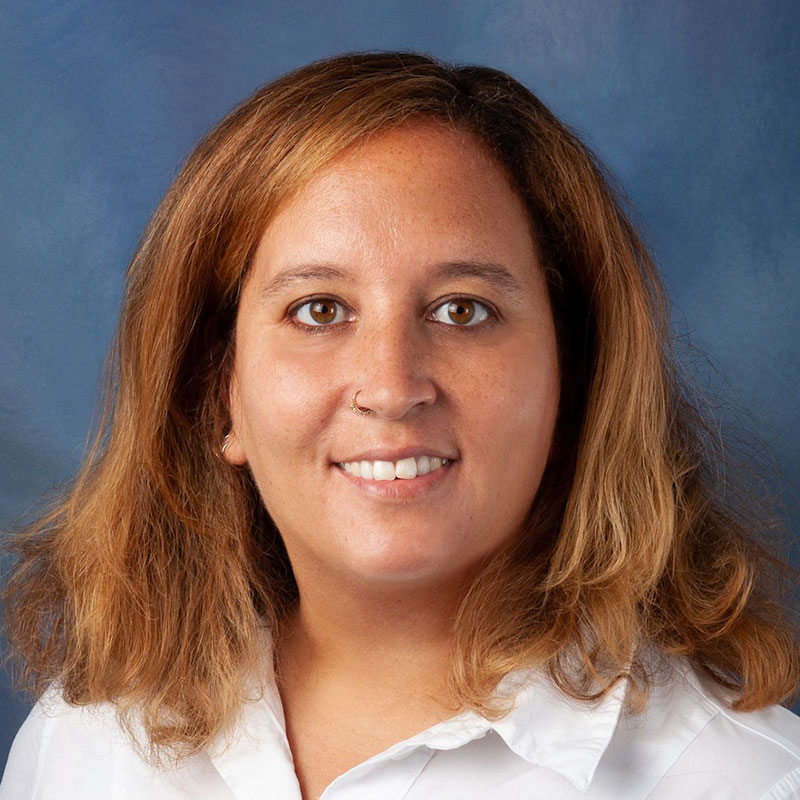
Jonathan L. Auerbach is an Assistant Professor in the Department of Statistics at George Mason University . His work bridges statistics and public policy , focusing on causal inference , longitudinal data analysis , and official statistics . He has contributed to understanding urban myths (e.g., New York City rat populations, building height trends), election fraud , and policy evaluation for initiatives like Vision Zero. Education : PhD in Statistics (Columbia University, 2020), BA in Economics (Cornell University, 2010) Research Interests include data science , causal inference , survey methodology , and urban analytics . His recent work addresses climate change impacts on cherry blossom seasons, federal data security , and street vendor demographics in New York City. Scientific Awards include the 2024-2025 President of Washington Statistical Society , 2020-2021 American Statistical Association Science Policy Fellow , and 2019 Howard Levene Outstanding Teaching Award . He has served as an instructor for courses like Capstone in Statistics and Causal Inference , emphasizing technical communication and data ethics .
François Héran is a Professor at Collège de France, holding the Migrations and Societies Chair. With a background in philosophy, demography, and anthropology, he has conducted fieldwork in Spain, Bolivia, and the Netherlands, and worked at INED and INSEE. He co-founded the Institut Convergences Migrations in 2017. Institution: Collège de France Chair: Migrations and Societies Key Collaborators: Özge Biner (Research Engineer), Audrey Lenoël (Post-Doctoral Fellow), Laura Odasso (Researcher) His research spans the multifaceted dynamics of international migration, including demographic trends, integration challenges, policy frameworks, colonization legacies, and religion. He emphasizes empirical data, historical context, and ethical considerations. Recent lecture series (2024-2025) focus on religion and migration, following annual themes like colonization, law, and rhetoric. His work critiques data fluidity in migration studies while advocating for rigorous analytical frameworks. Scientific Awards Zellidja Scholarships for international study trips Héran leads seminars and lectures with multidisciplinary experts, fostering dialogue between academic and institutional stakeholders. He has shaped French migration statistics and policy discourse through surveys on family structures, language transmission, and discrimination.
Gordana Jovanović is a Full Professor at the Department of Geography, Tourism and Hospitality within the Faculty of Sciences and Mathematics at the University of Novi Sad, Serbia. She has held this position since 2015 after progressing through academic ranks from Assistant (1985-2001) to Doctoral Professor (2001-2006) and Associate Professor (2006-2015). Her educational background includes a Diploma thesis (1984), Master's thesis (1992), and Doctoral dissertation (2001), all completed at the Department of Geography, Tourism and Hotel Management, Faculty of Philosophy, University of Novi Sad. Her doctoral work focused on the Vojvodina Danube Region. Professor Jovanović specializes in Regional Geography with concentrated expertise in Tourism Geography and Demographic Geography. Her research examines regional development patterns, spatial planning for tourism infrastructure, demographic shifts in Vojvodina's ethnic communities, and environmental geography of river basins. She integrates geographical analysis with practical tourism development strategies. Analysis of her recent publications reveals consistent focus on Vojvodina's regional geography, particularly tourism potential in Danube areas and demographic challenges in border regions. Her work frequently addresses ethnic minority populations in Serbia and extends to international contexts including Morocco and Tunisia, demonstrating methodological approaches to tourist regionalization and spatial planning. She has actively participated in major research projects including 'Geographical aspects of the state and direction of development of Serbia (Vojvodina)' (2001-2005), 'Demographic Transitions in Serbia' (2006-2010), 'Development of a Concept for the Revitalization of Depopulated Border Areas of Banat' (2008-2009), and 'Population and settlements of Vojvodina', all funded by Serbian national and provincial research bodies. As an active member of the Serbian Geographical Society and VGD Branch, Professor Jovanović contributes to academic discourse through conference participation including Geotrends, CTTH, and Danube research conferences. Her international collaborations span Romanian, Bulgarian, Hungarian, and Serbian geographical institutions with emphasis on cross-border cooperation in the Danube basin.
Dan A. Black is a Professor at the University of Chicago Harris School of Public Policy , a Senior Fellow at the National Opinion Research Center (NORC) , and a Research Fellow at IZA . His work bridges labor economics, economic demography, urban economics, and applied econometrics, with a focus on policy-relevant empirical analysis. Education: BA and MA in History from the University of Kansas; MS and PhD in Economics from Purdue University. Black’s research explores labor market dynamics, including wage gaps, migration, human capital, and policy impacts. His methodological expertise spans econometrics, causal inference, and data reliability. He has also contributed to studies on racial and gender disparities, urban inequality, and public health economics. His recent publications highlight interdisciplinary trends: labor economics (training, job lock, wage disparities), demography (mortality estimation, migration), and urban economics (inequality, policy evaluation). Methodological themes include instrumental variables , matching estimators , and measurement error . Scientific Awards: Fellow of the Society of Labor Economists Senior Fellow at NORC Research Fellow at IZA Black has served on editorial boards for the Journal of Labor Economics , Labour Economics , and Journal of Urban Economics . He has advised panels for the U.S. Census Bureau, Department of Education, and Environmental Protection Agency, and consulted for governments in New Zealand, Australia, and the Inter-American Development Bank. His affiliations include the Committee on Quantitative Methods in Social, Behavioral, and Health Sciences at the University of Chicago.
Teresa Fort is an Associate Professor at the Tuck School of Business at Dartmouth College , focusing on international trade, industrial organization, and political economy. She teaches core microeconomics and seminars on firm globalization, while maintaining affiliations as a Faculty Research Fellow at the National Bureau of Economic Research (NBER) and a Research Affiliate at the Centre for Economic Policy Research (CEPR). Her work bridges economic theory with empirical analysis using U.S. Census Bureau data. PhD , University of Maryland (2012) MA , University of Maryland (2008) BA , University of Virginia (2000) Her research explores global production fragmentation , technology's impact on offshoring , and globalization's heterogeneous effects . Key findings include: technology's disproportionate role in domestic production reorganization, the rise of factoryless goods producers redefining manufacturing statistics, and evidence on how trade policies create interdependent sourcing dynamics . Recent publications in Review of Economic Studies and Journal of Political Economy Macroeconomics examine tariff escalation welfare effects and multinational firm trade patterns . Her work has been featured in major media outlets including Financial Times , The Wall Street Journal , and Marketplace . NBER Faculty Research Fellow CEPR Research Affiliate Coauthor of influential studies on global value chains She actively participates in academic conferences, recently discussing topics like multinational firm strategies and labor mobility during recessions . Her empirical methods often involve novel data infrastructure projects, including redesigning the U.S. Census Bureau's Longitudinal Business Database and County Business Patterns imputation techniques.
Xi Huang is an Assistant Professor in the School of Public Administration at the University of Central Florida (UCF), part of the College of Community Innovation and Education. She holds a Ph.D. from the joint public policy program at Georgia State University and Georgia Institute of Technology. Her research focuses on immigration policy, migrant integration, urban development, and policy analysis. She teaches courses in policy process, policy analysis, research methods, and public program evaluation. Dr. Huang’s work bridges urban sociology, criminology, and public policy, with notable projects on human trafficking, regional resilience, and immigrant entrepreneurship. She previously served as a Census Bureau Special Sworn Status researcher at the Atlanta Census Research Data Center (2013–2014). Her recent publications explore topics such as hurricanes’ impact on sex trafficking, urbanicity’s role in homeless services, and immigrant reactions to state policies. Key themes include disaster management, socio-spatial inequality, and policy design for marginalized populations. No specific awards are listed, though her research demonstrates significant contributions to interdisciplinary policy analysis. She advises no listed students but contributes to UCF’s academic mission through teaching and research leadership. Her work often intersects with urban planning, economic development, and social welfare, reflecting her commitment to addressing real-world challenges through evidence-based policy solutions.
Jen'nan Ghazal Read is a Professor of Sociology at Duke University with multiple cross-appointments as a Research Professor of Global Health at the Duke Global Health Institute and Professor in the Sanford School of Public Policy. She is also a Faculty Research Scholar at Duke's Population Research Center. Her interdisciplinary work bridges sociology, public health, and policy studies with a focus on ethnic diversity within racial categories. Professor of Sociology, Trinity College of Arts & Sciences (2018-Present) Research Professor of Global Health, Duke Global Health Institute (2018-Present) Professor in the Sanford School of Public Policy (2025-Present) Faculty Research Scholar, Duke Population Research Center (2010-Present) Dr. Read is an internationally renowned scholar who challenges conventional approaches to racial and ethnic categorization in health research. Her work demonstrates substantial health disparities among ethnic groups within broad racial categories like 'White,' particularly focusing on Middle Eastern Americans. She has conducted groundbreaking research showing that using non-Hispanic Whites as a reference category masks important health inequalities among White subgroups, including immigrants from different regions. Her expertise on U.S. Census categories contributed to recent revisions of federal standards for collecting race and ethnicity data. Her publication record reveals a consistent focus on health disparities, with recent work examining immigrant health advantages among White populations, discrimination effects on mental health, and the unique health experiences of Arab Americans. Dr. Read's research spans multiple methodologies including quantitative analysis of national datasets and qualitative interviews with Muslim American women. Bass Chair and Bass Society of Fellows (2019) Howard D. Johnson Teaching Award (2020) Outstanding Teaching Assistant of the Year, University of Texas (1999) Dr. Read has secured significant research funding including the 2022 Census Study Research grant, the ACCESS Arab American Research Initiative, and the Thriving after Surviving project focused on Muslim refugee students. She has been featured in major media outlets including The New York Times, NPR, and Al Jazeera English, and has presented at prestigious institutions worldwide including the National Academy of Medicine, the U.S. Census Bureau, and universities across Europe and the Middle East.
Dr. Jasmin Hodžić is Director of the Institute of Language at the University of Sarajevo (since 2021) and teaches at the University of Novi Pazar. In April 2025 he was promoted to Scientific Advisor. His expertise spans syntax, sociolinguistics, accentology, and cognitive linguistics, with a central focus on the Bosnian language. Education 2017 – Ph.D. in Linguistics, Faculty of Humanities, Džemal Bijedić University of Mostar 2013 – M.Sc. in Linguistics, Faculty of Humanities, Džemal Bijedić University of Mostar 2009 – B.A. in Bosnian Language and Literature, Faculty of Humanities, Džemal Bijedić University of Mostar 2003 – Electrical Engineering Diploma, High School of Electrical Engineering, Mostar Research Interests Hodžić’s work integrates formal syntactic analysis with sociolinguistic inquiry. He investigates syntactic ambiguity, accentual variation in Neo-Štokavian standards, and the historical status of Bosnian. Cognitively oriented studies explore metaphor and conceptual framing in literary and religious texts, while sociolinguistic projects examine language policy, education, and identity in Bosnia-Herzegovina and the Sandžak region. Recent publications reveal intensified attention to language ideology during the 1990s conflict, the codification of orthoepic norms, and the use of Ottoman-era sources to reconstruct linguistic history. Together, these strands position him as a leading voice in Bosniak linguistic scholarship. Scientific Awards Special Mention at the 36th Sarajevo Book Fair (2025) University of Sarajevo Council for Science & Art Award (2020) Designation “Publication of Special National Interest” (2020) Grants, Advising & Teams While specific grant identifiers are not detailed, Hodžić’s continuous appointment as Senior Research Associate (2021–2025) and now Scientific Advisor presumes sustained national research funding. He has organised or delivered keynote lectures at more than 60 conferences, indicating leadership of multiple collaborative projects. Media engagements (TV Sarajevo, Hayat TV, BIR) further extend his role as public intellectual and mentor. Laboratory & Institute Leadership As Director of the Institute of Language at the University of Sarajevo, Hodžić oversees a national centre for linguistic research, standardisation, and public policy consultation, coordinating teams working on accentuation, syntax, and sociolinguistic atlas projects.
Leah Boustan is a Professor of Economics and Director of the Economic History Program at Yale University. She is a research associate at the National Bureau of Economic Research (NBER), where she co-directs the Development of the American Economy Program, and serves as co-editor of the American Economic Journal: Applied Economics . Her research lies at the intersection of economic history and labor economics, with a focus on migration, intergenerational mobility, and racial economic disparities. She employs large-scale historical datasets, particularly digitized U.S. census records, to study long-term economic trends. Her work has demonstrated that children of immigrants consistently achieve higher economic mobility than children of the U.S.-born, and that immigrants assimilate culturally and economically at rates comparable across historical periods. The themes in her recent publications reflect a strong emphasis on empirical methods, historical data linkage, and policy-relevant findings. Her research spans topics such as immigrant incarceration, enclave effects, occupational assimilation, and the economic impacts of the Great Black Migration. She has also contributed to understanding political discourse on immigration through textual analysis of congressional speeches. Alfred P. Sloan Research Fellowship (2012) IZA Young Labor Economist Award (2019) Fellow of the Econometric Society (2022) Fellow of the Society of Labor Economists (2024) Allan Sharlin Memorial Book Award Alice Hanson Jones Award Boustan has advised major research initiatives such as the Census Linking Project, which enables longitudinal analysis of historical U.S. census data. She has not publicly listed formal PhD or Master’s students in the provided materials. Her work is supported by prestigious fellowships and institutional affiliations, and she plays a key role in shaping research agendas in urban economics and economic history through editorial leadership. She is affiliated with interdisciplinary research teams focused on digitizing and analyzing historical records, and her collaborations with scholars like Ran Abramitzky have produced influential books and policy insights. Future work is likely to expand on big data applications in economic history and intergenerational inequality.
Mark Williams is a Senior Lecturer in Finance at Boston University's Questrom School of Business, with over three decades of experience in risk management. Since 2002, he has taught graduate and undergraduate courses while maintaining an active role in financial analysis, media commentary, and policy advisory. Education: MBA (Boston University School of Business, 1993), BS (University of Delaware, 1985) Williams specializes in Risk Management across banks, hedge funds, and Fintech sectors, with particular focus on Cryptocurrency and Blockchain Technology . His recent research explores Immigration and Outmigration patterns in Massachusetts and economic implications of technological disruption in sports. His publications span 15 recent works including analyses of crypto regulations, student debt impacts, and sports economics. These works demonstrate his interdisciplinary approach blending finance, public policy, and social sciences. Scientific Awards Beckwith Teaching Award (2008, 2021) James E. Freeman Lecturer Chair (2018) Williams frequently advises policymakers, having served on President Biden’s Economic Subcommittee (2020), provided congressional testimony (2014), and consulted with The World Bank. He currently presides over the Boston Economic Club (since 2022) and serves on Lesley University’s Board of Trustees (since 2018).
Dr. Gábor Koloh is a contemporary Assistant Professor and Research Fellow at the Eötvös Loránd University (Department of Economic and Social History) and the HUN–REN RCH Institute of History . His scholarly work focuses on demographic history , social history , and rural economic structures , with particular emphasis on fertility transitions , household organization , and modernization processes in 19th-20th century Hungary. Education : Law (ELTE), Aesthetics (BA), MA and PhD in Economic and Social History (supervised by György Kövér) Research Themes : Demographic change in interwar Hungary Ethnic agricultural practices in Baranya Temporal/spatial patterns in peasant communities Social mobility of Protestant clergy Methodology : Micro-historical analysis, family reconstitution, manuscript source interpretation Current Projects : Interdisciplinary studies on pronatalist discourse, cooperative territorial development, and aristocratic demographic patterns
Michael Rodríguez-Muñiz is an Associate Professor in the Department of Sociology at the University of California, Berkeley, where he co-directs the Latinx Social Science Pipeline initiative and the Anticolonial Lab. He joined Berkeley's faculty through the Latinx and Democracy cluster, focusing on critical race and Latinx studies within academic and community contexts. His educational background includes: PhD in Sociology from Brown University MA in Sociology from the University of Illinois-Chicago BA in Political Science and Mexican and Caribbean Studies from Northeastern Illinois University His research centers on race, knowledge production, and temporality within Latinx communities, with emphasis on demographic politics, anticolonial movements, and Du Boisian theory . Current projects examine Puerto Rican diasporic resistance, state repression, and the political construction of population statistics, utilizing ethnographic and qualitative methodologies to challenge dominant demographic narratives. His publication portfolio reveals consistent engagement with Latinx political representation, demographic change discourse, and racial knowledge systems. Recent works critically analyze majority-minority projections, ethnoracial diversification attitudes, and the intersection of race with political trust, demonstrating methodological rigor through community-engaged scholarship. His award-winning book Figures of the Future: Latino Civil Rights and the Politics of Demographic Change (2021) received: Otis Dudley Duncan Book Award (2023) Mary Douglas Book Prize (2022) ASA Latino/a Section Best Book Award (2022) Charles Tilly Distinguished Book Award Honorable Mention (2022) As co-director of the Anticolonial Lab and Latinx Social Science Pipeline, Rodríguez-Muñiz bridges academic research with community action through initiatives like Digitizing the Barrio—a Puerto Rican community archive in Chicago—advancing anticolonial praxis and Latinx representation in knowledge production.
Dr. Bo Xia is a Professor at the School of Architecture & Built Environment, Queensland University of Technology (QUT). His expertise spans construction management, sustainable development, and age-friendly built environments. He holds editorial roles at journals like the International Journal of Construction Management and ASCE Journal of Management in Engineering. His research focuses on retirement village sustainability, project delivery systems, and megaproject governance, supported by grants from ARC and RICS. Education includes a PhD from Hong Kong Polytechnic University and roles as Adjunct Professor at Hefei University of Technology. He has supervised over 10 doctoral students, with notable works on retirement village dynamics and green building practices. Awards include Best Paper Awards at CRIOCM 2018 and 2013, and recognition for postgraduate supervision excellence. Current projects include 'Building a Better Built Environment for Older Australians' (ARC DP230101313) and resilience frameworks for disaster risk reduction in SE Queensland. His work bridges theoretical research with practical applications in urban sustainability and infrastructure policy. Key research themes are: Age-friendly communities & retirement village design Sustainable construction practices Project delivery innovation (design-build, PPP) Social license for infrastructure projects Megaproject social responsibility Publications highlight spatial analyses of retirement communities, public perception studies, and Bayesian network modeling. Collaborations span 12 universities across Australia, China, and the U.S., reflecting his global research impact.
Liam Midzain-Gobin serves as Associate Professor in the Department of Political Science within the Faculty of Social Sciences at Brock University. A settler scholar who completed his PhD at McMaster University in 2020, he has rapidly established himself as a significant voice in critical Indigenous and settler colonial studies. His academic journey includes an M.A. from the University of Ottawa (2015) and a B.Soc.Sci. from the same institution (2012). Dr. Midzain-Gobin's research centers on how settler colonialism persists in contemporary political structures and how Indigenous peoples revitalize governance practices to challenge colonial sovereignty. His work examines the 'logic of improvement' as a constitutive element of international order, exploring how cosmological assumptions about human dominion over the earth underpin settler sovereignty. Employing community-engaged methodologies, he collaborates directly with Indigenous communities through two major research projects: 'Building Inter-National Sovereignty: The Case of the Big Salmon River' (funded by SSHRC) and 'Indigenous Visions for Making Home in Niagara' (funded by the Niagara Community Foundation). His scholarly output reveals a consistent focus across Indigenous politics, settler colonial theory, and decolonial international thought. The 15 most recent publications demonstrate his engagement with critical questions of sovereignty, Indigenous governance, and resistance across multiple disciplinary contexts including political science, international relations, security studies, and Indigenous studies. His work frequently addresses the material and epistemic dimensions of settler colonialism while highlighting Indigenous strategies of resurgence and self-determination. Among his professional activities, Dr. Midzain-Gobin serves as Associate Editor for Critical Studies on Security and is co-editing the 'Handbook of Critical Understandings of Canada in the World' with colleagues Heather A. Smith, David Black, and David J. Hornsby. His commitment to community engagement extends beyond research into teaching practice, where he emphasizes critical approaches to Indigenous-settler relations. In the classroom, he teaches foundational and specialized courses including Introduction to International Relations, Research Design and Methods, Canadian Political Thought, Indigenous Politics in Canada, Global Indigenous Politics, and Indigenous-Settler Relations. His pedagogical approach reflects his scholarly commitment to decolonizing knowledge production and fostering critical engagement with Indigenous governance and sovereignty questions.
Veronica Berrocal is a Professor in the Department of Statistics at the University of California, Irvine (UCI), affiliated with the Donald Bren School of Information & Computer Sciences. Her research focuses on developing statistical models to analyze spatial and temporal data, particularly in environmental health, geophysical processes, and public health outcomes. She collaborates with institutions like Drexel University and the University of Michigan to study the interplay between environmental factors (e.g., built environments, air quality) and health disparities. Her work also addresses calibration of geophysical models and leveraging social media for health behavior analysis. Key research areas include spatial dependence modeling, post-processing outputs from climate/air quality models, and identifying how neighborhood characteristics influence health behaviors (e.g., obesity risk in school children). She develops statistical approaches to reconcile discrepancies between observational data and model outputs, particularly in environmental and health contexts. Her methodological contributions span Bayesian statistics, spatial-temporal data fusion, and multiresolution analysis. Her research often integrates interdisciplinary collaborations, such as combining UAV mapping for disease surveillance (e.g., dengue outbreaks) and using Yelp reviews to assess food environments. She has also contributed to public health initiatives like developing web-based platforms (e.g., MyGoutCare) to improve patient education and outcomes for chronic conditions. While no specific awards are listed, her extensive publications reflect her impact in environmental statistics and health analytics. She advises no listed students but collaborates widely with researchers across disciplines. Her office is located in DBH 2026, and she can be reached at vberroca@uci.edu.