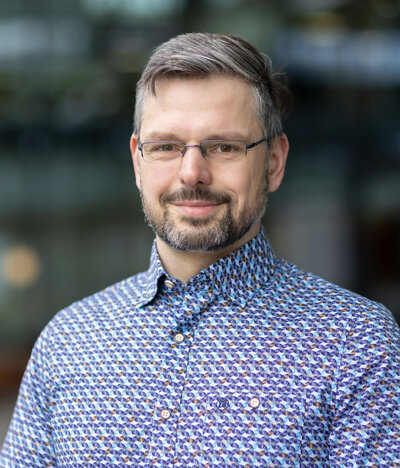
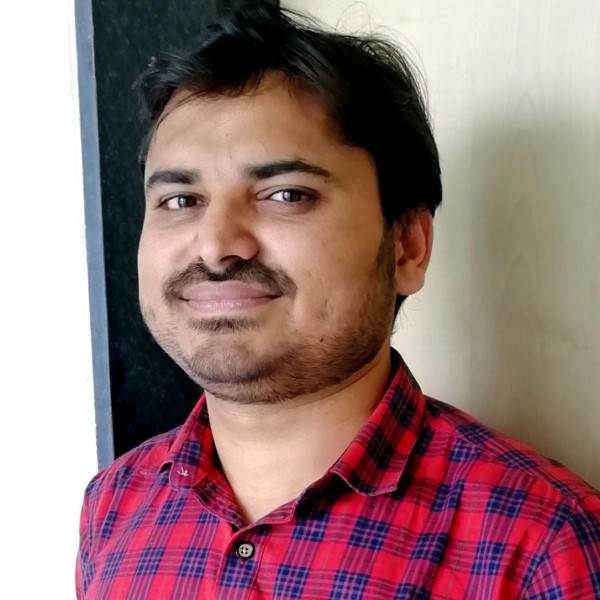
Lendert Gelens serves as a Senior Lecturer at KU Leuven's Faculty of Medicine within the Department of Cellular and Molecular Medicine. He leads the Laboratory for Dynamics in Biological Systems and holds significant interdisciplinary roles as a member of iSi Health - KU Leuven Institute for Physics-based Modeling for In Silico Health and Leuven.AI - KU Leuven Institute for Artificial Intelligence. His institutional involvement extends to multiple governance bodies including the OC Biophysics, Biochemistry and Biotechnology, Faculty Council of Medicine, and Departmental Council for Cellular and Molecular Medicine. Dr. Gelens' research centers on mathematical and physical modeling of biological systems with particular emphasis on cell cycle dynamics, wave pattern formation, and temperature effects on developmental processes. His work bridges physics, mathematics, and biology to understand fundamental principles of self-organization in living systems. He investigates how nuclear-cytoplasmic interactions regulate cell cycle timing, how temperature influences embryonic development beyond traditional Arrhenius relationships, and how spatial organization affects biological oscillations. His approach integrates experimental biology with computational modeling, dynamical systems theory, and increasingly machine learning techniques to extract meaningful patterns from complex biological data. Analysis of his recent publications reveals a strong trend toward data-driven approaches in biological modeling. He has pioneered the application of machine learning to identify nullclines in oscillatory systems and extract hidden information from biological time series. His research consistently focuses on frog egg extract systems as model organisms for studying fundamental cell cycle principles, with particular attention to wave phenomena, spatial organization, and temperature scaling effects. The interdisciplinary nature of his work is evident in publications spanning mathematical biology, biophysics, computational neuroscience frameworks like the FitzHugh-Nagumo model, and artificial cell construction. Dr. Gelens actively supervises multiple PhD students including Prokop, Piñeros, and Frolov, and leads substantial research funding through numerous projects running from 2021-2029. His current grants address critical questions in biological self-organization, temperature effects on development, artificial cell construction, and data-driven cell cycle modeling. As head of the Laboratory for Dynamics in Biological Systems, he directs research on how physical principles govern biological organization across scales, from molecular oscillators to cellular and tissue-level patterns. His laboratory serves as a hub for interdisciplinary collaboration between physicists, mathematicians, and biologists working on fundamental questions in systems biology.



.jpeg)