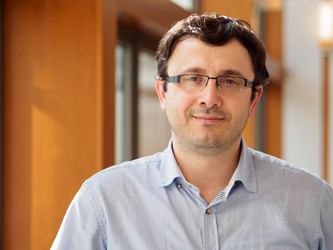
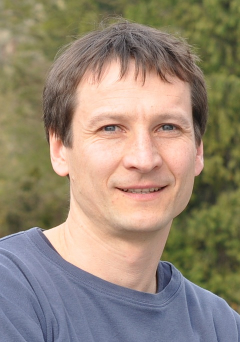
Matthias Weiss is a Professor of Experimental Physics at the University of Bayreuth since 2010. Previously, he held roles including BIOMS Junior Group Leader at the German Cancer Research Center (2004–2010) and postdoc positions at EMBL Heidelberg and the MEMPHYS-Center in Denmark. He studied physics at Frankfurt and Heidelberg, earning a Diploma (1997) and PhD in quantum chaos (2000). His research bridges physics and biology, focusing on dynamic self-organization in living systems. Key areas include transport processes, organelle formation, embryogenesis, and parasite-host interactions. Techniques include advanced light microscopy and computational modeling. His work spans projects like the physics of Giardia adhesion and Trypanosoma motility, funded under SPP 2332 PoP. Notable publications explore anomalous diffusion in nuclei, ER network dynamics, and microtubule roles in Trypanosoma. Collaborations involve institutions like DKFZ, EMBL, and the University of Würzburg. He leads the Experimental Physics I department at Bayreuth and advises on biophysical methodologies.
Ahmet Yildiz serves as Professor of Biochemistry, Biophysics and Structural Biology and of Physics at the University of California, Berkeley, leading an active research laboratory in Stanley Hall focused on the biophysical mechanisms of intracellular transport. Research interests center on motor protein dynamics, particularly dynein and kinesin function along cytoskeletal tracks. The Yildiz Laboratory employs integrated approaches including single-molecule fluorescence imaging, optical trapping, and cryo-electron microscopy to investigate how motors achieve processive movement, generate force in crowded cytoplasmic environments, and are regulated by adaptor proteins and microtubule-associated proteins (MAPs). Key projects examine dynein activation by Lis1/NudE, bidirectional transport reconstitution for mitochondrial cargo, and the "MAP code" hypothesis governing motor recruitment. Recent publications (2023-2025) demonstrate consistent focus on structural-mechanistic insights into dynein-dynactin complexes and regulatory mechanisms, with emerging connections to neurodegenerative disease pathways through neuronal transport studies. The work bridges quantitative biophysics with cellular physiology through advanced in vitro reconstitution techniques. The laboratory operates within UC Berkeley's collaborative research ecosystem, utilizing specialized facilities for high-resolution structural biology and single-molecule analysis to advance fundamental understanding of cellular organization principles.
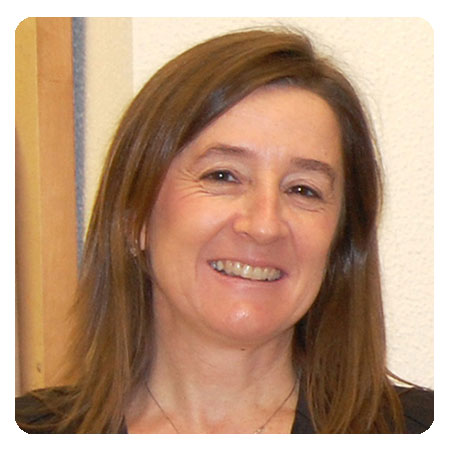
Maria Pilar Coy Fuster is a Full Professor at the University of Murcia , affiliated with the Faculty of Veterinary Medicine and the Department of Physiology . Her research focuses on reproductive physiology, in vitro fertilization (IVF), oviductal mechanisms, epigenetics, and assisted reproductive technologies (ART) in mammals, particularly pigs and cattle. Education : Degree in Veterinary Medicine, University of Murcia (1987) PhD in Veterinary Medicine, University of Murcia (1991) Diplomate in Animal Reproduction, European College of Animal Reproduction (2001) Research Interests encompass understanding oviductal glycoproteins like OVGP1 that regulate polyspermy, genomic and proteomic analysis of reproductive fluids, epigenetic impacts of ART, and developing biobanks for reproductive biofluids. She co-discovered a conserved oviductal mechanism in ungulates (absent in humans) that enhances IVF efficiency, leading to a PNAS publication and a patent. Scientific Awards include: Mention of Quality by the Spanish Ministry of Education Mention of Excellence by the Spanish Ministry of Education She has secured substantial funding, including a €3.8 million European Horizon 2020 grant for the Rep-Biotech Marie Sklodowska-Curie program, producing 15 international PhDs. Currently, she leads the AFRODITA network. Teaching Contributions include designing the internationally recognized Master and PhD programs in Reproductive Biology and Technology at the University of Murcia. She plays a leadership role as an Associate Editor for journals like Molecular Reproduction and Development and Molecular Human Reproduction .
Dr. Guillaume Duclos is an Assistant Professor in the Martin A. Fisher School of Physics at Brandeis University, where he leads the Duclos Lab. His research focuses on the physics of active matter, biomimetic systems, and the interplay between molecular motors and soft materials. He holds a PhD from Institut Curie and Pierre et Marie Curie University (Paris, France). His lab investigates pattern formation in active materials, topological defects in nematics, and collective cell migration. Key funding includes NSF CAREER (2021–2026) and DOE Early Career (2023–2028) awards. Current students include Annemarie Winters (co-advised with Hannah Yevick), Benjamin Strain, Bennett Sessa, and Adrielle Cusi. Alumni include Dr. Bibi Najma (now at Caltech) and Dr. Salman Alam (at Lam Research). The lab emphasizes interdisciplinary training in biophysics, soft matter, and quantitative biology. Recent work includes studies on 3D pattern formation in protein-membrane systems, microtubule-motor interactions, and active nematic droplets. Research facilities support cutting-edge microscopy and computational modeling.
Alex Mogilner is a Professor of Mathematics and Biology at New York University's Courant Institute and Department of Biology. His research focuses on computational and mathematical modeling of cellular processes, including cell motility, mitosis, actin dynamics, and galvanotaxis. He collaborates closely with experimentalists to bridge theoretical and empirical cell biology. Education: Ph.D., Applied Mathematics, University of British Columbia, Canada (1995) Ph.D., Physics, USSR Academy of Sciences (1990) M.Eng., Engineering Physics, Ural Polytechnic Institute, USSR (1985) Research Interests: Mathematical modeling of molecular machines in cells Mitotic spindle dynamics and chromosome segregation Actin-myosin contraction mechanisms Galvanotaxis and electrotaxis in cell migration Cellular biophysics and mechanochemical processes Selected Publications Highlights: Developed models for mitotic spindle assembly and error correction Investigated mechanisms of cell polarization and turning Studied actin network contraction and cytoskeletal dynamics Explored galvanotactic cell migration in electric fields Labs/Teams: Leads a computational modeling lab at NYU, collaborating with experimental groups globally in cell biology, biophysics, and systems biology.
Christian Jenul is Lecturer in Molecular Microbiology at the University of Leicester's Department of Genetics and Genome Biology. He holds an MSc in Molecular Microbiology from the University of Graz and a PhD from the University of Zurich, where he studied natural product biosynthesis in Burkholderia cenocepacia. Education: PhD, University of Zurich MSc Molecular Microbiology, University of Graz BSc Molecular Biology, University of Graz His research examines enzyme-driven modification of natural products during polymicrobial infections, combining mass spectrometry, bacterial genetics, and infection models to understand microbial competition. Recent work focuses on staphylococcal enzymes that inactivate Pseudomonas siderophores, revealing mechanisms influencing pathogen fitness in co-infections. His publications demonstrate consistent application of chemical biology approaches to bacterial signaling and antimicrobial strategies. Scientific Awards: Postdoc Mobility Fellowship, Swiss National Science Foundation He leads an independent research group investigating bacterial communication systems and develops genetic tools to study metabolic interactions in infection contexts.
Associate Professor Patrick Bertolino at the University of Sydney's Central Clinical School leads the Liver Immunology Program at the Centenary Institute. With 20+ years of international recognition in liver immunology , he pioneered discoveries about CD8+ T cell activation and hepatocyte-mediated immune tolerance , including the paradigm-shifting finding that liver-activated T cells are deleted via hepatocyte lysosomes. His work bridges transplantation immunology , chronic hepatitis , and malaria vaccine development using transgenic mouse models . Trained by immunology luminaries: Chantal Rabourdin-Combe (ENS-Lyon), Jacques Miller (WEHI), Barbara Fazekas de St Groth (Centenary Institute) Continuous NHMRC funding since 2000: 2 Program Grants, 6 Project Grants 2010 NHMRC Senior Research Fellowship Research Themes explore how the liver uniquely regulates immunity: Induces transplant tolerance via T cell deletion Exploits immune subversion in hepatitis B/C and malaria Develops gene therapy and mRNA vaccines for liver-targeted immunity Investigates hepatitis C reinfection post-transplant Article Trends show sustained focus on T cell-liver interactions , with recent work on mRNA vaccines (2023), neuroinflammation in GVHD (2024), and long-lived TRM cells in malaria (2025). Publications span high-impact immunology , hepatology , and transplantation journals . Awards include: 2010 NHMRC Senior Research Fellowship 2009 Centenary Institute student paper award 1999 Kevin Lafferty Prize for Autoimmunity 1997 University of Sydney U2000 Fellowship Teaching includes 3rd-year Immunology lectures (since 1998). Led liver immunology group since 2011, mentoring students and postdocs. Collaborates with Centenary Institute and National Hepatitis C Elimination Program .
Daniel Baum is a Research Professor and Head of the Visual Data Analysis research group at the Zuse Institute Berlin (ZIB), which is affiliated with Freie Universität Berlin. His work spans across scientific visualization, computational biology, and image analysis, with a particular focus on developing methods for analyzing complex biological structures and neural circuits. He is actively involved in multiple interdisciplinary research projects including HFSP Chitons, Geometric Learning for Single-Cell RNA Velocity Modeling, and RobustCircuit. Dr. Baum's research interests center on visual and data-centric computing approaches to solve complex problems in biology and medicine. His work bridges the gap between computational methods and biological applications, with significant contributions to cryo-electron tomography analysis, neural circuit mapping, and geometric morphometrics. He develops innovative algorithms for 3D reconstruction, image segmentation, and visualization of biological structures, from molecular to organismal scales. His publication record demonstrates consistent contributions to visualization techniques applied to biological problems, with recent work focusing on neural circuit analysis in zebrafish and Drosophila, biomechanical studies of animal structures, and advanced methods for analyzing ancient artifacts. The research shows a clear trajectory toward increasingly sophisticated multimodal data integration and machine learning approaches. Dr. Baum leads a productive research group with several key collaborators who frequently appear as co-authors on his publications, indicating a strong mentoring relationship. His projects involve substantial funding from various sources supporting interdisciplinary collaborations across biology, computer science, and engineering. His laboratory at ZIB focuses on visual data analysis for complex biological systems, with particular strength in developing computational methods for neuroscience applications and biomaterial analysis. The group maintains strong collaborations with multiple institutions working on cutting-edge imaging technologies and biological model systems.
Sujit S. Datta is an Associate Professor of Chemical and Biological Engineering at Princeton University, with a joint appointment at the Omenn-Darling Bioengineering Institute. He leads the Datta Lab, which recently relocated to Caltech. His research integrates soft matter physics, fluid dynamics, and biological systems to address challenges in sustainability, health, and energy. Education: Ph.D., Physics, Harvard University, 2013 A.M., Physics, Harvard University, 2010 M.S., Physics, University of Pennsylvania, 2008 B.A., Physics and Mathematics, University of Pennsylvania, 2008 Research Focus: Datta's work centers on three interconnected areas: (1) Complex fluids in porous media, examining how polymer solutions and colloidal dispersions flow through confined spaces with applications in environmental remediation; (2) Mechanics of porous hydrogels, studying swelling behavior and fracture mechanics for water harvesting and agricultural applications; (3) Microbial collectives, investigating how bacteria move, grow, and form communities in complex environments for bioremediation and medical applications. His approach combines advanced microscopy, microfluidics, and theoretical modeling. Publication Trends: Recent articles (2019-2022) demonstrate a focus on bacterial dynamics in confined environments, hydrogel mechanics under constraint, and anomalous fluid transport in porous systems. His work consistently bridges fundamental physics with applications in biotechnology and environmental engineering. Honors and Awards: AIChE Allan P. Colburn Award (2023) Society of Rheology Arthur B. Metzner Award (2023) American Physical Society Early Career Award (2023) Camille Dreyfus Teacher-Scholar (2022) Pew Biomedical Scholar (2021) NSF CAREER Award (2019) ACS Unilever Young Investigator (2020) Andreas Acrivos Dissertation Award (2015) Advising and Funding: Current advisees include Anna Hancock and Sanjana Kamath. Major grants support his work, including awards from NSF, ACS Petroleum Research Fund, and Pew Charitable Trusts. His laboratory develops experimental platforms for studying transport phenomena in complex environments.
Gabriele Romano, PhD, is an Assistant Professor in the Department of Pharmacology & Physiology at Drexel University College of Medicine. His research focuses on cancer drug resistance mechanisms, leveraging mouse modeling, functional genomics, and computational biology. He leads the Romano Lab, which explores tumor-stroma interactions in minimal residual disease, tumor suppressor roles in therapy resistance, and HIV-cancer comorbidity. Education: PhD - Molecular and Translational Medicine, University of Milan, Bicocca (2015) MS - Medical Biotechnology, University of Milan, Bicocca (2012) BS - Biotechnology, University of Milan, Bicocca (2010) Research Interests: Cancer drug resistance mechanisms Immune evasion and tumor microenvironment Therapeutic strategies for HIV-associated cancers Functional genomics and nanoparticle delivery His work emphasizes developing novel therapies targeting residual tumor cells and improving outcomes for immunocompromised cancer patients. Key Awards: 2023 WW Smith Trust nominee (Cancer Research) 2022 Pew Biomedical Scholars competition nominee 2019 Maryanne Rosenstein Family Fellowship in Cancer Research Grants & Collaborations: Recipient of multiple institutional and foundation grants Collaborations with global institutions on translational projects Focus on mouse models, CRISPR screens, and bioinformatics Labs & Teams: Romano Lab at Drexel University Partnerships with MD Anderson Cancer Center and The Jackson Lab
Laura Jennings is an Assistant Professor in the Department of Microbiology & Cell Biology at Montana State University and a Faculty Affiliate of the Center for Biofilm Engineering. Her research focuses on bacterial pathogenesis, specifically exploring how biofilm polysaccharides and epigenetic mechanisms drive drug resistance and vaccine evasion. She holds a PhD in Civil & Environmental Engineering from Cornell University and a BS in Chemical & Biological Engineering from Montana State University. Dr. Jennings' professional background includes postdoctoral work at the University of Washington and a Research Assistant Professor role at the University of Montana. She has received prestigious awards such as the NSF GRFP Fellowship and Barry M. Goldwater Scholarship. Her lab investigates two primary areas: 1) the role of biofilm polysaccharides in host-pathogen interactions, and 2) epigenetic heterogeneity in bacterial populations. Her research has led to patents for antibacterial carbohydrate vaccines and collaborations on projects like the NIH ASCEND Innovation Award. Key grants include the Montana INBRE grant for epigenetic studies and funding from the UM Center for Translational Medicine for vaccine development. Dr. Jennings teaches courses such as Microbiology Senior Capstone (BIOM 494) and has mentored undergraduate researchers. Her lab, located in Lewis Hall, actively recruits students for projects in microbial genetics, biofilm engineering, and translational medicine.
Bin Liu is an Associate Professor in the Department of Physics at the University of California Merced. His research focuses on fluid dynamics, microfluidics, and active matter systems, with emphasis on bacterial motility, geometric control of fluid flows, and origami-based mechanics. He explores applications in biomedical engineering and material science through innovative microfluidic device designs and theoretical frameworks. His work integrates experimental and computational approaches to study phenomena such as symmetry-protected flows, bacterial behavior in structured environments, and topological properties of origami metamaterials. Liu’s contributions bridge physics, engineering, and biology, addressing challenges in lab-on-a-chip technologies and active matter systems. Key research topics include stress-free microfluidic manipulation, size-dependent transport in micropillar arrays, and the dynamics of bacterial aggregates. His studies often reveal how geometric and symmetry principles can be leveraged to control fluid flows and microbial behavior at microscopic scales.
Nikos Kavallaris is an Associate Professor at Karlstad University, specializing in Applied Mathematical Analysis. His research focuses on deterministic and stochastic modeling of biological, ecological, and industrial systems, including chemotaxis, tumor growth, MEMS technology, and uncertainty quantification. He collaborates with institutions like Osaka University and Brown University. He teaches modules such as Optimization and Applied Mathematics for Engineers. Kavallaris holds a PhD from the National Technical University of Athens (2000) and has held academic positions at Aegean University and the University of Chester. He co-organizes the 2024 Equadiff conference’s minisymposium on Nonlocal PDEs. His work bridges theoretical mathematics with applications in biology, engineering, and environmental science. Education: PhD in Applied Mathematics, National Technical University of Athens (2000) Postdoctoral Research: University of Wrocław (EU HYKE project), Osaka University (COE program) Collaborations: Osaka University, Heriot-Watt University, Sorbonne Paris Nord, Brown University Research Interests: Nonlinear PDEs, stochastic modeling in biology/ecology, MEMS device dynamics, and topological data analysis. His work addresses phenomena like tumor growth, DNA methylation, and industrial processes such as ohmic heating and metal welding. He explores quenching dynamics, blow-up solutions, and bifurcation theory in nonlocal models. Publications: Over 50 articles on topics ranging from stochastic MEMS models to cancer immunology, emphasizing nonlinear dynamics and uncertainty quantification. Recent work examines flood exposure in Sweden and immune infiltration patterns in breast cancer. Grants/Awards: Involved in EU Marie-Curie projects and collaborative research initiatives. His contributions span theoretical analysis and application-driven research in interdisciplinary fields. Labs/Teams: Active in international research networks, leading projects on nonlocal PDE applications and mathematical biology.
Christopher Jones is a Professor of Biology at Moravian University. He has been affiliated with the institution since 1999, where he teaches courses in molecular biology and genomics. Jones is actively involved in the Genome Consortium for Active Teaching (GCAT) and the Genomics Education Partnership (GEP), integrating advanced genomic research into undergraduate education through initiatives like DNA microarray analysis and collaborative annotation of Drosophila genomic data. B.A. in Biology and Russian, Haverford College M.Phil. in Molecular Biophysics & Biochemistry, Yale University Ph.D. in Molecular Biophysics & Biochemistry, Yale University His research focuses on molecular genetics , particularly the genetic basis of learning and memory in Drosophila melanogaster . Earlier work explored bacterial flagellar assembly, including studies on Salmonella typhimurium as a postdoctoral fellow at Cold Spring Harbor Laboratory. Jones' work spans neurological research (Alzheimer's disease via presenilin gene analysis), genomics pedagogy, and evolutionary biology. Key article trends include genomics education (2014-2020), Drosophila memory mechanisms (1997-2007), and foundational bacterial motility studies (1985-1992). His work with GEP and GCAT demonstrates commitment to course-based undergraduate research experiences (CUREs). Scientific Awards : NIH Postdoctoral Fellow Henry Wendt Neuroscience Fellow Jones mentors students through research collaborations, with Moravian undergraduates appearing as co-authors on publications. He contributes to genomics education through curriculum development and national partnerships. His laboratory work historically focused on bacterial flagellar complexes and Drosophila neurogenetics.
Dr. Weiwei Ai is a Research Fellow at the Auckland Bioengineering Institute , University of Auckland, New Zealand. With a multidisciplinary background in biomedical engineering and computational modeling, he focuses on developing energy-consistent physiological models and closed-loop validation frameworks for implantable medical devices. Education PhD in Bioengineering, University of Auckland (2019) Master of Engineering (ME) in Electrical Engineering, Beijing University of Technology (2005) BSc in Electronic Engineering, Qingdao University (2002) Dr. Ai's research centers on computational physiology and medical device validation , utilizing bond graph formalisms and hybrid automata to create thermodynamically consistent models for glucose transport, cardiac pacemakers, and gastrointestinal systems. His work bridges mathematical modeling with clinical applications through formal verification techniques. His recent publications highlight trends in closed-loop biomedical device design and energy-based physiological modeling , including: (1) bond graph models for SLC transporter dynamics, (2) adaptive respiratory pacemaker frameworks with biofeedback, (3) formal verification of cardiac devices using timed automata, and (4) compositional cyber-physical epidemiology models. He also explores AI-driven integration of digital twins in healthcare through FAIR data principles. Supervision Opportunities : Dr. Ai is an accredited PhD supervisor at the University of Auckland, offering projects on AI-driven energy-based platforms for credible digital twins in healthcare. Labs : Affiliated with the Auckland Bioengineering Institute, focusing on computational models and in-silico validation systems.