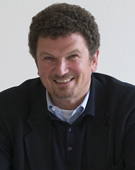
Christoph Kiener is a Researcher at the Karlsruhe Institute of Technology, working within the Grunwaldt Working Group led by Prof. Dr. Jan-Dierk Grunwaldt. His role focuses on advancing research in catalytic processes and materials development at the institution's Engesserstr. 20, 76131 Karlsruhe campus. His core research interests center on: Catalysis Chemical Engineering Materials Science The Grunwaldt Working Group specializes in experimental and theoretical investigations of catalysts, with applications spanning sustainable energy and industrial chemical processes. Dr. Kiener contributes to this mission through collaborative projects in reactor design and material characterization.
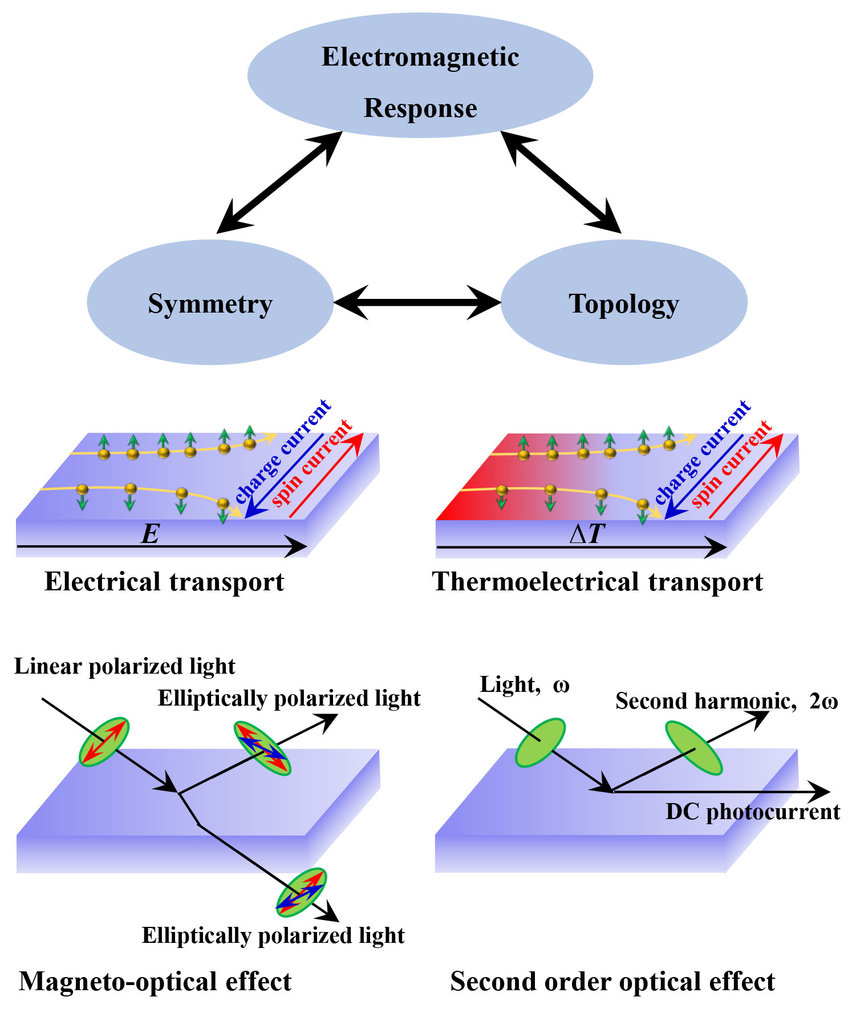
Yan Sun is Professor at the University of Tennessee, Knoxville and leads the Topological Transport Theory group at the Max Planck Institute for Chemical Physics of Solids (MPI CPfS) in Dresden. His research bridges electromagnetic response theory, symmetry principles, and topology to predict novel transport phenomena in quantum materials, with emphasis on experimental realization through collaborations. Research Interests: Sun investigates symmetry-forbidden transport effects in topological systems, including anomalous Hall/Nernst effects, spin Hall phenomena, magnetoresistances, and higher-order responses like second-order Hall effects and giant photovoltaic effects. His group combines model Hamiltonians with density functional theory to connect fundamental physics with material properties, focusing on magnetic Weyl semimetals and topological catalysts. Publication Trends: Recent works demonstrate expertise in topological insulators/semimetals, with 2018–2015 publications emphasizing Berry curvature engineering, symmetry-protected states, and prediction of materials for spintronics applications. Research consistently targets transport anomalies arising from topological charge and magnetism. Scientific Awards: None mentioned in source text. Advising and Collaborations: Leads active MPI CPfS group with current members Yang Zhang (Visiting Scientist) and Jonathan Noky (Research Technician), plus former member Quinan Xu. Maintains extensive experimental partnership with Claudia Felser’s group on topological/magnetic materials for spintronics, catalysis, and surface-state characterization. Labs and Teams: Directs the Topological Transport Theory group within MPI CPfS’s Topological Quantum Chemistry department, focusing on database development for inversion-symmetry-broken Weyl semimetals and nonlinear optical responses. Research integrates theoretical modeling with experimental validation to realize predicted quantum phenomena.
Scott Miller is the Sterling Professor of Chemistry and Department Chair at Yale University's Department of Chemistry within the Faculty of Arts and Sciences. He is also affiliated with the Yale Cancer Center as a member of the Developmental Therapeutics Program, demonstrating the translational nature of his research. Professor Miller's research focuses on the creation of new catalysts for complex molecule synthesis and derivatization, with particular emphasis on peptide-based catalysts for enantioselective reactions. His lab explores the application of asymmetric catalysis principles to regioselectivity, site-selectivity, and chemoselectivity, especially in natural product diversification. The Miller Lab targets molecular functionality ubiquitous in complex natural products to use these materials as scaffolds for new bioactive entity synthesis. Recent publications reveal significant advances in areas including atropisomerism, enantioselective hydrodifluoroalkylation of alkenes, catalyst-controlled regiodivergent oxidation, and site-selective protein editing. His work bridges fundamental chemical principles with potential biomedical applications through his cancer center affiliation. Professor Miller maintains an active research program with numerous high-impact publications in leading chemistry journals including Nature Chemistry, Journal of the American Chemical Society, and Nature Chemical Biology. His research demonstrates consistent innovation in catalytic methodology development and application to complex molecular systems. The Miller Lab employs combinatorial methods for catalyst screening and optimization, drawing mechanistic analogies to enzymes while developing novel peptide-based catalytic platforms. This approach has enabled significant advances in selective synthesis of complex molecules with potential applications in medicinal chemistry and drug discovery.
Dr. Mariya Rozenblit is an Assistant Professor of Medicine at Yale School of Medicine specializing in Medical Oncology. She holds appointments at Yale Cancer Center and the Center for Breast Cancer, where she leads translational research initiatives. Her clinical practice focuses exclusively on breast cancer management, from ductal carcinoma in situ to metastatic disease. She completed her medical education at Icahn School of Medicine (MD 2015), internal medicine residency at NYU Langone Medical Center (2018), and medical oncology fellowship at Yale. Her research program investigates: Biomarker-driven clinical trial design Genomic alterations preceding breast cancer development Oligometastatic disease biology Age-specific molecular differences in breast cancer Immunotherapy biomarkers in early-stage disease Recent publications (2022-2025) demonstrate consistent focus on breast cancer genomics and precision oncology. Over 80% of her 15 most recent articles examine molecular biomarkers, with particular emphasis on: Homologous recombination deficiency signatures HER2-low characterization ctDNA analysis techniques Germline mutation patterns in young patients Epigenetic aging markers Honors include: ASCO Conquer Cancer Young Investigator Award (2020) Susan G. Komen Career Catalyst Grant (2022) She currently serves as sub-investigator on multiple clinical trials evaluating novel therapeutic approaches for breast cancer. Her research group collaborates extensively with Yale's Genomics, Genetics, and Epigenetics Program.
Prof. Dr. Janina Kneipp is a Professor (W3) of Physical Chemistry at Humboldt-Universität zu Berlin, where she has led an active research group since 2012. She previously held positions as Assistant Professor at HU Berlin/BAM (2008-2012), Junior Researcher at BAM (2005-2008), and research appointments at Harvard Medical School, Princeton University, and Erasmus Universiteit Rotterdam. Education: Dr. rer. nat. (summa cum laude), Freie Universität Berlin (2002) Undergraduate/Graduate Studies in Biology & Physics, Freie Universität Berlin (1992-1998) Research Focus: Her interdisciplinary work bridges physical chemistry and biospectroscopy, with particular emphasis on: Surface-enhanced Raman scattering (SERS) for complex sample analysis Plasmonic catalysis and hot electron chemistry Multiphoton-excited vibrational spectroscopy Nanoscale biochemical mapping in plant and animal systems Development of advanced plasmonic substrates Publication Trends: Recent work demonstrates strong focus on multimodal spectroscopy applications, with studies combining SERS, hyper-Raman, IR, and synchrotron techniques to address questions in catalysis, nanoparticle-cell interactions, plant biochemistry, and biosensing. Publications frequently incorporate advanced nanomaterials, electrochemical methods, and machine learning-assisted spectral analysis. Scientific Awards: Fellow, European Academy of Sciences (2020) Caroline von Humboldt Professorship (2019) Wilhelm Ostwald Fellow, BAM (2012) Bunsen-Kirchhoff Award, GDCh (2010) ERC Starting Grant (2010) Academic Leadership: Currently advises 5 PhD students and leads multiple collaborative initiatives. Serves as Board Member of Einstein Center Catalysis (since 2019), Head of Chemistry Department (2014-2016), and Speaker of Graduate School SALSA (since 2012). Secured funding through DFG, EU networks, and ERC grants supporting spectroscopy infrastructure development. Lab & Team: Leads the KneippLab research group with 2 postdoctoral researchers, 5 graduate students, and technical staff. Research focuses on developing spectroscopic methods for interrogating biological and chemical processes at nanoscale resolution using plasmonic enhancement strategies.
Prof. Dr. Beatriz Roldan Cuenya is a Professor and Group Leader at the Fritz Haber Institute of the Max Planck Society, where she directs the Department of Interface Science. She holds a European Research Council Consolidator Grant and is a Fellow of the Max Planck Society. Her research integrates surface science, catalysis, and nanomaterials, with a focus on understanding dynamic surface transformations during chemical reactions using advanced operando techniques. Her work spans electrocatalysis (CO₂ reduction), thermal catalysis (CO₂ hydrogenation), and nanoparticle design. Key themes include: Correlating nanoscale structure with catalytic activity/selectivity Developing size/shape-controlled catalysts Probing reaction mechanisms via real-time microscopy/spectroscopy Her recent publications (2021-2025) predominantly explore CO₂ conversion strategies, bimetallic catalysts, and operando characterization methods. Trends show emphasis on sustainable chemistry and energy applications. Notable scientific awards: AVS Fellow of the Society Award (2021) ISE-Elsevier Prize for Experimental Electrochemistry (2021) Academia Europaea Membership (2020) ERC Consolidator Award (2016) Max Planck Society Fellowship (2016) She leads a well-equipped research group investigating catalyst design and reaction dynamics. The lab leverages synchrotron facilities and in-house instrumentation for fundamental studies.
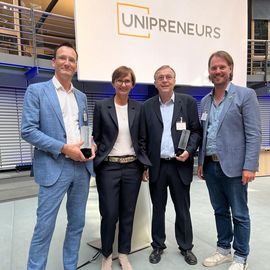
Prof. Dr. Reinhard Schomäcker is a Professor at the Technical University of Berlin's Institute of Chemistry and a Group Leader at UniSysCat. His research bridges catalysis, reaction engineering, and sustainable chemistry, with applications in CO₂ utilization, photocatalytic hydrogen production, and hydrocarbon conversion. He leads the Reaction Engineering Group, focusing on catalyst design and process optimization. Research Interests: His work spans heterogeneous catalysis, kinetic studies, membrane reactors, and techno-economic assessments. Key areas include: Development of tandem catalytic systems for CO₂ hydrogenation Photocatalytic hydrogen evolution using advanced materials Design of nanocatalysts for industrial processes Awards & Recognition: Innovation Award of German Gas Industry (2016) UNIPRENEURS Award for entrepreneurial contributions (2023) Lab & Resources: He directs the Reaction Engineering Group ( www.reaction-engineering.tu-berlin.de ), which collaborates extensively within UniSysCat. The lab specializes in operando catalyst characterization and reactor design.
Siegfried R. Waldvogel is a prominent researcher in electrochemical synthesis, currently serving as Director of the Department for Electrosynthesis at the Max Planck Institute for Chemical Energy Conversion and Professor at Karlsruhe Institute of Technology, both positions held since 2023. He also maintains his position as Full Professor at Johannes Gutenberg Universität Mainz, where he has been based since 2010. His academic journey includes professorships at Rheinische Friedrich Wilhelms Universität Bonn (2004-2010), habilitation at Westfalische Wilhelms Universität Münster (1998-2004), postdoctoral work at Scripps Research Institute (1997-1998), and PhD studies at Ruhr-Universität Bochum/Max-Planck-Institute for Coal Research (1994-1996). Professor Waldvogel's research focuses on sustainable electro-organic synthesis, with particular emphasis on developing novel electrochemical methods for organic compound synthesis, biomass valorization, and green chemistry applications. His work bridges fundamental electrochemistry with practical organic synthesis, creating methods that reduce waste, utilize renewable resources, and operate under milder conditions compared to traditional chemical processes. Recent research highlights include electrochemical dehydration reactions, synthesis of heterocyclic compounds, CO2 conversion, and development of peroxodicarbonate as a green oxidizer. Analysis of his recent publications (2024-2025) reveals a strong focus on sustainable electrochemical processes across multiple subfields of organic chemistry. His work spans electrochemical oxidation and reduction reactions, biomass conversion (particularly lignin valorization), and development of novel electro-synthetic methodologies. The research demonstrates consistent innovation in applying electrochemistry to solve challenges in organic synthesis while maintaining environmental sustainability. Professor Waldvogel actively supervises research through his positions at multiple institutions, with his current leadership role at the Max Planck Institute for Chemical Energy Conversion providing significant resources for electrochemical research. His extensive publication record and collaborative work across multiple institutions indicate substantial research funding and a well-established research group. As Director of the Department for Electrosynthesis at the Max Planck Institute for Chemical Energy Conversion, Professor Waldvogel leads a research team focused on advancing electrochemical methods for sustainable chemical synthesis. His dual appointments at Karlsruhe Institute of Technology and Johannes Gutenberg Universität Mainz provide additional research capacity and educational opportunities for students interested in electrochemistry and sustainable organic synthesis.
Simon Thiele is a prominent researcher at Forschungszentrum Jülich GmbH in Germany, focusing on electrochemical energy conversion systems for hydrogen technologies. His work spans both fundamental materials science and practical engineering applications in fuel cells and electrolyzers. His research interests center on membrane science , electrocatalysis , and electrode engineering for proton exchange membrane systems. Thiele investigates novel hydrocarbon-based ionomers as alternatives to conventional perfluorinated membranes, develops catalyst systems with reduced precious metal content, and optimizes electrode structures for improved performance. His work addresses critical challenges in hydrogen production via water electrolysis , fuel cell operation , and liquid organic hydrogen carrier systems . Analysis of his recent publication trends shows a strong focus on iridium reduction strategies for electrolyzers, advanced membrane development , and scalable manufacturing techniques . His work bridges fundamental materials science with practical engineering considerations, with particular attention to the relationship between material properties, electrode structure, and electrochemical performance. Thiele's scientific contributions have been recognized through a substantial citation record, with over 6,487 citations and an h-index of 48 according to Scopus data. His publications appear consistently in high-impact journals across electrochemistry, materials science, and chemical engineering disciplines. His research group likely focuses on experimental development and characterization of electrochemical materials and components, with strong emphasis on practical applicability and scalability. The work involves sophisticated materials synthesis, electrochemical testing, and advanced characterization techniques including tomography and spectroscopy. Current projects appear to address the critical challenges of cost reduction, durability improvement, and performance enhancement for hydrogen technologies, with particular attention to membrane development, catalyst optimization, and manufacturing process innovation.
Gabriel Chan is a researcher at the Colloid Chemistry Department of the Max Planck Institute of Colloids and Interfaces in Potsdam, Germany. His work bridges materials science and organic chemistry through the development of interfacial photoelectrochemical systems. Chan's research focuses on photoelectrochemistry in organic synthesis , specifically developing heterogeneous photoelectrodes as sustainable alternatives to traditional homogeneous catalysts. His work addresses critical challenges in catalyst recovery, stability, and cost-efficiency that plague conventional photoredox catalysis. Key research areas include: Development of semiconductor-based photoelectrodes (BiVO₄, TiO₂, WO₃) Valorization of biomass-derived molecules (glycerol, HMF, lignin) C-H bond activation and functionalization reactions Design of self-powering photoelectrochemical systems His recent review article in Angewandte Chemie (2025) demonstrates expertise in making complex photoelectrochemical concepts accessible to synthetic chemists while advancing sustainable chemistry methodologies. The work highlights how interfacial photoelectrochemistry can reduce reliance on precious transition metals and improve atom economy in organic synthesis. Chan's research has significant implications for industrial applications where catalyst recyclability and process sustainability are critical concerns. His work with nanoporous BiVO₄ photoelectrodes has demonstrated improved reaction rates and selectivity for high-value organic compounds compared to conventional methods.
Prof. Dr. Michael Bron leads the Technical Chemistry of Renewable Energies research group at Martin Luther University Halle-Wittenberg within the Faculty of Natural Sciences II. His work focuses on electrochemical energy conversion technologies critical to renewable energy systems. His research expertise spans electrocatalytic CO2 reduction , redox flow batteries , fuel cells , and electrolysis . The group specializes in developing micro- and nanostructured materials for energy conversion, with particular emphasis on carbon-based electrodes, nickel oxides for oxygen evolution, and metallic nanoparticles. Their methodology combines advanced electrochemical techniques (cyclic voltammetry, impedance spectroscopy), materials synthesis (graphene, CNTs, metal nanoparticles), and characterization (Raman/IR spectroscopy, XRD). Prof. Bron actively supervises doctoral candidates and Master's students while maintaining extensive experimental facilities. His group recently appeared in MDR Info (May 2023) discussing oxygen as a waste product in green hydrogen production, and in Deutschlandfunk Kultur (March 2023) covering digitalization in chemical laboratories. The group offers Bachelor's and Master's theses in chemistry and Renewable Energies programs, focusing on physical and chemical principles of energy storage/conversion in solar cells, batteries, and photocatalysts. Current research projects include carbon electrodes for vanadium redox flow batteries and catalysts for CO2 reduction to valuable products.
Fritz Frenkler serves as an Honorary Professor of Design in the Digital Society at the Institute for Design Research, HBK Schwäbisch Gmünd. His position bridges academic theory with practical design applications in contemporary digital contexts. His research focuses on the intersection of design and societal transformation within digital ecosystems. Key areas include digital interface anthropology , design ethics in algorithmic systems , and cultural adaptation to immersive technologies . His work emphasizes design as a catalyst for social cohesion in technology-driven societies. Frenkler maintains active industry collaboration through f/p Design GmbH while contributing academic rigor to design education. His advisory role connects institutional research with real-world design challenges in digital product development.
Alexander Mitsos is a Professor at Forschungszentrum Jülich in Germany, where he leads research at the intersection of process systems engineering, chemical engineering, and computational methods. His work spans optimization theory, machine learning applications, and energy systems, with a focus on developing novel methodologies for complex engineering problems across multiple domains. Dr. Mitsos's research interests center on the application of advanced optimization techniques to chemical engineering problems. His primary areas of focus include: Process systems engineering and optimization Machine learning applications in chemical engineering Energy systems and hydrogen technologies Bioprocess engineering and control systems Ammonia energy storage and carbon capture His recent publications reveal a strong trend toward integrating machine learning with traditional chemical engineering approaches. He has pioneered work on graph neural networks for molecular property prediction, reinforcement learning for control systems, and bilevel optimization for energy systems. His research demonstrates a consistent focus on developing computationally efficient methods that bridge theoretical advances with practical engineering applications, particularly in sustainability-focused domains like hydrogen technologies and carbon emission reduction. The analysis of his 15 most recent publications shows a balanced portfolio between theoretical method development (e.g., optimization algorithms) and practical applications (e.g., cement production, hydrogen compression). Dr. Mitsos has mentored numerous graduate students and postdoctoral researchers, as evidenced by his extensive publication record with junior authors. His research has been supported by various grants focused on energy transition, process optimization, and sustainable chemical engineering solutions, with significant collaborations across European institutions. The funding landscape for his work appears to emphasize sustainability transitions and industrial decarbonization, particularly in energy-intensive sectors. His work appears to be conducted within a research group focused on process systems engineering, with strong connections to both computational mathematics and practical chemical engineering applications. The group maintains laboratories for experimental validation of computational models, particularly in bioprocess engineering and hydrogen technologies, while maintaining strong theoretical foundations in optimization and control theory.