معرفی
Gabriel Chan is a researcher at the Colloid Chemistry Department of the Max Planck Institute of Colloids and Interfaces in Potsdam, Germany. His work bridges materials science and organic chemistry through the development of interfacial photoelectrochemical systems.
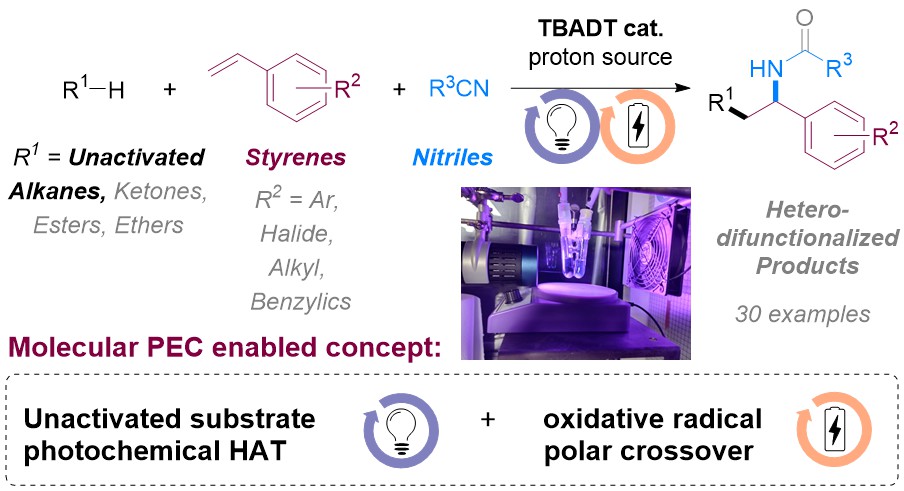
Chan's research focuses on photoelectrochemistry in organic synthesis, specifically developing heterogeneous photoelectrodes as sustainable alternatives to traditional homogeneous catalysts. His work addresses critical challenges in catalyst recovery, stability, and cost-efficiency that plague conventional photoredox catalysis. Key research areas include:
- Development of semiconductor-based photoelectrodes (BiVO₄, TiO₂, WO₃)
- Valorization of biomass-derived molecules (glycerol, HMF, lignin)
- C-H bond activation and functionalization reactions
- Design of self-powering photoelectrochemical systems
His recent review article in Angewandte Chemie (2025) demonstrates expertise in making complex photoelectrochemical concepts accessible to synthetic chemists while advancing sustainable chemistry methodologies. The work highlights how interfacial photoelectrochemistry can reduce reliance on precious transition metals and improve atom economy in organic synthesis.
Chan's research has significant implications for industrial applications where catalyst recyclability and process sustainability are critical concerns. His work with nanoporous BiVO₄ photoelectrodes has demonstrated improved reaction rates and selectivity for high-value organic compounds compared to conventional methods.