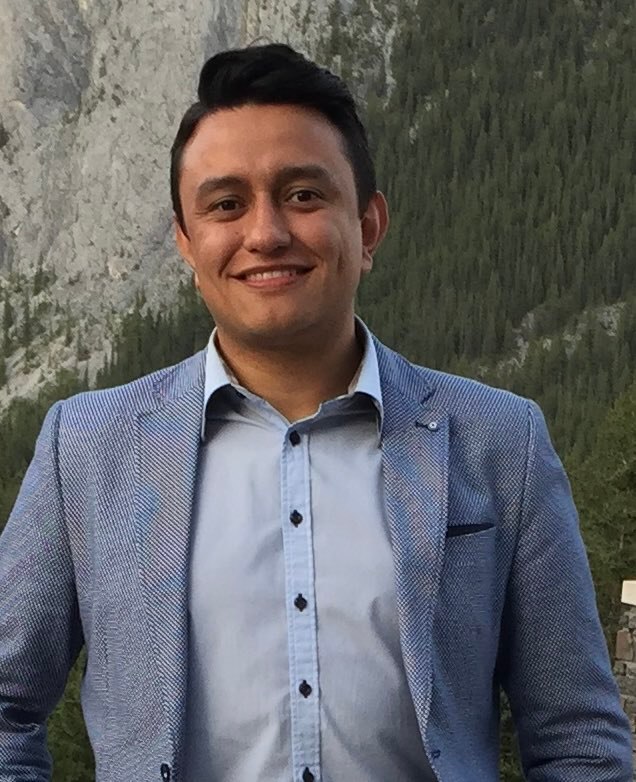
José Eduardo Villalobos Graillet is an Assistant Professor of Spanish at Idaho State University , specializing in Modern Peninsular Literature and Culture with a focus on visual culture (film and television) . He previously held a position as Spanish Instructor at Wilfrid Laurier University in the Department of Languages and Literatures. Research Areas : Spanish Film Studies, Spanish Medieval Literature, Latin American and Caribbean Studies, Teaching Spanish as a Foreign Language, Visual Culture, and Critical Pedagogy. His scholarly work examines film and television adaptations of 'La Celestina' , analyzing censorship dynamics across Francoist Spain, the Democratic Transition, and contemporary Spain. He also contributes to Spanish pedagogy , developing technological tools like Lang-8 for written expression and culturally immersive teaching units on topics such as winter festivals and Caribbean music. His publications span both critical academic analysis and methodological innovations for language instruction. Key Themes in Publications : Adaptation fidelity, political censorship, intercultural pedagogy, and the role of digital platforms in language learning.
Gustavo J. Bobonis is a Professor in the Department of Economics at the University of Toronto, with affiliations at the Munk School of Global Affairs and Public Policy. He holds a Ph.D. from the University of California, Berkeley (2005) and a B.A. from the University of Puerto Rico at Rio Piedras (2000). He co-directs the Forward Society Lab and is actively involved in research on development, labor, political economy, and economic history. Research Interests: His work focuses on development economics, particularly the impact of public policies on poverty, violence, education, and governance. He employs rigorous empirical methods, including field experiments and quasi-experimental designs, to analyze issues such as intimate partner violence, corruption, clientelism, and human capital accumulation. His research is geographically concentrated in Latin America and Puerto Rico. Recent Research Trends: His recent publications and working papers (2022–2025) demonstrate a strong focus on institutional reform, including anti-corruption audits, domestic violence courts, and education management. He also investigates long-term social impacts of welfare programs and climate adaptation strategies. His interdisciplinary approach bridges economics, public policy, and social science. Scientific Awards: U of T Department of Economics Faculty Award for Excellence in Undergraduate Teaching, 2015 John C. Polanyi Prize in Economic Science, 2009 National Academy of Education / Spencer Foundation Postdoctoral Fellow, 2008 Advising and Grants: While specific student names are not listed, he advises graduate students through the Honours Essay and research workshops. He leads collaborative research projects funded through grants and affiliations with J-PAL and BREAD, often involving large interdisciplinary teams. His work includes randomized evaluations and long-term follow-ups, suggesting sustained funding and research support. Labs and Teams: He co-directs the Forward Society Lab, which likely supports policy-relevant research on social development. He frequently collaborates with economists such as Paul Gertler, Marco Gonzalez-Navarro, Simeon Nichter, and Luis R. Cámara Fuertes. His affiliations with J-PAL and BREAD indicate integration into major global research networks focused on development and poverty alleviation.
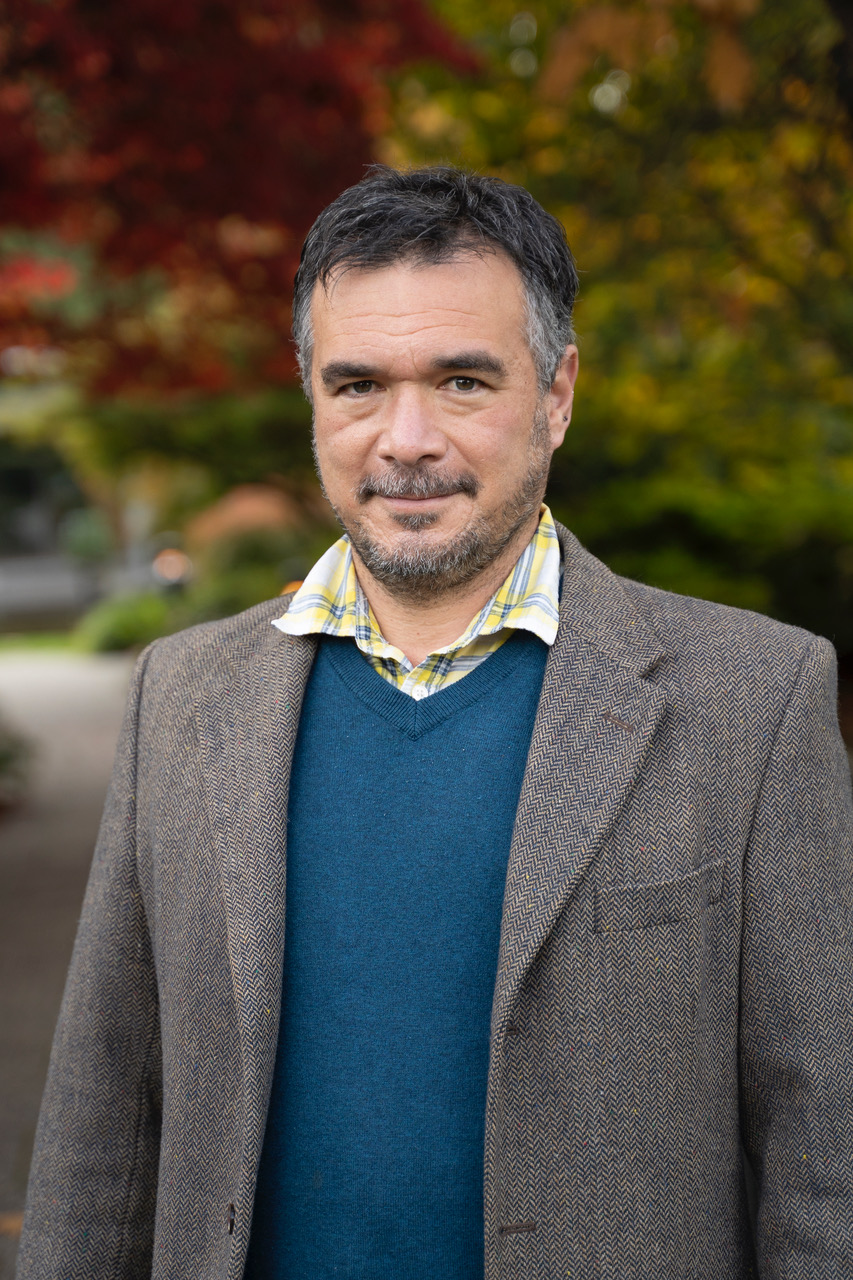
Dr. Lincoln Z. Shlensky is an Associate Professor in the Department of English at the University of Victoria, situated on the traditional territories of the WSÁNEĆ and Lək̓ʷəŋən peoples. His research focuses on postcolonial literature, diaspora studies, and media studies with emphases on the Caribbean, Jewish studies, and film. He holds degrees from Brown University (BA), UC Berkeley (MA/PhD). Teaching: Undergraduate courses in film rhetoric, postcolonial studies, and cultural theory Service: Chair of Caribbean Studies Association's 2010-11 Technology Task Force (awarded President's Distinguished Service Award) Administration: English Department webmaster since 2006; Senate Committee on Academic Standards representative 2010-2013 Research explores postcolonial memory through modernist literary influences, with an upcoming manuscript Islands of Memory: The Literary Politics of Aftermaths . His work appears in Callaloo , Prooftexts , and Qui Parle , focusing on authors like Edouard Glissant, Jamaica Kincaid, and Aharon Appelfeld. He supervises graduate students in postcolonial theory and global cinema. Has produced student films including a departmental history for UVic's 50th anniversary and instructional content for first-year writing. Maintains active academic website at shlensky.com .
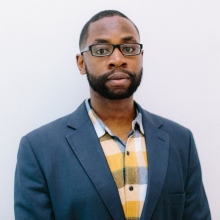
Dr. Wendell Nii Laryea Adjetey is an Associate Professor and William Dawson Scholar in the Department of History and Classical Studies at McGill University, specializing in post-Reconstruction U.S. history and the African Diaspora in North America and the Atlantic World. His research examines transnational Black freedom struggles, connecting social, cultural, intellectual, political, and military histories across geographical boundaries. His award-winning monograph Cross-Border Cosmopolitans: The Making of a Pan-African North America (UNC Press, 2023) has received multiple honors including the Governor General's History Award and CHA Best Scholarly Book Prize. The work pioneers integrated analysis of African American, African Canadian, and African Caribbean histories within broader Atlantic frameworks. Educational background includes: Postdoctoral fellowship at Harvard University Ph.D., M.Phil., and M.A. from Yale University M.A. from University of Toronto Honors B.A. from University of Toronto (St. Michael's College) Dr. Adjetey's scholarly distinctions include the H. Noel Fieldhouse Award for Distinguished Teaching and Principal's Prize for Excellence in Teaching at McGill. His extensive service includes advisory roles for SSHRC anti-racism initiatives and founding the Dr. Kenneth Melville Black Faculty and Staff Caucus. As a public intellectual, he contributes to The Washington Post , Globe and Mail , and Toronto Star , addressing historical consciousness and contemporary social justice issues. His humanitarian work includes gang prevention programs and educational equity initiatives.
Jean-Luc Bonniol is a Professor of Anthropology at Paul-Cézanne University (Aix-Marseille III) affiliated with UMR 6591 (IDEMEC) and the Mediterranean House of Human Sciences. His work focuses on postcolonial societies, race, and Caribbean cultural dynamics. Key affiliations: University of Aix-Marseille, IDEMEC research unit, Mediterranean anthropological networks. Doctoral research included studies on population genetics in Caribbean island communities. Research emphasizes colonial legacies, memory of slavery, and creolization processes. He has curated major collections like the 'Creole Societies' series. Publications span anthropology, sociology, and history, addressing topics like racialization, postcolonial identity, and Guadeloupean social movements. His 2009 analysis of labor strikes in Guadeloupe remains seminal. Received formal permissions to distribute works openly via Les Classiques des sciences sociales. Active in interdisciplinary dialogue blending anthropology with historical and political analysis.
Rafael Wainer is a Continuing Sessional Lecturer in the Department of Anthropology at the University of British Columbia (UBC), affiliated with the Faculty of Arts. His academic background includes a PhD in Medical Anthropology (UBC, 2017), an M.A. from UBC (2008), and a Licenciado from the Universidad de Buenos Aires (2003). His research focuses on medical anthropology, socio-cultural anthropology, and health-related issues in Latin America, particularly Argentina. Education: Ph.D., Medical Anthropology, University of British Columbia, 2017 M.A., University of British Columbia, 2008 Licenciado, Universidad de Buenos Aires, 2003 Research Interests: Children’s cancer experience and biomedicine Palliative care and end-of-life practices Humor in clinical settings Death, dying, and grief in schools Healthcare policy and pandemic responses Ethnographic methods in medical institutions Teaching: Rafael teaches courses on Medical Anthropology, Socio-Cultural Anthropology, and Applied Anthropology, emphasizing critical perspectives on health, biomedicine, and cultural practices. Publications: His work explores themes like permeable bodies in pediatric oncology, grief in educational settings, and the role of humor in palliative care. Recent contributions include analyses of Argentina’s Hospice movement and critiques of pandemic-era health technologies. Recognition: He has received awards including the Sessional Lecturer Teaching Award (2022) and multiple research grants supporting fieldwork in Argentina and Canada. Advisory Role: Co-director of Darío-Iván Radosta’s PhD thesis on Argentina’s Hospice movement (2020–present). Outreach: Engages in public projects like “Duelo en Escuelas” , addressing grief in educational contexts, and critiques of health policies (e.g., Canada’s pandemic app).
David A. B. Murray is a Professor in the Department of Anthropology and the School of Gender, Sexuality and Women's Studies at York University. His research integrates queer theory, anthropology, and migration studies to examine sexual and gender minorities across Martinique, Barbados, New Zealand, and Canada. Ph.D. Anthropology, University of Virginia M.A. (Distinction) Anthropology, University of Virginia B.A. (Honours) Anthropology, McGill University Professor Murray's work critically engages with nationalism, colonialism, identity performativity, and health inequities. His recent publications analyze queer temporalities, HIV/AIDS narratives, and transnational refugee politics. Emerging from his 2015-2025 publications, key trends include: Queer refugee experiences in Canada/USA HIV/AIDS in Caribbean contexts Queer temporality and biopolitics Language and identity politics Postcolonial identity negotiations Performance of cultural citizenship His research program involves fieldwork across Caribbean and Canadian sites, examining how marginalized communities navigate structural inequities through cultural resistance and identity reclamation.
Melanie J. Newton is a Professor of History at the University of Toronto, with cross-appointments to the Centre for Caribbean Studies. Her research focuses on Caribbean and Atlantic World histories, particularly slavery, emancipation, Indigenous and African diaspora experiences, gender dynamics, and colonial legal systems. She has held significant administrative roles, including Director of the Caribbean Studies Program and Chair of the Faculty of Arts and Science Academic Appeals Board. DPhil, Oxford University BA, McGill University Newton's work intersects with fields like colonialism, cultural studies, and decolonization, as well as social history and political law. Her publications analyze themes such as genocide in the Caribbean, diaspora identity, and gendered legal struggles. Scientific awards include the 2023 Milner Memorial Award, 2023 Lester J. Cappon Prize, and the 2016 Outstanding Teaching Award from the University of Toronto. She has contributed to public policy through roles like co-chairing Toronto's Dundas Street renaming advisory committee.
Adelle Blackett is a Full Professor and Canada Research Chair in Transnational Labor Law at the Faculty of Law, McGill University. She currently serves on public service leave as Senior Advisor to the Director-General of the International Labour Organization in Geneva. Her academic credentials include a BA in History from Queen's University, civil law and common law degrees from McGill, and an LL.M./JSD from Columbia University. Fellow of the Royal Society of Canada (2020) Bora Laskin National Human Rights Fellow Pierre Elliott Trudeau Foundation Fellow Professor Blackett's research focuses on transnational labor law with emancipatory approaches, particularly domestic workers' rights and the intersection between trade and labor standards. She has contributed to international legal discourse through roles as Rapporteur-General for the International Academy of Comparative Law and as an expert for CETA and USMCA trade agreements. Her pedagogical innovations include courses on Slavery and the Law, transnational labor law futures, and labor law development with the African Development Bank. Her scholarly work has appeared in leading journals like American Journal of International Law and International Labour Review . She directs the Labor Law and Development Research Laboratory and has received numerous teaching awards including McGill's Principal's Prize for Teaching Excellence (2020). Professor Blackett has held visiting professorships at Fordham, Cornell, Université catholique de Louvain, and the University of Toronto. 2020 CCIL Scholarly Book Award for Everyday Transgressions 2019 CAPSLE Award for Advancing Legal Pedagogy Queen Elizabeth II Diamond Jubilee Medal Bob Hepple Lifetime Achievement Award Honorary Doctorates from three universities Professor Blackett has shaped policy as Chair of Canada's Employment Equity Act Review Task Force and through advisory roles at the ILO's Advisory Committee on Trade and Labor. She founded McGill's Black Faculty and Staff Caucus and co-authored the Scarborough Charter on anti-Black racism in Canadian higher education. Her work bridges academic research, policy implementation, and social justice advocacy.
Yasmine Shamsie is an Associate Professor in the Department of Political Science at Wilfrid Laurier University , specializing in democracy promotion , Central America , Caribbean , and foreign intervention . Her work critically examines Haiti 's political economy, focusing on post-disaster recovery, state-building, and the impacts of international aid. Research Interests include democratization processes in fragile states, corporate influence on development, agrarian displacement, and the efficacy of foreign policy interventions in the Global South. She analyzes how international actors like Canada and the Organization of American States (OAS) navigate peacebuilding, electoral reforms, and economic development in Haiti and Latin America. Recent publications explore topics such as agrarian displacement , export processing zones , and state-corporate partnerships , with a focus on Haiti's post-earthquake challenges. Her work spans Political Science , Development Studies , and International Relations , emphasizing the intersection of economic policy, human security, and corporate accountability. Contact Information : Email yshamsie@wlu.ca , Office: DAWB 4-112, Wilfrid Laurier University. Languages: English, French, Spanish.
Professor Jennifer Ruth Hosek is a faculty member in the Department of Languages, Literatures and Cultures at Queen's University within the School of Arts and Science. She is cross-appointed with Gender Studies and Film and Media, affiliated with the Cultural Studies Graduate Program, and associated with the Queen’s-University of Havana Exchange. PhD in Comparative Literature, University of California, Berkeley (2004) MA in Comparative Literature, University of California, Berkeley (1995) Bachelor's summa cum laude in Comparative Literature and German, University of Illinois at Urbana-Champaign (1992) Her research explores: 20th-21st Century German Culture, particularly film Transnational and Feminist Theories European Union Cultural Dynamics Cuban-German Cultural Intersections Urban Mobility Cultures Petrocultures and Environmental Humanities Recent publications analyze: Urban development in post-WWII Berlin German cultural perceptions of Cuba Gendered dimensions of Latin American cinema Technological impacts on mobility cultures Scientific awards and support include: 2008 National Coalition of Women in German Best Article Prize Berlin Studienstiftung des Abgeordnetenhauses DAAD Fellowship Humboldt Foundation Grants Mellon Foundation Support She co-organized the Contagion Cultures lecture series and developed the peer-to-peer language exchange tool LinguaeLive , both funded by SSHRC and internal Queen's grants. Her teaching spans German Studies, Film and Media Studies, and Global Development (Cuba), with courses on cultural history, urban mobility, and transnational cinema.
Sarah Phillips Casteel is a Professor of English at Carleton University in Ottawa, Canada. She is cross-appointed to the Institute of African Studies and the Institute for Comparative Studies in Literature, Art and Culture. Casteel is a founding member of the Centre for Transnational Cultural Analysis and MDS: Migration and Diaspora Studies at Carleton University. Beyond Carleton, she serves on the Academic Council of the Holocaust Educational Foundation of Northwestern University, the advisory board of Bloombury Academic's Comparative Jewish Literatures series, and the editorial boards of Jewish Historical Studies: A Journal of English-Speaking Jewry and www.AmericanJewishStudies.org. Her educational background includes a B.A. from the University of Toronto and M.A., M.Phil., and Ph.D. degrees from Columbia University, reflecting her strong foundation in literary and cultural studies. Casteel's research is situated at the intersection of Black studies and Jewish studies, with particular focus on Black and Jewish diaspora literature and culture, global Holocaust studies, memory studies, and Caribbean and hemispheric American studies. Her groundbreaking work challenges conventional narratives of Holocaust history by centering Black wartime experiences, particularly through her research on the Josef Nassy Collection. She has significantly expanded the discussion of Black-Jewish literary and aesthetic relations beyond the U.S. national frame, demonstrating how Caribbean literary traditions have shaped Jewish identity and vice versa. Her scholarship reveals how marginalized histories intersect and how literature and art serve as crucial sites for documenting and resisting historical erasure. Norman Raab Foundation Fellow, Mandel Center for Advanced Holocaust Studies, United States Holocaust Memorial Museum, Washington DC, 2022 Marston LaFrance Fellowship, Faculty of Arts and Social Sciences, Carleton University, 2021-22 Potsdam Postcolonial Chair in Global Modernities, University of Potsdam, Germany, 2021 Research Achievement Award, Carleton University, 2019-20 Visiting Fellow, Zentrum Jüdische Studien Berlin-Brandenburg, Berlin, 2019 Canadian Jewish Literary Award, 2016 John Charles Polanyi Prize for Literature, Government of Ontario, 2007 Horst Frenz Prize, American Comparative Literature Association, 2004 Professor Casteel has supervised numerous doctoral students across English, Canadian Studies, and Cultural Mediations, with dissertations focusing on Caribbean literature, diaspora studies, Holocaust memory, and visual culture. Her supervisory work demonstrates her commitment to fostering interdisciplinary scholarship that bridges literary studies with historical and cultural analysis. She has secured substantial research funding through multiple SSHRC grants, including an SSHRC Insight Grant (2021-26), an SSHRC Insight Development Grant (2017-19), and an SSHRC Standard Research Grant (2008-12), supporting her groundbreaking research on Black experiences during the Holocaust and Caribbean-Jewish literary relations. Casteel actively participates in international academic communities, co-organizing significant workshops and conferences that bridge Holocaust studies with postcolonial studies, such as 'Black Lives under Nazism' at the United States Holocaust Memorial Museum and 'Globalizing Holocaust Studies: Pedagogical Approaches' at the University of Potsdam. Her work connects scholars across disciplines and national boundaries, fostering dialogue between Black studies, Jewish studies, and Holocaust studies, while challenging the Eurocentric frameworks that have traditionally dominated Holocaust scholarship.
Pablo A. Ramirez is an Associate Professor in the School of English and Theatre Studies at the University of Guelph. His interdisciplinary research bridges 19th-century American literature, Latinx cultural production, and memory studies. He holds a PhD from the University of Michigan and a BA from Yale University, complemented by an MFA in Creative Writing from the University of Miami. His primary research focuses on two major projects: 'Consent of the Conquered,' examining Californio women writers' use of contractual language, and 'Collective Memory in the Borderlands,' analyzing Latinx writers' engagement with historical gaps through narrative. He teaches courses on Latinx Studies and 19th-century literature, while also serving as a second reader in the Creative Writing MFA program. Key areas of expertise include law and literature intersections, supernatural themes in 19th-century texts, and borderland memory formations. His publications span peer-reviewed journals like Nineteenth-Century Literature and Arizona Quarterly , alongside contributions to edited collections addressing Latin American and Caribbean community studies. Dr. Ramirez advises graduate students across English/theatre studies and Latin American/Caribbean studies programs.
Paul Lovejoy is a Distinguished Research Professor and Canada Research Chair in African Diaspora History at York University's Department of History. He holds an honorary Doctorate from the University of Stirling and is a Fellow of the Royal Society of Canada. His research focuses on African history, the African diaspora, slavery, and Islamic studies in Africa. Lovejoy has authored over 40 books and 150 articles/chapters, including seminal works on West African jihad movements and trans-Atlantic slavery. He founded the Harriet Tubman Institute for Research on Africa and its Diasporas and leads major projects like the 'Testimonies of Enslavement' initiative. Education: Ph.D. (University of Wisconsin), Honorary Doctorate (University of Stirling) Affiliations: UNESCO Slave Route Project, Editor of African Economic History, Board Member of Walk With Web Inc. His research interests integrate global slavery narratives, diasporic identities, and historical methodologies. Recent projects include digital preservation of Sierra Leone archives and the Datas Project on trans-Atlantic slavery documentation. Awards include the eponymous Paul E. Lovejoy Prize for slavery studies. Grants: SSHRC grants for 'Testimonies of Enslavement' and 'Islamic Terrorism in Africa'. Key Projects: Freedom Narratives portal, Equiano's World, and the UNESCO General History of Africa series.
Philip Kaisary is Professor of Law and Professor of English & Comparative Literary Studies at Carleton University, cross-appointed between the Department of Law and Legal Studies, the Department of English Language and Literature, and the Institute for Comparative Studies in Literature, Art, and Culture. His work integrates Caribbean and Latin American studies, critical legal theory, human rights, and world literary studies. Education: M.A. (Hons.) English Literature, University of Edinburgh M.A. Postcolonial Studies, University of Sussex Ph.D. English & Comparative Literary Studies, University of Warwick Graduate Diploma in Law, Oxford Brookes University Graduate Diploma in Legal Practice, Oxford Institute of Legal Practice Admitted as Solicitor of England & Wales (non-practising) Research & Teaching: Kaisary’s scholarship interrogates law, literature, and film to foreground histories of slave resistance, the Haitian Revolution, and Black radical thought. Recent courses include Directions and Dead Ends in the Law & Literature Movement , The Haitian Revolution and Rights , and Critical Theory for Legal Studies . Publications Trend: His recent articles (2020-2025) cluster around cinematic representations of slavery, the Haitian Revolution’s legal and cultural legacies, and materialist critiques of human rights discourse, evidencing a sustained engagement with visual culture and radical political thought. Awards & Fellowships: Ruth and Mark Phillips Professor of Cultural Mediations, 2023–2025 Fulbright Fellowship, Vanderbilt University Lord Haldane Scholarship, Lincoln’s Inn Attorney General Award for Pro Bono activities Graduate Supervision: He welcomes prospective students interested in materialist approaches to law & literature, critical legal studies, world literature, and Black Atlantic cultures.