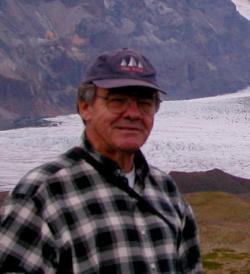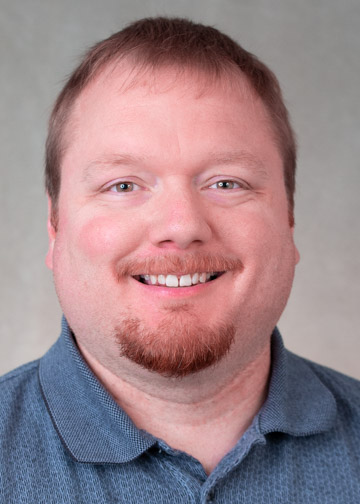
Dr. Thomas A. Hegna is an Associate Professor and Departmental Coordinator in the Geology & Environmental Sciences Department at SUNY Fredonia, where he also serves as coordinator for Physics. His research focuses on the fossil record of arthropods, particularly trilobites and early crustaceans, using this lens to bring phylogenetic relationships into focus. Dr. Hegna's educational background includes: Ph.D. from Yale University M.S. from the University of Iowa B.S. in Geoscience with honors and high distinction from the University of Iowa (minors in English and Philosophy) His research interests center on arthropod evolution and fossilization, with particular emphasis on invertebrate paleontology. Dr. Hegna has made significant contributions to understanding the fossil record of branchiopod crustaceans and their evolutionary history. His work bridges paleontology, evolutionary biology, and geology to reconstruct ancient ecosystems and evolutionary patterns. His recent publications show a consistent focus on arthropod evolution, with particular attention to crustaceans, trilobites, and fossilization processes. His work often employs advanced imaging techniques like micro-CT scanning and combines fieldwork with laboratory analysis to address fundamental questions in evolutionary history. Dr. Hegna has received numerous prestigious awards: WIU Provost's Excellence Award for Teaching with Technology (2016) William T. and Charlotte N. Hagen Young Scholar/Artist award (2022) SUNY Chancellor's award for excellence in scholarship (2024) Robert W. Kasling Memorial Lecture award (2025) Dr. Hegna has mentored 40 students in research projects and led two separate NSF-funded teams (at WIU and SUNY Fredonia) that secured grants for scanning electron microscopes. His collaborative approach to research has fostered strong relationships between students, faculty, and institutions. He directs the Hegna Lab at SUNY Fredonia, which focuses on arthropod paleontology using both traditional and cutting-edge techniques including 3D printing and micro-CT scanning. The lab has produced numerous student-led research projects and publications.