معرفی
Professor Martin Smith is a Professor in Palaeontology and Director of Education in the Department of Earth Sciences at Durham University. He has been with Durham University since 2015, following a Junior Research Fellowship at Clare College, University of Cambridge from 2012-2015.
Professor Smith obtained his PhD from the University of Toronto in 2012, and holds MA & MSc degrees from Sidney Sussex College, University of Cambridge (2008). His academic journey began with undergraduate studies in Natural Sciences at the University of Cambridge, specializing in Earth Sciences.
Professor Smith's research focuses on the origins of complex animal life as revealed by the fossil record, particularly the Cambrian Explosion period approximately 530 million years ago. His work combines detailed examination of exceptional fossil deposits like the Burgess Shale with sophisticated mathematical techniques for phylogenetic analysis. He investigates how early animal body plans evolved, with particular interest in Cambrian organisms such as Hallucigenia, Wiwaxia, and Nectocaris. His research spans multiple disciplines including palaeontology, evolutionary biology, and computational methods for analyzing evolutionary relationships.
Professor Smith's publication record demonstrates a consistent focus on methodological innovation in phylogenetic analysis alongside detailed studies of early animal evolution. His recent work has made significant contributions to understanding Cambrian fossils, including studies on euarthropod organ systems, the identification of early algal rather than bryozoan fossils, and the radiation of early annelids. His methodological papers on phylogenetic tree analysis have established new standards for comparing evolutionary trees and identifying problematic taxa.
As an educator and mentor, Professor Smith supervises multiple postgraduate students and research fellows. His current team includes Research Fellow Deng Wang, Postdoctoral Research Associate Kilian Eichenseer, and Postgraduate Student Alex Butryn. Former students include Emma Long (now at University of Exeter) and Stella Felsinger (now at University of Oxford). He leads the Leverhulme Trust-funded research project "Timing the pace of the Cambrian Explosion" which develops mathematical techniques to integrate geological observations and establish the rate of biodiversity emergence during this critical period in Earth's history.
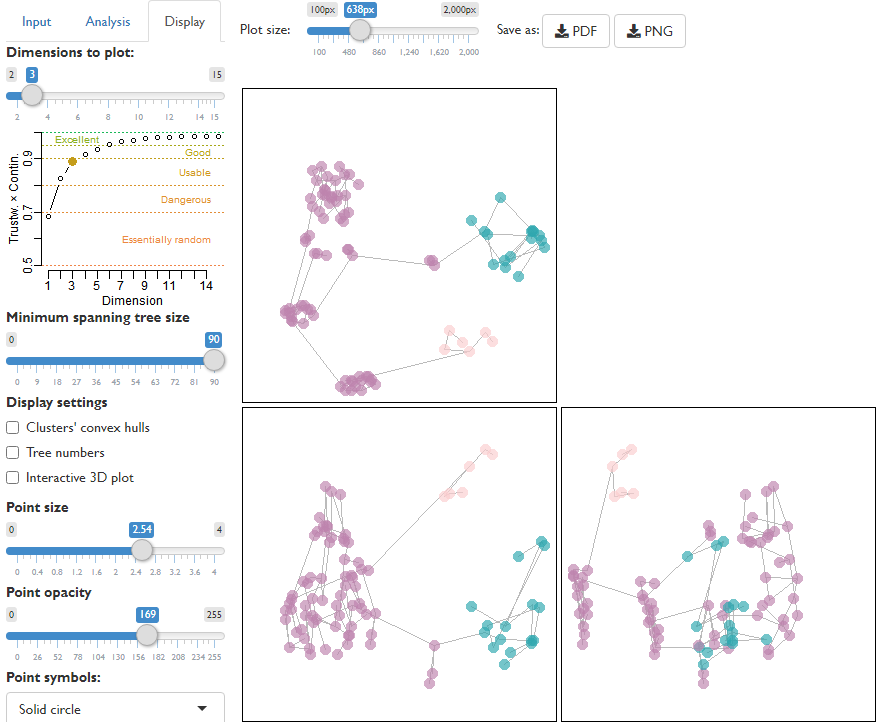
Professor Smith has developed several innovative software packages to facilitate phylogenetic analysis, including TreeDist, TreeTools, TreeSearch, and Rogue. These tools have become important resources for the evolutionary biology community, enabling more robust analysis of evolutionary relationships. His laboratory group, the Palaeoecosystems group, focuses on reconstructing past interactions between life and the planet through quantitative analysis of fossil and geological data.