معرفی
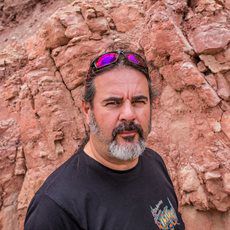
Dr. Rob Sansom is a Senior Lecturer in the Department of Earth and Environmental Sciences at the University of Manchester, where he has been faculty since 2019. His research focuses on using the fossil record to address major evolutionary questions, particularly concerning vertebrate origins and the Cambrian explosion. He leads an active research group investigating phylogenetics, experimental taphonomy, and early vertebrate evolution.
Education:
- PhD, Department of Earth Sciences, University of Bristol and Department of Palaeontology, Natural History Museum (2004-2008)
- BA, Biological Sciences, St. John's College, University of Oxford (2000-2003)
Dr. Sansom's research centers on three main areas: phylogeny and the fossil record, experimental decomposition and taphonomic biases, and the origin and early evolution of vertebrates. He investigates how morphological data from fossils can be accurately placed in the tree of life, how decay processes affect fossil preservation, and what the fossil record reveals about vertebrate origins. His work combines phylogenetic analyses, laboratory experiments on decay, and direct fossil studies to address fundamental questions in evolutionary biology.
His recent publications demonstrate a strong focus on vertebrate evolution, particularly jawless fishes and early gnathostomes. He develops computational tools like TREvoSim for evolutionary simulations and investigates how taphonomic processes influence our interpretation of the fossil record. His work bridges paleontology, evolutionary biology, and computational methods to address longstanding questions about evolutionary patterns and processes.
Scientific Awards:
- Hodson Award, Palaeontological Association (2016)
- NERC research fellow (2011)
- Outstanding contributions in Geobiosciences (2014)
Dr. Sansom actively supervises multiple PhD and MPhil students, with current projects focusing on topics like the soft tissue fossil record for vertebrate origins, morphological evolution, and trilobite morphospace. He has led or participated in several major research projects including "Evolutionary mechanisms and dynamics," "ICAL: Interdisciplinary Centre for Ancient Life," and "Overcoming the morphology problem of phylogenetics." His group has received funding from NERC, BBSRC, and other sources.
He leads a research group within the Interdisciplinary Centre for Ancient Life (ICAL) at the University of Manchester, where his lab conducts both experimental work on decomposition processes and theoretical analyses of fossil data. The group collaborates extensively with researchers across multiple disciplines to investigate evolutionary questions using integrated approaches.