معرفی
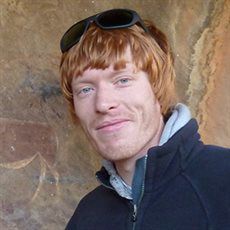
Professor Philip Donoghue holds the title of Professor of Palaeobiology at the University of Bristol's School of Earth Sciences. He is a Fellow of the Royal Society (FRS), recognizing his significant contributions to evolutionary biology and palaeontology. His research integrates fossil records with genomic data to explore the timing and mechanisms of major evolutionary events, such as the emergence of flowering plants, early animal development, and the diversification of arthropods and vertebrates.
Education: B.Sc. (Leicester), M.Sc. (Sheffield), Ph.D. (Leicester).
Research interests include developmental biology of ancient fossils, phylogenetic modeling methodologies, and the impact of environmental changes (e.g., oxygen levels) on organismal evolution. His work often employs synchrotron tomography and computational fluid dynamics to reconstruct fossil anatomy and function. Recent studies highlight debates over the origins of key groups like tracheophytes, conodonts, and vertebrate skulls, alongside methodological advancements in divergence time estimation.
Advising and grants: Professor Donoghue has advised over 30 PhD students and postdoctoral researchers, many of whom have transitioned to roles in academia, industry, and government. His lab receives funding from NERC, BBSRC, and EPSRC, supporting projects on fossil preservation, evolutionary timelines, and functional morphology. Past grants include Royal Society fellowships and international collaborations through schemes like the Marie Skłodowska-Curie Fellowship.
Labs/teams: He leads the Donoghue Lab, a multidisciplinary group focusing on palaeobiology and geobiology. Current members include Research Associates and PhD students working on topics ranging from Devonian jawless fishes to Cretaceous insect diversity. Alumni have secured positions at institutions like the University of Cambridge, Natural History Museum, and UK Research and Innovation (UKRI).