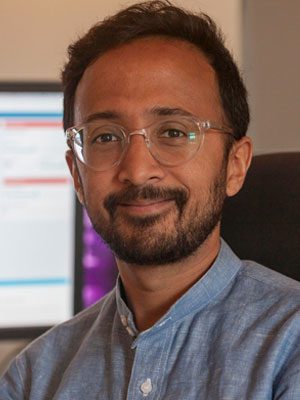
Zhen Ming (Jack) Jiang is an Associate Professor and York Research Chair (Tier II) in Software Engineering for Foundation Model-Powered Systems at York University's Department of Electrical Engineering and Computer Science. His research bridges software engineering, artificial intelligence, and computer systems with significant industrial impact. Dr. Jiang earned his Ph.D. from Queen's University's School of Computing and MMath/BMath degrees from the University of Waterloo's David R. Cheriton School of Computer Science. During his doctoral studies, he collaborated with BlackBerry's Performance Engineering team, developing tools now used daily to monitor commercial software systems. His research focuses on engineering rigor for AI-powered applications , software engineering evolution in the Generative AI era , and performance optimization of large-scale systems . Key areas include software performance engineering, mining software repositories, debugging distributed systems, source code analysis, and software visualization. His work combines empirical studies with practical tool development. Recent publications reveal strong trends in applying AI to software engineering challenges, particularly in machine learning systems reliability, blockchain efficiency, and AIOps solutions. His research consistently emphasizes empirical validation using real-world systems and industrial case studies. Scientific recognition includes: York Research Chair (Tier II) in Software Engineering for Foundation Model-Powered Systems NSERC Discovery Accelerator Supplements (DAS), 2020 Best Paper Award at ICST 2016 IEEE Software Best SEIP Paper at ICSE 2015 Ph.D. Research Achievement Award at Queen's University Multiple best paper awards at WCRE, MSR, and ICSE Dr. Jiang actively supervises graduate students and has secured competitive research funding including NSERC grants. His service includes program committee roles for top conferences (ICSE, ASE, ICSME) and editorial work for leading journals (TSE, TOSEM, EMSE). He leads research initiatives focused on foundation model-powered systems, collaborating with industry partners on performance monitoring and debugging solutions for large-scale distributed environments.