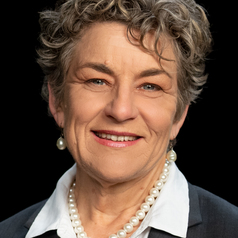
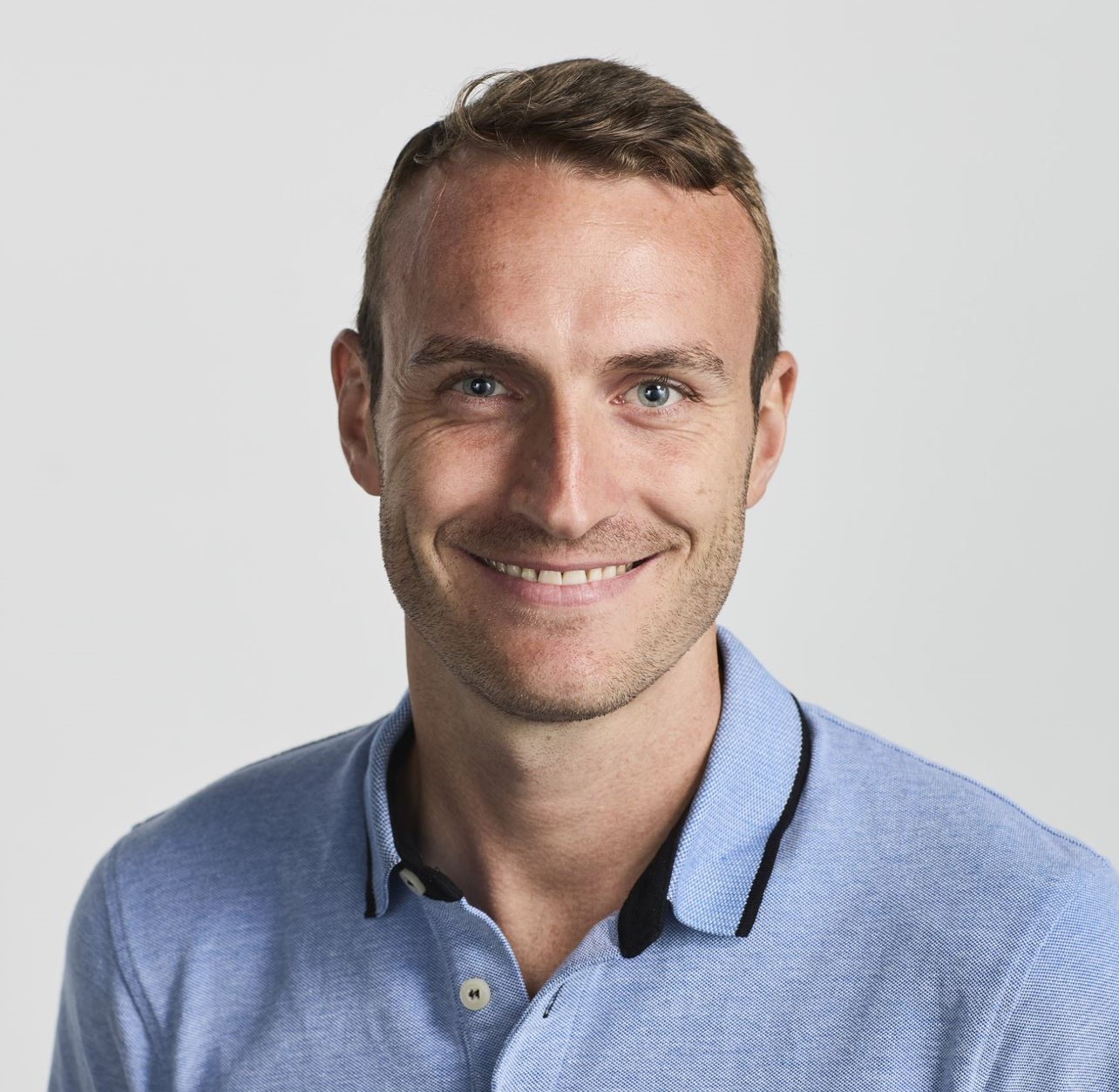
Steven Siems is a Professor at Monash University's School of Earth Atmosphere and Environment. He leads research on clouds, precipitation, and boundary layer meteorology, focusing on the Southern Ocean, Australia, and SE Asia. As a Chief Investigator in the ARC Securing Antarctica's Environmental Future (SAEF) center, he studies precipitation processes and co-chairs the World Weather Research Program's Weather Modification Expert Team. He also edits the Journal of Southern Hemisphere Earth System Science. Education: PhD in Applied Mathematics from the University of Washington (Seattle), followed by post-doctoral research at NCAR and UMIST. His work contributes to UN Sustainable Development Goals related to climate action and life below water. Projects: CAPE-k (Southern Ocean Clouds), CCI GBR (Great Barrier Reef Climate), POSOSI (Antarctic Sea Ice), and PSCSO (Southern Ocean Convection) Research Themes: Cloud microphysics, orographic precipitation, trade wind cumulus dynamics Recent publications focus on satellite cloud retrievals, coral bleaching drivers, and precipitation biases in high-latitude observations. Supervised PhD students engage in fieldwork across the Snowy Mountains, King Island, and Great Barrier Reef aboard research vessels like the R/V Investigator.
Professor Sergio Garcia (Yani) is a globally recognized expert in dairy science at the University of Sydney. He holds the title of Professor of Dairy Science and leads key roles including Director of the Dairy Research Foundation and Group Leader of the Dairy Science Group. His affiliations include membership in the Sydney Environment Institute, Sydney Institute of Agriculture, and Charles Perkins Centre. He earned his Agr. Eng (B.Ag.Sc) from Universidad de Mar del Plata, Argentina, and a PhD from Massey University, New Zealand. Research focuses on pasture-based dairy systems, including grazing management, forage utilization, crop-pasture integration, and automation in dairy farming. He supervises the FutureDairy Project and explores innovations like robotic milking and remote sensing technologies. His work addresses sustainability challenges such as reducing greenhouse gas emissions and optimizing feed efficiency. Recent grants include projects on dairy business resilience post-bushfires and climate-adaptive farming strategies. He has authored over 100 publications, with recent topics covering methane emissions monitoring, Napier grass applications, and automated feeding systems. Garcia’s labs and teams collaborate on platforms like FutureDairy and DairyUp, advancing precision agriculture and livestock systems.
Grant Hamilton is a Professor in Ecology at Queensland University of Technology (QUT), affiliated with the School of Biology & Environmental Science within the Faculty of Science. His research focuses on ecological analytics, conservation science, and the application of unmanned aerial systems (UAVs) for wildlife surveillance, invasive species management, and agricultural systems. He holds a Doctor of Philosophy from QUT and is a member of the Ecological Society of Australia and the Modelling and Simulation Society of Australia and New Zealand. Research interests include detection and surveillance technologies, spatial analytics, and the integration of artificial intelligence with ecological monitoring. Notable projects include the Yurol Ringtail State Forest Koala Baseline and Monitoring Project, Agri-Intelligence in Cotton Production Systems, and automated wildlife detection using drones. His work bridges ecological theory with practical applications in conservation, agriculture, and biosecurity. Publications span topics like UAV-based wildlife detection, statistical modelling for pest surveillance, and Bayesian networks for environmental management. He has advised multiple PhD and master’s students on projects related to pest invasions, agricultural systems, and biodiversity monitoring. Current grants include Australian Competitive Grants focusing on digital agriculture and cotton production systems.
Michael Curtin is an Associate Professor and Head of School at the School of Allied Health, Exercise and Sports Sciences , Charles Sturt University. With a career spanning over three decades, he has worked across Australia, Botswana, and the UK, including roles in clinical practice, research, and education at institutions like the University of Southampton and the National Spinal Injuries Centre.
Rebecca Monson is a Professor at the ANU College of Law, Governance and Policy, working part-time since 2014. She holds a BA(Hons I) in Geography (Monash), LLB (Hons I) (Monash), and a PhD (ANU). Her research focuses on social difference, natural resource governance, and justice systems in Australia and the Pacific, with particular emphasis on climate displacement, land tenure, and gender relations. She led the development of Solomon Islands' relocation guidelines (2022) and authored the award-winning book Gender, Property and Politics in the Pacific (2023). She advises international organizations on climate adaptation, resource governance, and justice systems. Her academic roles include former Deputy Associate Dean (Research) and Director of Higher Degree Research at ANU Law. She sits on the ANU Pacific Institute and Australian Association for Pacific Studies boards. Her ARC DECRA grant supports research on Pacific women’s movements and natural resource rights. Key projects include the Solomon Islands Displacement and Relocations Project (2010–2011) and Resilience and Vulnerability in Property Systems (2013–2019). Her research spans climate mobility planning, legal pluralism, and transnational feminisms. Recent work includes analyzing Pacific climate justice frameworks and adaptive governance strategies. Collaborations with the World Bank, Asian Development Bank, and UN agencies inform her applied research on rule of law and disaster risk reduction. Education: Monash University (Geography, Law), ANU (PhD) Key Awards: 2023 Australian Legal Research Award Professional Experience: Legal practice in emergency services, Bushfire CRC researcher, Van Vollenhoven Institute RA Her advising and grants include projects on customary justice systems and climate resilience. Current active project: Navigating justice systems: how Pacific women secure their property rights (2021–2025).
Dr. Alyssa Morse is a Research Fellow at the Centre for Mental Health Research within the National Centre for Epidemiology and Population Health at Australian National University . Holding a PhD in Psychology from ANU, her work focuses on lived experience integration across mental health research, services, and policy. Key affiliations: ANU Centre for Mental Health Research Research groups: Child, Youth and Family Mental Health and Suicide Prevention Unit; Lived Experience Research Unit Research Interests: Alyssa specializes in enhancing lived experience involvement in mental health systems, developing youth mental health prevention programs, and evaluating mental health service designs. Her work addresses emotional regulation, stigma reduction, and digital health innovations. Publication Trends: Her recent scholarship examines pandemic impacts on mental health, technology-based interventions, post-disaster recovery, and ethical frameworks for lived experience research. Collaborative projects often involve school-based programs, caregiver support, and peer worker integration. Scientific Contributions: ALIVE Next Generation Researcher Network 2022 Seed Funding RSPH Excellence in Population Health Research Award Advisory & Grants: Actively supervises projects like "We live in our own world" (young caregiver support) and co-creates mental health resources. Funded studies include "Lived Experience Mental Health Education" and disaster resilience programs. Labs & Teams: Works with multidisciplinary teams in the Child, Youth and Family Mental Health and Suicide Prevention Unit , collaborating with Mental Illness Education ACT (MIEACT), Health Care Consumers’ Association, and ACT Mental Health Consumer Network.
Barbara Ryan is a Senior Lecturer at the University of Southern Queensland , specializing in Disaster Communications , Community Engagement , and Public Relations . With over 35 years of experience in PR practice and teaching, she is a Fellow of the Public Relations Institute of Australia (PRIA) and Chair of Emergency Media and Public Affairs . Her research focuses on disaster information seeking, crisis communication, and building community resilience through participative engagement models. Education: PhD (RMIT University) Master of Professional Communication (University of Southern Queensland) Graduate Certificate in Tertiary Teaching and Learning (University of Southern Queensland) BA (Mitchell College of Advanced Education) Her recent work includes the 2022 Community Experiences of Eastern Australia Floods project funded by Natural Hazards Research Australia , building on earlier research like the 2020 Bushfire Preparedness Study and the 2018 National Community Engagement Model . She teaches courses in Disaster Communication , Crisis Communication , and Campaign Development , with a focus on digital media analytics. Scientific Awards: Fellow of the Public Relations Institute of Australia (PRIA) Founding Member and Chair, Emergency Media and Public Affairs Coordinator, USQ/ANU Fulbright Scholarship (2013) As a practitioner, she combines academic work with real-world consulting in emergency communications , local government reputation management , and community-driven climate action . Her research supervision spans Communication and Media Studies , Disaster and Emergency Management , and Strategic Communication .
Dr. Tom James Stindl is a Lecturer and statistician at the School of Mathematics and Statistics, UNSW Sydney. His work centers on point process models, particularly renewal Hawkes processes, with applications across finance, seismology, crime analysis, and bushfire modeling. He earned his Ph.D. in statistical inference for self-exciting point processes under Dr. Feng Chen at UNSW Sydney. Supervises PhD, MRes, and Honours students (e.g., Jason Lambe, Zhe Han) Research focuses on computational statistics, Hawkes processes, and Bayesian/non-parametric methods Key grant: "Inference for Hawkes processes with challenging data" (Australian Research Council, 2024-2026) His recent publications analyze statistical inference techniques for point process models, though specific titles aren't listed here. Teaching includes courses like Statistical Inference and Statistical Modelling and Computing . Contact: t.stindl@unsw.edu.au
Dr. Yifei Dong is a Research Fellow at the Data Science Institute , University of Technology Sydney, with expertise in LLM-assisted agent systems , explainable AI , and multimodal artificial intelligence . Holding a PhD in Computer Science from UNSW Sydney and over a decade of fintech industry experience including CTO roles, he has secured $2.4 million in competitive funding for AI solutions bridging academia and real-world applications in healthcare, education, and finance. Education : PhD in Computer Science from UNSW Sydney Current Role : Research Fellow at UTS Data Science Institute (2023–present) Past Academic Appointments : Lecturer at Southern Cross University and Western Sydney University Dr. Dong’s research focuses on making AI systems transparent and socially beneficial , with contributions to adversarial AI, trustworthy digital societies, and wireless sensor networks. His recent work includes: Developing AICAttack (2025) for adversarial image captioning attacks Creating the QMAD fairness metric (2025) for dynamic environments Advancing explainable ECG diagnosis systems (2025) via multimodal LLMs As a scientific awardee (2025 RegTech Social Impact of the Year), he has pioneered AI solutions for vulnerable populations, such as NDSI participants through the "My Complaint Assistant" tool. His supervision of PhD and Honours students emphasizes technical rigor and ethical responsibility.
Dr. Elle Bowd is a Postdoctoral Research Fellow at the Fenner School of Environment & Society, Australian National University. She is an ecologist specializing in plant and fungal ecology in Australian eucalypt forests and woodlands, with a particular focus on above and below-ground interactions and ecosystem responses to disturbance. Dr. Bowd's research spans several key areas: Understanding how ecosystems respond to wildfire and logging in forests and the pathways that generate ecological change Plant and fungal ecology in Australian eucalypt forests and woodlands in NSW and Victoria Cross-cultural projects partnering with First Nations Peoples to support the re-emergence of Indigenous-led cultural burning Creating interfaces between First Nations knowledge and management and Western science Her recent publications demonstrate significant contributions to fire ecology, forest regeneration, and cultural burning practices. Her work often involves long-term empirical studies and landscape-scale data analysis, with highly cited papers on fire and logging impacts on forest ecosystems. She has published 35 research outputs with over 566 citations and an h-index of 12. Dr. Bowd is actively involved in several significant research projects: 'Re-emergence of First Nations burning in contemporary grassy woodlands' (2024-2028) as Co-Investigator 'Bushfire risk-reduction through cultural burning in travelling stock routes' (2022-2024) as Principal Investigator Multiple projects on soil ecology and forest recovery after disturbance Her work has important implications for forest management policy, particularly regarding cultural burning integration and ecosystem recovery following major disturbances in the context of climate change.
Professor Alex Collie serves as Director of the Healthy Working Lives Research Group and the Division of Health Systems, Services and Policy within the School of Public Health and Preventive Medicine at Monash University. He holds the prestigious position of Australian Research Council Laureate Fellow and serves as President of the Scientific Committee on Work Disability Prevention for the International Commission on Occupational Health (ICOH). Additionally, he is a member of the Australian Research Council College of Experts and serves as course co-ordinator for the Graduate Certificate in Personal Injury Management. Professor Collie earned his PhD in psychology and has built a distinguished career spanning senior positions in industry, government, and academia. Prior to his current roles, he served as CEO of the Institute for Safety Compensation and Recovery Research and Executive Director of the Victorian Neurotrauma Initiative. His educational background in psychology forms the foundation for his interdisciplinary approach to work disability and compensation systems. Professor Collie is recognized internationally as a leading authority on return to work and injury compensation system policy and practice. His research program focuses on work injury rehabilitation, occupational health, and social protection schemes for personal injury across Australian and international contexts including workers' compensation, motor vehicle crash compensation, and disability insurance. His work integrates public health perspectives with social policy analysis to address complex challenges in workplace injury management and recovery systems. Professor Collie employs mixed methods approaches, including participatory modeling techniques to re-imagine workers' compensation scheme design in Australia. Professor Collie's extensive publication record of 277 research outputs demonstrates consistent contributions to understanding work disability prevention, workers' compensation systems, and occupational health policy. His recent research (2021-2025) shows particular focus on the impact of extreme events (bushfires, pandemics) on occupational health and injury claims, as well as the evaluation of rehabilitation services for compensated workers with conditions like low back pain. His work bridges academic research with practical policy implementation, often involving large-scale data linkage studies and international collaborations. ARC Future Fellowship (2019) Churchill Fellowship (2010) Dean's Award for Research Impact (Economic & Social) (2021) Professor Collie leads a substantial research portfolio with 69 projects totaling significant funding. He currently serves as Primary Chief Investigator on the ARC-funded Worker Voice project, Chief Investigator on the NHMRC Centre of Research Excellence in Improving Health After Compensable Injury, and Primary Chief Investigator on the TRANSITIONS data linkage study. He also advises PhD students and coordinates graduate coursework. His research group works closely with government authorities and industry partners to translate evidence into policy and practice improvements. As Director of the Healthy Working Lives Research Group, Professor Collie oversees a multidisciplinary team conducting research on work disability prevention and rehabilitation. The group collaborates with international partners through ConsoRTI (International Consortium) and maintains strong connections with policy makers through various advisory groups. Their work spans multiple domains including injury compensation systems, return-to-work processes, and the intersection of health conditions with workforce participation.
Dr Jessica K Weir is an Associate Professor at the Institute for Culture and Society, Western Sydney University, specializing in environmental issues and natural hazard risk through Indigenous-non-Indigenous jurisdictional lens. With over two decades of collaboration with Indigenous leaders in Australia, her work challenges colonial environmental epistemologies and promotes integration of Indigenous knowledge in public-sector practices. Qualifications: Doctor of Philosophy, Australian National University Her research engages human geography, environmental humanities, and decolonial studies, focusing on cultural burning, disaster justice, and scientific-Indigenous knowledge exchange. She leads projects with the Bushfire and Natural Hazards Cooperative Research Centre and contributes to UN Sustainable Development Goals through climate change adaptation and indigenous rights frameworks. Scientific Awards: Deputy Vice-Chancellor Research Award ‘Excellence in Indigenous Research’ (2023) Dorothy R Taylor Award – Best Paper (2021) Emergency Communication – Research category winner (2022) Current collaborations include natural scientists in bushfire mitigation and policy reform, while producing diverse research outputs ranging from academic publications to artistic collaborations and community training programs.
Larissa Bamberry is an Associate Professor at Charles Sturt University's School of Business with a focus on gender relations in regional labour markets and workplaces. She holds a PhD from the University of Sydney and has extensive experience in industrial relations, public policy, and workforce development. Education: GCTTL (RMIT), PhD (University of Sydney), BA (Hons) (UNSW) Current research explores gender equity in male-dominated industries, climate change impacts on work conditions, and rural workforce redesign. She leads consultancies for regional development and has secured grants from Commonwealth departments and the ARC. Her 15 most recent publications (2023-2025) analyze: Climate change adaptation in rural healthcare and mining sectors Gender inclusion strategies for tradeswomen Labour market restructuring in regional Australia Neoliberal policy impacts on gender inequality Scientific contributions include: ARC Discovery Grant on unions and regional regeneration Collaborative projects with Swinburne University and NSW Family and Community Services Methodological innovations in regional skills audits She supervises PhD candidates researching bushfire risk decision-making, aged care leadership, disability sector job quality, and Ethiopian enterprise development.
Sarah Clement is an Adjunct Associate Professor at The University of Western Australia's School of Social Sciences/Geography and Honorary Senior Research Fellow at the University of Liverpool. She holds a BSc (Hons) from Michigan State University and PhD from Murdoch University's Department of Environmental and Conservation Sciences. Her work focuses on environmental governance in the Anthropocene, particularly addressing climate change, biodiversity conservation, and wildfire management through governance reforms. She leads the ARC-funded 'Fire and Transformation' project examining bushfire governance in Australia and contributed to the Urban GreenUP EU Horizon2020 project testing nature-based solutions (NBS). Education: BSc (Hons) Environmental Studies, Michigan State University PhD Environmental and Conservation Sciences, Murdoch University Research Interests: Environmental governance systems, climate change adaptation, NBS implementation, wildfire policy, social-ecological resilience, and biodiversity planning. Her book Governing the Anthropocene explores governance frameworks for novel ecosystems. Current projects include DECRA-funded bushfire governance analysis and Liverpool's Urban GreenUP NBS demonstration. Grants & Projects: ARC DECRA Fellowship (2021-2024) ARC Fire & Transformation Project (2021-) EU Horizon2020 Urban GreenUP (2018-2023) Labs/Teams: Involved with UWA's School of Social Sciences research groups and the interdisciplinary Landscapes and Policy Research Hub (NSW Government-funded NERP/NESP program). Active contributor to global environmental policy initiatives aligned with UN SDGs 11,13,14,15.
Jessica K Weir is an Associate Professor and Senior Research Fellow at the Institute for Culture & Society, Western Sydney University. She is a non-Indigenous scholar with over two decades of collaboration with Indigenous leaders in Australia, focusing on environmental issues and natural hazard risk through a lens that holds environment and society in intimate relation. Her educational background includes a Doctor of Philosophy from the Australian National University. Prior to her academic career, she built extensive experience through 20 years in the public, private and community sectors, including ten years with the Native Title Research Unit at the Australian Institute for Aboriginal and Torres Strait Islander Studies (AIATSIS). Weir's research re-thinks nature and what counts as evidence about nature, innovating in areas traditionally investigated by the natural sciences. Her internationally recognized book Murray River Country (Aboriginal Studies Press, 2009) examines how Indigenous leaders critique the public sector's either/or hyper-separation of nature and society. Her scholarship is in dialogue with human geography, Indigenous studies, decolonial studies, political science, the environmental humanities, and science and technology studies. She prioritizes non-traditional research outputs such as training for public servants and collaborations with artists, including the "So you care about Indigenous scholars?" poster series and "At risk in the climate crisis" podcast series. Analysis of her recent publications reveals a consistent focus on centering Indigenous knowledge systems within environmental management, natural hazard risk mitigation, and academic structures. Her work increasingly emphasizes relational approaches to knowledge exchange, challenging colonial frameworks in environmental research and advocating for more equitable partnerships between Indigenous and non-Indigenous knowledge systems. A significant portion of her recent work addresses cultural burning practices and their integration into public sector fire management. Her notable scientific awards include: Deputy Vice-Chancellor Research Award 'Excellence in Indigenous Research' (2023) Dorothy R Taylor Award – Best Paper (2021) Emergency Communication – Research, overall category winner (2022) Weir serves as a node leader in the Bushfire and Natural Hazards Research Centre and has led multiple significant research projects, including "Aboriginal relief and recovery - Inquiry into Victoria's Bushfires 2019-2020" (2021), "Cultural hazards: knowledge, practice and risk management with Aboriginal communities in southern Australia" (2017-2021), and "Scientific Diversity, Scientific Uncertainty and Risk Mitigation Policy and Planning" (2014-2022). She is available to supervise PhD students in her areas of expertise and is an editorial board member of the Routledge Environmental Humanities Book Series. She actively collaborates with natural scientists and is deeply engaged with Indigenous communities, particularly through her work with the Bushfire and Natural Hazards Research Centre which focuses on integrating Indigenous knowledge systems into natural hazard management frameworks.