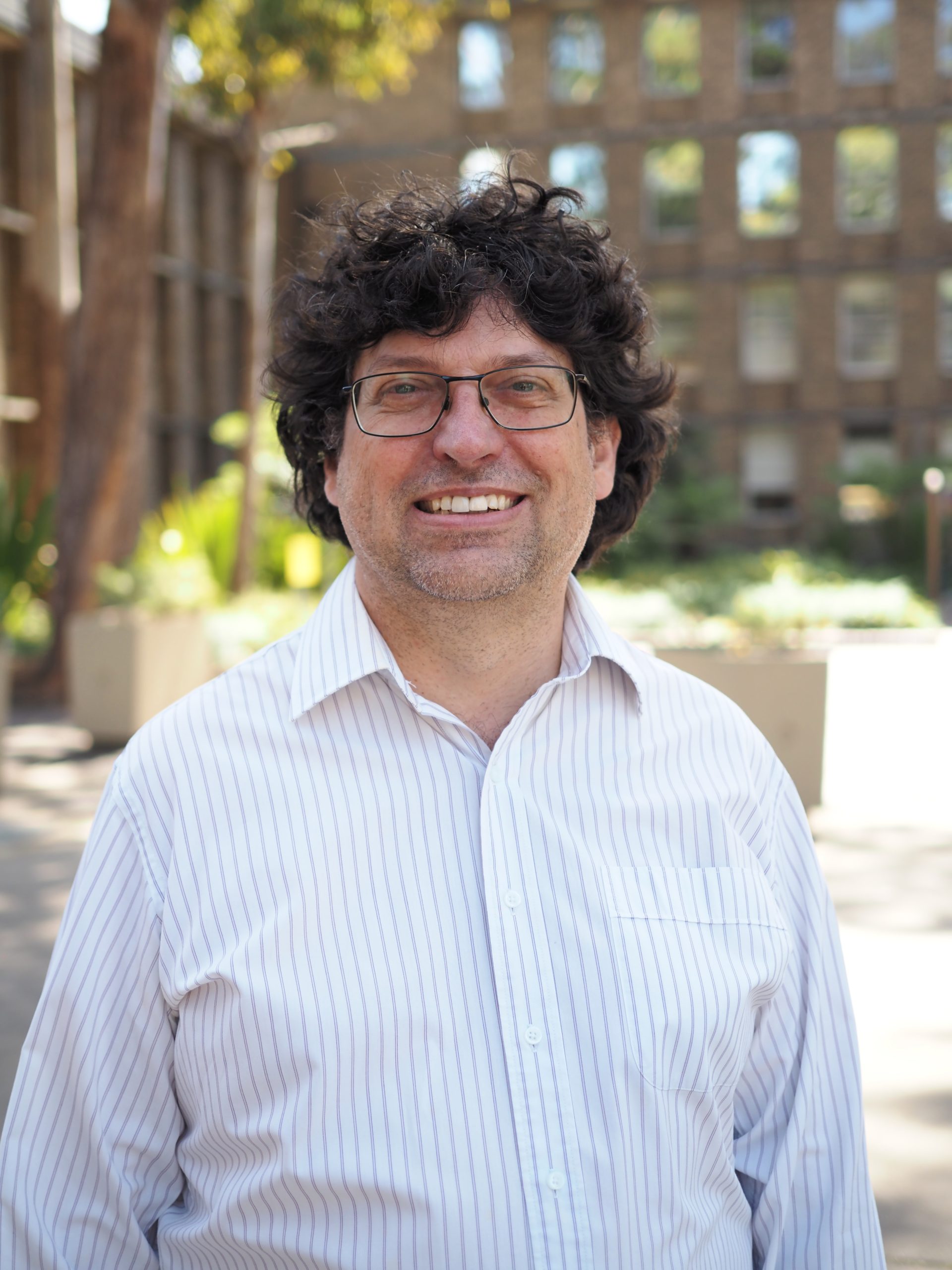
Amir Aryani is an Associate Professor at the School of Business, Law and Entrepreneurship , Swinburne University of Technology . He leads the Social Data Analytics (SoDA) Lab within the Social Innovation Research Institute , focusing on data-driven solutions for health and social challenges. His work involves large-scale cross-institutional projects with international collaborators including the British Library , ORCID , and NIH . Research Focus: Data modeling, real-time analytics, and information retrieval for social-good initiatives Collaborations: CERN, Data Archiving and Networked Services (DANS), and Global Information Systems (GESIS) His research explores data science applications in mental health, community resilience, and sustainable development. Key trends in his publications include: Mapping research to United Nations Sustainable Development Goals Developing hybrid expert-finding models using NLP and graph algorithms Creating interoperable research graphs for cross-platform discovery Assessing social impact of data projects in non-profit sectors Amir is actively involved in PhD supervision and has secured funding from Australian Research Council , National Health and Medical Research Council , and philanthropic foundations . He also contributes to community data projects through the SoDA Lab , which builds tools for social connection analysis and humanitarian response optimization.
Professor Jason Evans is a leading climate scientist at the University of New South Wales (UNSW), serving as Chief Investigator at the Climate Change Research Centre. He completed his undergraduate degrees in physics and mathematics at Newcastle University in 1996 and earned his PhD in Environmental Management from the Australian National University in 2001. After six years as a postdoctoral and research fellow at Yale University, he returned to Australia in 2007 to join UNSW's Climate Change Research Centre. Education: Bachelor's degrees in Physics and Mathematics, Newcastle University (1996) PhD in Environmental Management, Australian National University (2001) Research Interests: Professor Evans specializes in regional climate dynamics, focusing on land-atmosphere interactions and the water cycle in the context of climate change. His research integrates advanced modeling tools with extensive observational datasets, particularly emphasizing satellite-based remote sensing and earth observations . His work addresses critical questions about regional climate change impacts, including urban climate dynamics, extreme weather events, drought mechanisms, and renewable energy implications under changing climate conditions. His research spans multiple interconnected domains: from developing novel approaches for moisture source identification using Lagrangian methods , to investigating flash drought prediction using deep learning techniques , and evaluating the performance of high-resolution climate simulations across diverse geographical regions including Australia, Alaska, and Saudi Arabia. Scientific Recognition: Lead Author, IPCC Special Report on Climate Change, Desertification, Land Degradation, Sustainable Land Management, Food Security, and Greenhouse Gas Fluxes in Terrestrial Ecosystems Member, Science Advisory Team for CORDEX (World Climate Research Programme) Editor, Journal of Climate (2016-2022) Fellow, Modelling and Simulation Society of Australia and New Zealand (2020) Biennial Medal, Modelling and Simulation Society of Australia and New Zealand (2021) Fellow, Royal Society of New South Wales (2021) Research Impact and Contributions: Professor Evans has made significant contributions to understanding regional climate change through his extensive publication record of over 50 articles since 2021. His work has advanced knowledge in areas including urban climate dynamics , drought mechanisms and prediction , extreme weather events , and renewable energy impacts under climate change . His research has informed climate policy through his role as a Lead Author for the IPCC and his involvement with international climate research initiatives like CORDEX.
Dr. Husam Al-Najjar is a Lecturer at the School of Computer Science within the Faculty of Engineering and Information Technology at the University of Technology Sydney (UTS). He serves as the Course Director for the Bachelor of Information Systems (BIS) program. With expertise in geospatial technology and machine learning, Dr. Al-Najjar focuses on predicting and mitigating natural hazards and environmental issues to contribute to a sustainable digital earth. Dr. Al-Najjar earned his PhD from the University of Technology Sydney. Before joining academia, he worked in project management and has received numerous prestigious awards, scholarships, and grants throughout his career. Dr. Al-Najjar's research primarily centers on the application of machine learning techniques to address complex environmental challenges. His work spans geospatial AI, natural hazard prediction (particularly landslides and bushfires), and sustainable development. He has developed innovative approaches that integrate physical models with machine learning algorithms to improve prediction accuracy in data-scarce environments. His research also extends to remote sensing applications, urban planning, and smart city technologies, with a strong emphasis on practical solutions for real-world problems. Analysis of Dr. Al-Najjar's recent publications reveals a strong focus on applying explainable AI techniques to natural hazard prediction, particularly landslides. His work consistently bridges the gap between theoretical machine learning approaches and practical geospatial applications. He has made significant contributions to integrating physical models with AI, developing methods for handling imbalanced data through generative adversarial networks, and improving feature selection for remote sensing applications in environmental monitoring. Best Paper Award at the ISPRS Geospatial Week in Enschede, the Netherlands As an educator, Dr. Al-Najjar is actively involved in mentoring and teaching. He serves as Course Director for the Bachelor of Information Systems program and teaches courses in GIS, Information Systems, IS development methodologies, Design & Innovation, and Project Management. He welcomes prospective PhD candidates interested in his research areas and emphasizes the importance of detailed research proposals that demonstrate novelty and significance. His teaching philosophy focuses on fostering an engaging and inclusive learning environment that promotes student success and well-being. Dr. Al-Najjar is affiliated with 'The Trustworthy Digital Society' concentration at UTS and serves as a referee and holds editorial roles in respected journals. His work contributes to the development of geospatial AI frameworks that support decision-making in environmental management and disaster preparedness.
Dr. Win Wah is a Senior Research Fellow at Monash University specializing in occupational and environmental health impacts related to extreme weather events, particularly bushfires. Contributes to UN Sustainable Development Goals through research on climate change health impacts Lead investigator in projects examining first responders' health risks His work spans: Systematic reviews of wildfire smoke exposure effects Statistical modeling of post-cancer surgery quality of life Construction worker health assessments Research outputs show collaboration patterns across: Public health epidemiology Occupational risk assessment Environmental health policy
Professor Geoffrey Morgan is an epidemiologist and environmental health expert at the University of Sydney , affiliated with the School of Public Health and University Centre for Rural Health . With over 30 years of experience, he investigates environmental risk factors for health, particularly air pollution, heat, and climate-related hazards. He leads the NHMRC Centre for Clean Air Research Excellence and co-leads the Bushfires, Air Pollution and Extreme Events Theme in the HEAL network. His research has directly informed Australian ambient air quality standards and guided state-level air pollution control policies. Key areas include Environmental epidemiology Exposure assessment Climate change health impacts Health burden projections Recent publications (2025–2024) focus on wildfire smoke effects, temperature-related cardiovascular and mental health risks, PM2.5 mortality, and climate-driven infectious disease patterns. These studies span Australia, Singapore, and global contexts, emphasizing policy translation through health impact assessments. Professor Morgan teaches Environmental Health (PUBH5121) and Environmental Epidemiology (PH5125) in the University of Sydney's Master of Public Health program. He supervises PhD and MPhil students in environmental epidemiology.
Dr. Danielle Verdon-Kidd is an Associate Professor in Earth Sciences at the University of Newcastle, specializing in climate variability and extreme event analysis. Her research integrates palaeoclimatology, hydrology, and climatology to understand and mitigate climate-driven risks. She has held roles in the School of Environmental and Life Sciences since 2003, after completing her PhD in Civil Surveying & Environmental Engineering and Bachelor of Engineering (Environmental Eng) at the University of Newcastle. Education: PhD (Civil Surveying & Environmental Engineering), University of Newcastle Bachelor of Engineering (Environmental Eng), University of Newcastle Research Interests: Her work focuses on climate extremes (droughts, bushfires, tropical cyclones), palaeoclimate reconstructions, and interdisciplinary approaches to risk assessment. She emphasizes leveraging long-term data (e.g., tree rings, coral records) to inform water management, infrastructure planning, and community resilience. Key projects include collaborations with governments and industries to develop tools like CoastAdapt for coastal risk management. Publications & Awards: Over 100+ publications, including peer-reviewed journal articles and conference contributions. Notable awards include the Women in Research Fellowship (2018) and Envisage Program mentorship (2019). Advising & Partnerships: Supervises undergraduate and graduate students, fostering the next generation of climate researchers. Collaborates with federal/state agencies (e.g., NSW Department of Planning), water authorities, and international partners (e.g., University of Melbourne, Hydro Tasmania) to bridge scientific research and practical applications. Labs & Teams: Leads projects in palaeoclimate reconstruction, stochastic modeling, and climate adaptation. Active in interdisciplinary teams addressing climate change impacts on agriculture, biodiversity, and urban planning.
Dr. Chloe Lucas is a Senior Lecturer and Research Fellow at the School of Geography, Planning, and Spatial Sciences, University of Tasmania, with a focus on climate communication and social adaptation. She holds a PhD in Geography (2018) and an MA in English Literature (1997), bringing interdisciplinary expertise to her work. Current ARC DECRA Fellow in Climate Citizenship Coordinator of Education for Sustainability Tasmania Co-founder of the award-winning Curious Climate Schools initiative Her research explores the social dimensions of climate change , examining how cultural contexts shape responses to extreme weather events. She bridges human geography, sociology, and communication studies to develop inclusive climate dialogues. Recent projects focus on bushfire preparedness, youth climate education, and underinsurance dynamics. Key article trends show interdisciplinary work in climate adaptation games bushfire risk communication global climate perception datasets youth emotional resilience post-disaster community narratives with emphasis on visual media and participatory methods. Scientific Recognition Tasmanian Young Tall Poppy of the Year (2023) Schmidt Award for Science Communications (2022) Green Gowns Benefitting Society Award (2022) Wiley Best Paper Recognition (2018) As an educator, she coordinates Professional Research Methods and supervises PhD candidates studying climate communication. Her funded projects include Australian Research Council grants on bushfire readiness and Spencer Foundation research on youth climate education models.
Amisha Mehta is a prominent academic at Queensland University of Technology (QUT), specializing in risk communication, crisis management, and disaster communication. Her work bridges theoretical frameworks with practical applications in public relations, organizational trust, and emergency management. Dr. Mehta has contributed extensively to understanding trust dynamics in corporate and governmental communication during crises, particularly focusing on misinformation management, emergency warning systems, and community resilience-building strategies. Lead researcher in multiple disaster communication projects including the Bushfire and Natural Hazards CRC. Co-editor of the Routledge Handbook of Risk, Crisis, and Disaster Communication (2024). Published over 80 peer-reviewed articles and book chapters in journals like Disasters , International Journal of Disaster Risk Reduction , and Public Relations Review . Her research emphasizes practical outcomes for policymakers and practitioners, with a focus on multi-channel communication strategies, business continuity during disasters, and the role of social media in crisis response. She has advised government agencies on risk communication frameworks and participated in high-impact projects such as enhancing dam safety messaging and improving bushfire warning efficacy. Recent work explores the intersection of corporate sustainability strategies (e.g., Net Zero goals) and public trust, as well as the evolving challenges of misinformation in crisis contexts.
Samsung Lim serves as an Associate Professor of geographic information systems (GIS) in the School of Civil and Environmental Engineering at the University of New South Wales (UNSW) Sydney. With expertise spanning data science, artificial intelligence, and machine learning, Lim applies geospatial technologies to critical real-world challenges in natural disaster management and public health research. Lim's interdisciplinary work bridges engineering, computer science, and public health domains to develop practical decision-making tools for emergency response and disease surveillance. Ph.D. in Aerospace Engineering and Engineering Mechanics, University of Texas, Austin, TX, USA M.A. in Mathematics, Seoul National University, Seoul, South Korea B.A. in Mathematics, Seoul National University, Seoul, South Korea Lim's research focuses on applying GIS to natural disaster management and public health challenges. Key areas include machine learning methods for bushfire susceptibility mapping, spatial clustering for landslide susceptibility analysis, city-scale evacuation management in flood scenarios, and social media-based natural disaster assessment. In public health, Lim investigates geo-correlations between environmental factors and asthma occurrence, computational approaches to avian influenza outbreaks, emerging hot spot analysis of COVID-19, and early detection systems for emerging infectious diseases. This work combines advanced spatial analytics with machine learning to address complex environmental and health challenges. The recent publication record demonstrates a clear interdisciplinary trajectory where geospatial science intersects with public health emergency response and natural hazard management. Lim's work consistently applies machine learning techniques to geospatial data, with particular emphasis on disaster susceptibility mapping, disease outbreak detection, and infrastructure monitoring. The research spans multiple continents and addresses both immediate emergency response needs and long-term environmental health challenges, reflecting a commitment to practical applications of geospatial science. Associate Editor of Geospatial Information Science National Delegate of Commission 3 of International Federation of Surveyors (FIG) National Representative of the International Cartographic Association (ICA) Commission on Sensor-driven Mapping Senior Member of Institute of Electrical and Electronics Engineers (IEEE) Lim actively contributes to the development of early warning systems for emerging infectious diseases through collaborations with public health researchers. The work on EPIWATCH demonstrates how AI can enhance surveillance capabilities for outbreak detection. Lim's research on cruise ship transmission of diseases and the spread of avian influenza through bird migration patterns and poultry trade networks shows strong engagement with real-world public health challenges. These projects often involve multidisciplinary teams spanning engineering, computer science, epidemiology, and veterinary medicine. Lim's work integrates multiple geospatial data sources and analytical techniques to address complex environmental and public health challenges. This includes developing frameworks for performance analysis of OpenStreetMap data, creating specialized road datasets for pedestrian navigation, and applying Persistent Scatterer Interferometry for land motion monitoring. The research combines traditional geospatial methods with cutting-edge machine learning approaches to extract meaningful insights from complex spatial datasets.
Dr Habib Rahman is a Professor of Economics at Durham University Business School, with prior roles at Curtin University, Monash University, and others. His research focuses on Development Economics, Climate Change, Natural Disasters, and Political Economy. He has led numerous grants, including AUD-funded projects on climate policy frameworks and disaster recovery in Australia, Vietnam, and Southeast Asia. His work informs public policy in multiple countries and has been published in top journals like the Journal of Development Economics and Health Economics. Key research interests include the economics of natural disasters, climate change adaptation, and the interplay between disasters and political institutions. He has pioneered models to assess economic losses from natural hazards and advised international organizations like UNDP and the World Bank. Grants include AUD 213,797 for carbon market establishment in Vietnam (2023) and AUD 641,528 for Paris Agreement training (2022). His recent publications analyze disaster recovery, famine impacts, and climate-smart agriculture interventions. Technical assistance extends to governments and NGOs globally. Labs/Teams: Leads interdisciplinary teams on climate policy and disaster resilience initiatives, collaborating with institutions like the Bushfire & Natural Hazards CRC and the Asian Disaster Preparedness Center.
Associate Professor Eleanor Bruce is an academic at the University of Sydney, affiliated with the Sydney Environment Institute and Sydney Institute of Agriculture. As Deputy Node Leader of the University of Sydney's SpaceNet program, her work integrates Earth observation data with socio-ecological research to address environmental change and sustainability challenges. Her research focuses on coastal management, climate adaptation, remote sensing, and geospatial technologies. Her expertise includes spatial analysis of marine ecosystems, disaster risk assessment, and climate-smart agricultural systems in the Pacific region. She leads interdisciplinary projects involving partnerships between academia, policy, and communities. Notable contributions include developing frameworks for youth engagement in climate adaptation and creating open-source geospatial tools for smallholder farmers. Eleanor has secured grants such as the 'Identifying High-Risk Communities for Climate-Sensitive Child Undernutrition in Maluku Province, Indonesia' (2024) and 'Detecting Flooding in Fiji's Croplands' (2022). Her work emphasizes practical applications of geospatial data to enhance resilience in vulnerable coastal communities. She has collaborated on projects like the 'More Than Maps' framework for youth research capacity building and pioneered UAV techniques for whale observation. Her research also addresses historical vegetation changes in protected areas like the Angkor World Heritage Site. Eleanor holds leadership roles in environmental policy and has contributed to initiatives like the Sydney Southeast Asia Centre. Her teaching and supervision span environmental GIS applications and climate change mitigation strategies.
Ian Manock serves as an Adjunct Lecturer at Charles Sturt University's Australian Graduate School of Policing and Security in Bathurst. With extensive professional experience spanning emergency management, policing, and military service, he contributes specialized expertise in disaster response systems and resilience frameworks. Education: Graduate Certificate in Learning & Teaching Higher Education (2015, CSU) Master of Emergency Management (2002, CSU) Bachelor of Social Science (Emergency Management) (1997, CSU) Associate Diploma in Emergency Management (1995, University of Tasmania) His research centers on community resilience in post-disaster recovery, examining how social capital and economic systems interact during emergency management cycles. Current investigations explore digital communication channels in crisis response and interdisciplinary approaches to emergency education. His work demonstrates particular focus on Bangladesh flood case studies and Australian emergency management frameworks. Publications reveal consistent output in disaster management since 2003, with recent emphasis on gender dynamics in recovery processes and standardized education frameworks. His research portfolio shows strong integration of practical emergency response experience with academic rigor. Professional Affiliations: Australian Institute of Emergency Services International Association of Emergency Managers Royal Air Forces Association With prior roles as Regional Emergency Management Officer for Tasmania State Emergency Service and Senior Inspector in the Royal Hong Kong Police Force, Manock brings operational expertise to his academic work. His military background as a Royal Air Force officer further informs his interdisciplinary approach to emergency management education and practice.
Dr. Rachel King is an Associate Professor in the School of Mathematics, Physics and Computing at the University of Southern Queensland. Her applied research spans statistical applications in environmental science, public health, and agricultural risk management. She develops spatial modeling frameworks for ecological conservation and designs UV exposure assessment methodologies for skin cancer prevention. Her research group focuses on creating statistical tools for environmental decision-making, including wildlife corridor design, drought forecasting systems, and climate risk models for agriculture. Current projects investigate human-wildlife conflict mitigation and optimize bushfire preparedness strategies. Publication analysis shows strong emphasis on interdisciplinary collaboration, blending advanced statistics with practical environmental applications. Recent methodological innovations include INLA-SPDE spatial models and electronic UV monitoring systems. She leads community engagement initiatives on disaster preparedness and mentors graduate students in statistical applications for environmental science.
Associate Professor Thayaparan Gajendran serves as Head of the School of Architecture and Built Environment at the University of Newcastle. With expertise in construction management and disaster risk reduction, he applies a sociological lens to study organizational cultures, ICT integration, and innovation in project-based industries. His work bridges construction and disaster management, emphasizing evidence-based solutions for improved community resilience. Education: PhD (University of Newcastle), MSc in Facilities Management (National University of Singapore), Postgraduate Diploma in Management (University of Sri Jayewardenepura), BSc in Quantity Surveying (University of Moratuwa, Sri Lanka) Gajendran’s research focuses on cultural analysis in permanent and temporary organisations , ICT adoption , innovation behavior , and project governance within construction and disaster contexts. He has designed university programs like the Master of Disaster Preparedness and Reconstruction and led curriculum reforms integrating Building Information Modelling (BIM). Recent publications highlight topics such as power dynamics in megaprojects, behavioral economics in green construction adoption, and climate resilience in informal settlements. His scientific awards include multiple citations for teaching excellence and research supervision, alongside 2023 Excellence Awards in Equity/Diversity, Leadership, and Industry Engagement. Teaching: Courses in Building Economics, Disaster Management, and Research Methods Administrative Roles: Research Director, Program Convenor for Disaster Management, Acting Head of Discipline
Dr. Atakelty Hailu is an Associate Professor at the UWA School of Agriculture and Environment, University of Western Australia. He serves as Graduate Research Coordinator and Coordinator of the Master of Agricultural Economics program. His educational background includes a BSc in Agricultural Economics from Alemaya University (1990) and PhD from University of Alberta (1998), with postdoctoral research at the Canadian Sustainable Forest Management Network. Research Expertise: Hailu's research spans productivity and efficiency analysis, environmental policy design, whole-farm bioeconomic modeling, agent-based computational economics, and non-market valuation. His current projects examine marine recreation valuation, economic-hydrologic modeling, China's carbon abatement costs, and human development indicators. Publication Focus: Hailu's recent publications reflect his interdisciplinary approach, addressing technical efficiency in agriculture across multiple countries (Vietnam, Pakistan, Kenya, Bangladesh), sustainable intensification practices, fisheries management innovations, and economic valuation methods. His work consistently integrates econometric methods with environmental policy applications. Awards and Recognition: Outstanding Doctoral Thesis Award (Canadian Agricultural Economics Society) Chancellor's Gold Medal for undergraduate achievements Publication of Enduring Quality Award (CAES, 2018) Graduate Supervision: Hailu has supervised numerous PhD students on projects including marine reserve effectiveness, agricultural efficiency in Vietnam and Ethiopia, conservation valuation in national parks, and fisheries management systems. Current PhD advisees focus on topics ranging from no-take marine reserves to efficiency in Kenyan agriculture. Research Funding: Hailu has secured multiple grants including projects on natural hazard economics (Bushfire CRC), marine conservation strategies (Australian Marine Conservation Society), environmental service policies (AgriFutures Australia), and conservation tender optimization (Dept of Agriculture).