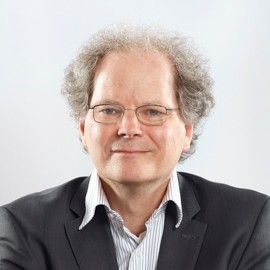
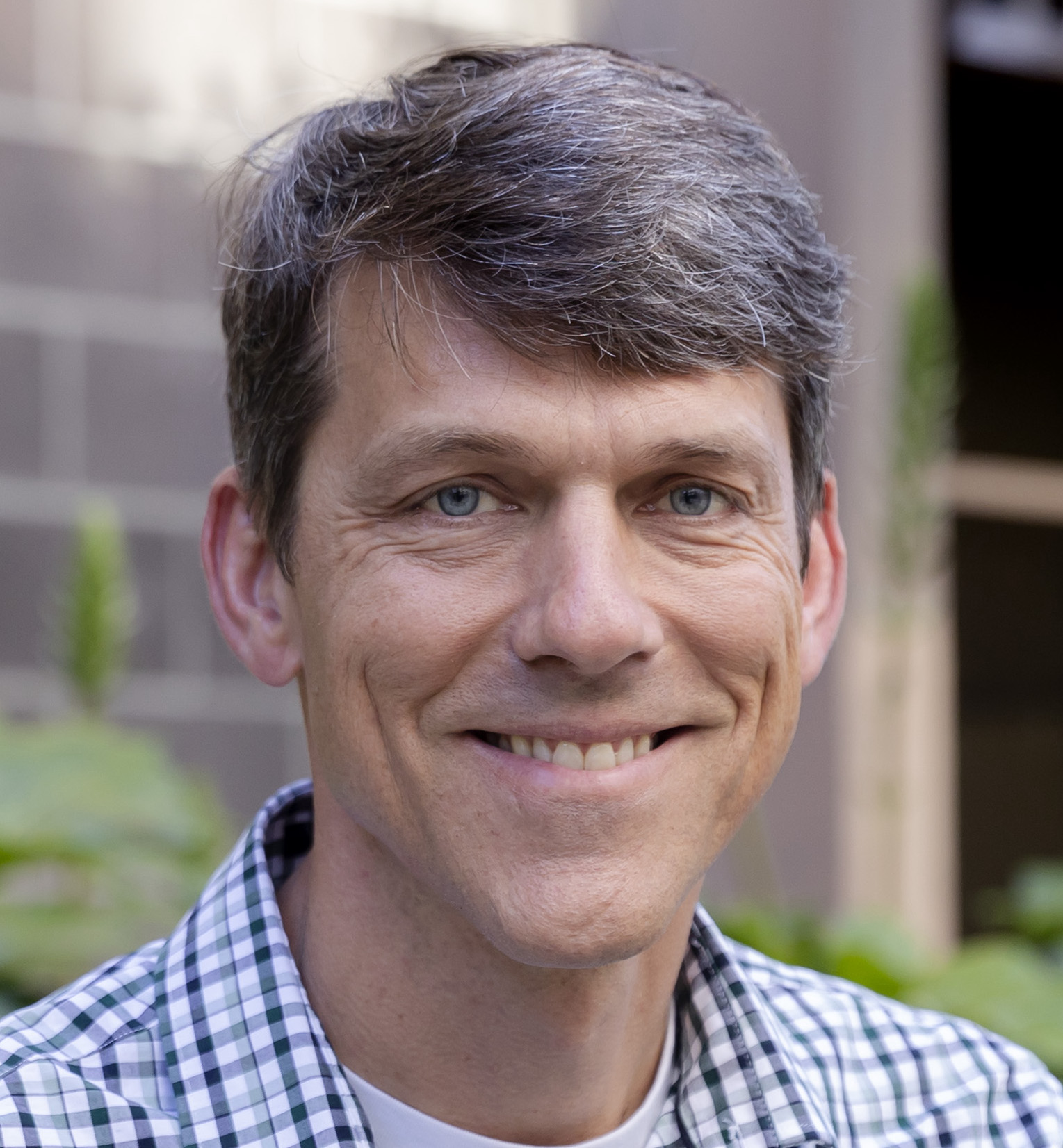
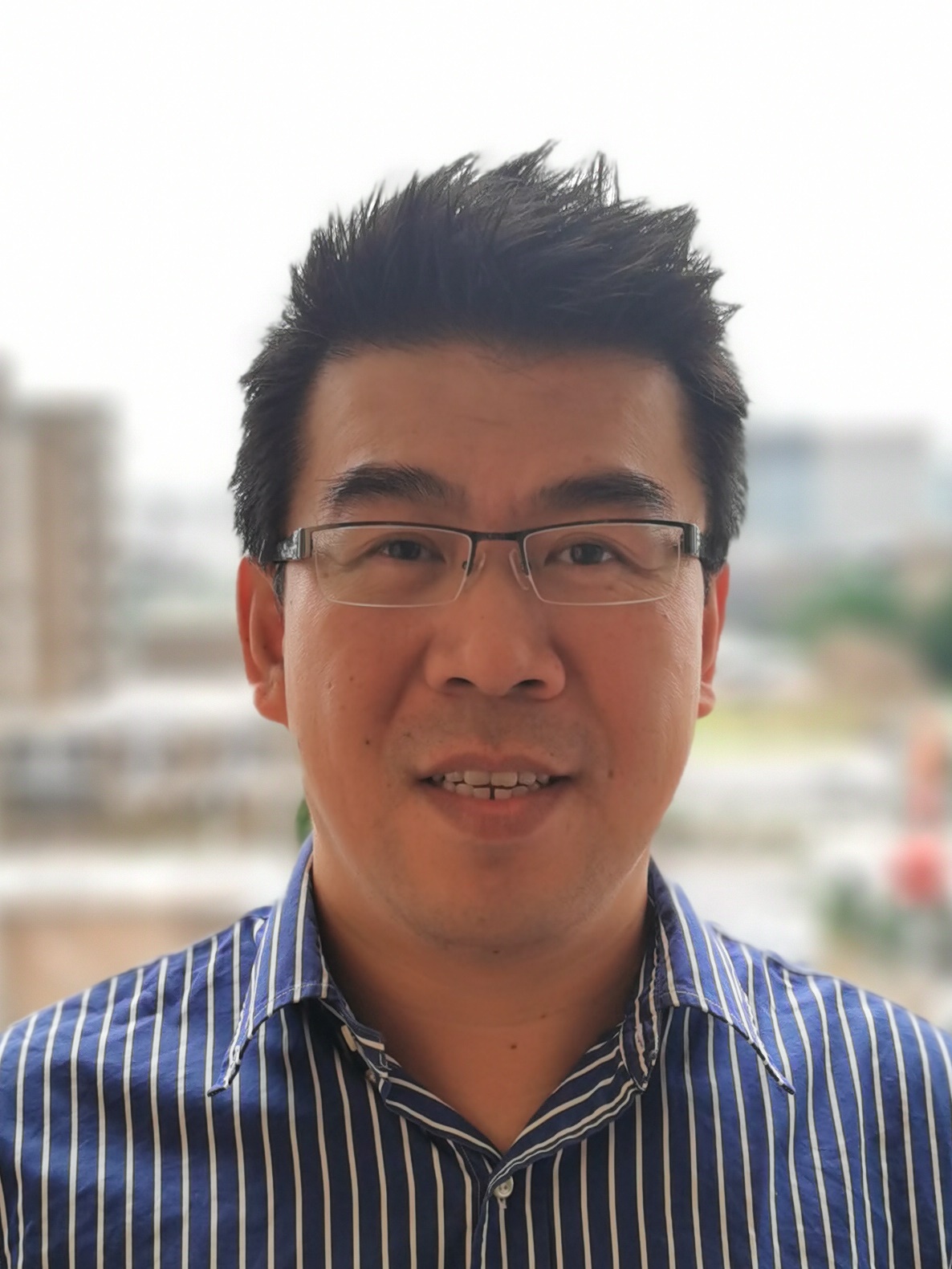
Dr. Ina Eugenio Noronha Maia is a researcher at TU Wien's Department of Energy Economics and Energy Efficiency, part of the E370-03 research group. Her work focuses on advancing building decarbonization through data-driven approaches, optimizing retrofitting strategies, and aligning economic assessments with long-term climate goals. She holds a PhD and has contributed to cross-country analyses of building energy performance, budget constraints in renovation investments, and the design of policy instruments like energy performance certificates and renovation passports. Her research interests include sustainable building retrofitting, energy efficiency optimization, and the socio-economic dimensions of energy policy implementation. She has explored frameworks for long-term step-by-step renovation models, integrating techno-economic factors with building owner capabilities. Key publications include analyses of natural gas expenditure impacts on decarbonization, budget-restricted renovation scenarios, and comparisons of building stock data sources. Her work bridges technical and policy domains, emphasizing practical implementation challenges and consumer perspectives in energy transition efforts.
Alan Short is the President and Professor of Architecture at the University of Cambridge's Department of Architecture. He holds concurrent roles as a Ministry of Education Distinguished Professor in China and international co-director of Chongqing University's National Centre for Low-Carbon Green Buildings. His research focuses on sustainable architecture, urban climate resilience, and low-carbon building systems. He leads interdisciplinary teams addressing climate adaptation in healthcare infrastructure, urban ventilation, and energy efficiency in China's Hot Summer-Cold Winter regions. Education: Bachelor’s in Architecture, Trinity College, Cambridge (Senior Scholarship recipient) Postgraduate Exchange Fellowship, Harvard University’s Graduate School of Design Research Interests: Climate-responsive building design Urban heat island mitigation Low-carbon cooling strategies Infection-resilient healthcare environments Natural ventilation systems Key Projects: LoHCool : UK-China collaboration on low-carbon cities (2015–2019) Robust Hospitals in a Changing Climate : NHS energy adaptation (2013–2015) Excising Infection in Surgical Environments (ExISE) : AHRC-funded theatre design Awards & Honors: Higher Doctorate (Litt.D.) from University of Cambridge (2023) tv/e Global Sustainability Film Award (2013, 2019) RIBA Awards (1995, 2000, 2003, 2006) CIBSE Environmental Initiative of the Year (2006) Labs & Collaborations: Interdisciplinary teams at Cambridge, Imperial College, and Zhejiang University UK-China EPSRC/NSFC partnerships Advisory roles to NHS and UK Government on infrastructure resilience
Prof. Dr. Rainer Walz is Deputy Director and Head of the Department of Sustainability and Infrastructure Systems at the Fraunhofer Institute for Systems and Innovation Research (ISI). He holds an adjunct professorship at the Karlsruhe Institute of Technology (KIT) and a visiting professorship at the Chinese Academy of Sciences. His academic journey began with studies in economics and political science at the University of Freiburg and Brock University, Canada, followed by a doctorate and habilitation in economics. Key Affiliations : Fraunhofer ISI (1991–present), KIT (adjunct professor), Chinese Academy of Sciences (visiting professor) Research Themes : Sustainability policy, green innovation systems, resource economics, and globalization-environment interactions Committees : ESIR (EU expert group), Springer's Sustainability and Innovation series editorial board, Globelics scientific committee Scientific Impact : Recipient of the 1992 Friedrich August von Hayek Prize, Walz's work spans renewable energy transitions , green hydrogen export analysis , autonomous driving systems , and societal resilience during pandemics . His publications emphasize empirical modeling and policy advice for sustainability transformations.
Dr. Imed Romdhani is an Associate Professor in Networking at Edinburgh Napier University's School of Computing Engineering and the Built Environment. He has been with the university since June 2005 and is affiliated with the Centre for Distributed Computing, Networking and Security as well as the Centre for Cybersecurity, IoT and Cyberphysical Systems. His research falls under the broader theme of AI and Technologies, focusing particularly on networking, cybersecurity, and IoT applications. Dr. Romdhani earned his PhD from the University of Technology of Compiegne (UTC), France in May 2005. He also holds an engineering degree in networking from the National School of Computing (ENSI, Tunisia) and a Master's degree in networking from Louis Pasteur University of Strasbourg (ULP, France). Prior to joining Edinburgh Napier, he worked extensively with Motorola Research Labs in Paris where he authored 4 patents. Dr. Romdhani's research primarily focuses on networking technologies, particularly in the domains of Internet of Things (IoT), cybersecurity, and routing protocols. His work spans theoretical foundations to practical implementations, with significant contributions to RPL (Routing Protocol for Low-power and Lossy Networks), intrusion detection systems, and cloud service architectures. He has developed innovative approaches to security in IoT environments using machine learning techniques and has contributed to semantic models for cloud service discovery and orchestration. His recent work has expanded into building maintenance management systems using intelligent process automation and examining educational challenges in conflict zones. Analysis of Dr. Romdhani's publication record reveals a clear research trajectory evolving from foundational work on concurrency models and distributed systems (JCSP) to specialized networking protocols, and more recently to applied AI-driven security solutions for IoT and practical applications in building management and education. His work consistently bridges theoretical computer science with real-world applications, demonstrating both technical depth and practical relevance. Authored 4 patents during work with Motorola Research Labs in Paris Dr. Romdhani has supervised numerous PhD students throughout his career, with recent supervisions focusing on IoT security, blockchain applications, and building maintenance systems. His research has been supported by projects such as 'Reliable Internet of Things based monitoring & Surveillance in Oil & Gas Fields (RsIoT)' with a value of £66,635. He has also contributed to significant collaborative works including edited books on cybersecurity applications. As a member of the Centre for Distributed Computing, Networking and Security and the Centre for Cybersecurity, IoT and Cyberphysical Systems, Dr. Romdhani contributes to Edinburgh Napier's research ecosystem focused on next-generation networking technologies and security solutions. His recent work on educational support in conflict zones demonstrates his commitment to applying technical expertise to address pressing global challenges.
Dr. Julio Bros Williamson is a Research Fellow at the School of Engineering and The Built Environment , Edinburgh Napier University, with a focus on climate change impact on dwellings , building performance evaluation , and energy-efficient retrofitting . His work bridges smart cities , offsite construction , and carbon emissions reduction , often involving Scottish Funding Council and Built Environment - Smarter Transformation projects. Key research themes include the performance gap in aspirational vs. actual energy use, dilapidation factors in building envelopes, and innovative insulation materials like nano-aerogel and natural wood fibre . He has contributed to net-zero housing models via digital twin frameworks and dynamic thermal modeling . His recent projects span tenement refurbishment trials , hydrogen energy solutions for remote distilleries, and remote verification inspection techniques. As a supervisor, he guided Astrid Bagireanu on digital twin applications and co-authored over 26 outputs, including theses , reports , and conference proceedings , with a focus on Scotland’s housing stock and policy-driven sustainability .
Faizal HAFIZ is a Postdoctoral Research Fellow at SKEMA Business School, France, specializing in computational intelligence and machine learning applications. He holds a PhD from The University of Auckland (2020) and previously served as a Research Assistant Professor at King Saud University (2010-2016) and Utility Assistant Manager at Reliance Energy Ltd. (2008-2010). His research focuses on multi-criteria optimization, neural network architectures for financial forecasting, epidemic control strategies, and energy-efficient building systems. Education: PhD in Computational Intelligence, University of Auckland, 2020 Research interests span computational intelligence, machine learning, and their applications in systems control, supply chain resilience, and financial modeling. His work integrates game theory for epidemic policy analysis and employs advanced optimization techniques like particle swarm algorithms and epsilon-constraint methods. His recent publications address epidemic control strategies in heterogeneous networks, stock market forecasting using sparse neural architectures, and balancing energy consumption with thermal comfort in buildings. Collaborations include studies on supply chain reconfiguration under divergent policies and the psychological impacts on epidemic dynamics. Scientific Awards: New Zealand International Doctoral Scholar in Computational Intelligence and Control (2016-2020) Advising and Grants: Co-supervised M. MUBASHIR WANI's PhD thesis (2022) Labs/Teams: Affiliated with SKEMA's Centre for Analytics and Management Science , focusing on interdisciplinary research in operations research and data-driven decision-making.
Maléna Bastien Masse serves as a Lecturer at the Department of Architecture within EPFL's School of Architecture, Civil and Environmental Engineering (ENAC), and as a Scientist at the Structural Exploration Lab (SXL). Her research focuses on advancing circular economy practices in construction through systematic building reuse methodologies. Her primary research interests include: Developing standardized assessment frameworks for building component reuse potential Creating digital inventories of construction systems (e.g., DISCS database with 102 Swiss buildings) Exploring concrete rubble as structural material through digital fabrication techniques Documenting historical reuse practices in Swiss construction heritage Designing interdisciplinary pedagogy for sustainable building with reused materials Recent publications demonstrate strong emphasis on data-driven approaches to circular construction, with 9 of 10 articles published in 2025 addressing methodological innovations in reuse assessment, material flow analysis, and digital process integration. Her work consistently bridges historical analysis with contemporary engineering solutions. Research is supported by the Swiss National Science Foundation (FNS 105216_192693), EPFL ENAC, and collaborative industry partnerships. She actively contributes to critical practice through conference installations and physical prototypes that demonstrate viable reuse systems. Her laboratory work centers on the Structural Exploration Lab (SXL), where digital tools are developed to enhance precision in deconstruction and material recovery processes. Current projects focus on creating waste-negative concrete structures and optimizing supply chains for reused building components.
Dr. Katsu Goda is an Associate Professor and Canada Research Chair in Multi-Hazard Risk Assessment at the Department of Earth Sciences, Western University. His research focuses on earthquake and tsunami risk management, combining engineering, financial analysis, and decision-making frameworks. He holds an office in BGS 1076 and can be reached at kgoda2@uwo.ca. Dr. Goda's work spans multidisciplinary areas including probabilistic seismic hazard modeling, tsunami engineering, and financial risk analysis. His research addresses lifecycle cost analysis of structures, seismic risk mitigation techniques, and decision-making under uncertainty. Notable contributions include stochastic finite-fault modeling, seismic loss estimation, and multi-hazard risk assessment for subduction zone earthquakes. His recent articles emphasize advanced methodologies in rupture recurrence analysis, Coulomb stress changes on faults, and tsunami hazard modeling in Makran and Cascadia subduction zones. He has also contributed to studies on earthquake insurance demand in Canada and social vulnerability assessments in coastal regions like Gwadar, Pakistan. Awards: Canada Research Chair (CRC) Tier 2 in Multi-Hazard Risk Assessment Research Themes: Earthquake-Tsunami Interactions Risk-Based Early Warning Systems Financial Instruments for Catastrophe Mitigation Teaching: Courses include Data Analysis in Earth Sciences (ES 2222), Environmental Geophysics (ES 3320), and Natural Catastrophes (GP 9573). Dr. Goda collaborates internationally, with active projects in Japan, Malawi, and Canada. His research integrates cutting-edge computational models with real-world applications to enhance community resilience against natural disasters.
Duncan Callaway is an Associate Professor of Energy and Resources at UC Berkeley with an affiliate appointment in Electrical Engineering and Computer Science. He also serves as the Chair of the Energy and Resources Group (ERG) and is a Faculty Scientist at Lawrence Berkeley National Laboratory. His work focuses on emerging energy technologies, grid operations, and data-driven solutions for energy systems. Callaway holds a Ph.D. in Theoretical & Applied Mechanics from Cornell University and has industry experience with Davis Energy Group and PowerLight Corporation. His research emphasizes quantifying impacts of new technologies on power systems, developing control systems for grid integration, and advancing energy efficiency strategies. Key areas include renewable energy integration, smart grid technologies, and environmental justice in energy policy. Callaway teaches courses on energy systems and data science applications in energy. Education: Ph.D., Theoretical & Applied Mechanics, Cornell University, 2001 B.S., Mechanical Engineering, University of Rochester, 1995 Callaway's recent work explores peer-to-peer energy markets, grid stability in inverter-dominated systems, and equity implications of electrification policies. He received the NSF CAREER Award (2015) and has published extensively on machine learning for grid optimization, wildfire risk mitigation, and residential energy access. His lab develops open-source simulation tools (e.g., PowerSimulations.jl) and collaborates on hardware-in-loop testing for grid technologies. Current projects address climate-aware grid planning, decentralized energy storage, and the socio-technical challenges of energy transitions.
Dr.-Ing. Rita Streblow is a leading researcher at RWTH Aachen University's Institute for Energy Efficient Buildings and Indoor Climate, where she heads the Digital Energy Neighbourhoods team (since 2021). Formerly, she served as Chief Engineer at the same institute (2007-2023) and held a professorship in Digitale Vernetzung von Gebäuden, Energieversorgungsanlagen und Nutzenden at Technische Universität Berlin (2019-2024). Since 2025, she has been an Associate Member of the Einstein Center Digital Future. She earned her doctorate from RWTH Aachen in 2011 with a thesis on thermal comfort modeling. Her research spans energy-efficient building systems , smart grid integration , and HVAC optimization , with focal areas including: Digitalization of energy neighborhoods and local market mechanisms Thermal comfort modeling for inhomogeneous environments Semantic interoperability in building automation Retrofit strategies for residential and office buildings Analysis of her recent publications reveals strong emphasis on smart building technologies , district-scale energy management , and data-driven fault detection , with recurring themes of IoT integration, open-source tool development, and policy-relevant energy planning. She has received notable scientific awards including: Borchers-Plakette, RWTH Aachen (2012) Award for Young Researchers, German Society of Refrigeration and Air Conditioning (2011) She leads experimental research at the Urban Energy Lab 4.0 and collaborates on national projects like PLUG-N-HARVEST (adaptive façade retrofits) and AGENT (multi-agent energy systems).
Thomas Patrick is a Professor of Finance at the School of Business, The College of New Jersey (TCNJ). He holds a Ph.D. and M.A. in Finance from the University of Kentucky and a B.A. in Finance from Syracuse University. His research focuses on corporate valuation, investment strategies, real estate finance, and behavioral economics in financial decision-making. Education : Ph.D., University of Kentucky, 1974 M.A., University of Kentucky, 1971 B.A., Syracuse University, 1968 His publications span topics such as public-private partnerships, mortgage trends, closed-end fund performance, and lease-purchase analysis, appearing in journals like the International Research Journal of Applied Finance and the Journal of Financial Education . While no specific awards are mentioned, his work includes applied case studies and conference proceedings. Professor Patrick teaches courses in business valuation, personal finance, and capital flows. He is based in Business Building, Room 114, TCNJ, Ewing, NJ, and maintains regular office hours on Thursdays. His expertise bridges academic rigor with practical insights into financial markets and consumer behavior.
Mario Petrus Gerardus Schijven serves as an Assistant Professor in Business Administration and holds a concurrent appointment as Assistant Professor at the European Union Center within the University of Illinois at Urbana-Champaign. His primary email contact is schijven@illinois.edu, confirming active institutional engagement. His academic role focuses on research and publication in strategic management contexts without indicators of part-time status or retirement. Research interests center on deliberate learning mechanisms and organizational learning processes, particularly regarding acquisition activities. Key themes include acquisition capability development (100% weight in scholarly fingerprint), mergers and acquisitions (66%), post-acquisition integration (66%), and organizational restructuring (66%). Schijven investigates how firms build capabilities through governance structures and learning during acquisition cycles, bridging strategic decision-making with organizational adaptation. Publication trends over the last decade reveal consistent focus on acquisition governance and capability development, with recent articles (2024-2023) examining learning governance mechanisms and CEO ideological divergence in lobbying. Earlier works (2016-2015) analyze investor perceptions using configurational approaches and event-study methodology in M&As. His research appears in elite journals like Strategic Organization and Academy of Management Journal, with the 2016 fuzzy logic article accumulating 249 citations. Scientific Awards No scientific awards, fellowships, or medals were referenced in the provided text Advising and Grants No information about PhD/Master's students, advising roles, or grant funding was included in the profile Research output indicates collaborative work with scholars like Kolev, Haleblian, and Campbell but lacks mentoring details Labs and Teams No specific labs, research teams, or institutional collaborations beyond author co-listings were documented Profile references network visualizations and country-level external collaborations without concrete team descriptions
Gerold Winkler is a researcher at the Institute of Hydrobiology and Aquatic Ecosystem Management , part of the Department of Ecosystem Management, Climate and Biodiversity at the University of Natural Resources and Life Sciences, Vienna (BOKU) . With a focus on freshwater ecosystems in Eastern Africa and Europe, his work bridges ecological research with capacity-building initiatives. Projects: FreshNet (2024-2027), SWAQ Uganda (2021-2025), AQUAHUB II (2021-2024) Research interests center on fish ecology , water quality management , and ecosystem-based conservation . His work emphasizes sustainable fisheries, climate adaptation, and the ecological significance of large river systems, particularly the Danube and Eastern African lakes. Knowledge transfer includes leadership in educational programs like the International Joint Master Degree in Limnology & Wetland Management, with publications spanning genetic analysis , habitat modeling , and development policy . Current projects address freshwater conservation in the Lake Victoria basin and aquaculture optimization in Ethiopia.
Associate Professor Yi Liu is a faculty member at the University of New South Wales' School of Civil and Environmental Engineering. He holds a PhD in Remote Sensing in Hydrology from UNSW (2012) and dual MSc degrees from Vrije Universiteit Amsterdam in Hydrology (2007) and Environment and Resource Management (2005). His office is located in Room 112, Civil Engineering Building at UNSW's Kensington Campus. Liu's research focuses on earth observation, ecohydrology, climate change impacts, and extreme event analysis using satellite remote sensing. His work integrates microwave and optical remote sensing to study vegetation dynamics, soil moisture patterns, drought mechanisms, and carbon cycle processes across global ecosystems. Recent investigations examine Amazon rainforest responses to drought, high-mountain precipitation reconstruction, and CO2 fertilization effects on vegetation. Analysis of Liu's recent publications reveals strong emphasis on: • Satellite data fusion techniques • Climate-vegetation feedback mechanisms • Hydrological extremes and drought prediction • Global carbon cycle constraints • Machine learning applications in earth observation Scientific Awards: ARC Future Fellowship (2023) Clarivate Highly Cited Researcher - Cross-Field (2020-2022) UNSW Scientia Program (2021) ARC DECRA Award (2014) Malcolm Chaikin Engineering Research Prize (2013)
Dr. Janet Reyna is a Senior Research Engineer at the National Renewable Energy Laboratory (NREL) and joint faculty in Civil and Environmental Engineering at Colorado School of Mines. Her work focuses on energy and environmental impact analysis of urban systems, building decarbonization strategies, and advanced energy modeling. PhD in Environmental and Sustainable Engineering, Arizona State University Expertise in ResStock building stock energy model development Former ORISE Science & Technology Policy Fellow at DOE Building Technologies Office Research interests center on building stock energy modeling, climate change impacts, and building-grid interactions. Key areas include life cycle assessment, energy forecasting, and spatial analysis for urban systems. Her recent work examines regional decarbonization pathways and multifamily building retrofit strategies across diverse U.S. metropolitan areas. Current research trends emphasize electrification challenges, energy equity, and scalable retrofit planning through advanced building stock segmentation. Projects analyze Los Angeles case studies, Amarillo-Lubbock-Abilene-Midland-San Angelo multifamily dynamics, and Boise-Twin Falls regional energy patterns. Dr. Reyna's collaborations span NREL's Building Technologies & Science Center and Colorado School of Mines' engineering faculty. She works with technical teams on vehicle emissions simulation, grid interaction models, and policy-informed energy forecasting frameworks for sustainable urban development.