
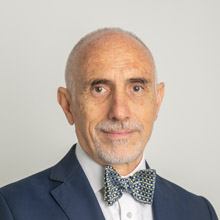
Summary Tiziano VESCOVI is a Full Professor of Business Economics and Management at the Venice School of Management , Ca' Foscari University of Venice. He holds roles including Co-Director of the International Management to Asia Research Laboratory (IMA Lab), member of the technical-scientific Committee of the Ca' Foscari Challenge School, and scientific director of the Italian School of Booksellers. His teaching focuses on Cross-Cultural Marketing , Brand Management , and International Marketing to China in both English and Italian programs. Education : - Degree in Business Economics (Ca' Foscari, 1981) - ITP Certificate (HEC Paris, 1987). Research Interests : - Cross-cultural aspects in international markets, particularly China. - Digital transformation in marketing strategies. - Luxury brand management and global market entry strategies. - Made-in-Italy products in socio-culturally diverse markets. Recent Projects : - 'The Merchant and the Dragon' (2013-): Strategies for Italian SMEs entering China. - 'Managing Digital Transformation' (2021-): Strategic processes in tech adoption. - PNRR LEGO Project (2024-26): Italy-East Asia education collaboration. Office Hours : - Weekly online sessions (Thursdays 2-4 PM via Zoom). - Physical location: San Giobbe Campus, C1 Building, Room 127. Labs/Initiatives : - IMA Lab: Research on Asia-Pacific market dynamics. - Master in Luxury Client Advisor: Collaboration with LVMH Group.
جستجوی استاد راهنمای دانشگاهی
برای مسیر پژوهشیتان، استاد راهنما، استاد دانشگاه و پژوهشگر مناسب را پیدا کنید و با آنها ارتباط بگیرید.
نمایش ۱-۱۵ از ۴۱۰ استاد راهنما
اطلاعات پروفایلها از صفحات عمومی دانشگاهها گرفته شده و ممکن است بهروز نباشد.
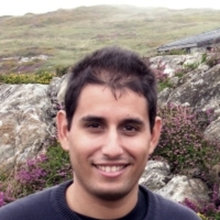
Daniele Loiacono is an Associate Professor at Politecnico di Milano's Department of Electronics, Information, and Bioengineering (DEIB), affiliated with the Artificial Intelligence and Robotics Lab (AIRLab). His research focuses on interdisciplinary applications of Artificial Intelligence, Machine Learning, and Deep Learning in medical imaging, radiation therapy, and procedural content generation for games. He leads projects in synthetic image generation for radiotherapy quality assurance, automated treatment planning, and bias analysis in medical AI systems. Key research areas include medical image synthesis using GANs, radiation therapy optimization, and algorithmic game design. His contributions span clinical applications such as total marrow irradiation (TMI) planning and lymph-node segmentation, alongside innovations in shader generation and interactive evolutionary tools for game development. Loiacono collaborates on multi-center studies to validate AI-driven workflows in healthcare and has pioneered methods combining lean Six Sigma with machine learning for treatment process improvement. His work bridges clinical medicine and computer science, addressing challenges in radiation oncology, anatomical imaging, and procedural content automation. The AIRLab serves as a hub for his research, integrating AI advancements into real-world medical and engineering solutions.
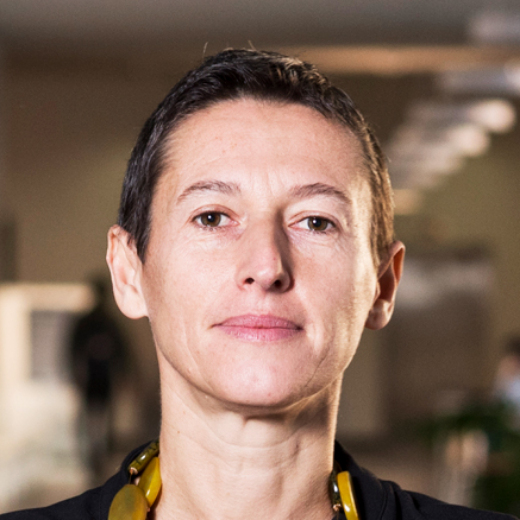
Rosella Gennari is an Associate Professor in Computer Science at the Faculty of Engineering, Free University of Bozen-Bolzano, where she conducts research and teaches in Human-Computer Interaction (HCI). Her work is centered on designing interactive technologies for children, focusing on physical-digital (phygital) artefacts, Technology-Enhanced Learning (TEL), and inclusive design. She leads the Research Unit Human-Centred Intelligent Systems and is actively involved in institutional leadership, including serving on the Third-Mission Board. Ph.D. : Computer Science, Amsterdam University (2002) Postdoctoral Experience : CWI, Amsterdam (ERCIM Alain Bensoussan Fellow); FBK-irst, Trento Leadership : Scientific & Technological Coordinator of the FP7-EU TERENCE project Her research explores how children interact with and design smart technologies, including IoT and AI, through playful and tangible interfaces. She investigates socio-emotional learning, digital well-being, and responsible design, often employing participatory and action research methods. Her work bridges computer science, education, and social impact, aiming to empower young learners as co-creators of technology. The analysis of her recent publications reveals a strong trend in developing and evaluating toolkits and frameworks for children and pre-teens to engage in designing smart things, IoT systems, and sustainable cities. Her work consistently emphasizes inclusivity, reflection, and responsible design, often in collaboration with teachers and learners. The publications span top HCI venues and journals, demonstrating a focus on practical applications in educational settings and the impact of technology on young users. Scientific Awards and Recognition ERCIM Alain Bensoussan Fellowship for talented young researchers Editorial Board Member, Journal of Child Computer Interaction (Elsevier, Q1) Regular reviewer for top HCI conferences and journals Advising and Grants : While specific advisees are not listed, her leadership role in the FP7-EU TERENCE project and numerous other research initiatives indicates extensive experience in securing and managing competitive grants. She mentors students through her research group and teaching, fostering the next generation of HCI researchers. Her collaborative network is extensive, with frequent co-authorship with researchers such as Alessandra Melonio, Maristella Matera, and Mehdi Rizvi. Labs and Teams : She leads the Human-Centred Intelligent Systems research unit, which serves as her primary lab and team. This group focuses on placing humans at the center of computer science and information engineering research. She is also a core member of the organizing committee for the MIS4TEL international conference series, highlighting her role in building and sustaining a global research community in Technology-Enhanced Learning.
Emanuele Naboni is an Associate Professor in the Department of Engineering and Architecture at the University of Parma, Italy. He teaches in the Second Cycle Degree program in Architecture and City Sustainability, offering courses such as Architectural Technologies for the Built Environment , Environmental and Outdoor Comfort Assessment , and Innovative Technologies for Sustainable Design from academic year 2019/2020 through 2025/2026. His research focuses on sustainable and climate-responsive architecture, with particular emphasis on urban microclimates, passive design strategies, and building performance optimization in Mediterranean environments. Key areas include facade engineering, thermal comfort, and computational simulation of localized climate impacts. The recent publications (2024–2025) highlight a strong trend in climate change adaptation through architectural and urban interventions. Topics span from simulating hyperlocal temperature variations to optimizing courtyard microclimates using evaporative cooling and adaptive shading, as well as retrofitting modernist urban forms for improved climate resilience. These works reflect interdisciplinary engagement with urban climatology, building physics, and environmental design. Scientific Awards: No awards mentioned in the provided text. Prof. Naboni is actively engaged in teaching and research. There is no mention of formal advising roles, grants, or leadership in labs or research teams within the available information. His scholarly output demonstrates consistent collaboration with researchers such as Marcello Turrini, Barbara Gherri, Carlos Alberto Rivera Gómez, and Carmen Galán-Marín. He contributes to advancing sustainable design practices through empirical and simulation-based studies, particularly focused on urban and architectural responses to climate change in Southern Europe.

Maurizio MUZZUPAPPA is a Full Professor at the Department of Mechanical, Energy and Management Engineering (University of Calabria) since 2018. His roles include Rector's Delegate for Technology Transfer, Academic Delegate for Education at DIMEG, and Head of the Physical Prototyping Laboratory at the MaTeRiA Center (UNICAL-CNISM collaboration). He supervises the Unical Racing Team in Formula SAE competitions and co-founded three university spin-offs: 3DResearch, Tech4Sea, and Q-BOT. As Scientific Director of projects like TECH4YOU (climate change adaptation technologies) and GROWN IN THE BLUE (Mediterranean reef conservation), he integrates research in industrial design, augmented reality, and underwater cultural heritage. He has authored over 200 publications (h-index 27) and holds 10 patents. His teaching includes Tools and Methods for Industrial Design and Formula SAE LAB . His research focuses on: Industrial design methodologies with parametric and sustainable approaches 3D prototyping and additive manufacturing User-Centered Design for product ergonomics Virtual/Augmented Reality applications in engineering and cultural heritage Underwater robotics and artifact restoration Recent publications highlight trends in AR for industrial maintenance, generative design tools, and mechatronic solutions for underwater heritage. He has supervised over 300 theses and 10 Ph.D. students while leading technology transfer initiatives.
Albena Kostadinova Yaneva is a Full Professor at the Department of Architecture and Design (DAD) at Politecnico di Torino, Italy. Her academic work bridges Political and Social Sciences with Architecture , focusing on the Sociology of Environment and Territory . She teaches courses such as Academic Writing: 5 Exercises in Style , Innovation Studies , and Architecture, Society and Territory A . Research Areas : Sociological analysis of architectural practices, digital technologies in design, actor-network theory applications, and material culture. Teaching Roles : Course Instructor for PhD and Master's programs, emphasizing critical design, environmental sustainability, and urban sociology. Her recent publications explore themes like the impact of Zoom technologies on architectural collaboration, performative school buildings, and the role of models in design processes. Collaborative works include studies on graphene research labs and the interplay between science and urban development. She supervises PhD student Rayna Elena Razmilic Triantafilo, whose research focuses on architectural discourse platforms. Though no scientific awards are explicitly listed, her work engages with interdisciplinary methodologies, blending architectural anthropology and digital humanities to analyze contemporary design challenges.
Alberto Macii is a Full Professor in the Department of Control and Computer Science (DAUIN) at Polytechnic University of Turin. He is also a member of the Interdepartmental Center IAM@PoliTo - Integrated Additive Manufacturing and serves on two colleges: College of Computer, Film and Mechatronics Engineering and College of Mechanical, Aerospace and Automotive Engineering. His research interests include: Digital circuits and systems Electronic systems, modeling, and simulation Energy-efficient circuits and systems Energy management and battery systems Embedded systems and cyber-physical systems Low energy building technologies His work aligns with several Sustainable Development Goals including affordable and clean energy (Goal 7), industry innovation and infrastructure (Goal 9), and sustainable cities and communities (Goal 11). His publication record shows a consistent focus on energy efficiency in electronic systems spanning over two decades, with particular emphasis on battery modeling and power management. Recent work has expanded into environmental applications with transformer neural networks for flood forecasting, demonstrating the evolution of his research into new application domains while maintaining core expertise in energy optimization. His scientific awards include: Best paper award ACM/IEEE Great Lakes Symposium on VLSI (2008) IEEE Fellow (2007-) Senior Member IEEE He has served as Editor-in-Chief for the Journal of Embedded Computing (2005) and as Program Chair for EUC2005: Embedded & Ubiquitous Computing. Professor Macii has advised PhD students including Alberto Bocca (2019-2023) whose thesis focused on compact modeling techniques for energy analysis and optimization of complex systems. He has led numerous research projects including CANP (2018-2020), R3-PowerUP (2017-2021), SERENA (2017-2020), AMable (2017-2021), and STAMP (2016-2019), demonstrating sustained research leadership across multiple funding mechanisms. He is active in the EDA - Electronic Design Automation research group and LAB 4 research laboratory at DAUIN, with research spanning VLSI-CAD, Smart City technologies, and Industry 4.0 applications. His work bridges theoretical computer engineering with practical applications in energy conservation across multiple domains.
Ting Sunمشاهده پروفایل
دانشیار
Dr Ting Sun is an Associate Professor in Climate & Meteorological Hazard Risks at University College London , Department of Risk and Disaster Reduction. He earned his BEng (2009) and PhD in Hydrology (2013) from Tsinghua University , followed by a visiting period at Princeton University (2011–2012). After postdoctoral appointments at Tsinghua and the University of Reading , he held a NERC Independent Research Fellowship at Reading (2017–2022) before joining UCL in May 2022. Education PhD in Hydrology, Tsinghua University, 2013 BEng in Hydraulic Engineering, Tsinghua University, 2009 Visiting PhD Student, Princeton University, 2011–2012 Research Interests Dr Sun’s work converges on urban climate modelling across scales —from neighbourhood blocks to global grids—focusing on the impacts of weather and climate extremes such as heat waves and extreme rainfall in cities. He is the lead developer of the Surface Urban Energy and Water balance Scheme (SUEWS) and its Python wrapper SuPy , developed in collaboration with Prof Sue Grimmond’s micromet group. He also contributes as a core member of the Urban Multi-scale Environmental Predictor (UMEP) development team. His multidisciplinary expertise integrates hydro-climate dynamics, computational modelling, machine learning, built-environment processes, and public-health linkages . Research Trends from Recent Publications Across the 15 most recent articles, a clear trajectory emerges from high-resolution urban-process modelling toward integrated socio-environmental assessments . Studies published in 2024–2025 couple atmospheric models (WRF-SUEWS) with global building-morphology datasets (GLAMOUR) to quantify how cities alter rainfall patterns, temperature sensitivity, and heat-related mortality. Earlier works progressively refined SUEWS’s physical parameterisations and Python accessibility, while recent outputs leverage deep-learning remote-sensing tools (SHAFTS) and hybrid hydrological-neural architectures to deliver actionable insights for urban planning and climate adaptation. Scientific Awards & Fellowships NERC Independent Research Fellowship , University of Reading, 2017–2022 HEA Fellowship , University College London, 2023 Professional Service & Editorial Roles Topic Editor , Geoscientific Model Development (from 2025) Editorial Board Member , Scientific Data (from 2024) Peer review and consultancy for journals, conferences, and policy bodies Supervision of taught-course projects and research degrees External examining and mentoring Labs, Teams & Collaborations Dr Sun leads and collaborates within the UCL Department of Risk and Disaster Reduction , working closely with the micromet group at the University of Reading (Prof Sue Grimmond) on SUEWS/SuPy development. He is an active member of the UMEP consortium and maintains extensive international collaborations spanning Tsinghua University, Princeton, and numerous European research centres, underpinning a vibrant, interdisciplinary research network focused on urban climate resilience.
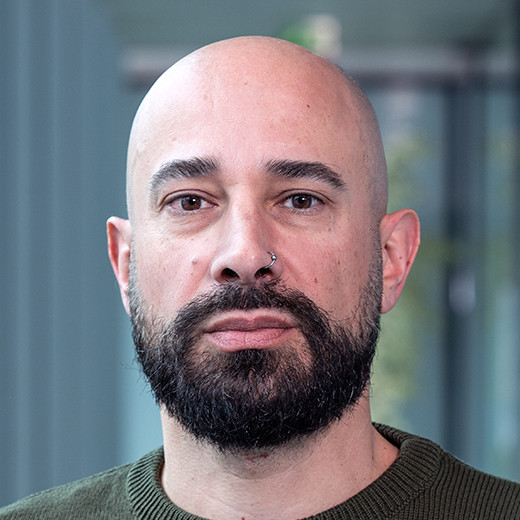
Michele Cagol is a Professor at the Free University of Bozen-Bolzano , Faculty of Educational Sciences. Their work bridges pedagogy, emotional education, and ecological sustainability, with a focus on relational learning frameworks and multisensory educational practices. Research Themes : Emotional education, educational ecology, sustainability pedagogy, media and communication education, teacher training. Projects : Lead participant in the EU Interreg Alpine Space project FRACTAL , promoting green space awareness in the Alpine region. Recent publications emphasize radical relational pedagogy, ecological ethics, and the role of wonder in learning. Notable methodologies include intra-actionist music composition and microteaching for multilingual competencies. Teaching responsibilities span General Pedagogy , Social Education , and teacher training for primary/middle school contexts.
- Pedagogy
- Emotional Education
- Educational Ecology
- +۳ مورد دیگر
Giuseppe Cavallaro is an Associate Professor at the Department of Physics and Chemistry , University of Palermo. His research focuses on nanotechnology , biopolymer composites , and cultural heritage conservation . Key research themes include: Halloysite clay nanotubes for drug delivery and pollutant removal Hybrid materials integrating chitosan , cellulose , and metal oxides Applications in sustainable agriculture , art conservation , and environmental decontamination Recent publications highlight his work on thermoresponsive nanocarriers , antimicrobial composites , and green building materials . Contact: giuseppe.cavallaro@unipa.it
Paolo Bussottiمشاهده پروفایل
دانشیار
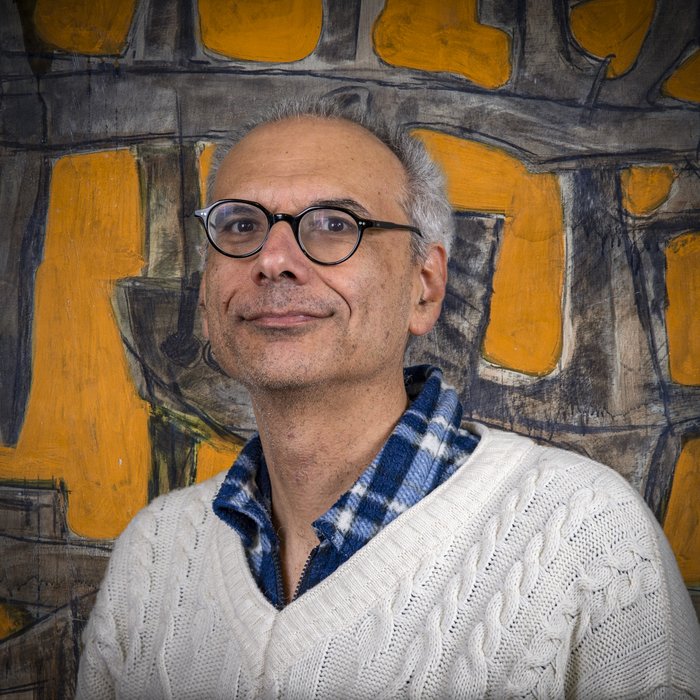
Paolo Bussotti is an Associate Professor of History of Science and Technology at the University of Udine's DIUM department. His academic career includes roles at Ludwig Maximilian University (Munich), Bayerische Akademie der Wissenschaften, and Berlin-Brandenburg Academy of Sciences through Humboldt Fellowships. He holds a PhD in Historical Sciences from the University of San Marino (1996). Education : Bachelor of History of Science and Technology, University of Pisa (1991) PhD in Historical Sciences, University of San Marino (1996) Research Interests : 17th-Century Physics/Astronomy (Kepler, Galileo, Descartes, Leibniz, Newton) Mathematics History: Number Theory (Fermat-Gauss), Projective Geometry Philosophy of Mathematics: Foundations at the turn of the 20th century Science Education: Integrating history into math teaching Key Projects : Galileo's Sidereus Nuncius translation (2001) Kepler Commission collaboration (2005) Enriques Study Center directorship (2008-2010) Grants/Awards : Three Humboldt Fellowships (2003, 2013-2014, 2019) Research grants from DIUM and DMIF (Udine) Labs/Teams : Collaborations with Munich Center for Mathematical Philosophy, Berlin-Brandenburg Academy, and Bayerische Akademie der Wissenschaften.

Roberto Giorgiمشاهده پروفایل
دانشیار
Roberto Giorgi is an Associate Professor of Computer Engineering at the Department of Information Engineering, University of Siena, Italy. He has held this position since October 1, 2006, following his tenure as an Assistant Professor since March 15, 1999. His educational background includes a Ph.D. in Computer Engineering from the University of Pisa (1999) with a thesis on coherence protocols for shared-memory multiprocessors, and an Electronic Engineering degree (1995) with a thesis on trace-driven performance evaluation of multiprocessors. Giorgi's primary research focuses on Computer Architecture , particularly on multiprocessor/multicore issues including processor design, coherence protocols, programmability, and energy efficiency. His work spans both theoretical and practical aspects of computer architecture, with emphasis on real-world implementations and educational tools. He has coordinated significant EU-funded projects including AXIOM (2014-2018) on Smart Cyber-Physical Systems and TERAFLUX (2009-2014) on Many-Cores. His recent publications (2022-2025) demonstrate a strong progression toward practical applications of computer architecture research, with particular emphasis on RISC-V architecture, FPGA-based acceleration, dataflow computing models (especially DF-Threads), and graph processing. Many of his papers address educational tools for computer architecture education, real-time object detection on embedded platforms, and novel execution paradigms for edge computing and HPC. IEEE Senior Member ACM Lifetime Member Coordinator of EU-funded AXIOM project (2014-2018) on Smart Cyber-Physical Systems Coordinator of EU-funded TERAFLUX project (2009-2014) on Many-Cores Giorgi has been actively involved in securing research funding and building collaborations, particularly in high-performance computer architecture research with emphasis on scalable architectures and embedded systems. He leads the Computer Architecture Lab (ROOM 223) at the University of Siena, which was established in 2007, and has been instrumental in developing practical implementations of architectural concepts including the AXIOM platform for cyber-physical systems.
Alessandro Di Vita is an Associate Professor at the Department of Psychological, Pedagogical, Physical Exercise and Training Sciences, School of Medicine and Surgery, Università degli Studi di Palermo (UNIPA). His work centers on educational psychology, career orientation, and pedagogical methodologies for adolescents and university students. Research Interests: Expressive writing for life planning, self-efficacy development, performance anxiety management, peer tutoring, and intercultural education. Key Projects: «Telemaco» (remote peer tutoring), «FOrCe» (career guidance interventions), and «FOrP» (school-university transition). Collaborations: Worked with international institutions like Universidad Austral (Argentina) and Universidad de Estudios de Palermo (Italy). His publications from 2007–2025 reflect a consistent focus on adolescent relationships, educational reform, and digital pedagogy. He has contributed to validation studies for psychological scales like the Worry Emotionality-Junior (WE-J) and developed methodologies such as «SeCo» for post-diploma decision-making. Alessandro also emphasizes Student Voice in educational processes, promoting active participation and resource utilization. Recent works include international comparative studies on peer tutoring and training programs for secondary school teachers.
Enrico Macii is a Full Professor at the Politecnico di Torino, affiliated with the Interuniversity Department of Regional and Urban Studies and Planning (DIST) and the Department of Control and Computer Engineering (DAUIN). He leads the Electronic Design Automation (EDA) research group and holds key roles as Scientific Advisor for the Politecnico-STMicroelectronics partnership and Scientific Contact for the European Chips Joint Undertaking. Research Interests: His work spans digital circuits and systems, energy efficiency, smart cities, Industry 4.0, and smart manufacturing. He focuses on embedded and cyber-physical systems, low-power design, neuromorphic computing, AIoT, and sustainable urban development. Recent Publications: His recent research demonstrates strong trends in edge AI, neuromorphic computing, and smart energy systems. Articles highlight innovations in low-power hardware acceleration, federated learning, physics-informed AI, and digital twin applications for urban and industrial systems. There is a clear emphasis on deploying AI efficiently on constrained devices and integrating physical models with machine learning. J. William Fullbright Fellowship (1993) Best paper award IEEE European Design Automation Conference (1996) Best paper award ACM/IEEE Great Lakes Symposium on VLSI (2008) DAC Service Award (2014) IEEE Fellow (2006) DATE Fellow (2014) Advising and Grants: He has supervised over 25 PhD students in computer engineering, AI, and urban systems. His research is funded by major EU programs (Horizon 2020, PNRR, KDT JU), national (PRIN, FAR), and regional grants, as well as industrial contracts with STMicroelectronics, Michelin, and Cefriel. He leads numerous high-impact projects in smart manufacturing, energy efficiency, and digital twins. Labs and Teams: He is a core member of the EDA Group, an interdepartmental research team at Politecnico di Torino focusing on VLSI-CAD, bioinformatics, smart cities, and Industry 4.0. He also contributes to IAM@PoliTo (Integrated Additive Manufacturing) and leads multiple EU and national research consortia.
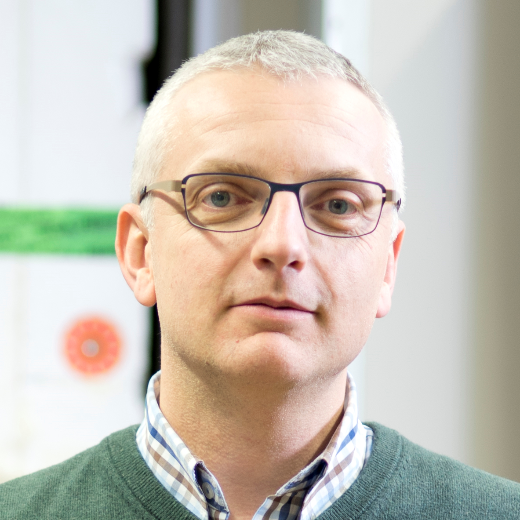
Andrea Gasparella is a Tenured Full Professor and Dean of the Faculty of Engineering at the Free University of Bozen-Bolzano, located at NOI Techpark in Bozen-Bolzano, Italy. His research focuses on building physics, energy systems, and inclusive design, with a particular emphasis on indoor environmental quality for neurodivergent individuals and sustainable urban development. He leads projects like the Flexibots initiative (biodegradable medical microrobots) and BeSENSHome (autonomy support for neurodivergent people). His work integrates advanced modeling (e.g., CFD, machine learning) with real-world applications in energy efficiency, climate adaptation, and human-centered design. Key research areas include thermal and acoustic comfort, renewable energy integration, and smart building technologies. He collaborates with industry partners like Galileo High School and regional institutions to advance automation and robotics. Notable contributions include studies on urban heat islands, energy retrofit strategies for historic buildings, and the impact of ventilation on contagion risks in educational settings. As Dean, he promotes innovation through interdisciplinary initiatives at NOI Techpark, including new engineering programs and infrastructure like the university canteen. His publications span over 50 peer-reviewed articles in journals and conferences like Building Simulation Applications (BSA), addressing topics ranging from solar irradiance prediction in mountain regions to the psychophysical needs of neurodivergent populations. He actively contributes to policy discussions on decarbonization and energy equity in Alpine contexts. Professional activities include organizing events such as the 'nextFSE' fire safety conference and engaging with local organizations like Rotary Clubs to foster community ties. His work bridges academic research with practical solutions for climate resilience, accessibility, and technological advancement.