
Professor Haijiang Li is a Chair in BIM for Smart Engineering at Cardiff University's School of Engineering. His roles include leading the Computational Mechanics and Engineering AI Research Group, directing the BIM for Smart Engineering Centre, and overseeing the BIM MSc programme. He holds editorial roles for journals like Construction Innovation and Automation in Construction , and chairs the European Group of Intelligent Computing in Engineering (EG-ICE). Research focuses on smart computational engineering platforms integrating BIM, AI, and big data for sustainable infrastructure. Key areas include digital twins, disaster management, and resilient urban systems. He has secured £40M in research funding, including £9M as PI, and led over 70 research staff and students. Prof. Li is a Standards Committee Technical Executive at buildingSMART, driving international BIM standards. His work includes co-authoring a book on BIM standards across China, the US, and the UK. Awards include Fellowships from the British Computer Society (FBCS) and the Higher Education Academy (FHEA). His research outputs span over 250 publications, covering topics like AI-driven bridge maintenance, ontology-based decision-making, and energy-efficient urban systems. Collaborations with industry and global partners emphasize practical applications of BIM and smart technologies.
جستجوی استاد راهنمای دانشگاهی
برای مسیر پژوهشیتان، استاد راهنما، استاد دانشگاه و پژوهشگر مناسب را پیدا کنید و با آنها ارتباط بگیرید.
نمایش ۱-۱۵ از ۲۹۵ استاد راهنما
اطلاعات پروفایلها از صفحات عمومی دانشگاهها گرفته شده و ممکن است بهروز نباشد.

Ian Ewartمشاهده پروفایل
دانشیار
Ian Ewart is an Associate Professor at the University of Reading's School of the Built Environment, serving as Head of Construction and Engineering Management and Research Group Lead for Organisation, People and Technology. He chairs the Research Ethics Committee since 2016 and supervises undergraduate/postgraduate dissertations. His academic journey spans engineering and anthropology: DPhil Social and Cultural Anthropology, University of Oxford, St Hugh's College (2007-2012) MSc Material Anthropology and Museum Ethnography, University of Oxford, St Hugh's College (2006-2007) BA (Hons) Archaeology and Anthropology, University of Oxford, Harris Manchester College (2003-2006) Diploma in Management Studies, University of the West of England (1990-1994) BEng (Hons) Mechanical Engineering, Staffordshire University (1983-1987) Ewart's research integrates ethnographic methods with digital technology studies, examining human-technology interactions in construction and domestic settings. His work bridges engineering practice and social anthropology, focusing on skill transmission, sustainable design, and multisensory experiences in virtual environments. Publications from 2025-2013 reveal a dominant trajectory in digital twins for socio-ecological sustainability, VR-based occupant behavior prediction, and HBIM for heritage conservation. The corpus demonstrates consistent cross-disciplinary innovation, merging archaeological reconstructions with healthcare applications while maintaining anthropological rigor. Key recognition: ESRC Future Research Leader fellowship (2013) for Designing Healthy Homes project He supervises PhD candidates like Afolabi Dania (Nigerian sustainable construction) and Joanna Hull (Heritage BIM), leveraging ESRC funding for ethnography-VR health studies. His grants emphasize participatory design and real-world impact assessment in built environments. Leaders the Organisation, People and Technology research group, developing multisensory Roman town reconstructions with sound/smell integration to advance archaeological and architectural experience modeling.
Duncan Wilson is a Professor of Connected Environments at the Bartlett Centre for Advanced Spatial Analysis (CASA) at University College London. His work bridges academia and industry, focusing on IoT, AI, and spatial analysis to enhance understanding of built and natural environments. Current role: Professor of Connected Environments at UCL Education: PhD in Artificial Intelligence and Machine Vision (UCL, 1997), BEng (Hons) in Electrical Engineering (Loughborough University, 1993) Research interests include: Cognitive computing at the network edge Extraordinary sensory systems for data capture Spatial reasoning and digital twins IoT for healthcare and biodiversity Edge AI and TinyML Recent articles span digital twin development , IoT for biodiversity monitoring , and smart healthcare infrastructure . He has received recognition for collaborative R&D approaches during his directorship at Intel's Sustainable Connected Cities institute. Teaching: Leads MSc Connected Environments and modules on IoT ethics, AI on microcontrollers, and sensor network deployment Projects: IoT Living Lab at UCL, Project Hercules for eye clinic analytics, and Shazam for Bats environmental monitoring Professional activities: Former Director of Intel Collaborative Research Institute (2012-2018), ex-member of Smart London Board (2017-2022)
Professor Mohamed Naim is a distinguished academic at Cardiff Business School, Cardiff University, where he holds the position of Professor in Logistics and Operations Management. He has served in several leadership roles, including former Head of the Logistics and Operations Management Section and former Deputy Dean at the Business School. He was also the founding director of the Centre for Advanced Manufacturing Systems at Cardiff (CAMSAC). He is actively engaged in high-impact research and industrial collaboration, currently leading a Knowledge Transfer Partnership (KTP) with Tower Cold Chain Solutions Ltd. and contributing to major research programs such as ASTUTE, ASTUTE2020, and AFAIR. His research interests center on the development of business systems engineering approaches to resilient supply chains, with a focus on sustainability, circularity, and flexibility in lean and agile systems. He has made significant contributions to supply chain dynamics, particularly in engineer-to-order (ETO) sectors such as construction and shipbuilding. His recent work explores digital transformation in logistics, including 5G-enabled smart ports, building information modelling (BIM), and AI-driven decision-making. The analysis of his recent publications reveals a strong trend toward interdisciplinary research, integrating operations management with healthcare (trauma systems), digital technologies, and sustainable industrial practices. His work frequently employs system dynamics, simulation, and empirical case studies to address complex supply chain challenges. Scientific Awards: Institution of Electrical Engineers' Manufacturing Division Premium (1996) Royal Academy of Engineering Global Research Award (2003) Professor Naim is actively involved in research supervision and has contributed to two Research Excellence Framework (REF2021) impact cases on innovative procurement and financially sustainable supply chains. He is a founding member of the Logistics Systems Dynamics Group (LSDG) and has led and co-directed multiple large-scale research initiatives. His work is characterized by strong industry engagement, particularly through Knowledge Transfer Partnerships and collaborations with public sector bodies like the Welsh European Funding Office (WEFO). Research Centers and Teams: Logistics and Operations Management Section, Cardiff Business School Centre for Advanced Manufacturing Systems at Cardiff (CAMSAC) Logistics Systems Dynamics Group (LSDG) ASTUTE / ASTUTE2020 / ASTUTE East programmes AFAIR project (Expert Advisor)

Dr. Frederic Bosche is a Reader in Construction Informatics at the University of Edinburgh's School of Engineering, leading the CyberBuild Lab. His research focuses on advancing digital construction technologies, including BIM, sensing systems, and digital twinning to enhance infrastructure management and workforce safety. Education: PhD in Civil Engineering (University of Waterloo), M.Sc. from University of Texas at Austin, and M.Eng. from Ecole Centrale de Lille. Research interests include automated construction processes, data-driven infrastructure lifecycle management, and integrating emerging technologies like AI and IoT into construction workflows. His CyberBuild Lab has pioneered projects in defect detection, roof monitoring, and smart construction inspection. Notable contributions include over 100 publications, 12 research projects (e.g., 'Digital Facility' and 'Monitoring Roofs of Traditional Buildings'), and awards such as the Charles M. Eastman Top PhD Paper Award. He actively engages in public outreach through science festivals and collaborates internationally with institutions like ETH Zurich and Heriot-Watt University.

Mina Najafiمشاهده پروفایل
پژوهشگر
Dr. Mina Najafi is an academic researcher specializing in sustainable construction, digital transformation in built environments, and place attachment theory. Her work bridges engineering, urban planning, and social sciences. She actively supervises PhD students and contributes to interdisciplinary research initiatives. Research Focus: Sustainable Construction, BIM Technology, Digital Twins, Aging in Place Strategies, and Climate Resilience. Key Projects: Exploration of digital frontiers in construction, policy analysis for energy efficiency, and community-centric design for low-density regions. Her research interests span innovative construction practices, the integration of emerging technologies, and the socio-cultural dimensions of built environments. Recent work emphasizes leveraging digital tools for supply chain optimization and climate adaptation.

Craig Hancockمشاهده پروفایل
استاد پژوهش
Dr. Craig Hancock is a Research Professor in Geospatial Engineering with 15 years of research experience in Surveying and Geodesy. His expertise spans GNSS error mitigation, structural monitoring, and geospatial techniques for digital construction. He has supervised 10 PhD students and published over 80 academic papers. Education: BSc and PhD in Surveying/Geomatics Key Projects: Principal Investigator for projects on GNSS error mitigation, structural health monitoring, and marine economy technology. His research focuses on three core areas: GNSS error categorization and mitigation (particularly ionospheric effects), structural and environmental change monitoring, and geospatial data acquisition for BIM and digital construction. Recent work includes improving 3D modeling accuracy, UAV-based GNSS spoofing detection, and BIM-enabled facility management in healthcare infrastructure. His articles explore topics like sensor optimization, structural dynamics, and geospatial data fusion. Grants include £150k for bridge deformation studies and £9k for ionospheric error analysis. He actively contributes to teaching and enterprise initiatives, integrating geospatial technologies with industry needs.
Martha Tsigkari serves as an Associate Professor at The Bartlett School of Architecture, University College London (UCL), where she bridges architectural practice with cutting-edge computational research. Her position situates her at the forefront of digital transformation in the built environment, with institutional affiliations spanning UCL's Faculty of the Built Environment and direct contributions to UN Sustainable Development Goals 4 (Quality Education), 11 (Sustainable Cities), and 13 (Climate Action). Her research program critically examines the integration of artificial intelligence, machine learning, and cognitive psychology into architectural design processes. Key investigations include spatial and visual connectivity analysis, XR-enhanced collaborative design environments, and AI-driven optimization of building performance. She explores how digital tools reshape creativity, professional identity, and sustainability outcomes in architecture, with particular focus on data commoditization, skills evolution, and human-AI collaboration in design workflows. Her interdisciplinary approach connects architectural theory with computational neuroscience and industrial digitalization trends. Tsigkari's publication trajectory reveals a clear evolution from computational structural analysis (2012-2017) toward AI ethics and professional transformation (2022-2024). Early work established foundations in performance-driven facades and material systems, while recent output confronts existential questions about architectural practice in the AI era. Her scholarship consistently addresses the tension between technological capability and human-centered design values, with growing emphasis on sustainable development frameworks and educational implications. Scientific Awards: No major awards are documented in the available records. Advising and Grants: While specific supervisees and funding mechanisms aren't detailed in current sources, her extensive collaborative network across 30+ publications indicates active mentorship and research leadership. Co-authorship patterns suggest involvement in multi-institutional projects addressing AECO industry digitalization, with potential ties to UK research councils and industry partnerships like RIBA. Labs and Teams: Tsigkari operates within The Bartlett's digital research ecosystem through recurring collaborations with Kosicki, Tarabishy, and Psarras. Her work manifests in experimental toolsets including Glaucon (XR design environment), HYDRA (optimization framework), and SandBOX (conceptual design system), indicating leadership in UCL's computational design labs focused on human-AI interaction and sustainable building technologies.

Mustafa Abedmousa is a Lecturer at the Civil and Environmental Engineering Department of Birzeit University, Palestine, and a PhD researcher in Construction Management at the University of Westminster since 2018. He holds a BSc (Distinction, 2005) and MSc (Distinction, 2008) in Civil Engineering from Birzeit University and the University of Birmingham, respectively. His expertise spans construction management, BIM implementation, and sustainable infrastructure development. He has taught courses in construction management, specifications, and civil engineering laboratories at Birzeit University, supervising ~4 final-year projects annually on BIM and project management. His research focuses on construction labor productivity and sustainable practices, with notable work on LEED certification applicability in Palestine. Award-winning educator, he developed training programs with regional construction firms and contributed to curriculum design for Birzeit's Civil Engineering Master's program. His professional experience includes roles as a Planner/Quality Control Engineer for USAID-funded West Bank infrastructure projects.

Dr. Elham Delzendeh is an Associate Professor and College Academic Lead for Employability at the College of Built Environment, Birmingham City University. She specializes in Digital Built Environment and Technological Design, with research emphasizing cutting-edge digital technology, building energy performance, occupant behavior, and Building Information Modelling (BIM). Her academic background includes a PhD in Architecture and Built Environment, an MSc and BSc in Architectural Engineering. PhD in Architecture and Built Environment MSc in Architectural Engineering BSc in Architectural Engineering Her research bridges practical and academic expertise in design and construction, focusing on occupant behavior analysis, energy-efficient building simulation, and Industry 4.0 technologies like digital twins. She has contributed extensively to energy performance modeling, occupant-driven systems, and sustainable urban interventions. Selected scientific awards include Fellow of the Higher Education Academy (FHEA) . She has supervised postgraduate research in digital built environments and occupant behavior, integrating real-world industry insights into her pedagogy.

Dr. Muhammad Shafique is a Lecturer at Brunel University London, affiliated with the Department of Civil and Environmental Engineering within the College of Engineering, Design and Physical Sciences. He joined Brunel in May 2022 after completing his PhD at the City University of Hong Kong and a postdoctoral fellowship there. His research focuses on life cycle assessment, circular economy, and sustainable design for civil and transportation systems. PhD, Architecture and Civil Engineering (2021), City University of Hong Kong M.S., Smart City and Construction Engineering (2018), University of Science and Technology, South Korea Dr. Shafique's work addresses environmental challenges in emerging technologies through proactive modeling. Key areas include: sustainable construction, green buildings, battery recycling for electric vehicles, hydrogen mobility systems, and climate change adaptation. His recent publications emphasize lifecycle emissions of alternative fuels and circular economy applications in infrastructure. He serves as Associate Editor for Frontiers in Energy Research and Frontiers in Sustainability , and holds editorial roles at four other journals. Dr. Shafique actively mentors PhD candidates and organizes international conferences on carbon capture and circular economy topics.
Dr Abdul-Majeed Mahamadu is an Associate Professor in Innovative and Industrialised Construction at University College London (UCL) and a Cost Intelligence Consultant. A chartered surveyor (MRICS) and construction manager (MCIOB), he also holds a fellowship from the Higher Education Academy (HEA). His research focuses on applying digital technologies like Building Information Modelling (BIM), Virtual Reality (VR), and Artificial Intelligence (AI) to improve construction project efficiency and safety. He leads projects such as Safecrobot (VR safety training) and TIES Living Lab (AI cost data mining). PhD (BIM in Construction Supply Chains) MSc (Construction Project Management) BSc (Building Technology) His research spans BIM maturity , design for safety , digital twins , and immersive technology applications . Recent work includes VR-based hazard perception tools and AI-driven infrastructure cost optimization. He teaches modules in project management, modular construction, and digital delivery at UCL. His publications analyze BIM implementation challenges, immersive safety training, and sustainable design optimization, reflecting his commitment to advancing construction technology and safety standards.
Sina Moradi is a Lecturer in Project Management at University College London's Bartlett School of Sustainable Construction , where he teaches undergraduate and postgraduate modules since September 2024. Prior to joining UCL, he worked for six years at Tampere University (Finland) as a PhD student (2018–2021) and postdoctoral researcher (2021–2024). He also spent five years as a construction supervisor and project planning specialist in the Middle East before his PhD. Research Interests: Affordable housing, collaboration in construction, environmental sustainability, managerial competencies, project theory, and project delivery models Teaching Responsibilities: Module leader for Project and Programme Management, Strategic Quality Management, Procurement and Supply Chain, and tutorial lead for Organizations and People in Projects Publications focus on collaborative construction, lean methodologies, and sustainability, with 2025–2024 works analyzing mutual trust in projects, waste reduction, BIM integration, and sustainable delivery frameworks. He authored the Routledge Handbook of Collaboration in Construction (2024) and contributed to journals like Smart and Sustainable Built Environment , Building Research and Information , and International Journal of Managing Projects in Business . He serves as an editorial board member of Project Leadership and Society and International Journal of Project Management , reviews for multiple journals, and leads as Programme Director at CIB since 2024. His work aligns with UN Sustainable Development Goals 11 (Sustainable Cities), 12 (Responsible Consumption), and 13 (Climate Action).
Kirti Ruikarمشاهده پروفایل
دانشیار
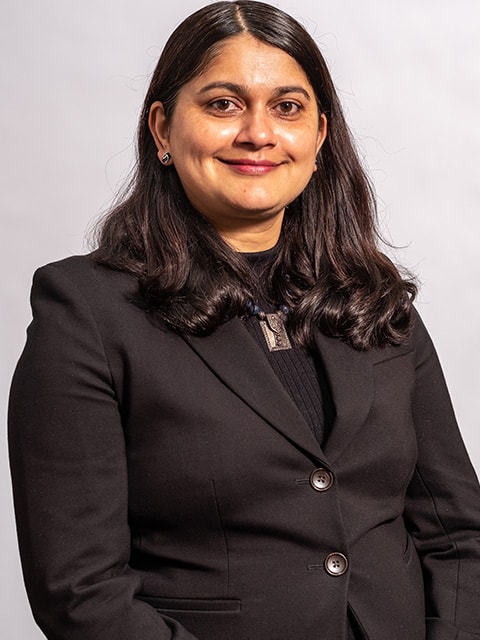
Dr. Kirti Ruikar is a Reader in Digital Construction with 19 years of experience, specializing in applying digital technologies like BIM and AI to enhance safety, resilience, and performance in construction and infrastructure projects. She holds a BArch, MSc, and EngD, and is a Fellow of the Higher Education Academy (FHEA). As a University Special Envoy for India, she bridges international collaborations. Her research focuses on BIM integration for site safety and sustainability, Data-driven solutions for infrastructure projects, AI applications in construction safety, Public-Private Partnerships in developing countries, Enterprise systems optimization, and policy interventions in roadworks management. Notable projects include Data Lakes for Indian highways (collaboration with IIT Delhi), BIM-based safety frameworks for staircases and ladders, Social network analysis for knowledge management, and FCDO-funded automated construction safety systems. Her work spans over 150 publications, including 3 books and 50 journal papers, with a strong emphasis on Q1 journals. She has secured £1m+ in funding from Innovate UK, EPSRC, and international bodies. Collaborations include Asite, Arup, and Derby City Council. Her research outputs highlight trends in Industry 4.0 adoption, AI-driven safety systems, and leveraging data lakes for infrastructure resilience. She advocates for ethical innovation and cross-disciplinary collaboration to address global construction challenges.
Kwasi Gyau Baffour Awuahمشاهده پروفایل
پژوهشگر ارشد
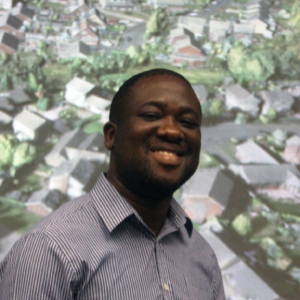
Dr Kwasi Gyau Baffour Awuah is an interdisciplinary academic and practitioner with over 22 years of international experience in real estate, urban development, and sustainability across developing and developed contexts. Currently based at THINKlab, University of Salford, he leads the real estate research and consultancy cluster while teaching urban development modules. His educational qualifications include: PhD in Economic Analysis of Spatial Planning & Management Systems PG Cert. in Academic Practice in Higher Education (PCGAP) MA in Development Studies BSc (Hons) in Land Economics Professional Diploma in Real estate surveying & valuation Certificate in Cradle-to-Cradle (C2C) Professional Certificate in Alternative dispute resolution Dr Awuah's research spans land administration, heritage conservation, urban governance, sustainable development, and property valuation, with particular focus on African urban contexts. His work bridges theoretical frameworks with practical policy implementation, addressing challenges in informal settlements, infrastructure financing, and sustainable resource management. Recent publications (2021-2024) demonstrate a pronounced shift toward digital heritage conservation (HBIM applications in Jordan), stakeholder dynamics in Nigerian water systems, and sustainable housing solutions. His interdisciplinary approach integrates urban planning, digital technologies, and governance frameworks to tackle complex sustainability challenges in rapidly urbanizing regions. No scientific awards were explicitly mentioned in the source material. Dr Awuah has supervised over 50 student dissertations across degree levels and serves as an external examiner for multiple universities. His research attracts substantial funding from: RICS (Property Valuation Practice in Sub-Saharan Africa) DFID (Urbanisation and Infrastructure Research Programme) EU (INTERREG IVB C2C BIZZ project) AHRC (Digital Heritage in India) Royal Academy of Engineering (Jordanian Heritage Conservation) As leader of the real estate research cluster at THINKlab, he directs a multidisciplinary team conducting internationally collaborative projects with academic institutions, government bodies, and industry partners across Africa, Europe, and Asia.