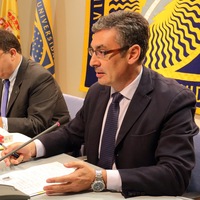
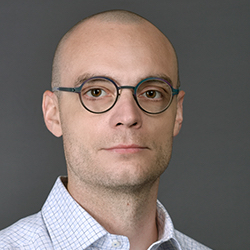
Bernardo Jesús Periñán Gómez, currently a Professor of Private Law at Universidad Pablo de Olavide (Seville, Spain) , specializes in Roman Law and its reception into modern legal systems. He leads the research group From the European Common Law to Civil Law and has established research stations at institutions like Harvard and Pavia. His work bridges historical jurisprudence with contemporary legal challenges, particularly in pandemic-related obligations and urban liability frameworks. Education: Doctorate in Roman Law from Universidad de Sevilla (1997) focusing on the Senatus Consultum Macedonianum. Research: Explores Roman legal structures, comparative law, and globalization's impact on individual juridical capacity. Publications: Over 40 articles and monographs in journals like Revista Internacional de Derecho Romano and Boletín Mexicano de Derecho Comparado , emphasizing doctrinal continuity and adaptation. Awards & Roles: Serves on international scientific committees, directs doctoral theses, and contributes to editorial boards including Persona Collection at Comares Publishing.
Professor Christian Deutscher is a prominent sports economist at Bielefeld University's Faculty of Psychology and Sport Science, specializing in the Department of Sport Science within Division V - Sport and Business. As both Research Officer and Internationalization Officer, he leads significant work in sports economics, particularly focusing on betting markets, match-fixing detection, and sports integrity. His research has attracted funding from major institutions including the German Research Foundation. Deutscher's research interests span sports economics, betting market efficiency, match-fixing detection, sports management, and the business aspects of professional sports. His work combines advanced statistical modeling with practical applications in sports integrity monitoring. He has extensively analyzed live betting markets, Bundesliga economics, and the impact of technological innovations like VAR in football. His research often examines the intersection of sports performance, economic incentives, and market behavior. Analysis of his recent publications reveals a strong focus on empirical studies of sports betting markets, particularly live and in-play betting dynamics. His work demonstrates sophisticated use of state-space models and other advanced statistical techniques to detect market inefficiencies and potential integrity issues. Deutscher frequently collaborates with statisticians and economists to develop warning systems for match-fixing, with particular attention to German football leagues. His research bridges theoretical economics with practical applications in sports governance. Professor Deutscher actively contributes to the European Sport Economics Association (ESEA), having edited special issues of conference proceedings and serving in editorial capacities. His work has been published in leading journals including Journal of Sports Economics, Economic Inquiry, and Applied Stochastic Models in Business and Industry. As Research Officer for the Faculty of Psychology and Sport Science, Deutscher oversees research initiatives and international collaborations. His current projects include data-based fraud detection in live betting markets, funded by the German Research Foundation across multiple phases. He also serves on various university committees including the Quality Improvement Commission and Examination Board for the Department of Sport Science. Deutscher maintains strong connections with sports organizations and betting industry stakeholders, ensuring his research has practical relevance for sports integrity monitoring. His work on betting market inefficiencies has direct applications for regulatory bodies seeking to protect the integrity of sporting competitions.
Maximilian Egger is a Doctoral Researcher at the Institute for Communications Engineering under Prof. Antonia Wachter-Zeh at the Technical University of Munich (TUM). His research focuses on distributed machine learning, privacy-preserving computing, and information theory. He holds an M.Sc. in Electrical Engineering and Information Technology (2022, TUM) and a B.Eng. in Electrical Engineering (2020). He has conducted research stays at École Polytechnique Fédérale de Lausanne (2024) and Imperial College London (2023). Egger has received several awards, including the DAAD Scholarship (2023) and the VDE Award Bavaria (2020). His work emphasizes secure federated learning, Byzantine-resilient systems, and efficient distributed algorithms. He is affiliated with the Chair of Coding and Cryptography and actively contributes to advancements in decentralized learning systems. Recent publications highlight breakthroughs in privacy preservation, channel capacity estimation, and scalable federated edge learning.
Marco Di Renzo is a CNRS Professor (Directeur de Recherche Titulaire) at University of Paris-Saclay, affiliated with CentraleSupelec and the Signals and Systems Laboratory (L2S). He serves as Coordinator of the Communications Networks Area at the DigiCosme Laboratory of Excellence and Editor-in-Chief of IEEE Communications Letters. His academic leadership includes membership in the Ph.D. School on ICT Admission Committee at Paris-Saclay University. His educational background includes a Laurea (cum laude) and Ph.D. in Electrical Engineering from University of L'Aquila, Italy (2003, 2007), and a Habilitation à Diriger des Recherches from University Paris-Sud (2013). Laurea (cum laude), Electrical Engineering, University of L'Aquila (2003) Ph.D., Electrical Engineering, University of L'Aquila (2007) Habilitation à Diriger des Recherches, University Paris-Sud (2013) Di Renzo's research focuses on next-generation wireless communications, particularly reconfigurable intelligent surfaces (RIS), 6G technologies, and stochastic geometry modeling. His work bridges theoretical communication theory with practical implementations in cellular networks, millimeter-wave communications, and ultra-wide band systems. Recent publications demonstrate leadership in holographic metasurfaces, integrated sensing and communication (ISAC), and AI-empowered network design, establishing him as a pioneer in electromagnetic wave manipulation for future networks. His award-winning publications span RIS-aided communications, channel modeling, and security frameworks. Analysis of his recent work reveals consistent focus on three pillars: (1) fundamental electromagnetic theory for wave manipulation, (2) practical RIS implementations across frequency bands, and (3) integration with AI for network optimization. His articles frequently address industrial applications including factory automation and space-air-ground networks. Di Renzo's scientific recognition includes: IEEE Fellow (2020) and IET Fellow (2020) Highly Cited Researcher (Web of Science, 2019) SEE-IEEE Alain Glavieux Award (2017) Multiple Best Paper Awards (IEEE ICC, EURASIP) Nokia Foundation Visiting Professorship (2020) As Principal Investigator for CNRS, he coordinates multiple Horizon 2020 projects including SURFER, PathFinder, and MetaWireless. His leadership extends to serving as Project Coordinator for H2020 5Gwireless, 5Gaura, MAPNET, and REDESIGN. With over 350 publications, 17,000+ citations, and h-index of 66+, his research group maintains strong industry partnerships with Nokia and other telecommunications leaders. Di Renzo directs the Signals and Systems Laboratory (L2S) at Paris-Saclay and coordinates the DigiCosme Excellence Lab's Communications Networks Area. His team specializes in electromagnetic modeling for wireless networks and has pioneered the European Telecommunications Standards Institute (ETSI) Industry Specification Group on RIS. The group maintains active collaborations with Aalto University (Finland), University of Technology Sydney (Australia), and University of L'Aquila (Italy).
Abderrahim Benslimane is a Full Professor of Computer Science at the University of Avignon, France, where he serves as Vice Dean of International Relations at the UFR STS (Unité de Formation et de Recherche en Sciences et Technologies). He is also Head of the master degree SICOM (Systèmes Informatiques Communicants: réseaux, services et sécurité) program at the university. His extensive academic career spans several decades with significant contributions to computer science, particularly in networking and security domains. Professor Benslimane holds a HDR (Title to supervise researches) from the University of Cergy-Pontoise, a Ph.D. from the University of Franche-Comté, along with M.S. and B.S. degrees in Computer Science from the same institution and the University of Nancy respectively. His research interests primarily focus on distributed computing, networking and communication protocols, with particular emphasis on modeling, describing and implementing secure communication protocols and multimedia applications in heterogeneous network architectures. He combines engineering and theoretical approaches using graphs, distributed algorithms, transition systems, and performance evaluation models. Benslimane's scholarly work demonstrates a strong trend toward addressing security and privacy challenges in emerging technologies. His recent publications focus on cybersecurity applications for wireless sensor networks, Internet of Things, blockchain implementations, UAV communications, and vehicular networks. He has pioneered research in energy attack mitigation, trust management systems, and secure group communications, often employing game theory and novel cryptographic approaches. His work bridges theoretical foundations with practical implementations in next-generation networking technologies. IEEE VTS Distinguished Lecturer (2020-2022) Best Paper award at IEEE ICC 2019 Multiple Prime d'Encadrement et de Recherche Doctorale awards (1998-2021) Prime d'Excellence Scientifique (2011-2015) IEEE Senior Member As an academic leader, Benslimane has served as Editor in Chief of Multimedia Intelligence and Security Inderscience Journal, Area Editor of IEEE Internet of Things Journal, and Associate Editor for multiple prestigious publications including IEEE Transactions on Multimedia and IEEE Wireless Communication Magazine. He has founded and led research centers including the Informatics Research center (CRI) at the French University in Egypt and the Multimedia and networking team (RAM) at the Laboratoire d'Informatique d'Avignon (LIA). His laboratory research focuses on security, communication protocols, graphs and distributed algorithms, with applications in ad hoc networks, sensor networks, vehicular networks, and IoT.
Eric Chalfant is an Adjunct Assistant Professor in the Department of Film and Media at Queen’s University. He has previously taught at Elon University and Portland Community College. He earned his PhD from Duke University (2016), MA from Wake Forest University (2011), and BA from Whitman College (2008). Research Interests: Intersections of media studies, religious studies, and affect theory; material media analysis; sound culture studies; interface studies; algorithmic and network culture. Key Projects: A book-length study on media archaeology of North American atheist media (print, broadcast, digital) and another project exploring media, religion, and affect studies through the lens of 'noise' and divination. Media Archaeology: Examines how changing media forms (print, radio, digital) shaped atheist subjectivity, from 19th-century openness to Reddit's networked speed. Advising: Serves as MA and PhD Co-Supervisor.
Anna Lysyanskaya is the James A. and Julie N. Brown Professor of Computer Science at Brown University. She joined Brown in 2002 after earning her Ph.D. from MIT. Her research focuses on cryptography, particularly privacy-preserving protocols and anonymous credentials. She has received prestigious awards including the NSF Career Award, Sloan Foundation Fellowship, and Google/IBM Faculty Fellowships. Her work emphasizes secure communication systems and cryptographic foundations for privacy. Education: Ph.D. in Computer Science from MIT. Research interests include cryptographic protocols, anonymity, and secure authentication. She has authored over 140 publications and contributed to projects like PACIFIC for privacy-preserving contact tracing and Bruisable Onions for anonymous communication. Her grants support advancements in cryptographic security and privacy-enhancing technologies. Awards include the NSF Career Award, Sloan Fellowship, and multiple industry recognitions. She collaborates widely and advises on cryptographic standards for digital identity and secure computation.
David J. Stensrud is a Professor of Meteorology and Atmospheric Science at Pennsylvania State University, where he has been a faculty member in the Department of Meteorology and Atmospheric Science within the College of Earth and Mineral Sciences. His research focuses on advancing our understanding of severe weather phenomena and improving numerical weather prediction capabilities. Dr. Stensrud received his academic training at Penn State, earning his M.S. in Meteorology in 1985 and his Ph.D. in Meteorology in 1992. His educational background has provided the foundation for his extensive research career focused on atmospheric dynamics and prediction. Dr. Stensrud's research spans several critical areas in atmospheric science, with particular emphasis on mesoscale meteorology , numerical weather prediction , and synoptic meteorology . He is internationally recognized for his work on ensemble forecasting , where he explores how groups of numerical weather prediction models can provide probabilistic forecasts of severe weather events. His research on convective-scale data assimilation aims to improve how observations from radar and satellites are incorporated into high-resolution weather models. Additional research interests include the physical processes behind severe weather phenomena like derechos and heavy rainfall events, the predictability of convective-scale phenomena, and the dynamics of the North American monsoon system. He has made significant contributions to understanding how urban environments influence thunderstorms and how convective systems interact with their larger-scale environment. Analysis of Dr. Stensrud's recent publications reveals a consistent focus on improving severe weather prediction through advanced data assimilation techniques. His work primarily centers on integrating radar and satellite observations into convection-allowing models to enhance forecasting capabilities for thunderstorms and other severe weather phenomena. A notable trend in his research is the increasing sophistication of ensemble approaches to address uncertainties in both initial conditions and model physics. His publications demonstrate a progression from fundamental studies of mesoscale phenomena to increasingly operational applications with potential for real-world forecasting improvements. Dr. Stensrud has served in several important professional capacities that highlight his standing in the meteorological community: Chair, Storm-scale Radar Data Assimilation Workshop, Norman, Oklahoma, October 2011 Member, NOAA/NWS Functional Weather Radar Requirements Integrated Working Team, 2012-2013 Guest Editor, Advances in Meteorology, Special Issue on "Storm-scale data assimilation and NWP", 2013 Commissioner, Scientific and Technological Activities Commission, American Meteorological Society, 2016-2017 Dr. Stensrud has authored more than 150 peer-reviewed publications and a textbook entitled "Parameterization Schemes: Keys to Understanding Numerical Weather Models." He has been actively involved in mentoring graduate students, though specific names of advisees are not provided in the available information. In collaboration with colleagues at Penn State, he helped create a 20-station environmental monitoring network across Pennsylvania with plans to expand to 50+ stations. His research has been supported by various grants that have enabled field campaigns such as the Mesoscale Predictability Experiment (MPEX) in 2013, where his team intercepted severe thunderstorms to collect critical observational data. Dr. Stensrud is involved with several research teams and facilities at Penn State, including work with the Joel N. Myers Weather Center and the Bob and Charlotte Landis Broadcast Room. His research group focuses on analyzing data from dual-polarization radar systems and developing improved techniques for assimilating these observations into convection-allowing models. He collaborates extensively with other researchers at Penn State and beyond, particularly in studies involving the interactions between urban environments and thunderstorms, and the upscale effects of deep convection on larger-scale weather patterns.
Jörg Spenkuch is an Associate Professor of Managerial Economics & Decision Sciences at Kellogg School of Management, Northwestern University, where he has been since 2013. He holds a Ph.D. in Economics (2013) and M.A. (2009) from the University of Chicago, and dual B.A. degrees in Economics and Business Administration (2007) from the University of St. Gallen, Switzerland. Education: Ph.D., 2013, Economics, University of Chicago M.A., 2009, Economics, University of Chicago B.A., 2007, Economics, University of St. Gallen B.A., 2007, Business Administration, University of St. Gallen Professor Spenkuch's research bridges political economy and applied microeconomics , with a focus on ideological behavior, strategic decision-making, and social dynamics. His work examines topics like: Political Economy: Campaign finance, electoral accountability, and ideological sorting. Behavioral Economics: Satisficing behavior, memory-driven choices, and strategic voting. Public Policy: School desegregation effects, bureaucratic performance, and immigration-crime linkages. His recent publications analyze: Long-term ideological shifts from 1975 school desegregation (2025 working paper). Memory premiums in decision-making (2025 working paper). Complexity's role in chess strategy (2024 Review of Economic Studies ). Political accountability during natural disasters (2025 American Economic Journal ). Scientific Recognition: MinE Best Paper Award (European Economic Association) Chair's Core Teaching Award Deutschlands "Top 40 unter 40" (Capital magazine) FEEM Award (European Economic Association) Best Paper Award, RGS Doctoral Conference At Kellogg, he teaches Leadership and Crisis Management (PACT-440-5) and Business Analytics (DECS-435-0). His work has been published in top journals like Econometrica , American Economic Review , Quarterly Journal of Economics , and Review of Economic Studies , covering topics from partisan spatial sorting to expressive vs. strategic voting behavior.
Aleksandar Mihajlovic is a researcher and Art Director at Singidunum University, Serbia. With a doctoral degree in Contemporary Business Decision-Making (2022), a master's in Business Economics (2014), and a bachelor's in Computer Graphics and Design (2008), he combines academic rigor with creative leadership in the university's marketing strategy. Doctoral studies: Contemporary Business Decision-Making, Singidunum University (2022) Master studies: Business Economics, Singidunum University (2008–2014) Undergraduate: Computer Graphics and Design, Faculty of Informatics and Management (2005–2008) High school: Robotics and Flexible Production Systems Technician, Polytechnic Academy (1995–1999) His research spans visual communication , digital marketing , and artificial intelligence applications in creative industries. Key contributions include Co-authoring 11 academic papers (2015–2025) on topics like Instagram ad effectiveness, techno-feudalism, and responsive logo design. Developing the scientific research portal 'Singipedia' and international magazine 'SingiLogos'. Participating in 7 global projects including Erasmus+ and TEMPUS initiatives. His scientific awards include the JISA Discobolos Special Award (2010), IT Globus Award (2010), and Grafima Fair Special Award (2025). He serves on the organizing committee for conferences like Sinteza and Sitcon , and has judged marketing competitions while volunteering for NGOs like the City Organization of the Deaf of Belgrade.
Griseldis Kirsch is a researcher at the School of Languages, Cultures and Linguistics (LAC) at SOAS University of London. Her work focuses on Japanese media and popular culture, with particular emphasis on gender, transnationalism, and identity politics. She has edited and contributed to key publications such as the Handbook of Japanese Media and Popular Culture in Transition (2022) and Assembling Japan: Modernity, Technology and Global Culture (2015). Her research spans visual culture, historical memory, and media's role in constructing national identities. Recent articles examine topics ranging from imperial nostalgia in Japanese television to the representation of cultural otherness and gender dynamics in propaganda films. She has supervised or collaborated on theses exploring single motherhood, anime music, and Korean-Japanese media remakes. Notable trends in her publications include critiques of Japanese nationalism, analysis of transpacific cultural flows, and investigations into minority representations. Her work bridges film studies, anthropology, and cross-cultural communication, often addressing tensions between local and global influences in media. Current affiliations include contributions to the JAPAN DOCUMENTS publication series and ongoing scholarly engagement with Japanese television dramas, anime, and their socio-political implications.
Mustafa Aksu is a Professor at Istanbul University's Faculty of Law, Department of Civil Law. His research spans Civil Law , Intellectual Property Law , Information Law , and EU Legal Harmonization . He has advised 26 theses and published extensively on digital rights, family law, and obligations law. Research Interests: Focus on AI and law, copyright exhaustion in digital markets, EU-Turkey legal alignment, domain name regulation, and protection of computer programs. Publications: Recent works include AI's legal frameworks (2023), medical informatics law (2021), and digital exhaustion doctrine (2016). His research emphasizes cross-border IP enforcement and EU court precedents. Contact: Email aksum@istanbul.edu.tr | Office: Hukuk Fakültesi Binası, İkinci Kat, Oda No: 38, Beyazıt, Istanbul, Turkey.
Ari Jantunen is a Professor in Strategy Research at the LUT Business School, LUT University, Lappeenranta, Finland. He is affiliated with the Department of Business Studies and has been actively contributing to academic research in strategic management and organizational behavior. University: LUT University School: LUT Business School Department: Business Studies Position: Professor, Strategy Research Email: Ari.Jantunen@lut.fi He earned his D.Sc. (Econ.) from Lappeenranta University of Technology in 2005, establishing a long-standing academic career focused on strategic change and innovation. Ari Jantunen’s research centers on strategic change and renewal, organizational cognition, dynamic capabilities, dominant logic, and industry dynamics . His work explores how managerial cognition influences strategic decisions and organizational performance, particularly in industries undergoing transformation such as media, energy, and forest sectors. He also investigates sustainability strategies, the circular bioeconomy, and corporate social performance. His recent publications reflect a strong trend in using cognitive mapping, qualitative comparative analysis (fsQCA), and simulation modeling to understand strategic phenomena. Articles on dominant logic, strategic renewal, and cognitive diversity highlight his focus on the cognitive underpinnings of strategic management. Among his notable works are studies on the bioeconomy transition in the pulp and paper industry, innovation races in high-tech sectors, and the interplay between corporate social and financial performance. Jantunen has collaborated extensively with researchers such as Anni Tuppura, Satu Pätäri, Kalevi Kyläheiko, and Anssi Tarkiainen, often co-authoring studies in journals like European Management Journal , Journal of Business Research , and Futures . Ari Jantunen is actively engaged in research and supervision, though no specific students are listed in the provided sources. He does not appear to have received any explicitly mentioned scientific awards, but his consistent publication record in high-impact journals underscores his academic contributions. He has been involved in interdisciplinary research projects, particularly those examining the interface between the energy and forest sectors, the diffusion of energy services, and innovation in cleantech firms. His work often combines theoretical rigor with practical insights, contributing to both academic discourse and industry applications.
Bernie Grummell is an Associate Professor in the Departments of Education and Adult & Community Education at Maynooth University , part of the Faculty of Social Sciences. They co-direct the Doctorate in Higher and Adult Education Programme, the Structured PhD in Adult & Community Education, and the Centre for Research in Adult Learning and Education. They serve on the Social Science Research Subcommittee and the Athena Swan Committee, and engage actively with policy, community, and civil society organizations. Research Interests: Grummell’s work focuses on social justice, inclusion, and transformation across education and society. Current projects include the TUTOR teachers academies (Erasmus+), Youthreach staff wellbeing, and transformative community education in Malawi and Zambia. Past research includes adult literacy initiatives for ALOA and policy briefings for SOLAS, ETBI, and NALA. Publications & Projects: Key works include edited volumes on critical adult education research (Brill/Sense, 2020) and Power and Possibility in Adult Education (Brill, 2019). They led the DISCs project on societal challenges in higher education and contributed to EU-funded initiatives like HE4U2 (cultural inclusion) and Unlocking Freedom (disability de-institutionalisation). Policy Contributions: Grummell has authored submissions to Ireland’s National Access Plan, Department of Further and Higher Education strategies, and the Student Grant Scheme (SUSI) review, advocating for equitable access and inclusive education policies. Teaching & Leadership: Their roles include curriculum development for social justice teaching in Irish higher education and guidelines for intercultural learning environments in HE institutions.
Timothy James Lockley is Professor of American History at the University of Warwick. He has held academic positions at the university since 1996, progressing from Lecturer to Professor in 2015. His research spans the social history of the colonial and antebellum American South, the Caribbean, slavery, race, class, poverty, and medical history. He is also interested in the cultural history of cricket and classical music broadcasting. M.A., University of Edinburgh, 1993 Ph.D., University of Cambridge, 1996 Lockley's research explores the complex relationships between race and class, particularly among non-slaveholding whites and enslaved African Americans. His work on medical history examines racial immunity theories and mortality patterns in urban centers like Savannah. He has also published on the history of classical music radio and the social role of cricket in the American South. His recent articles focus on military slavery in the West India Regiments, slave conspiracies, family life under slavery, urban poverty, and the cultural impact of radio. These publications reflect a consistent engagement with themes of race, resistance, gender, and health in the Atlantic world. Scientific awards and grants include: AHRC Grant (2015–2018): "Africa's Sons Under Arms" AHRB Grant (2000–2002): "Southern Charities Project" He has supervised numerous PhD and MA students on topics including enslaved masculinity, slaveholding ideology, antislavery networks, and folk religion in Jamaica. He has served as associate editor of Slavery & Abolition and contributed to major reference works. He is actively involved in public history, appearing on BBC’s "In Our Time" to discuss topics such as the Pilgrim Fathers, Pocahontas, and the Haitian Revolution. Lockley leads research groups and collaborates with scholars across the UK and US, focusing on Atlantic history, slavery, and cultural memory. His future research includes a study of Savannah in 1820 and the history of classical music radio during World War II.