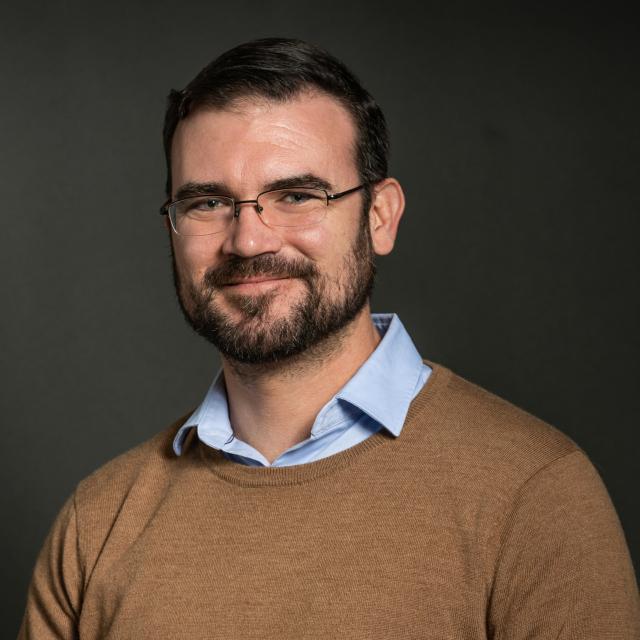
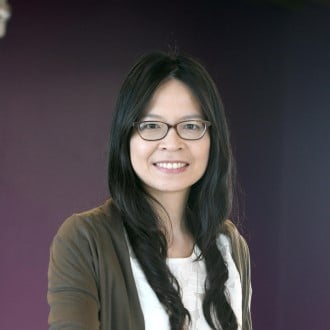
Professor Gita Alaghband is Chair and PhD Director at the Department of Computer Science and Engineering, University of Colorado Denver. Her work bridges high-performance computing with AI applications in computer vision, facial recognition, and deep learning optimization. Current research focuses on real-time multi-human tracking for autonomous systems Develops explainable AI solutions for medical and financial domains Leads the Parallel Distributed Systems (PDS) Lab Key publication trends include: 2025: Medical imaging AI for pediatric trauma analysis 2024: Financial forecasting with causal econometrics and adversarial defense systems 2023: Trajectory prediction models and HEVC compression frameworks Scientific recognition: IRC Best Paper Award (2020) for facial recognition research Students advised include industry leaders at Google, VMWare, and Nissan, with research spanning parallel computing, medical imaging AI, and autonomous systems.
Professor Mike Nicholls is a full-time faculty member at Flinders University, holding a Strategic Professorship in Psychology within the College of Education, Psychology and Social Work. He is Director of the Brain and Cognition Laboratory and currently serves as Dean of Research for his college. Previously, he was a professor at the University of Melbourne for 17 years. His educational background includes a BArchSt from the University of Adelaide (1985–1987), a BA (Hons) in Psychology from the University of Adelaide (1998), and a PhD in Experimental Psychology from King’s College, Cambridge (1990–1993), funded by a Cambridge Commonwealth Trust scholarship. Mike Nicholls’ research is centered on cognitive neuroscience, particularly the study of behavioral and perceptual asymmetries related to brain lateralization. His work investigates handedness, spatial attention in clinical and healthy populations, language, facial expression perception, and the role of eye movements. He explores how attention is controlled by the brain across sensory modalities and spatial dimensions. His recent publications reveal a strong focus on how social context influences perception, body image, facial judgments, and attentional processes, often employing neuroimaging and psychophysical methods. His 15 most recent articles (2023–1996) span topics including inattentional blindness, social modulation of visual perception, reinforcement learning in visual cortex, and attentional distortions in spatial cognition. These works reflect a consistent interest in the neural and cognitive underpinnings of lateralized behavior and attention, with applications in both healthy and clinical populations. Scientific Awards: Outstanding Academic Mentor Award, Australian Psychological Society (2020) Mike Nicholls has supervised numerous research students and PhD candidates, with advising interests in laterality, attention, and cognitive neuroscience. He has secured substantial research funding, including multiple ARC Discovery and Linkage Grants, with recent projects focusing on decision aids in complex environments, augmented reality for defense, and attentional asymmetries in navigation. He has also held editorial roles in journals such as Laterality and the Quarterly Journal of Experimental Psychology , and currently serves on the ARC's Medical Research Advisory Group. He leads the Brain and Cognition Laboratory at Flinders University, a research team dedicated to understanding cognitive processes and their neural representations, particularly in the context of brain asymmetry and attentional control.
Hynek Wichterle is a Professor holding joint appointments in the Departments of Pathology & Cell Biology, Neuroscience (in Neurology), and Rehabilitation and Regenerative Medicine at Columbia University Medical Center. He serves as Co-Director of the Columbia Stem Cell Initiative and Vice-Chief of the Division of Regenerative Medicine in the Department of Rehabilitation & Regenerative Medicine. He also holds the administrative title of Co-Director of the Motor Neuron Center. Dr. Wichterle received his M.S. degree from Charles University in Prague and his Ph.D. degree from The Rockefeller University. He trained at Columbia University, where he became an assistant professor in 2004 and associate professor in 2012 before achieving his current professorship. Wichterle's research focuses on modeling nervous system development in vitro using stem cell technologies. His laboratory has pioneered efficient methods for differentiating pluripotent embryonic stem cells into specific subtypes of spinal motor neurons and interneurons. His work combines stem cell differentiation with CRISPR-based genome editing and inducible transgene expression to decode transcriptional programs controlling neural development. A major focus of his research involves using both mouse and human pluripotent stem cells to model motor neuron degenerative diseases like amyotrophic lateral sclerosis (ALS), with the goal of discovering new neuroprotective drugs. Analysis of his recent publications reveals a consistent focus on developmental neuroscience, stem cell biology, and neurodegenerative disease modeling. His work spans molecular mechanisms of neuronal specification, chromatin regulation, and therapeutic applications for motor neuron diseases. Over time, his research has evolved from foundational work on motor neuron differentiation to increasingly sophisticated models of disease mechanisms and drug discovery approaches. Dr. Wichterle has made significant contributions to understanding the transcriptional programs that control motor neuron identity and function. His laboratory has assembled global maps of genomic regulatory elements controlling motor neuron expression programs, effectively decoding the 'syntax and grammar' of the transcription factor language that specifies neuronal cell identity during embryonic development. His research program benefits from extensive collaborations across multiple disciplines, including molecular biology, genomics, and therapeutic development. The laboratory's unique stem cell-based screening platforms have enabled the identification of compounds that protect motor neurons from degeneration, bridging basic science with potential clinical applications for ALS and related disorders.
Luis Antonio Belanche Muñoz is a Professor at the Department of Computer Science , Faculty of Informatics of Barcelona (FIB) , Universitat Politècnica de Catalunya (UPC) . He is affiliated with research groups SOCO - Soft Computing and IDEAI-UPC - Intelligent Data Science and Artificial Intelligence Research Group . His career spans over 25 years, with 216 documented activities. His research focuses on Machine Learning , Kernel Methods , and Neural Networks . He has pioneered techniques in feature selection, similarity measures, and hybrid models connecting deep learning with kernel methods. His work applies to diverse domains including finance, microbiology, cancer diagnostics, and environmental engineering. Recent publications highlight trends in kernel matrix analysis using entropy, microbiome data integration , and drug resistance prediction in HIV. Earlier work includes knowledge-based systems for wastewater treatment diagnostics and educational technologies for MOOC environments. He has collaborated with 75+ researchers across UPC's research network, contributing to projects funded under Spain's State Research Plans and Catalonia's RIS3CAT strategy. His 2011 thesis on Feature selection in brain tumor MRS data demonstrates interdisciplinary applications.
Patrick Cox is an Assistant Professor at Lehigh University, specializing in Cognitive Psychology and Neuroscience . His research explores variability in perception and attention across contexts and expertise levels, with applications in training strategies, autism treatments, and computer vision. Education: Ph.D. in Neuroscience from Georgetown University Previous Position: Postdoctoral Fellow at George Washington University Research interests include Visual Search , Attention , Computational Cognitive Neuroscience , and Object Perception . His interdisciplinary approach combines behavioral testing , EEG , and computational modeling to address both basic and applied questions in cognition. Recent articles focus on experimental design biases , auditory-visual integration , expert performance , and fatigue-induced cognitive decline . Applied work spans autism research , airport security training , and biologically-inspired algorithms . Contact: pac323@lehigh.edu | Chandler-Ullmann Room 109
Dr. Olga Witczak is an Assistant Professor at the Faculty of English, Adam Mickiewicz University in Poznań, where she conducts research and teaches in translation studies, with a focus on cognitive and technological aspects of translation. She holds a Ph.D. in English Linguistics and specializes in post-editing of machine translation, computer-assisted translation, and eye-tracking methodologies. Her educational background includes: B.A. in English, Poznań, 2013 M.A. in English (European Master's in Translation), Poznań, 2015 Ph.D. in English Linguistics, Poznań, 2021 Dr. Witczak's research centers on the cognitive processes involved in translation, particularly in post-editing environments. She investigates how translators interact with machine translation outputs, use external resources, and manage cognitive effort. Her work employs empirical methods such as eye-tracking, key-logging, and screen recording to analyze translation processes. She is particularly interested in information-seeking behavior, productivity in post-editing versus translation from scratch, and student attitudes toward machine translation. The trends in her recent publications reveal a strong interdisciplinary approach combining translation studies, cognitive science, and human-computer interaction. Her research consistently focuses on empirical analysis of translation processes, with an emphasis on Polish-English language pairs and the use of digital tools. Key themes include cognitive load, technological integration in translation, and pedagogical implications for training future translators. She has received several academic honors, including: Adam Mickiewicz University Vice-Chancellor's scholarship for outstanding PhD students (2017/2018, 2018/2019) Adam Mickiewicz University Vice-Chancellor's scholarship for the 30% best PhD students (2016/2017, 2017/2018, 2018/2019) Adam Mickiewicz University Rector’s scholarship for academic achievements (2017, 2019) Dr. Witczak is actively involved in research projects funded by the National Science Centre and the Polish National Agency for Academic Exchange. She serves as Principal Investigator on a project exploring boredom as a modulator of creativity in translation tasks. She supervises student research and has organized academic conferences such as the Young Linguists’ Meeting in Poznań. She also contributes to professional development through workshops on eye-tracking, E-Prime, and audiovisual translation. She is a member of academic and professional organizations including the Konsorcjum do Badań nad Edukacją Tłumaczy and the Stowarzyszenie Społeczności LGBT+ UAM, reflecting her commitment to both scholarly excellence and inclusive academic communities.
Jubin Aboutalebi is an Adjunct Professor (Professor II) in Linguistics at the Department of Language and Culture, UiT The Arctic University of Norway, located in Tromso. He specializes in psycholinguistics and cognitive neuroscience with a focus on bilingualism and multilingualism. His research explores the neurocognitive mechanisms of language processing, bilingual brain plasticity, and cognitive reserve across the lifespan. Key interests include: Neural correlates of bilingual language control Neuroplasticity in multilingual individuals Cognitive reserve enhancement through bilingualism Emotional processing in native vs. foreign languages Neuroimaging of language comprehension (fMRI, EEG) Aboutalebi's recent publications (2022-2025) demonstrate a consistent focus on bilingual cognition, with topics spanning neurodevelopmental effects of multilingualism, emotional interference in language processing, and the neuroprotective benefits of bilingualism in aging. His work frequently employs advanced neuroimaging methodologies to investigate brain-behavior relationships. He collaborates extensively with international researchers and contributes to projects through the Psycholinguistics of Language Representation (PoLaR) lab, C-LaBL, and AcqVA-Nor research groups.
Susana Cid Fernández is a Permanent Labor Teacher at the Department of Developmental and Educational Psychology within the Faculty of Education Sciences at the University of Santiago de Compostela. She is affiliated with the Institute of Psychology (IPsiUS) and actively contributes to the NeuCogA - Aging, Applied Cognitive Neuroscience, and Psychogerontology research group. Research Interests : Her work focuses on neurocognitive aging, event-related potentials (ERPs), and brain stimulation techniques like tDCS/tACS for cognitive enhancement. She investigates attentional control, memory processing, and neurophysiological markers in healthy aging and mild cognitive impairment (MCI), with applications in aphasia rehabilitation and cognitive training interventions. Publications : Recent studies highlight her contributions to understanding age-related ERP changes, brain stimulation efficacy for memory improvement, and cross-modal information processing in aging. Her work bridges cognitive neuroscience with clinical applications in psychogerontology. Labs & Teams : Collaborates with the NeuCogA group on interdisciplinary projects integrating cognitive psychology, neurophysiology, and rehabilitation technologies.
Jeffrey S. Katz is a Professor in the Department of Psychological Sciences at Auburn University's College of Liberal Arts, with a joint appointment in Electrical and Computer Engineering. He holds the Mike and Leann Rowe Endowed Professorship and serves as Director of the Cognitive and Behavioral Sciences (CaBS) Program. His research focuses on comparative cognition, integrating behavioral and neuroimaging methods to study learning, memory, and cognition across species, particularly humans and working dogs. Ph.D. in Experimental Psychology, Tufts University B.A. in Psychology, Ithaca College Dr. Katz's research interests include comparative cognition , concept learning , change detection , and canine cognition , with a strong emphasis on using fMRI and operant methods. His lab explores the neural and behavioral bases of cognition in both humans and animals, particularly in the context of working dogs and detection tasks. His recent publications reveal a strong trend toward canine neuroimaging , cross-species concept learning , and sensory memory , particularly gustation. The research bridges psychology, neuroscience, and engineering, often involving interdisciplinary collaborations and student involvement. Scientific awards and honors include: APA Fellow (Divisions 3 and 6) Gerald and Emily Leischuck Endowed Presidential Award for Excellence in Teaching (2015) Honors College Professor of the Year (2016) Comparative Cognition Society Recognition of Service Award (2014) Psi Chi Excellence in Teaching Awards Auburn University Alumni Professorship Dr. Katz has secured research grants from the NSF and NIMH, advising numerous graduate and undergraduate students in the Comparative Cognition Lab. He is deeply involved in teaching, offering courses such as Cognitive Neuroscience, Animal Cognition, and Advanced Experimental Psychology. His lab collaborates with Auburn’s Canine Performance Sciences and the MRI Research Center, providing rich training opportunities for students. The Comparative Cognition Lab conducts research at the Biological Research Facility, the MRI Research Center, and through field studies with working dogs. The lab fosters a collaborative environment focused on understanding the mechanisms of learning and memory across species.
Silvia Paracchini is Professor of Neurogenetics and Genomics at the University of St Andrews, School of Medicine , where she leads the Neurogenetics group within the Cellular Medicine Division. She is affiliated with several interdisciplinary units including the Centre for Biophotonics, Biomedical Sciences Research Complex, Institute of Behavioural and Neural Sciences, and the St Andrews Bioinformatics Unit. Her research focuses on the genetic basis of complex cognitive and behavioral phenotypes , particularly dyslexia, handedness, language disorders, and neurodevelopmental conditions . She employs multidisciplinary approaches such as genome-wide association studies (GWAS), whole exome sequencing, polygenic scoring, and functional genomics to uncover the molecular mechanisms underlying these traits. Her work contributes to UN Sustainable Development Goals in health and well-being. Recent publications reveal strong trends in human genetics and neurodevelopmental genomics , with studies on handedness, language acquisition in bilingual children, grip strength in youth, and machine learning applications in mental health . Her research increasingly integrates public and patient involvement , as seen in work shaping UK research priorities through lived experience of learning difficulties. Fellow of the Royal Society of Biology (2018) Fellow of the Royal Society of Edinburgh (2019) Royal Society University Research Fellowship (2011) Member of the RSE Young Academy of Scotland (2013, 2014) She actively mentors postgraduate researchers and leads significant funded projects, including the Specific Learning Difficulties Network funded by the Medical Research Council. Her lab produces open datasets and software, promoting transparency and reproducibility. She is an active participant in international conferences and public engagement, including media appearances on Left Handers Day . Her research group, the Neurogenetics group , collaborates widely across the UK and internationally, with recent work involving institutions in Hong Kong, Germany, Spain, and the US. She has served as Principal Investigator on grants from the Medical Research Council, The Royal Society of Edinburgh, and Scottish Funding Council .
Josh Blake is a Lecturer in Clinical Psychology at Norwich Medical School, University of East Anglia (UEA), where he contributes to research and teaching in clinical psychology with a focus on stroke and neuropsychological conditions. He is actively engaged in research on mood disorders following brain injury and the development of accessible mental health assessment tools. Education: Doctor of Clinical Psychology, University of East Anglia (Awarded: 11 Oct 2022) MSc in Applied Neuropsychology, University of Bristol (Awarded: 1 Nov 2016) BSc in Psychology (Awarded: 14 Jul 2014) His research interests include stroke-related mood disorders, post-COVID syndrome, psychometric development, and the use of quantitative methods to understand emotional and cognitive impairments. He is particularly invested in creating and validating screening tools for individuals with acquired cognitive and language deficits, ensuring accessibility in clinical settings. His recent publications span topics such as post-stroke depression, emotionalism, and the validation of mental health instruments like the PHQ-9 and CORE-10 in stroke populations. These works reflect a strong trend toward rigorous psychometric evaluation and comparative clinical analysis in neuropsychology and rehabilitation settings. He is currently leading and contributing to active research projects funded by the National Institute for Health and Care Research (NIHR), including the validation of anxiety assessment tools using both standardized scales and natural language processing models in stroke and acquired brain injury contexts. Josh Blake collaborates with clinical and academic professionals across institutions and is open to research supervision and collaboration. He also holds an external position as a Clinical Psychologist at Norfolk Community Health and Care NHS Trust, integrating clinical practice with academic research.
Dr. Alvitta Ottley is an Assistant Professor in the Department of Computer Science & Engineering at Washington University in St. Louis, with a courtesy appointment in the Department of Psychological & Brain Sciences. Her research focuses on interdisciplinary approaches to visualization systems, machine learning, and cognitive science to enhance decision-making in healthcare, intelligence analysis, and scientific discovery. She leads the AIR-D Summer Science Camp, a program aimed at underrepresented high school students in STEM. Education: PhD and MS in Computer Science from Tufts University (2016, 2013). Research Interests: Developing adaptive visualization systems that account for users' cognitive traits and goals. Her work integrates AI-driven insights with human factors to create context-aware interfaces. Recent studies explore trust dynamics in visualizations, cross-cultural visualization literacy, and the impact of chart types on legal decision-making. Awards: NSF CRII Award (2018), NSF Career Award, EuroVis Early Career Award (2022), and multiple best paper recognitions at top visualization conferences. Grants & Advising: Active in mentoring students and securing grants such as the NSF CAREER Award for context-aware systems. Her work on medical decision-making visualization received NSF support in 2018. Labs & Teams: Affiliated with the Division of Computational & Data Sciences and the Center for Trustworthy AI in CPS, focusing on ethical AI integration in visual analytics.
Moritz Franz Nikolaus Wurm is a Researcher at the Interdepartmental Center for Mind/Brain Sciences (CIMEC) at the University of Trento, Italy , where he leads the Action Concepts and Recognition Group since 2022. He completed his PhD in Psychology (magna cum laude) at the Max Planck Institute for Neurological Research and the University of Münster in 2011, followed by postdoctoral work at Harvard University and the University of Trento. Research Interests : Dr. Wurm specializes in action recognition , conceptual knowledge representation , and neural decoding using fMRI , MEG , and MVPA/RSA techniques. His work explores how contextual, social, and physical cues shape neural processing of actions and objects, with recent projects on dynamic RSA for temporal neural analysis. Scientific Awards : Fondo Italiano della Ricerca (FIS) Starting grant (2024-2029) Piano Nazionale di Ripresa e Resilienza (PNRR) PhD Grant (2023-2027) University of Trento Starting Grant Giovani Ricercatori (2021) DFG Research Fellowship (2014–2017) Best Abstract Award at CAOs Workshop (2014) Other Activities : He serves as a scientific advisor for the MEG Laboratory at CIMEC, organizes the Concepts, Actions, and Objects workshop series, and leads the CIMeC Colloquia Series. He is an ad hoc reviewer for journals like Nature Communications , NeuroImage , and Journal of Neuroscience .
Hsinhuei Sheen Chiou is a Professor and Chair of the Department of Speech, Hearing, and Rehabilitation Services at Minnesota State University, Mankato. She holds a Ph.D. in Speech-Language-Hearing Sciences from the University of Minnesota with a minor in Psychology, alongside an M.A. from SUNY Buffalo and B.A. from Soochow University. Research & Advocacy: Dr. Chiou leads a brain injury research lab focusing on neurogenic communication disorders, cultural responsiveness in healthcare, and patient-centered care models. Her work spans aphasia rehabilitation, dementia interventions, and diversity initiatives in speech-language pathology (SLP). Affiliations include co-founding Garden EngAGEment, leading Minnesota Connect Aphasia Now, and serving on advisory boards for multicultural SLP organizations. Publications & Trends: Recent work emphasizes cultural competence in SLP for Asian/Pacific Islander communities, nonlinguistic cognition in Mandarin aphasia, and interprofessional approaches to dementia care. Themes include equity in clinical practice, environmental design for aging, and assessment innovation. Scientific Awards: Meritorious Award (2023, ASHA) Leadership: Dr. Chiou advocates for marginalized populations through DEI initiatives, multicultural constituency groups, and keynote speaking engagements across the U.S., Taiwan, and international conferences.
Xiangyang Xue is a Professor at Fudan University in Shanghai, China, with an extensive research portfolio spanning computer vision, machine learning, and artificial intelligence. His work demonstrates significant contributions to object-centric representation learning, 3D reconstruction, person re-identification, and semantic segmentation. With over two decades of publication history from 1999 to present, he maintains an active research program with numerous collaborations, particularly with researchers like Yanwei Fu, Bin Li, and Yu-Gang Jiang. Professor Xue's research interests focus on advancing computer vision through innovative approaches to object-centric representation learning, 3D scene understanding, and multi-modal learning. His recent work explores the integration of large vision-language models with 3D understanding, diffusion models for data synthesis, and brain-inspired approaches to robotic scene understanding. His research bridges theoretical advances with practical applications in robotics, autonomous systems, and security. Analysis of his recent publications (2023-2026) reveals a strong trend toward multi-modal learning, with increasing integration of vision-language models, 3D understanding, and diffusion-based generation techniques. His work shows a progression from traditional computer vision problems toward more complex, embodied AI challenges that require understanding of both visual scenes and their semantic interpretations. Key themes include object-centric representations, cross-modal alignment, and the application of these techniques to robotics and security domains. Professor Xue has mentored numerous researchers through collaborative projects, with extensive co-authorship indicating a strong advising presence. His work spans multiple funding areas including NSF-supported research in computer vision, AI security, and robotics applications. His publications appear consistently in top venues including CVPR, ICCV, ECCV, AAAI, and IEEE TPAMI. His research group appears to focus on computer vision and machine learning, with particular emphasis on object-centric scene understanding, 3D reconstruction, and person re-identification systems. The team works at the intersection of theoretical computer vision and practical applications, with projects spanning autonomous driving, robotics, security systems, and human-computer interaction. Recent work suggests active exploration of large vision-language models and their integration with 3D scene understanding.