Florian Walter is a researcher at the Technische Universität München under the Department of Robotics, Artificial Intelligence and Real-Time Systems. He holds a Master’s degree in informatics and has been involved in the Human Brain Project (HBP) SP10 Neurorobotics research group since 2014, focusing on neurobiological learning methods for robotics. His work bridges neuroscience and robotics through spiking neural networks, neuromorphic systems, and cognitive navigation frameworks. Education : Master’s in Informatics (TUM, high distinction), internship in automotive industry, visiting researcher at Stanford University’s AI Lab. Research Interests : Neurobiological learning methods, spiking neural networks, neuromorphic computing, cognitive navigation, multisensory integration, and soft robotics. Publications : Recent work spans deep spiking reinforcement learning, domain adaptation, object detection with event-based cameras, and neuromorphic implementations on Loihi chips. Teaching : Courses on Cognitive Systems, Real-Time Systems, and Advanced Machine Learning in Neurorobotics. Leadership : Coorganized workshops at IROS 2015 and EuroAsianPacific Joint Conference 2015, and organized HBP workshops. Email : florian.walter@tum.de
Dr. Stefano Villa is a Group Leader and Scientist at the Max Planck Institute for Dynamics and Self-Organization , leading interdisciplinary research at the intersection of biophysics, fluid dynamics, and cellular mechanics. He earned a Master's degree in Physics from the University of Milan (2014) and a PhD in Physics from the University of Montpellier (2018). His career includes postdoctoral work at the Charles Coulomb Laboratory (Montpellier) and BIOMETRA Department (University of Milan). His research spans three main domains: Cilia-Driven Cerebrospinal Fluid Dynamics in the ventral third ventricle of mammalian brains, using particle tracking and immunostaining to decode flow patterns. Shear-Induced Cellular Responses in amoeba colonies, epithelial monolayers, and heart muscle fibers, integrating experimental microscopy with vertex modeling. Colloidal and Soft Matter Mechanics via rheomicroscopy and 3D tracking of microparticles near fluid interfaces. His recent publications in Soft Matter , Nature Materials , and Cell Reports highlight his contributions to understanding tissue fluidification, stress-induced phase transitions, and interfacial particle dynamics. Collaborations span institutions including the University of Milan , IFOM Institute , and Charles Coulomb Laboratory .
Prof. Dr. Christian Müller leads the Müller Group at the Department of Chemistry , part of the Chemistry and Biochemistry faculty at Free University of Berlin . His research spans both Inorganic Chemistry and Neuroscience , focusing on interdisciplinary connections between chemical synthesis and cognitive processes. Key research areas include synthesis and reactivity of phosphininium salts in chemistry, alongside neural mechanisms of language processing , aphasia therapy , and brain-constrained deep neural networks in neuroscience. His work bridges organophosphorus chemistry and cognitive neuroscience , emphasizing cross-modal interactions and computational modeling. Current students in his group include B.Sc. Duy Nguyen , and the Müller Group actively explores neuroplasticity, semantic grounding, and sensory integration through experimental and computational approaches. Despite no explicit mention of scientific awards, his publications highlight a robust interdisciplinary portfolio.
Prof. Dr. Gabriel Curio serves as Head of the Neurophysics Group at the Department of Neurology with Experimental Neurology at Charité - Universitätsmedizin Berlin. He holds the position of Senior Physician and Research Officer at the Benjamin Franklin Campus (CBF), located at Hindenburgdamm 30 in Berlin, with contact number +49 30 8445 2276. His research program focuses on combining neuroscientific questions with physical approaches to understand brain function. Key areas include: Neurophysiology of motor and somatosensory systems Ultra-high-frequency EEG oscillations (400-1200 Hz) linking macroscopic EEG to cortical action potentials Computational signal processing of neuronal activity Brain-computer interface development Innovative EEG hardware including miniature electrodes and low-noise amplifiers Clinical electrophysiological studies on stroke, epilepsy, and Parkinson's disease Prof. Curio's work bridges theoretical modeling with experimental approaches, particularly in understanding stimulus processing in the somatosensory system through neural network modeling. His major collaborations include: Technical University of Berlin (Berlin Brain Computer Interface, Bernstein Center for Computational Neuroscience) Physikalisch-Technische Bundesanstalt (PTB) Clinical Research Group 'Deep Brain Stimulation' (KFO 247) DFG SFB 618 Berlin School of Mind and Brain As a Senior Physician and Research Officer, Prof. Curio maintains a strong clinical-research integration, applying neurophysical principles to neurological disorders while advancing fundamental understanding of brain function through physics-based approaches.
Professor Ina Schiering is a distinguished academic at Ostfalia University of Applied Sciences, serving as Professor in the Faculty of Computer Science. She will assume the role of Vice President for Research, Development and Technology Transfer in September 2025, and currently holds a Research Professorship (2021-2026). Professor Schiering serves in numerous leadership roles including Managing Director of the Institute for Distributed Systems, Board member of the Center for Digital Technologies (DIGIT), and Deputy spokesperson of the cooperative doctoral program "Digital Transformation to a Sustainable Society" of TU Clausthal and Ostfalia University. Her research interests span IT Security, Privacy (particularly data protection risks and data protection impact assessment), Data Governance, and Datensouveränität. She also focuses on Digital Transformation applications in fields like forest and water management, Assistive Technologies for inclusion, and Internet of Things with Wireless Sensor Networks. Professor Schiering leads a research group with over a dozen members working on projects that bridge technical security aspects with practical applications in healthcare, rehabilitation, and environmental contexts. Professor Schiering's recent publications demonstrate a strong focus on privacy by design frameworks, data protection impact assessments, and the development of assistive technologies like the RehaGoal App. Her work shows a consistent trajectory toward making digital technologies more secure, privacy-preserving, and accessible for diverse user groups, particularly those with cognitive challenges. Her scientific contributions include numerous publications in reputable venues, with recent work appearing in IEEE Access, Springer's IFIP series, and specialized journals in privacy, security, and rehabilitation. She has co-edited several volumes of Privacy and Identity Management proceedings and has made significant contributions to the understanding of data protection in digital environments. Professor Schiering actively supervises students, with opportunities available for Bachelor's and Master's theses in Security, Privacy, and Applied Cryptography. Her lab provides students with hands-on experience in developing practical solutions for real-world challenges in digital security and privacy.
Prof. Dr. Klaus R. Pawelzik is a Professor at the University of Bremen's Institute for Theoretical Physics, where he leads the Theoretical Bio- and Neurophysics research group. His research bridges theoretical physics and neuroscience, with laboratories located in the Cognium building on the university campus. His primary research interests include: Computational models of neural dynamics and information processing Neurophysics and mechanisms of cortical computation Brain-computer interfaces and neuroprosthetic systems Dynamical systems approaches to causality and network analysis Biologically plausible learning algorithms for spiking neural networks Attention mechanisms and sensory processing in primate brains Recent publications (2015-2020) demonstrate strong focus on attention mechanisms in visual processing, causal inference methods for dynamical systems, hardware implementations for neuroprosthetics, and biologically inspired learning algorithms. The work consistently integrates mathematical rigor with experimental neuroscience, featuring collaborations with neurophysiology labs and engineering groups. Prof. Pawelzik leads an active research team developing both theoretical frameworks and experimental platforms for neuroscience research. The lab specializes in open-source neurotechnology solutions, including wireless implantable devices for electrocorticography and FPGA-based processing systems for real-time neural signal analysis.
George Al Boustani is a researcher at the Associate Professorship of Neuroelectronics at the Technical University of Munich (TUM), affiliated with the Munich Institute of Biomedical Engineering (MIBE). He holds a B.Sc. in Computer and Communication Engineering from the American University of Science and Technology (2016) and an M.Sc. in Neuroengineering from TUM (2020). Current research focuses on non-invasive electrode fabrication and biowearable technologies . Key applications include stroke detection and neuro-automation in real-world environments. Specializes in dry electrode design , machine learning for neural signals , and long-term neural recording viability . Contact: george.al-boustani@tum.de
Dr. Norman Forschack is a Researcher in the Department of General Psychology and Methodology at the University of Leipzig, focusing on neural mechanisms of attention and sensory processing. His work centers on alpha-band oscillations and their role in modulating perceptual awareness across visual and somatosensory domains using multimodal neuroimaging techniques. His research interests include cognitive neuroscience, attentional control mechanisms, and sensory perception dynamics. Forschack investigates how feature-based and spatial attention selectively enhance target processing while suppressing distractors, with particular emphasis on the neural correlates of conscious and unconscious perception. His experimental paradigms integrate EEG, fMRI, and behavioral measures to dissect attentional templates in visual search and somatosensory contexts. Analysis of his 2020-2025 publications reveals consistent exploration of alpha oscillations as modulators of attentional selection, with increasing sophistication in multimodal approaches. Recent work examines depth perception in attentional shifts, color chromaticity effects, and learning-induced plasticity in distractor processing, demonstrating how oscillatory dynamics shape both perceptible and imperceptible stimulus processing. Forschack contributes to a DFG-funded project (2018-2023) led by Matthias Müller investigating alpha oscillations in selective attention. His collaborative work with Till Nierhaus, Arno Villringer, and others spans neuroimaging methodology development and theoretical advances in attention models. As part of Leipzig University's cognitive neuroscience infrastructure, he operates within the General Psychology and Methodology department, contributing to experimental design frameworks and data analysis pipelines for attention research.
Victor Müller is a Research Associate at the Max Planck Institute for Human Development (MPIB) in Berlin, affiliated with the Developmental Psychology department. He has held research positions at MPIB since 2004, following prior roles at Saarland University and the University of Tübingen. Müller earned his Doctorate in Social Sciences from the University of Tübingen in 1996. His research investigates neural and physiological mechanisms of interpersonal coordination, with emphasis on: Psychophysiology of lifespan aging and social interactions Hyper-brain networks during synchronized activities (e.g., music performance) Complexity in brain dynamics and topological network analysis Genetic bases of neuronal plasticity and phase synchrony Müller's recent publications (2014–2024) predominantly explore interbrain synchronization during collaborative tasks, using hyperscanning techniques to analyze guitar quartets, choir singing, and piano duets. Key trends include network topology dynamics, cross-frequency coupling, and physiological coordination in social contexts. Awards include: Nordmark Neuropharmaka Award for Parkinson's research (1994) Visiting Fellowship at Washington University School of Medicine (2008) He contributes to the Developmental Psychology team at MPIB, investigating group-level brain dynamics through experimental paradigms involving music and joint action tasks.
Matthias Kaschube is a Professor in the Faculty of Computer Science and Mathematics at Goethe University Frankfurt and a Senior Fellow at the Frankfurt Institute for Advanced Studies (FIAS). His research group focuses on understanding how the brain forms efficient representations of sensory environments and internal states through dynamic neural processes. He maintains active collaborations with leading neuroscience institutions including the University of Minnesota, Max Planck Florida Institute for Neuroscience, and Technion. Dr. Kaschube completed his physics studies at Goethe University Frankfurt and Georg-August-University Göttingen, graduating in 2000 and earning his doctoral degree in physics in 2005. His doctoral work was conducted at the Max Planck Institute for Dynamics and Self-Organization under Fred Wolf and Theo Geisel. He then held a Bernstein Fellowship before becoming a Theory Fellow at Princeton University's Lewis Sigler Institute from 2006-2011. In 2011, he joined Goethe University as Professor for Computational Neuroscience. His research spans four primary areas: the developmental emergence of cortical representations, flexible representations underlying learning and creativity, cognitive maps and representational spaces, and analysis methods for neural data. His group combines dynamic models of neural circuit function with neural data modeling techniques in close collaboration with experimental groups, creating an interdisciplinary interface between computer science, physics, biology, and AI. Notably, his work has revealed highly structured cortical networks prior to sensory experience that share similar architectural principles across sensory and association cortices. Analysis of his recent publications shows a consistent focus on understanding how endogenous neural activity patterns develop into reliable cortical representations through experience. His work spans multiple scales from molecular and cellular mechanisms to whole-brain functional organization, with particular emphasis on developmental processes in visual and auditory cortices. His methodological contributions include advanced techniques for analyzing chronic imaging data, tracking chromatophores in cuttlefish, and characterizing latent spaces in deep neural networks. Lewis Sigler Theory Fellowship (2006-2011) Bernstein Fellowship (2005) Professor Kaschube actively mentors a large group of PhD students including Lorenzo Butti, Jonas Elpelt, Santiago Galella, Deyue Kong, Maurycy Miekus, Ana Pamela Osuna Vargas, and Sigrid Trägenap. His research has been supported by multiple grants including NIH grants EY011488 and EY026273, Bernstein Focus Neurotechnology grant 01GQ0840, and BMBF project D-USA-Verbund: SpontVision. His group currently pursues three major research directions: the origin of distributed modular activity in neocortex, quantitative growth models for cuttlefish based on physical models, and the role of self-organization in linking endogenous cortical networks to sensory input.
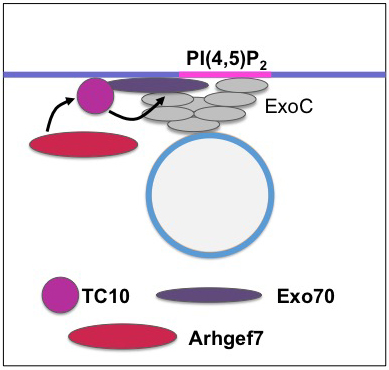
Professor Andreas W. Püschel leads the Molecular Neurobiology research group at the Institute of Integrative Cell Biology and Physiology, University of Münster. His research focuses on understanding the cellular and molecular mechanisms underlying neuronal polarization and migration during cortical development. He maintains active collaborations with multiple research centers including the Cells in Motion Cluster of Excellence and several Collaborative Research Centers. Professor Püschel's research centers on the fundamental processes that govern how neurons establish their polarized structure with distinct axonal and somatodendritic compartments. His work particularly investigates the role of small GTPases, especially Rap1, in regulating intracellular transport processes during neuronal differentiation. His laboratory employs advanced techniques including life cell imaging in dissociated neurons and organotypic slice cultures from embryonic mouse cortex, combined with genetic manipulations through knockdown or knockout approaches. Analysis of Professor Püschel's publication record reveals a consistent focus on neuronal development mechanisms, with particular emphasis on GTPase signaling pathways. His research has established Rap1 GTPases as master regulators of cell polarity in the developing cortex, and his team has identified key molecular players including Arhgef7 and TC10 in regulating membrane dynamics during neuronal polarization. Recent work has expanded into mitochondrial dynamics, vesicle transport modeling, and the connection between neuronal development and neurodevelopmental disorders. Professor Püschel actively mentors several PhD students including Elena Bekker, Trisha Kundu, Federica Olocco, Priyadarshini Ravindran, and Priyadharshini Srikanth. His research is supported by multiple funding sources including the Cells in Motion Cluster of Excellence, CRC 1009 (Breaking Barriers), CRC 1348 (Dynamic Cellular Interfaces), CRC 1459 (Intelligent Matter), and CRC 944 (Physiology and Dynamics of Cellular Microcompartments). The Püschel laboratory operates within the Molecular Neurobiology department at the University of Münster, utilizing advanced imaging techniques to study neuronal development. The team employs a multidisciplinary approach combining molecular biology, live-cell imaging, and optogenetic manipulation to understand the spatiotemporal control of membrane dynamics during neuronal differentiation. Their work has significant implications for understanding neurodevelopmental disorders resulting from defects in intracellular transport and neuronal migration.
Smita Krishnaswamy is an Associate Professor of Genetics and Computer Science at Yale University with joint appointments in both departments. She is affiliated with multiple interdisciplinary programs including the Applied Mathematics Program, Computational Biology and Bioinformatics Program, Yale Center for Biomedical Data Science, Yale Cancer Center, and the Wu Tsai Institute. Her research bridges computational methods development with biomedical applications, focusing on unsupervised machine learning approaches for high-dimensional data analysis. Associate Professor of Genetics, Yale School of Medicine Associate Professor of Computer Science, Yale University Affiliated Faculty, Applied Mathematics Program Affiliated Faculty, Computational Biology and Bioinformatics Member, Yale Center for Biomedical Data Science Member, Yale Cancer Center Member, Wu Tsai Institute Dr. Krishnaswamy's research focuses on developing unsupervised machine learning techniques, particularly manifold learning and deep learning methods, to analyze high-dimensional biomedical data. Her lab creates algorithms for non-linear dimensionality reduction, data geometry learning, denoising, imputation, and inference of multi-granular structures from complex datasets. These methods are applied to diverse data types including single-cell RNA-sequencing, mass cytometry, electronic health records, and connectomic data across multiple biological systems. Her work spans several key application areas including immunology and immunotherapy, cancer research, neuroscience, developmental biology, and health outcomes analysis. The lab employs approaches from geometric deep learning, multiscale graph signal processing, and topological data analysis to extract meaningful biological insights from complex datasets. Recent publications demonstrate the lab's leadership in developing methods for spatial transcriptomics, brain-state trajectory modeling, and organ donation prediction. Excellence in Science Early-Career Investigator Award from FASEB (2022) Yale Cancer Center Class of '61 Cancer Research Award (2025) Dr. Krishnaswamy maintains active collaborations across Yale and secures research funding supporting her work in computational biomedicine. She advises students through multiple programs including Genetics, Computer Science, and the Biological and Biomedical Sciences Graduate Program, fostering interdisciplinary training at the intersection of computation and biomedicine. The Krishnaswamy Lab operates at the forefront of computational biomedicine, developing mathematical approaches that enable new biological discoveries from complex datasets.
Andre Levchenko is the John C. Malone Professor of Biomedical Engineering at Yale University, with secondary appointments in Neurosurgery and affiliations spanning the Yale Cancer Center (Cancer Signaling Networks Program), Systems Biology Institute (Director), Yale Biomedical Imaging Institute, and Program in Neurodevelopment and Regeneration. His lab employs interdisciplinary approaches integrating systems biology, microfluidics, and computational modeling to investigate cellular decision-making. Research focuses on three interconnected themes: Dynamic signaling networks : Decoding VEGF/YAP crosstalk in angiogenesis, NOTCH spatiotemporal patterning, and oscillations in HIF-1α during hypoxia Cancer mechanisms : Ion transport in glioblastoma invasion, metabolic adaptations in tumors, and therapeutic targeting of transcriptional networks Stem cell & developmental engineering : Brain organoid specification using WNT/SHH gradients, mechanobiology of stem cell differentiation, and CRISPR-engineered models Publication analysis reveals consistent emphasis on quantitative approaches to cell signaling (60% of recent work), cancer biophysics (30%), and neurodevelopmental engineering (10%), with frequent use of single-cell analysis, microfluidics, and mathematical modeling. Major scientific recognitions include: Burroughs Wellcome Fund Fellowship (1999-2001) American Asthma Foundation Early Excellence Award (2010) Elected Fellow, American Institute for Medical and Biological Engineering (2013) The Levchenko Lab at Yale's Systems Biology Institute hosts graduate students and postdocs pursuing projects at the interface of engineering, systems biology, and translational medicine. Active collaborations extend to neurosurgeons, oncologists, and stem cell biologists across Yale.
Dr. Angelo Valleriani serves as Group Leader for Stochastic Processes in Complex and Biological Systems at the Max Planck Institute of Colloids and Interfaces in Potsdam, Germany, and coordinates the International Max Planck Research School (IMPRS) on Multiscale Bio-Systems. His research bridges theoretical physics and biological applications with a focus on quantitative modeling of complex biological phenomena. Dr. Valleriani earned his PhD in High Energy Physics from SISSA in Trieste, Italy (1996), following a Laurea Degree in Theoretical Physics from the University of Bologna (1992) with full marks and honors. His academic journey includes Visiting Scientist positions at Max Planck Institutes in Golm and Dresden before becoming a Group Leader in November 2000. His research interests encompass: Stochastic modeling of biological processes RNA biology and translational control mechanisms mRNA and tRNA turnover dynamics Population genetics and evolutionary biology Biostatistical data analysis Dr. Valleriani's recent publications (2022-2024) reveal a strong emphasis on computational approaches to biological problems, particularly in ribosome dynamics, protein synthesis regulation, and cellular remodeling processes. His work demonstrates sophisticated integration of mathematical modeling with experimental biology. He maintains active collaborations with researchers from multiple institutions including the University of Potsdam (Silke Leimkühler, Carsten Beta, Stefanie Barbirz), University of Cambridge (Davide Chiarugi), Weizmann Institute (Ziv Reich, Ruti Kapon), DRFZ Berlin (Ria Baumgrass), and others. The research group actively recruits MSc students from physics, mathematics, engineering, and bioinformatics backgrounds for challenging thesis projects in computational biology and biophysics.
Prof Dr Agnes Flöel is a Professor at the University of Greifswald Medical School, where she leads research at the intersection of cognitive neuroscience, sleep physiology, and brain stimulation. Her work focuses on understanding neural mechanisms underlying memory formation and cognitive decline in aging, with particular emphasis on sleep-related processes and non-invasive brain stimulation techniques. Her research interests center on sleep physiology , cognitive neuroscience , and neurostimulation . Dr. Flöel investigates how slow oscillations, spindles, and delta waves interact during sleep to support memory consolidation, particularly in older adults and those with cognitive impairment. Her work extends to developing interventions combining cognitive training with transcranial direct current stimulation (tDCS) to enhance cognitive function in aging and early Alzheimer's disease. She also contributes to methodological advancements in sleep staging through deep learning approaches and addresses technical challenges in neuroimaging. Dr. Flöel's publication record demonstrates consistent productivity with multiple high-impact papers annually, primarily focused on sleep neuroscience, brain stimulation, and cognitive aging. Her work shows strong collaborative patterns with researchers across Germany, particularly within the SFB 1315 research consortium. Recent publications (2022-2024) increasingly incorporate computational approaches, deep learning, and multimodal neuroimaging to address fundamental questions about neural plasticity and memory. Her research has been supported through the Collaborative Research Center 1315 (SFB 1315) funded by the German Research Foundation, focusing on neuronal circuits in aging. Dr. Flöel serves as principal investigator for multiple clinical trials examining brain stimulation approaches for cognitive enhancement in older adults and those with mild cognitive impairment. Dr. Flöel leads a research group investigating sleep-brain interactions in aging, collaborating closely with computational neuroscientists, neurologists, and psychologists. Her team utilizes multimodal approaches including EEG, MRI, and behavioral assessments to understand neural mechanisms of cognitive decline and potential interventions.