معرفی
Professor Andreas W. Püschel leads the Molecular Neurobiology research group at the Institute of Integrative Cell Biology and Physiology, University of Münster. His research focuses on understanding the cellular and molecular mechanisms underlying neuronal polarization and migration during cortical development. He maintains active collaborations with multiple research centers including the Cells in Motion Cluster of Excellence and several Collaborative Research Centers.
Professor Püschel's research centers on the fundamental processes that govern how neurons establish their polarized structure with distinct axonal and somatodendritic compartments. His work particularly investigates the role of small GTPases, especially Rap1, in regulating intracellular transport processes during neuronal differentiation. His laboratory employs advanced techniques including life cell imaging in dissociated neurons and organotypic slice cultures from embryonic mouse cortex, combined with genetic manipulations through knockdown or knockout approaches.
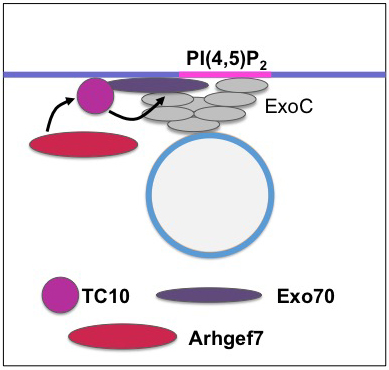
Analysis of Professor Püschel's publication record reveals a consistent focus on neuronal development mechanisms, with particular emphasis on GTPase signaling pathways. His research has established Rap1 GTPases as master regulators of cell polarity in the developing cortex, and his team has identified key molecular players including Arhgef7 and TC10 in regulating membrane dynamics during neuronal polarization. Recent work has expanded into mitochondrial dynamics, vesicle transport modeling, and the connection between neuronal development and neurodevelopmental disorders.
Professor Püschel actively mentors several PhD students including Elena Bekker, Trisha Kundu, Federica Olocco, Priyadarshini Ravindran, and Priyadharshini Srikanth. His research is supported by multiple funding sources including the Cells in Motion Cluster of Excellence, CRC 1009 (Breaking Barriers), CRC 1348 (Dynamic Cellular Interfaces), CRC 1459 (Intelligent Matter), and CRC 944 (Physiology and Dynamics of Cellular Microcompartments).
The Püschel laboratory operates within the Molecular Neurobiology department at the University of Münster, utilizing advanced imaging techniques to study neuronal development. The team employs a multidisciplinary approach combining molecular biology, live-cell imaging, and optogenetic manipulation to understand the spatiotemporal control of membrane dynamics during neuronal differentiation. Their work has significant implications for understanding neurodevelopmental disorders resulting from defects in intracellular transport and neuronal migration.