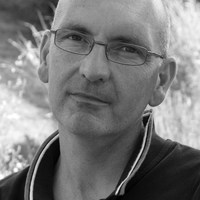
HLEISS Rima is a Teaching Researcher at CESI, specializing in Digital Engineering and Tools . Her work bridges Industry 4.0 , Artificial Intelligence , and Telecommunications . MSc in Signal, Image, and Speech (Telecom ParisTech, 2004) Engineering Degree in Computer Networks and Telecommunications (ENPG, 2001) BSc in Computer Engineering (Lebanese University, 2000) Her research focuses on Industry 4.0 , Additive Manufacturing , and Data Modeling , with applications in IoT , Cloud Computing , and Biomedical Engineering . Recent publications emphasize neuroimaging and machine learning integration. Publications span OFDM modulation , signal processing , and Industry 4.0 challenges, reflecting a multidisciplinary approach. Key collaborations include LINEACT and ENSAM institutions.
Anne-Lise Giraud and Sophie Bouton are researchers at the Hearing Institute (Institut de l’Audition, IdA), a center of the Pasteur Institute in Paris. Anne-Lise Giraud is the Structure Manager of the team focused on Neural Coding and Neuroengineering of Human Speech Functions, while Sophie Bouton is a Permanent Researcher. Their work is centered on understanding the neural basis of speech and language. Their research interests include the neural mechanisms of speech processing, auditory cortical dysfunctions in disorders like dyslexia and autism spectrum disorder (ASD), neural oscillations, brain-machine interfaces for speech restoration, and the genetic underpinnings of auditory processing. They investigate how atypical neural synchrony and oscillatory activity contribute to language impairments and aim to develop therapeutic interventions such as neurofeedback and rhythmic auditory stimulation. Their recent publications reveal a strong focus on using high-resolution EEG to study neural oscillations in children with ASD, the development of brain-machine interfaces, and the integration of semantics and acoustics in speech processing through hierarchical brain rhythms. Their work bridges fundamental neuroscience with translational applications for language disorders. Scientific Awards : No awards were mentioned in the provided text. Anne-Lise Giraud leads a research team with several PhD students and post-doctoral fellows, indicating an active role in mentoring and research supervision. She is the Principal Investigator on multiple funded projects, including RnDys (rhythmic auditory stimulation for dyslexia), GeneSpeech, and a prospective cohort study on ASD. Sophie Bouton is the PI on the project 'Maturation of neuronal oscillations in children.' Their research is supported by grants from organizations like ANR and the Fondation Pour l'Audition. They are key members of the Neural Coding and Neuroengineering of Human Speech Functions team at the Hearing Institute, working alongside other researchers and clinicians on projects related to tinnitus, autism, and speech disorders.
Jaime Sánchez is a Professor of Human-Computer Interaction at the Department of Computer Science, University of Chile, and serves as director of the C5 Center (Center of Computing and Communication for the Construction of Knowledge). He has held visiting positions at Columbia University and Harvard University's Center for Non-Invasive Brain Stimulation. His educational background includes: M.A. (1983) from Columbia University M.Sc. (1984) from Columbia University Ph.D. (1985) from Columbia University Postdoctoral research fellow at MIT Media Lab and Cornell University (1987) Professor Sánchez pioneers multimodal interfaces for blind learners through audio-haptic systems , investigating how 3D sound and tactile feedback enhance cognitive development, spatial memory, and navigation skills. His research spans virtual environments for mental map construction, neuroplasticity in brain adaptation, and game-based learning methodologies. Projects have been implemented across 12+ countries including Chile, the United States, and France, with free software distributed to schools for blind children worldwide. He leads the C5 Center at the University of Chile and collaborates with Harvard University on neuroimaging studies examining brain reorganization during navigation tasks. His work demonstrates how multimodal interfaces trigger compensatory cognitive enhancements in blind users, providing foundations for rehabilitation tools and educational frameworks.
Sinan Haliyo is a Professor at the Institute of Intelligent Systems and Robotics (ISIR), Sorbonne University, Paris, where he leads the 'Multiscale Interactions' research team. His academic career spans over two decades, with significant contributions to robotics, particularly in micromanipulation, haptics, and human-computer interaction. Dr. Haliyo earned his Doctorate from Pierre and Marie Curie University in 2002 with a thesis on "Adhesion forces and dynamic effects for micromanipulation," supervised by Prof. Jean-Claude Guinot. In 2019, he obtained his Habilitation to Direct Research (HDR) from Sorbonne University with the thesis "Multi-Scale Interactions," demonstrating his capacity to lead independent research and supervise doctoral candidates. His research broadly focuses on robotics and interactivity—designing teleoperated robots for specific applications and developing systems that allow operators to perceive what they are controlling through haptic and multimodal interfaces. Starting with microrobotics in the late 1990s, his work has expanded to encompass human-robot interaction, haptics, virtual reality, and human-machine interfaces. His multidisciplinary approach involves collaboration with roboticists, psychologists, neuroscientists, and biologists. Analysis of his recent publications (2023-2025) reveals a strong focus on optical microrobotics, biomedical applications, and haptic interfaces. His team is advancing techniques for precise micro-manipulation using optical tweezers combined with deep learning, developing medical microrobots for applications like biliary procedures and in vitro fertilization, and creating innovative haptic interfaces for surgical training and virtual reality. The research spans multiple disciplines including robotics, biomedical engineering, computer vision, and neuroscience. IROS'09 Best application Mechatronics Journal 2010 Triennal Best paper MARSS 2019 Best Paper World Haptics 2021 Best ToH Short Paper Hon. Ment. ISOT 2021 Best Student Paper INTERACT 2021 IFIP TC13 Pioneers' Award for Best Doctoral Student Paper Dr. Haliyo has supervised 14 theses to completion with 6 currently in progress, representing a total supervision rate of 390% (approximately 60% per thesis on average throughout his career). He has coordinated multiple significant research projects including ANR IOTA (Interactive Optical Tweezers), ANR OptoBots, and 3BIOT (Robotic Optical Tweezers for Biology). His research is funded by Sorbonne University, the Ile-de-France Region, ANR grants, and private companies including Percipio Robotics, Robeauté, and Segula. As leader of the Multiscale Interactions team at ISIR (since January 2019), Dr. Haliyo oversees a research group comprising 4 faculty members, 4 researchers, and 15 PhD students. Previously, he animated the Microrobotics group within the ISIR interaction team (2016-2019) and has been responsible for the ISIR Assisted Micromanipulation Platform since 2015, which serves as a node of the CNRS National Micro-Nanorobotics Platform and recipient of the Labex Robotex.
Fabien Alibart is a Research Officer and Permanent Researcher at the University of Sherbrooke (Canada), associated with the LN2-3IT/CNRS laboratory. His primary focus is on neuromorphic computing, memristive devices, and bio-inspired hardware solutions. He holds a PhD in Thin Film Physics from the University of Picardie Jules Verne (Amiens, France), specializing in optoelectronics and carbon-based devices. His research spans neuromorphic systems, organic electrochemical transistors, and memristive circuits. Key projects include developing iono-electronic materials for brain-inspired computing (IONOS project), cryogenic memristors, and 3D memory architectures. He has led multiple ANR and NSERC grants, focusing on neuromorphic interfaces and energy-efficient computing. Alibart's work intersects material science, electrical engineering, and biology. Notable contributions include memristor-based pattern classification, synaptic plasticity modeling, and neuromorphic hardware integration. His teams have pioneered organic/nanoparticle transistor synapses and developed CMOS-compatible memristive crossbars for analog AI acceleration. Collaborations span institutions like UdeM, IBM Zurich, and the European CHIST-ERA initiative. His lab focuses on advancing bio-interfacing technologies and neuromorphic engineering through multidisciplinary approaches.
Nicolas Roussel is the Director of the Inria research center at the University of Bordeaux, a role he has held since July 2017. Prior to this, he served as an associate professor (Maître de conférences) at Paris-Sud University and a senior researcher (Directeur de recherche) at Inria Lille - Nord Europe. His academic journey includes a PhD in Computer Science from the LRI and postdoctoral stays at GMD Sankt Augustin and the University of Fribourg. Research Interests: His work focuses on Human-Computer Interaction (HCI), with expertise in computer-mediated communication, groupware systems, interactive systems engineering, and tactile/gestural interaction. He explores human interactions with AI systems and augmented reality, emphasizing user-centered design and system latency optimization. He has contributed to major conferences like ACM CHI, ACM UIST, and ACM CSCW, and co-organized events such as the Forum on Tactile and Gestural Interaction and the 2021 PFIA (Artificial Intelligence Platform). He chairs Aerospace Valley’s 'Data Economy and Artificial Intelligence' ecosystem and serves on scientific boards of GIS Albatros and LyRE. Administrative Roles: He holds board positions at institutions like Digital Aquitaine and Cap Sciences, emphasizing technology’s societal impact. His work bridges academia and industry, including collaborations with Inria-Industry Meetings on digital interaction. Labs/Teams: Involved in Inria project teams such as GraphDeco, Potioc, and Castor, focusing on interactive systems and tactile interfaces. His research addresses challenges in latency compensation, gesture-based interaction, and BCI integration with AR systems.
Yves Boubenec is an Associate Professor (maître de conférences) in neuroscience at the École Normale Supérieure (ENS) in Paris, where he is affiliated with the Department of Cognitive Studies and the Perceptual Systems Laboratory. His research focuses on the neural basis of auditory cognition, particularly how attention, learning, and memory interact with auditory processing at the cortical level. He teaches neurophysiology of auditory perception at ENS through the IMaLiS and Cogmaster programs. His research spans three main conceptual angles: Attention , examining how top-down attention modulates auditory processing; Learning , studying how exposure to natural sounds shapes auditory perception across multiple time scales; and Memory , investigating how exposure to sounds leaves long-term traces in auditory cortex. He employs mesoscopic-scale neural recording techniques including electrophysiological recordings of neuronal populations and large-scale functional UltraSound (fUS) neuroimaging. Boubenec's recent publications (2023-2024) reveal a strong focus on speech processing, task engagement effects on auditory cortex, evidence integration across sensory modalities, and the neural mechanisms underlying categorical perception. His work frequently involves cross-species comparisons (particularly using ferrets) and combines experimental approaches with theoretical modeling. His laboratory offers multiple internship opportunities for students at various levels (L3, M1, M2, DENS) focusing on hemogenetic imaging, cross-species comparison of rhythm perception, and learning dynamics in biological and artificial networks. Boubenec collaborates extensively with researchers including Shihab Shamma, Srdjan Ostojic, and various interdisciplinary teams across neuroscience, acoustics, and computational modeling fields. His work bridges fundamental neuroscience with applications in speech processing and artificial intelligence.
Romain Grandchamp is a Researcher at Université Grenoble Alpes , affiliated with the Laboratoire de Psychologie et Neurosciences Cognitives (LPNC) and the Consciousness, Memory and MetaCognition (CoMMet) team. His work bridges neuroscience , brain-computer interfaces (BCI) , and cognitive modeling to study mental states , mind wandering , and inner speech . PhD in EEG and BCI (2012, Université Paul Sabatier) Developed tools like NeuroTRIP and Brainarium for BCI training and immersive neuroeducation Focus on electromyographic correlates of rumination, ICA decomposition , and neurofeedback applications Prior research includes neuroplasticity in meditation practitioners and verbal rumination mechanisms. Collaborations span institutions in France, Australia, Netherlands, and Morocco.
Vincent Guérin is a Doctor of Contemporary History and SHS researcher at the Gérontopôle des Pays de la Loire, where he coordinates the 'hearing and seniors' consortium. He serves as an associate researcher at the psychopathology and psychoanalysis research laboratory (RPPpsy) at the Catholic University of the West in Angers. His academic appointments include teaching positions at the Catholic University of the West (clinical psychology and applied mathematics), University of Angers (medicine, criminology, Esthua), ESSCA (Paris/Angers), and ESM Saint-Cyr. His research spans multiple interdisciplinary fields with a focus on the history of psychiatry (19th-21st century), trans/posthumanist concepts, and the relationship between artificial intelligence and society. He has developed significant expertise in the history of the anticipation of crime and deviance, augmented soldier concepts, senior volunteering, and aging studies. His work often explores the intersection of technology, ethics, and human experience, particularly examining how technological mutations shape social regulations and human behavior. Guérin's publication record demonstrates consistent scholarly output across multiple disciplines. His recent work shows a growing focus on brain-machine interfaces, cyberattacks, and the ethical implications of human enhancement technologies, particularly in military contexts. He has also conducted important research on senior volunteering, aging populations, and the social implications of AI. His publications appear in both French and international journals, reflecting his ability to bridge academic communities. As an active researcher, Guérin coordinates multiple research programs including the 'hearing and seniors' consortium (since 2024), studies on 'real utopia' (since 2024), and research on the 'augmented soldier concept' (since 2018). He has secured funding from various sources including Gérontopôle des Pays de la Loire, Malakoff Humanis, and France Alzheimer for his research on aging populations and technological impacts on society. His teaching portfolio is equally diverse, covering artificial intelligence, big data, augmented bodies, history of psychiatry, transhumanism, and geopolitics of climate change across multiple institutions and academic levels. This breadth of teaching reflects his interdisciplinary approach to understanding the complex relationships between technology, society, and human experience.
Emmanuel Guigon is a CNRS Research Fellow at Sorbonne University , affiliated with the IRIS team. His primary research focuses on computational neuroscience of motor control , exploring principles like optimal feedback control and sensorimotor integration. He is based at ISIR (Institute des Systèmes Intelligents et de Robotique), Campus Pierre et Marie Curie, Paris, and can be contacted at emmanuel.guigon@sorbonne-universite.fr. Guigon's research addresses the neural mechanisms underlying movement control , particularly how the brain manages kinematic redundancy and optimizes motor commands. His work spans biomechanics, robotics, and computational modeling, proposing unified frameworks for posture-movement coordination and explaining phenomena like Fitts' law and motor equivalence. Applications include humanoid robot control and brain-robot interfaces. His scientific contributions are evident in publications in journals such as PLoS Computational Biology , Journal of Neurophysiology , and Biophysical Journal . While no explicit awards or grants are listed, his models have been highlighted in F1000 Biology. Guigon's collaborations include researchers like Agnès Roby-Brami, Pierre Baraduc, and Nathanael Jarrasse.
Antoine CHAILLET is a Full Professor at CentraleSupélec and a junior member of the Institut Universitaire de France. He holds a Ph.D. in Control Theory from Université Paris Sud 11-L2S (2006) and has held academic positions including Associate Professor at L2S-Univ. Paris Sud 11-Supélec from 2007–2016. His research focuses on control theory applications in neuroscience , stability analysis of nonlinear systems , and time-delay systems . He has conducted postdoctoral work at the Centro di Ricerca Piaggio, Pisa (2006–2007) and held visiting scholar positions at the University of Twente and INRIA Sophia Antipolis. His work spans theoretical advancements in control systems and practical applications in biomedical engineering, including closed-loop stimulation strategies for neurological disorders like Parkinson’s disease. Education: B.Sc., ESIEE Amiens (2002) M.Sc., Control Engineering, Université Paris Sud 11 (2003) Ph.D., Control Theory, Université Paris Sud 11-L2S (2006) Research interests include: Neural field control and stabilization Time-delay systems stability analysis Adaptive control algorithms for biomedical systems Model reduction techniques for dynamical systems Awards: Junior Member, Institut Universitaire de France Marie-Curie Scholarship (2004) Key contributions include theoretical frameworks for Input-to-State Stability (ISS) in time-delay systems and experimental validations of closed-loop brain stimulation strategies. He collaborates with interdisciplinary teams in robotics, neuroscience, and medical engineering. His research is supported by institutions like EECI (European Embedded Control Institute) and the French National Research Agency.
Nisrine Jrad is a Lecturer (HDR) at the Catholic University of the West (Angers), serving as Deputy Director of the Institute of Applied Mathematics (IMA) and Vice-Dean for Professionalization. She is affiliated with the Angevin Systems Engineering Research Laboratory (EA7315). Her research focuses on Machine Learning, Deep Learning, and Signal Processing, with applications in biomedical domains like epilepsy, EEG signal analysis, and Brain-Machine Interfaces. Education: PhD in Machine Learning, University of Technology of Troyes (2009) Research Master, National School of Electricity and Mechanics (ENSEM), Nancy (2006) Electrical-Electronics Engineering Diploma, Lebanese University (2005) Research Interests: Supervised/unsupervised learning, deep clustering, EEG signal processing, epilepsy biomarkers, and high-frequency oscillations analysis. She has pioneered methods for seizure detection, cross-subject generalization, and medical data analysis using advanced neural networks and complexity measures. Teaching: Algebra, Data Analysis, Linear Models, and Automatic Classification across academic levels (Bac+1 to Bac+5). Students: Supervised PhD/MSc students include Rayane Chmaycem (spatio-temporal GNNs), Gaëlle Milon-Harnois (scalp HFO detection), and Elie Karam (graph-based clustering). Labs/Teams: Leads research in MAI (Medical Applied Informatics) team and collaborates with interdisciplinary groups on ovarian cancer transcriptomics and environmental toxicology.
Adrien MERLINI is a Researcher at IMT Atlantique's Microwave Department in Brest, France. His work focuses on computational electromagnetics, integral equation methods, and neuroimaging applications. He specializes in developing numerical techniques for low-to-high-frequency electromagnetic modeling, preconditioning strategies for integral equations, and machine learning-enhanced solutions for inverse problems. His research bridges fundamental theory and applied engineering, addressing challenges in medical imaging, material characterization, and high-performance computing. Key areas of expertise include: High-frequency spectral analysis of boundary integral operators Stabilized formulations for low-frequency electromagnetic simulations Supervised learning approaches for electrical source imaging Quasi-Helmholtz projector-based preconditioning techniques Fast direct solvers for integral equations His innovations in numerical methods have advanced applications in brain-computer interfaces, microwave-based medical imaging, and terahertz dosimetry. Collaborative projects include developing the simBCI framework for EEG simulation and the Pythran compiler for accelerating scientific Python codes. Research contributions span over 30 peer-reviewed articles since 2015, with recent emphases on conditioning analysis of electromagnetic integral equations and regularization strategies for neuroimaging inverse problems.
Bernard Bayle is a Professor at the University of Strasbourg and a member of the ICube Laboratory within the Robotics, Data Science, and Healthcare Technologies research group, which he headed from 2018 to 2023. He leads the HealthTech Interdisciplinary Institute that combines an interdisciplinary research cluster with a graduate school. His research focuses on the design, modeling, and control of robotic systems, particularly for healthcare applications including physical human-robot interactions and robot-assisted medical interventions. He teaches courses in Mechatronics and Haptics, Mobile Robotics, and Robot-Assisted Interventions at Télécom Physique Strasbourg. His research has resulted in over 100 scientific publications, 33 journal papers in top robotics and engineering venues, and 7 patent applications. His research primarily explores robotics applications in medical contexts, including surgical assistance, rehabilitation technologies, and diagnostic systems. Recent work focuses on haptic feedback systems, continuum robots, and autonomous medical intervention platforms. He has supervised 19 PhD students and led 5 research projects as principal investigator while participating in 11 others. His lab focuses on developing robotic solutions for healthcare challenges through interdisciplinary collaboration.
Brice Bathellier is a Research Director and team leader at the Institut Pasteur in Paris, where he heads the Neural Code in the Auditory System group within the Hearing Institute – Pasteur Institute Center . His research integrates advanced experimental and computational approaches to investigate auditory perception and neural coding in the mammalian brain. He is also a co-organizer of the international Pasteur Course Hearing: from mechanisms to restoration technologies (HeaR) , aimed at Master’s and PhD students, clinicians, and hearing professionals. His research interests lie at the intersection of systems neuroscience , neurophysiology , and sensory systems , with a primary focus on the auditory system. His team uses two-photon calcium imaging , multichannel electrophysiology , optogenetics , and behavioral analysis to study how sound representations are formed, manipulated, and integrated with other sensory modalities in the brain. Key projects include decoding nonlinear operations in auditory perception, generating artificial auditory percepts via optogenetic stimulation, modeling reinforcement learning in sensory discrimination, and exploring multisensory interactions between auditory, visual, tactile, and olfactory systems. The team's recent publications reveal a strong interdisciplinary trend, combining in vivo neuroscience , computational modeling , and behavioral neuroscience . Themes include neural coding of sensory identity, cortical dynamics during learning and memory, cross-modal integration, and the impact of network architecture on perception. The work spans molecular, cellular, and systems levels, with applications in understanding brain function and potential neuroprosthetic technologies. Brice Bathellier supervises several PhD students and postdoctoral researchers, indicating an active mentoring role. His team is part of broader institutional initiatives on brain connectivity and neurodegenerative diseases, suggesting involvement in collaborative, cross-functional research projects. While specific grant details are not mentioned, the scope and technical sophistication of the work imply significant research funding. The team is embedded within the Hearing Institute, a multidisciplinary center focused on progressive sensory deficits, pathophysiology, and therapy.