معرفی
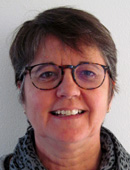
Vincent Guérin is a Doctor of Contemporary History and SHS researcher at the Gérontopôle des Pays de la Loire, where he coordinates the 'hearing and seniors' consortium. He serves as an associate researcher at the psychopathology and psychoanalysis research laboratory (RPPpsy) at the Catholic University of the West in Angers. His academic appointments include teaching positions at the Catholic University of the West (clinical psychology and applied mathematics), University of Angers (medicine, criminology, Esthua), ESSCA (Paris/Angers), and ESM Saint-Cyr.
His research spans multiple interdisciplinary fields with a focus on the history of psychiatry (19th-21st century), trans/posthumanist concepts, and the relationship between artificial intelligence and society. He has developed significant expertise in the history of the anticipation of crime and deviance, augmented soldier concepts, senior volunteering, and aging studies. His work often explores the intersection of technology, ethics, and human experience, particularly examining how technological mutations shape social regulations and human behavior.
Guérin's publication record demonstrates consistent scholarly output across multiple disciplines. His recent work shows a growing focus on brain-machine interfaces, cyberattacks, and the ethical implications of human enhancement technologies, particularly in military contexts. He has also conducted important research on senior volunteering, aging populations, and the social implications of AI. His publications appear in both French and international journals, reflecting his ability to bridge academic communities.
As an active researcher, Guérin coordinates multiple research programs including the 'hearing and seniors' consortium (since 2024), studies on 'real utopia' (since 2024), and research on the 'augmented soldier concept' (since 2018). He has secured funding from various sources including Gérontopôle des Pays de la Loire, Malakoff Humanis, and France Alzheimer for his research on aging populations and technological impacts on society.
His teaching portfolio is equally diverse, covering artificial intelligence, big data, augmented bodies, history of psychiatry, transhumanism, and geopolitics of climate change across multiple institutions and academic levels. This breadth of teaching reflects his interdisciplinary approach to understanding the complex relationships between technology, society, and human experience.