Professor Omid Kavehei is a Professor of Intelligent Microsystems in the Faculty of Engineering at the University of Sydney, serving as Deputy Head of the School of Biomedical Engineering. Previously, he held roles as a Research Fellow at the University of Melbourne and Lecturer at RMIT University. His research focuses on biomedical microsystems, nanotechnology, and brain-inspired hardware for healthcare applications, particularly epilepsy monitoring and seizure prediction. Education: PhD (specific institution not explicitly stated) His work bridges nanoelectronics and healthcare, aiming to develop low-power, brain-inspired devices for sensory perception and medical diagnostics. Key interests include neuromorphic engineering, wearable sensors, and AI-driven medical systems. Awards include the Ramaciotti Biomedical Research Award (2021), Microsoft AI for Accessibility Grant (2019), and multiple teaching/research excellence awards from the University of Sydney. His recent work explores neuromorphic cytometry for cell analysis, edge AI for ECG/EEG diagnostics, and closed-loop neurostimulation systems. Collaborations include the Sydney Nano Institute, Brain and Mind Centre, and industry partners like Microsoft. Current research students are advancing topics like bio-inspired algorithms for seizure detection, hardware-friendly machine learning models, and flexible sensor systems for aquatic environments. Grants include funding for neurophysiology platforms, quantum sensors, and semiconductor design. Labs/teams: Involved in the Centre for Drug Discovery Innovation and collaborations across engineering, neuroscience, and clinical domains.
Associate Professor Kai-Hsiang Chuang is a Principal Research Fellow at the School of Biomedical Sciences within the Faculty of Health, Medicine and Behavioural Sciences at the University of Queensland. He is also affiliated with the Queensland Brain Institute and the Centre for Advanced Imaging. His research focuses on understanding brain networks, developing advanced imaging techniques, and translating these findings to improve diagnosis and intervention for neurological disorders. Dr. Chuang received his Ph.D. in electrical and biomedical engineering from the National Taiwan University, Taiwan, in 2001. His doctoral research focused on improving the detection of brain activity using functional magnetic resonance imaging (fMRI). Ph.D. in Electrical and Biomedical Engineering, National Taiwan University (2001) Dr. Chuang's research spans multiple areas of brain imaging and neuroscience. His primary focus is on functional brain mapping , where he develops in vivo imaging techniques including functional MRI and multimodal integration with optogenetics, calcium imaging, and electrophysiology. He applies these techniques in both humans and animal models to improve understanding and intervention of brain function, disease processes, and treatment effects. Another key area is brain networks in learning, memory, and dementia . His work explores how brain network wiring and activity underpin cognition and behavior, with particular focus on understanding the causal relationship between brain network activity and memory formation. He develops techniques to modulate behavior by manipulating brain network activity. More recently, Dr. Chuang has expanded into brain waste clearance research, studying the brain's fluid drainage system that clears waste and toxic molecules like amyloid plaques. His lab is developing imaging techniques to track this system's function and understand its regulatory mechanisms, which could provide new treatment targets for dementia. Analysis of Dr. Chuang's recent publications reveals a strong focus on advancing functional MRI techniques for brain network analysis, particularly in rodent models. His work consistently bridges basic neuroscience with clinical applications, especially in understanding memory formation and dementia. A notable trend is the development of multimodal approaches that combine fMRI with optogenetics, calcium imaging, and electrophysiology to establish causal relationships in brain networks. His research increasingly addresses the translation of preclinical findings to human applications, with growing emphasis on Alzheimer's disease mechanisms and potential interventions. Dr. Chuang serves on the editorial boards of multiple prestigious journals including Frontiers in Neuroscience: Brain Imaging Methods , Imaging Neuroscience , and Scientific Reports , reflecting his standing in the field. Editorial Board Member, Frontiers in Neuroscience: Brain Imaging Methods Editorial Board Member, Imaging Neuroscience Editorial Board Member, Scientific Reports Dr. Chuang is actively involved in research supervision, currently serving as Principal Advisor for one PhD student working on "Developing imaging and neuro-technologies for decoding memory formation" and Associate Advisor for two other PhD projects. He has successfully completed supervision of three PhD students on topics related to resting-state networks, memory consolidation, and functional MRI. ARC Discovery Projects (2024-2028): "Decoding the brain network of memory formation" ARC Training Centre for Innovation in Biomedical Imaging Technology (2017-2024) NHMRC-NIH BRAIN Initiative Collaborative Research Grants (2016-2023) Universities Australia - Germany Joint Research Co-operation Scheme (2017-2018) Mater Medical Research Institute Limited grant for mindfulness-based cognitive therapy research (2017-2020) Dr. Chuang leads the Functional and Molecular Neuroimaging Group at the Queensland Brain Institute. His laboratory focuses on understanding the functional connectome of the brain and developing functional and molecular imaging techniques to study brain connectivity associated with behavior. The group has developed various MRI techniques to track neuronal connections, map large-scale brain synchrony, and quantify cerebral blood flow and metabolism in vivo. His research team collaborates extensively with other experts at UQ and internationally, including collaborations with Associate Professor Darryl Eyles, Professor Jürgen Götz, Professor Tianzi Jiang, Dr. Fatima Nasrallah, Professor Linda J. Richards, Professor Pankaj Sah, Professor Elizabeth Coulson, Dr. Patricio Opazo, Professor Feng Liu, and Professor Markus Barth.
Associate Professor Socrates Dokos is Deputy Head of the Graduate School of Biomedical Engineering at UNSW Sydney. His research focuses on computational modeling of electrical and mechanical properties in excitable tissues, with over 160 publications and a sole-authored textbook on Modelling Organs, Tissues, Cells and Devices . He leads interdisciplinary work combining computational modeling, systems identification, and experimental electrophysiology. Current IEEE EMBC Editor for Computational Systems & Synthetic Biology Member of EMBS Technical Committee on Therapeutic Systems and Technologies Key research areas involve Cardiac electrical and mechanical function modeling Retinal neural stimulation simulations Electroconvulsive therapy (ECT) optimization Biomechanical modeling of tissues and devices Parameter optimization for ionic cell models Cardiovascular-rotary blood pump interactions His recent publications demonstrate expertise in multi-scale biological modeling, cardiac hemodynamics, retinal prosthetics, and therapeutic neuromodulation techniques. He actively engages in developing standards for the Modeling Markup Language (MML) framework. Contact: Room 506, Samuels Building (F25), UNSW Sydney. Email: s.dokos@unsw.edu.au . ORCID: 0000-0002-7399-2712
Dr. Avinash Singh is a Senior Lecturer at the School of Computer Science at the University of Technology Sydney (UTS), Australia. He serves as co-chair of the IEEE Neuroethics Framework for the Workplace, sponsored by IEEE Brain, and is a member of the IEEE Standards Committee on Unifying Brain-Computer Interfaces (BCI). He also serves as an expert advisor for UNICEF and The Centre of Neurotechnology and Law, UK. Dr. Singh completed his PhD in Computer Science in 2019 at UTS, collaborating with the Technical University of Berlin, Germany, the University of California San Diego, USA, and the US Army Research Lab. Prior to his doctorate, he earned a Master's in Software Systems from Birla Institute of Technology and Science Pilani, India, and earlier degrees in Computer Science and Mathematics from Indian institutions. Working at the intersection of machine learning, cognitive neuroscience, and mixed-reality, Dr. Singh focuses on designing and developing real-world neuroadaptive BCI systems. His research integrates AI technologies with cognitive neuroscience to explore cognitive functions, discover relationships between brain dynamics, evaluate everyday interactions, and develop robust next-generation neuroadaptive BCIs. His work spans areas including neuroadaptive BCI applications for improving interpersonal communication, sensory augmentation for blind individuals, and dream reconstruction from brain signals. Analysis of Dr. Singh's recent publications reveals a consistent focus on developing novel EEG signal processing techniques, creating neuroadaptive interfaces, and applying BCI technology to real-world problems. His work shows increasing integration of deep learning with neuroscience, particularly in the context of cognitive conflict detection, spatial navigation, and assistive technologies for the visually impaired. The research demonstrates strong interdisciplinary connections across computer science, neuroscience, and human-computer interaction. Google TensorFlow Faculty Award (2021) Dr. Singh actively supervises PhD students and has received multiple research grants, including ARC Linkage Projects and NHMRC Ideas Grants. His funded research spans neuro-AI for personalized image generation, sensory augmentation for blind individuals, and ethical frameworks for BCI technology. He leads the UTSxDream Recording project (formerly DreamMachine) and collaborates with international institutions on BCI standardization efforts. Dr. Singh founded the India Future Society, a think tank focused on transhumanism, and actively advocates for the ethical development of neurotechnology. His work bridges academic research with practical applications in assistive technology, human-robot collaboration, and spatial navigation systems.
Dr. Yann Quide is a Research Fellow at UNSW School of Psychology and an Affiliated Scientist at Neuroscience Research Australia (NeuRA) Centre for Pain IMPACT. He leads the Neuroimaging, Neurobiology and Mental Health Program within the UNSW NeuroRecovery Research Hub and founded the ENIGMA-Chronic Pain working group, establishing himself as a prominent researcher in the intersection of neuroscience, mental health, and chronic pain. PhD Neuroscience, Université de Tours (France), 2014 MSc Neuroscience, Cognition and Behaviour, Université Paul Sabatier Toulouse III (France), 2007 BSc Cell Biology and Animal Physiology, Université de Tours (France), 2004 Dr. Quide's research focuses on understanding the role of stress and trauma in the development of physical and mental health conditions, with particular expertise in posttraumatic stress disorder, chronic pain mechanisms, and neurobiological alterations. His work integrates functional neuroimaging, structural brain analysis, and clinical interventions to explore how childhood trauma exposure impacts inflammatory responses and stress systems in psychiatric disorders. His extensive publication record reveals a strong emphasis on large-scale collaborative neuroscience through the ENIGMA consortium, with research spanning PTSD neurobiology, chronic pain mechanisms, schizophrenia spectrum disorders, and innovative neuromodulation approaches. His work consistently bridges neuroimaging findings with clinical applications, particularly in developing digital interventions for pain management. 2023: Biological Psychiatry Australia (BPA) – Best Research Paper Award 2018: Biological Psychiatry Australia (BPA) – Neuronal Signalling Award for 2nd Best Abstract 2018: NeuRA Carer Travel Award 2018: Paxinos Prize for best paper published by a NeuRA postdoctoral researcher 2010-2013: Postgraduate scholarship from the French Ministry for Higher Education and Research 2008: Travel fellowship from the France-Quebec Youth Office Dr. Quide has secured significant research funding as Chief or Associate Investigator, including an NHMRC MRFF grant of over $2.2 million for the NeuRoStiM Trial investigating brain-computer interface neuromodulation for spinal cord injury neuropathic pain. His supervision interests span functional neuroimaging, chronic pain, childhood trauma, schizophrenia, bipolar disorder, and inflammation, reflecting his multidisciplinary approach to mental health research. As founder and chair of the ENIGMA-Chronic Pain working group, Dr. Quide has established a major international collaborative network focused on identifying brain correlates of chronic pain through large-scale neuroimaging data analysis across multiple institutions worldwide.
Professor Gregg Suaning is a leading academic in Biomedical Engineering at the University of Sydney, affiliated with the School of Biomedical Engineering, The University of Sydney Nano Institute, and the Brain and Mind Centre. He holds a PhD from UNSW and has over 25 years of experience in implantable neuroprosthetics, focusing on restoring sensory functions for the blind and deaf. His work spans academic and industry roles, including contributions to Cochlear's cochlear implant innovations and pioneering visual prosthetic research. Education: PhD (UNSW, 2003), MSc and BSc (California State University, 1986-1988). Research interests center on developing implantable bionics to restore vision and hearing. Notable projects include the Phoenix 99 suprachoroidal visual prosthesis and facial nerve paralysis interventions. He has authored over 150 peer-reviewed papers and secured $60M+ in research funding. Awards include the Bartimaeus Award for contributions to the blind community and multiple innovation awards. He leads IEEE's Engineering in Medicine and Biology Society committees and holds senior IEEE membership. Current projects focus on facial nerve paralysis treatments, high-density micro-electrode arrays, and improving cochlear implant efficacy. His lab collaborates with clinical partners to advance biocompatible neural interfaces and prosthetic systems.
Marc Carmichael is an Associate Professor at the University of Technology Sydney (UTS), School of Mechanical and Mechatronic Engineering. He serves as Director of Teaching and Student Engagement at the UTS Robotics Institute (UTS:RI) and leads the UTS:RI human-robot interaction (HRI) lab. With expertise in physical human-robot collaboration, he has developed several novel robotic systems addressing real-world problems across various industries. Dr. Carmichael received his B.Eng. in Mechanical and Mechatronic Engineering (2008) and PhD in Robotics (2013) from UTS. He joined the UTS Centre for Autonomous Systems as a Lecturer in 2016, was promoted to Senior Lecturer in 2019, and holds the title of Associate Professor. His educational background and career progression reflect his deep commitment to robotics research and education. His research focuses on robotic systems that provide physical assistance to users during laborious activities, enabling effective human-robot collaboration. His work spans collaborative robotics (cobots), assistive robots, robotic rehabilitation, robot kinematics and control, and robot system design. He specializes in developing systems where humans and robots work together physically to accomplish tasks, particularly in industrial settings and for assistive applications. An analysis of his recent publications reveals a strong emphasis on learning from demonstration techniques, human-robot trust modeling, cognitive conflict detection during collaboration, and practical implementation of cobots in industrial settings. His work increasingly integrates machine learning with physical human-robot interaction, focusing on making robotic systems more adaptable, intuitive, and responsive to human needs. Australia's Most Innovative Engineers by Engineers Australia (EA) in 2018 Dr. Carmichael actively supervises research students and leads multiple funded research projects. His grants portfolio includes collaborations with NOKIA, OMRON, NSW Centre for Work Health and Safety, Rookwood General Cemetery, and the Australian Cobotics Centre. He has secured funding for projects including 'Physical human-robot interaction,' '5G Connected Cobots,' 'ARC Training Centre for Collaborative Robotics in Advanced Manufacturing,' and 'Next-Generation Intelligent Robotic Mobility Aid for Vision Impaired People.' As Director of Teaching and Student Engagement at the UTS Robotics Institute, he champions educational initiatives including undergraduate engineering subjects and industry-facing micro-credentials. His leadership in the HRI lab fosters innovation in human-robot teaming, with applications spanning industrial automation, assistive technology, and rehabilitation.
Professor Kay Double is a member of the Brain and Mind Centre and the Theme of Neuroscience within the School of Medical Sciences at the University of Sydney. Her research focuses on the interplay between neuropathological findings and quantitative neurochemistry, particularly investigating disease mechanisms in Parkinson’s disease. She has been funded by prestigious fellowships including the Alexander von Humboldt Foundation and consecutive Australian Research Fellowships. Her work challenges previous dogma about neuromelanin’s role in Parkinson’s, demonstrating its neuroprotective function in healthy cells and its dysregulation in disease contexts. Her current research projects explore copper dyshomeostasis and SOD1 proteinopathy in Parkinson’s and ALS, emphasizing translational research applications. Collaborations include interdisciplinary teams working on molecular pathways, diagnostic tools, and therapeutic strategies. Key approaches in her work include aetiological studies, cellular metallation analysis, and 3D neurochemical imaging. Scientific Awards: Alexander von Humboldt Research Fellowship (Germany) Australian Research Fellowships Advising and Grants: Professor Double advises current PhD student Anne LI. She has secured grants from organizations like the National Health and Medical Research Council (NHMRC), Motor Neurone Disease Research Institute of Australia, and the University of Sydney. Her grants include projects on SOD1 assays, copper pathways, and Parkinson’s diagnostics. Labs/Teams: She is part of the Brain and Mind Centre, collaborating with researchers such as Dr. Hare, Dr. Trist, and Dr. Genoud on projects involving metal-binding proteins, neurodegenerative mechanisms, and translational neuroscience.
Dr T. Thang Vo-Doan is a Lecturer at the University of Queensland in the School of Mechanical & Mining Engineering . He directs the UQ Biorobotics Lab and serves as an affiliate of both the Future Autonomous Systems and Technologies and the Queensland Brain Institute . PhD in Mechanical Engineering, Nanyang Technological University (2016) M.Eng. in Manufacturing Engineering, Ho Chi Minh City University of Technology (2010) B.Eng. in Mechanical Engineering, Ho Chi Minh City University of Technology (2008) His research focuses on biohybrid robotics , integrating biological systems with technology through cyborg insects , bio-inspired robotics , and fast lock-on tracking systems. He explores insect biomechanics and brain imaging in untethered insects , developing platforms for search-and-rescue missions and environmental monitoring. Recent work trends include: 2025: On-demand climbing control for cyborg beetles 2024: High-resolution insect tracking and soft textile muscles 2023: Intelligent insect–computer hybrid robots 2022: Autonomous navigation and robotic leg design 2018: Ultralightweight living robots Scientific honors: Human Frontier Science Program Cross-disciplinary Fellowship (2019-2022) He supervises projects on: Insect-machine hybrid robots Insect-inspired robotics Fast lock-on tracking Insect locomotion biomechanics Current grants include: NHMRC IDEAS Grant (2025-2028): Infrared and AI for Ross River virus surveillance Queensland Corrective Services Grant (2024-2027): Wastewater drug misuse analysis
Dr. Sherif Haggag serves as the Director of Teaching Operations and Course Advisor in the Department of Computer Science at the School of Computer and Mathematical Sciences, Faculty of Sciences, Engineering and Technology, University of Adelaide. His research focuses on human-centered aspects of software engineering and cybersecurity, with particular emphasis on: Human-centered software engineering and Adaptive User Interfaces Human factors and social engineering in Cybersecurity Persistence of the privacy Paradox and Cybersecurity behavior Digital health and smart software systems Domain-specific Visual Languages and Model-driven Engineering Smart home technologies and Digital Enhanced Living Agile methods (Scrum, SAFe, Kanban, Lean, large-scale agile) Human ergonomics using Sensor and depth cameras BCI applications Socio-technical aspects of Cybersecurity Dr. Haggag's work centers on addressing how software engineering can better account for diverse human characteristics including personality, gender, ethnicity, cultural backgrounds, emotional reactions, age, motivation, values, hidden biases, and physical & mental challenges. He also investigates social aspects related to collaboration, teamwork, leadership, and management. Dr. Haggag is eligible to supervise Master's and PhD students, though he notes he has limited capacity for supervision. He encourages prospective students to contact him to discuss availability and mentions that he enjoys 'thinking out of the box' through team brainstorming approaches.
Dr. Blake Saurels is a Postdoctoral Research Fellow at the School of Psychology within the Faculty of Health, Medicine and Behavioural Sciences at The University of Queensland. He completed his PhD in Psychology at UQ in 2022 with a thesis titled 'The perceptual and neural consequences of different types of prediction'. His educational background includes a Bachelor (Honours) of Psychology with First Class Honors (Hons Class 1A) from The University of Queensland. Dr. Saurels' research focuses on visual perception, neural correlates of vision, and cognitive neuroscience. His work examines predictive processing in the brain, face recognition mechanisms, binocular rivalry phenomena, and visual imagery. His recent publications reveal a strong interest in how the brain processes visual information, particularly regarding face pareidolia, neural prediction errors, and the relationship between visual imagery and perception. Analysis of his 15 most recent publications shows consistent exploration of neural and perceptual mechanisms related to prediction, visual processing, and imagery. His work frequently employs EEG methodology and experimental paradigms to examine how expectations shape perception and neural responses. Dr. Saurels is currently available for supervision and serves as an Associate Advisor for a PhD project titled 'The Neural Encoding of Naturalistic Faces for Social Perception,' working alongside Dr. Amanda Robinson, Associate Professor Alan Pegna, and Associate Professor Jess Taubert.
Dr. Cesar L. Moreno is a Postdoctoral Research Associate and Dr. John and Anne Chong Genome Editing and Stem Cell Research Fellow at the School of Life and Environmental Sciences, The University of Sydney, with an adjunct appointment as Associate Lecturer at the Kirby Institute, University of New South Wales. His work focuses on developing functional genomic tools for disease modeling using stem cells and mouse models. Education: PhD in Neuroscience from Icahn School of Medicine at Mount Sinai (2015) Postdoctoral training at Gandy Lab and New York Stem Cell Foundation (2015-2017) Research at UQ-StemCARE Centre, University of Queensland (until 2020) Dr. Moreno's research centers on CRISPR-based genetic screens in stem cells to investigate diseases like COVID-19 and biological processes including neural development and ageing. He integrates functional genomic and epigenomic approaches to uncover molecular pathways in neurodegenerative disorders, metabolic diseases, and viral pathologies, with emphasis on translating findings into therapeutic strategies. His 15 most recent publications reveal a strong trajectory in genome editing technologies, stem cell disease modeling, and virology, particularly SARS-CoV-2 research. Key themes include CRISPR screening innovations, Alzheimer's disease mechanisms using iPSC models, metabolic regulation, and neuroinflammation, demonstrating consistent interdisciplinary collaboration. Scientific Awards: Ruth L. Kirschstein National Research Service Awards for Individual Predoctoral Fellows F31 (2011-2015) Travel Scholarship for Aging and Diseases of Aging Keystone Symposium, Tokyo, Japan (2012) Dr. Moreno currently supervises two research students on dementia-related projects and secured a 2022 NHMRC Ideas Grant for the "UNIVERSAL NEUROPHOTONIC INTERFACE" project. He serves as a member of the Charles Perkins Centre and leads four major research initiatives spanning CRISPR barcoding, SARS-CoV-2 pathology, circadian rhythms in brain development, and neurophotonic stem cell models.
Adjunct Professor Andrew Bradley is affiliated with Queensland University of Technology (QUT), where he serves as the Associate Dean (Research) for the Science and Engineering Faculty. He holds positions in the Faculty of Engineering and School of Electrical Engineering & Robotics at QUT. Bradley has a PhD from the University of Queensland and extensive industry experience, including roles as Chief Technology Officer at Ausonex Pty Ltd and Principal Biomedical Engineer at Maxwell MRI. His expertise spans biomedical and electrical engineering, computing science, and communications technology. His research focuses on computer-aided diagnosis (CAD) systems in medical imaging, machine learning, medical device design, and statistical pattern recognition. He has contributed to projects involving deep brain stimulation, artificial hearts, neonatal hearing screening, and cancer diagnosis imaging. His work bridges academia and industry, emphasizing commercially oriented solutions while maintaining a strong publication record. Bradley has published over 140 peer-reviewed papers and holds 20 patents across multiple regions. His research has garnered over 8,400 citations with an h-index of 35. He has secured $6M+ in competitive grants and supported startups raising $4M in venture capital. His awards include the ARC Future Fellowship and Fellow of Engineers Australia. He has advised 21 PhD and 4 Research Masters graduates, with three current advisory roles. Bradley’s contributions span interdisciplinary collaborations and innovation in labs focusing on medical imaging, AI, and biomedical engineering applications.
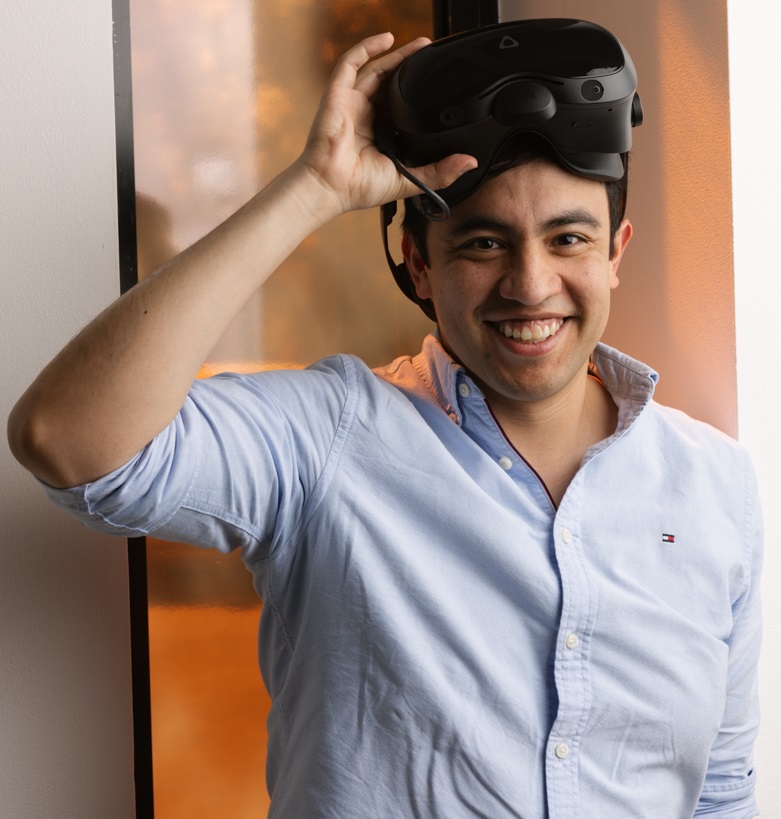
Carlos Tirado Cortes is a Lecturer in Interaction Design at the Discipline of Design Lab , Faculty of Architecture, Design and Planning, University of Sydney. As a virtual environments researcher, he focuses on Human-Computer Interaction and data visualization in immersive systems. Ph.D in Human-Computer Interaction (University of Technology Sydney, 2021) M.S. in Computer Game Engineering (Newcastle University, UK, 2015) B.S. in Engineering and Information Technology (Monterrey Institute of Technology, Mexico, 2012) His research explores immersive visualization for wildfire training (iFire project), VR sickness analysis, and brain-body dynamics during virtual navigation. Recent publications examine: AI-powered wildfire visualization systems Metaverse safety for children Postural instability in VR environments Fire-atmosphere interaction modeling Balance recovery techniques in immersive spaces
Dr. Yangyang Shu serves as an Associate Lecturer in the School of Systems and Computing at the University of New South Wales (UNSW) Canberra campus. Previously, he held a Research Fellow position at the Australian Institute for Machine Learning (AIML) at the University of Adelaide, where he contributed to the Centre for Augmented Reasoning (CAR) project. His academic foundation includes a Ph.D. in Computer Science from the University of Technology Sydney. His research spans cutting-edge areas in artificial intelligence, with core expertise in Machine Learning and Computer Vision . Key focus areas include: Low-supervised paradigms (Weakly/Semi-/Self-Supervised Learning) Rationale-Guided Machine Learning systems Generative AI applications Machine Learning in Music and affective computing Fine-grained visual recognition in data-scarce environments Dr. Shu's publication record demonstrates consistent contributions to top-tier venues including CVPR, ECCV, IEEE Transactions on Multimedia, and Pattern Recognition. His work bridges theoretical advances in learning with practical applications in photo aesthetic assessment, semantic segmentation, and emotion recognition, showing particular strength in developing methods for low-data regimes and leveraging privileged information. He maintains active research collaborations through the School of Systems and Computing at UNSW Canberra, building on prior affiliations with AIML and the Centre for Augmented Reasoning. His current teaching responsibilities include ZEIT 2103 (Data Structures and Representation) for Semester 1, 2025.