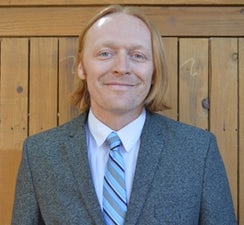
Ben Nobbs-Thiessen is an Assistant Professor of History and Chair of Mennonite Studies at the University of Winnipeg. He holds a PhD from Emory University (2016), with prior roles as a research associate at Arizona State University (2016–18) and a teaching fellow at Washington State University (2018–2020). His research focuses on Mennonite migrations across the Americas, environmental change, and indigenous-settler relations. He teaches courses on Latin American Mennonites and Mennonite Studies II. His research combines archival work, field studies, and oral histories from Bolivia, Paraguay, Mexico, Canada, and the U.S. His 2020 book Landscape of Migration examines Bolivia’s lowland colonization and its intersection with Mennonite and indigenous communities. Current projects include a century-long study of Mexico-Canada Mennonite migrations linked to water scarcity and neoliberal reforms. His publications span journals like Journal of Latin American Studies and Agricultural History , addressing topics like frontier development, foodways, and border conflicts. His transnational approach bridges environmental, migration, and colonial histories. He contributes to interdisciplinary initiatives such as the Newberry Consortium in American Indian Studies and the Centre for Rupert's Land Studies.
Karl Gustafsson is a Professor at Stockholm University within the Department of Economic History and International Relations. His work bridges security studies , collective memory , and digital research methods in international relations. Current Role: Professor of International Relations, Stockholm University Previous Positions: Post-Doc at Lund University, Researcher at Swedish Institute of International Affairs Visiting Appointments: University of Tokyo, Osaka University, Keio University, Academia Sinica, Nordic Institute of Asian Studies Research Focus: Karl specializes in memory politics , ontological security , and anxiety-driven international dynamics , particularly in Sino-Japanese relations and digital platforms . His studies explore how historical narratives and online memory construction influence state identity and policy. Awards & Grants: Recipient of the Wang Gungwu Prize (2014) and Stockholm University Association’s award (2011). Holds Swedish Research Council and Marianne & Marcus Wallenberg Foundation grants for projects on apologies in international politics and digital memory in East Asia . Publications: His work appears in journals such as International Studies Quarterly , European Journal of International Relations , and Memory Studies , addressing topics like narrative power in East Asia, anxiety’s role in policy change , and digital humanities applications in IR.
Ruben Andersson is Professor of Social Anthropology at the University of Oxford’s Department of International Development, where he researches migration, borders, security, and conflict. His work spans the West African Sahel, southern Europe, and global security dynamics. Current Leverhulme Major Research Fellow (2023-26) for 'Apocalypse soon: Security, subversion and the struggle for a human future' Author of three major monographs: Wreckonomics (2023), No Go World (2019), and Illegality, Inc. (2014) Co-edits special issues on remoteness and risk in global governance His research focuses on the unintended consequences of security interventions, including: How fear maps global danger zones Counterproductive border control industries Postcolonial risk economies in Mali and Afghanistan Security-fueled displacement cycles Profits from migration control systems Anthropology of the bioeconomy Recent publications (2016-2024) analyze: Security as subversion Border wall paradoxes Bioeconomic border technologies Digital danger mapping Interventionist 'bunker politics' Time as a control mechanism Scientific recognition: Leverhulme Major Research Fellowship (2023) Co-published in The Cambridge Journal of Anthropology , Political Geography , and Security Dialogue Doctoral supervision includes: Chloe Marshall-Denton Maggie Neil His fieldwork in Mali, Senegal, and the Mediterranean has produced critical insights about: Security industry feedback loops Risk aversion in academic/interventionist practices Colonial cartographic legacies in modern geopolitics Profit motives behind 'failed' interventions
Elizabeth Bernstein is a Professor of Women's, Gender & Sexuality Studies and Professor of Sociology at Barnard College, Columbia University, where she has been a faculty member since September 2002. Her work bridges sociological theory with feminist analysis, focusing on the intersections of gender, sexuality, and political economy. Bernstein directs significant research initiatives including the Gender Justice and Neoliberal Transformations Working Group, a transnational collaboration among thirteen scholars examining gender justice in contemporary global contexts. She is currently developing a new book project titled "Imagining Immunity: Precarious Bodies and the Governance of Gendered Dis-ease," which explores immunological metaphors in understanding bodily risk and suffering. B.A., University of California, Berkeley M.A., University of California, Berkeley Ph.D., University of California, Berkeley Professor Bernstein's research focuses on the political economy of the body, gender, and sexuality, with particular attention to sexual commerce, sex trafficking, and neoliberal governance. Her work employs ethnographic methods to examine how intimate relations become sites of economic exchange and political regulation. She investigates how concepts of authenticity, freedom, and rights are mobilized in debates about sexual commerce and trafficking. Bernstein's scholarship critically engages with feminist theory, carceral politics, and transnational governance frameworks, challenging conventional approaches to sex work and trafficking that often reinforce punitive systems rather than advancing gender justice. Analysis of Bernstein's scholarly output reveals a consistent trajectory examining the intersections of gender, sexuality, and political economy within neoliberal frameworks. Her work demonstrates increasing attention to transnational governance mechanisms and their impact on intimate relations and bodily autonomy. A notable trend is her critical examination of how anti-trafficking campaigns often employ carceral logic that undermines feminist goals of gender justice. Her scholarship consistently challenges binary frameworks that position sex work solely as exploitation or liberation, instead analyzing the complex economic, political, and social dynamics that shape sexual commerce globally. Bernstein's research has received significant recognition through prestigious awards including: Distinguished Book Award, American Sociological Association, Sociology of Sexualities Section (2020) for "Brokered Subjects" Honorable Mention, Society for the Study of Social Problems Global Division Book Award (2019) Norbert Elias Prize, Norbert Elias Foundation (2009) Distinguished Book Award, American Sociological Association, Sex and Gender Section (2009) Her work has also been supported by major funding organizations including the Institute for Advanced Study, National Science Foundation, Social Science Research Council, AAUW, and Mellon Foundation. As a principal investigator along with Janet Jakobsen for the Gender Justice and Neoliberal Transformations Working Group, Bernstein leads a significant collaborative research initiative sponsored by the Barnard Center for Research on Women. Her grant portfolio demonstrates sustained support from major research institutions, reflecting the significance of her work in gender studies and sociology. While specific student advisees aren't listed in the available materials, her role as a full professor at Barnard College indicates extensive mentorship of undergraduate and likely graduate students in Women's, Gender & Sexuality Studies and Sociology. Bernstein co-leads the Gender Justice and Neoliberal Transformations Working Group, a collaboration among thirteen scholars working transnationally on questions of gender justice. This initiative represents a significant research collective examining how neoliberal policies reshape gender relations globally. Her work with the Barnard Center for Research on Women provides institutional support for this transnational feminist research network, facilitating scholarly exchange and collaborative publication projects that advance critical perspectives on gender, sexuality, and political economy.
Dr. Rebecca Connolly is an Adjunct Professor at the Sydney Law School, University of Sydney, specializing in International Space Law, Technology Law, and Biotechnology Regulation. Her research addresses global governance challenges in outer space militarization, commercialization, and sustainability, while contributing to agricultural biotechnology policy frameworks. She is affiliated with the Space Law Council of Australia and New Zealand and the International Law Association. Education: LL.B (Hons), LL.M, Ph.D. (Sydney University). Teaching focuses on International Space Law and Technology Law. Recent publications (2023) emphasize regulatory gaps in near-space military activities and outer-space advertising, reflecting her expertise in emerging legal frontiers. Publications span over two decades, with early work addressing WTO disputes over genetically modified foods and AUSFTA environmental cooperation. No scientific awards listed, though her contributions to space law are notable. She supervises in space law and technology law domains, contributing to interdisciplinary legal scholarship.
Tong Lam is an Associate Professor in the Department of Historical Studies and the Graduate Department of History at the University of Toronto, where he also directs the Dr. David Chu Program in Asia-Pacific Studies at the Asian Institute. His research sits at the intersection of media studies, environmental history, and science and technology studies (STS), focusing on the politics and aesthetics of mobilization in China’s special zones across socialist and postsocialist eras. Employing interdisciplinary methodologies, his work explores themes such as state-precipitated violence, industrial ruination, and the socio-political implications of technology. He is a visual artist whose lens-based projects interrogate military violence, surveillance, and postindustrial landscapes. His recent scholarship analyzes postsocialist urbanism, digital governance, and the temporalities of infrastructure. While the absence of explicit scientific awards or student advisement records in the provided text precludes their inclusion here, his publications and creative practice reflect a sustained engagement with critical historical inquiry and contemporary socio-technological challenges.
Laura Spitz is Dean and Professor at the University of Calgary Faculty of Law, with a concurrent Visiting Professorship at Université Paris 1 Panthéon-Sorbonne Law School. Her academic and professional journey spans multiple institutions, including Seattle University, University of New Mexico, Cornell University, and Thompson Rivers University. Educational Background: JSD, Cornell University JD, University of British Columbia BA, University of Toronto Spitz's research interrogates the legal construction of borders and identities, blending contracts, commercial law, and critical analyses of personhood in corporate and environmental contexts. Her work explores the limits of subject-object dichotomies in law and society. Notable awards include multiple Graduation Hooding Professor distinctions at the University of New Mexico and Colorado Law School, alongside teaching accolades. She contributes to constitutional pluralism debates and has co-authored influential works on legal personhood. A nonpracticing member of the Law Society of British Columbia, Spitz serves as a legal expert in contracts and business law, with experience in First Nations economic development and nonprofit law. She has advised on Supreme Court cases and held leadership roles in global engagement and international affairs.
Markus Koller is a faculty member at Ruhr-Universität Bochum, affiliated with the Center for Religious Studies (CERES). His research focuses on Ottoman history, South-East European studies, and religious historiography. He holds an academic rank of Researcher and has been active in multiple projects, including the CERES Research Department. His work spans Ottoman military expansion, religious policies, and cultural exchanges. Notable contributions include studies on Atatürk's political biography, Ottoman-European diplomatic relations, and the historiography of the Ottoman Empire. Koller's publications cover books, edited volumes, and articles in peer-reviewed journals, reflecting his expertise in interdisciplinary historical research. He currently serves as a member of the CERES Research Department and has contributed to collaborative projects such as the 'Ottoman Europe' research initiative. His email is Markus.Koller@ruhr-uni-bochum.de .
Shira Robinson is an Associate Professor of History and International Affairs at The George Washington University, where she has taught since 2007. Her research centers on the social and cultural history of the Modern Middle East, with a particular focus on colonialism, citizenship, nationalism, and cultures of militarism after World War I. She is affiliated with GW's Institute for Middle East Studies and has previously taught at the University of Iowa and served as a Visiting Fellow at Princeton University's Davis Center for Historical Studies. Education: Ph.D. in Middle Eastern History, Stanford University (2005) Research Interests: Robinson's work critically examines the imposition of military rule on Palestinian Arabs who remained within Israel's borders after 1948. Her award-winning book Citizen Strangers: Palestinians and the Birth of Israel's Liberal Settler State (2013) explores how Israel used legal and military mechanisms to marginalize Palestinian citizens, drawing parallels with colonial practices in Algeria, South Africa, and North America. Her research highlights the continuity of colonial legal frameworks from the British Mandate period into Israeli law, particularly in land confiscation and citizenship legislation. Scientific Awards: Outstanding Academic Title Award (2014) - Choice Magazine Top 25 Academic Books of the Year (2014) - Choice Magazine Research Funding: Fulbright Institute Social Science Research Council Mellon Foundation Palestinian American Research Center Editorial Contributions: Robinson has served on the editorial committee of Middle East Report and co-edited its blog, contributing to scholarly discourse on Middle Eastern history and politics.
Paolo Sellari is an Associate Professor in the Department of Political Science at Sapienza University of Rome, where he contributes significantly to research and teaching in political and economic geography, geopolitics, and infrastructure security. He is affiliated with the research group Geopolitics of the Sea and plays a key role in the Master in Geopolitics and Global Security , contributing to curriculum development and academic supervision. Department: Department of Political Science University: Sapienza University of Rome Email: paolo.sellari@uniroma1.it His research interests span a broad yet interconnected spectrum, including maritime geopolitics, Mediterranean and Arctic strategic dynamics, Chinese foreign policy (especially the Belt and Road Initiative), infrastructure as instruments of power, and the geopolitics of climate change. He also explores unconventional intersections such as sports and geopolitics. His scholarly work emphasizes spatial dimensions of power, resilience, and connectivity in a rapidly transforming global order. The analysis of his recent publications (2023–2025) reveals a strong thematic consistency focused on maritime routes, infrastructure security, and the evolving geopolitical roles of the Mediterranean and Arctic regions. His work frequently addresses the interplay between physical geography and power projection, with a particular interest in how climate change, technological evolution, and strategic investments reshape global and regional orders. He contributes to both academic journals and reference works, including the Italian Encyclopedia. While specific scientific awards are not listed in the provided texts, his consistent publication record in reputable venues and leadership in advanced academic programs suggest recognition within the academic community. Sellari advises students through the Master in Geopolitics and Global Security and is involved in organizing seminars and educational content. Although no direct mention of grants is made, his editorial roles and institutional leadership imply active engagement in academic projects and collaborations. He supervises thesis work and contributes to academic discourse through prefaces, introductions, and editorial reviews. He is a core member of the Geopolitics of the Sea research group, which focuses on maritime spatial dynamics, naval security, and the geopolitical implications of oceanic infrastructure and climate change. This group serves as a hub for interdisciplinary research connecting geography, political science, and security studies.
David Manuel Bozzini is a Full Professor at the University of Fribourg , affiliated with the Faculty of Letters and Human Sciences within the Department of Social Sciences . He also serves as a Lecturer in the Department of Computer Science (Faculty of Science and Medicine), indicating interdisciplinary expertise. Joined University: 2017 Research Focus: Bozzini's work examines state surveillance mechanisms in militarized contexts, particularly in Eritrea and its diaspora. His research spans political anthropology, digital security, and cryptography, analyzing how insecurity is socially constructed and resisted through both traditional and technological means. Publications: His recent works explore: Ethnographic analysis of surveillance practices Digital repression in authoritarian regimes Political mobilization among exiles Technological resistance strategies Contact: Email: david.bozzini@unifr.ch Phone: +41 26 300 7840
Alexander Anatolyevich Sergunin is a Professor at the National Research University Higher School of Economics (HSE) , affiliated with the Faculty of World Economy and World Politics and the Department of International Relations . He has held academic positions at institutions such as St. Petersburg State University (since 2008), Nizhny Novgorod State Linguistic University (2013–present), and Nizhny Novgorod State University (1996–1998). His academic journey includes a Doctor of Political Science (1994) and a Candidate of Historical Sciences (1985). Education: Doctor of Political Science (1994) – Higher Attestation Committee of the Russian Federation Candidate of Historical Sciences (1985) – Lomonosov Moscow State University Specialty in History (1982) – Gorky State University named after N.I. Lobachevsky Additional training at Stockholm University (2015) Research Interests: Sergunin specializes in Theory of International Relations , Foreign Policy and Diplomacy , and Arctic Governance . His work explores the interplay between hard and soft security , military strategies , science diplomacy , and geopolitical dynamics . Recent publications focus on Russia’s Arctic strategies , international cooperation , and Blue Economy initiatives. Article Trends: His 15 most recent articles (2025–2024) highlight evolving themes in Arctic governance, Russian foreign policy, and security studies. Key topics include the Northern Sea Route as a geopolitical asset, science diplomacy in turbulent times, U.S. Arctic strategies , and Russia-China collaboration . Methodologically, his work spans comparative analysis , historical case studies , and policy evaluation .
Juan Llamas-Rodriguez is an Assistant Professor of Communication and Associate Director at the Center for Advanced Research in Global Communication at the University of Pennsylvania's Annenberg School of Communication. His research focuses on transnational media, border studies, and Latin American cultural production. He holds a Ph.D. from the University of California, Santa Barbara (2017), an M.A. from Concordia University (2013), and a B.A. from the University of Toronto (2011). His book Border Tunnels (2023) examines media's role in shaping borderland perceptions. He co-edits [in]Transition , a peer-reviewed videographic journal, and engages in public humanities projects like The Migrant Steps Project. His work appears in journals such as Feminist Media Histories , Journal of Cinema and Media Studies , and Television & New Media . Key research interests include digital culture, global communication, and the intersection of technology with society. He teaches courses on media and migration, multimodal scholarship, and Latin American television history.
Daniel Y. Kim is a Professor of English and American Studies at Brown University. His work bridges post-1945 U.S. literature, Asian American and African American traditions, and critical analyses of Cold War-era cultural memory. Education: PhD, University of California, Berkeley (1997) BA, University of Michigan (1988) Korean War historical trauma and affect theory are central to his scholarship, alongside explorations of racialized masculinity, identity politics, and U.S. imperial narratives. His research spans literary analysis, cultural studies, and transnational perspectives. Kim's recent publications analyze relationality in Asian American/East Asian studies, translations of Han Kang's novels, and nationalist technologies in Korean War memory. These works engage affect theory, trauma studies, and postcolonial critique. Scientific Awards & Honors: National Endowment for the Humanities Summer Stipend (2013) Presidential Faculty Research Fellowship, Pembroke Center (2017-18) Henry Merritt Wriston Faculty Fellowship (2000-01) Mellon Fellowship in the Humanities (1989) A dedicated advisor, Kim has received teaching awards and held graduate mentorship roles. His affiliations include the Modern Language Association, Association for Asian American Studies, and American Studies Association.
Julia Sachseder holds dual roles at Central European University (CEU) as a Senior Research Fellow in the Department of International Relations and a Visiting Professor in the Department of Gender Studies. Her interdisciplinary research bridges gender, political economy, violence, and environmental justice, utilizing feminist, postcolonial, and decolonial frameworks. Dr.phil in Political Science, University of Vienna Research Master in Political Science, Universitat Pompeu Fabra Bachelor of Arts in European Studies, Maastricht University Her work critically examines extractivist economies, sexual violence in conflict zones, EU border security, and climate crisis responses. Current projects include the FWF-funded "Risky Borders" and OEAW-funded "Climates of Peace," analyzing intersectional power dynamics and decolonial justice. Julia’s 15 most recent publications focus on the gendered and racialized politics of EU border security, environmental justice in conflict and post-conflict contexts, and feminist/postcolonial critiques of security institutions like Frontex. Key themes include epistemic violence, militarized peace, and transnational capital’s gendered impacts.