Ben Nobbs-Thiessen is an Assistant Professor of History and Chair of Mennonite Studies at the University of Winnipeg. He holds a PhD from Emory University (2016), with prior roles as a research associate at Arizona State University (2016–18) and a teaching fellow at Washington State University (2018–2020). His research focuses on Mennonite migrations across the Americas, environmental change, and indigenous-settler relations. He teaches courses on Latin American Mennonites and Mennonite Studies II. His research combines archival work, field studies, and oral histories from Bolivia, Paraguay, Mexico, Canada, and the U.S. His 2020 book Landscape of Migration examines Bolivia’s lowland colonization and its intersection with Mennonite and indigenous communities. Current projects include a century-long study of Mexico-Canada Mennonite migrations linked to water scarcity and neoliberal reforms. His publications span journals like Journal of Latin American Studies and Agricultural History , addressing topics like frontier development, foodways, and border conflicts. His transnational approach bridges environmental, migration, and colonial histories. He contributes to interdisciplinary initiatives such as the Newberry Consortium in American Indian Studies and the Centre for Rupert's Land Studies.
Dr Kingsley Edney is an Associate Professor in International Relations of China at the University of Leeds' School of Politics and International Studies. He holds a PhD (International Relations) and MA (Political Science) from the University of Melbourne, along with a BA(Hons) in Politics and Anthropology from Victoria University of Wellington. Fluent in Chinese and with experience living in Shanghai and Beijing, his research focuses on China's non-material international security dynamics, including cultural diplomacy, propaganda, and ideological strategies to manage global information flows. His expertise includes Chinese soft power, the role of ideology in foreign policy, and the intersection of domestic political cohesion with international security objectives. He teaches undergraduate and master's courses on China's domestic and international politics. Current postgraduate researchers under his supervision are Jinru Huang, Yanyu Lu, and Hengfeng Zhao. Edney's research outputs span topics like public perceptions of China in the Anglosphere, Chinese youth nationalism, and environmental governance. His work often bridges theoretical frameworks with empirical analysis of China's evolving global engagement strategies. He maintains active academic engagement through platforms like Google Scholar and ORCID.
Prof. Dr. Olena Palko is a historian specializing in Eastern Europe, the Soviet Union, and Ukraine. She holds the SNSF Professorship at the University of Basel's Department of History, focusing on East European History. Her research emphasizes Soviet minority policies, cultural politics, and national identity formation in interwar Ukraine. She is a leading scholar with notable works including Making Ukraine Soviet (2021), awarded the 2023 Alexander Nove Prize. Her current SNF-funded project, Red Tower of Babel , examines Soviet minority experiments in Ukraine. Education: PhD from University of East Anglia (2017); Kandydat nauk from National Academy of Sciences of Ukraine (2013). Research Interests: Soviet nationality policy, minority history, Ukrainian twentieth-century history, transnational border dynamics. Her work bridges archival analysis with transnational perspectives, addressing contested borderlands between Poland and the USSR. Key publications include co-edited volumes like Making Ukraine (2022) and Ukraine's Many Faces (2023). She actively contributes to academic governance roles, including co-convening the BASEES Study Group for Minority History and serving on the Scientific Advisory Council of the Council of Europe's history observatory.
Karl Gustafsson is a Professor at Stockholm University within the Department of Economic History and International Relations. His work bridges security studies , collective memory , and digital research methods in international relations. Current Role: Professor of International Relations, Stockholm University Previous Positions: Post-Doc at Lund University, Researcher at Swedish Institute of International Affairs Visiting Appointments: University of Tokyo, Osaka University, Keio University, Academia Sinica, Nordic Institute of Asian Studies Research Focus: Karl specializes in memory politics , ontological security , and anxiety-driven international dynamics , particularly in Sino-Japanese relations and digital platforms . His studies explore how historical narratives and online memory construction influence state identity and policy. Awards & Grants: Recipient of the Wang Gungwu Prize (2014) and Stockholm University Association’s award (2011). Holds Swedish Research Council and Marianne & Marcus Wallenberg Foundation grants for projects on apologies in international politics and digital memory in East Asia . Publications: His work appears in journals such as International Studies Quarterly , European Journal of International Relations , and Memory Studies , addressing topics like narrative power in East Asia, anxiety’s role in policy change , and digital humanities applications in IR.
Hillard von Thiessen is a full Professor of Early Modern History at the Historisches Institut of Universität Rostock, where he has held the chair since Summer Semester 2013. He served as Dean of the Philosophischen Fakultät from Winter Semester 2018/19 to Summer Semester 2022 and was previously acting chair at Universität zu Köln (2007-2012) and Universität Rostock (2012-2013). Currently, he is also a Fellow at the Käte-Hamburger-Kolleg "Einheit und Vielfalt im Recht" at the University of Münster. Professor von Thiessen completed his Magister Artium in 1995 at Freiburg with a thesis on witch hunts in Freiburg (1632-1677), for which he received the Waldseemüllerpreis in 1997. He earned his doctorate in 2001 with research on Capuchin friars as a reform order between confessionalization and everyday culture. In 2007, he completed his habilitation at the University of Bern with a study on cross-border patronage and diplomacy between Spain and the Papal States during Pope Paul V's pontificate (1605-1621). His research focuses on European Early Modern History, particularly international relations, norm competition, corruption and patronage cultures in the pre-modern era, religiosity, and the political culture of Habsburg Spain. His work often employs actor-centered perspectives to examine how individuals navigated complex normative frameworks during the Early Modern period. Recent publications demonstrate his interest in ambiguity as a historical phenomenon and how societies managed competing values and norms. His scholarly output reveals a consistent trajectory examining power structures, diplomatic networks, and cultural frameworks in Early Modern Europe, with particular attention to the intersection of religious, political, and social norms. The publications show increasing sophistication in analyzing how ambiguity functioned as a productive force rather than merely a problem to be solved in Early Modern governance and social relations. Waldseemüllerpreis der Universität Freiburg (1997) Professor von Thiessen has supervised numerous doctoral candidates through his habilitation and professorial positions, though specific student names aren't listed in the available documentation. His research has been supported by prestigious grants including the Gerda-Henkel-Stiftung post-doc fellowship, THEORIA Kurt von Fritz Science Program funding from the Mecklenburg-Vorpommern Ministry, and Swiss National Science Foundation support for collaborative research projects. His current research activities are centered at the Historisches Institut of Universität Rostock, with additional collaborative work through the Käte-Hamburger-Kolleg at the University of Münster, where he explores legal frameworks and norm competition in historical perspective. His ongoing monograph project "Das Zeitalter der Ambiguität" represents a significant contribution to understanding how Early Modern societies managed conflicting norms and values.
Dr. Joshua Savala is an Associate Professor of History at the University of Texas at El Paso (UTEP), part of the College of Liberal Arts. He holds a PhD from Cornell University (2019) and previously taught at Rollins College in Florida. His research focuses on Latin American social movements, transnational histories of the Pacific, and labor solidarity in the Andean and Southern Cone regions. Key areas of expertise include maritime workers, anarchism, public health epidemics, and border studies. Education: PhD in History, Cornell University (2019) MA in History, Cornell University (2015) MA in History, Tufts University (2012) BA in History and Sociology, University of California, Davis (2007) Research Interests: His groundbreaking work examines collaborative relationships between Peruvians and Chileans in the 19th and early 20th centuries, including studies on cholera epidemics, anarchist networks, and cross-border solidarity. Recent projects investigate cooperative urban planning on the U.S.-Mexico border and disaster responses in Valparaíso. Publications: Includes the award-winning book Beyond Patriotic Phobias (2022) and articles in Hispanic American Historical Review and Journal of Social History . His Spanish translation Más allá de la guerra (2024) is a binational publication with universities in Peru and Chile. Awards: Best Book (Social Sciences) on the Southern Cone (Honorable Mention), 2023 Flora Tristán Book Prize (Honorable Mention), 2023 José María Arguedas Prize, 2020 Teaching: Teaches courses on Modern Latin America, Pacific World histories, and borderland studies. Recent courses include Studies in Latin American History and South America Since 1810 . Labs/Teams: Engaged with UTEP's Borderlands Digital Humanities Center and the Institute of Oral History, emphasizing collaborative interdisciplinary projects.
Linda Morrice is a Professor of Education and Migration at the School of Education and Social Work, University of Sussex. She specializes in the intersection of refugee/migration studies with education, focusing on informal learning, social integration, and exclusion. Her research spans both the Global North and South, emphasizing refugee access to higher education and policy implications. Current role: Co-Director, Centre for International Education (2021-2024) Education: BA(Hons) in Social Anthropology (University of Sussex), PgDip (Birkbeck, 2004), MA (University of Sussex, 2005), Doctorate in Education (University of Sussex, 2010) Her scientific work explores refugee education through participatory methodologies, creative/narrative methods, and life history approaches. Recent publications analyze racialized borders, digital technology’s role in refugee well-being, and sanctuary city frameworks. Supervision interests include refugee family dynamics, informal pedagogies, and gendered policy impacts. Key grants include UKRI funding for digital well-being of unaccompanied refugee children (2024-2027), ESRC projects on longitudinal qualitative studies (2023-2024), and AHRC research on refugee cultural values (2013-2014). She has led evaluations for the Home Office and Queen Rania Foundation. Professional roles: Co-Chair, Sussex University of Sanctuary group (2019-2024) Advisory member for Home Office integration frameworks and vulnerable persons resettlement schemes Labs/teams: Founding member of University of Sussex Sanctuary Group and Brighton & Hove Sanctuary on Sea. Her research emphasizes participatory practices with refugee communities and longitudinal tracking of social networks.
Roswitha Skare is a Professor of Documentation Science at the Department of Language and Culture, UiT The Arctic University of Norway, within the Faculty of Humanities, Social Sciences and Teacher Education. She is actively engaged in research and teaching, focusing on documentation studies, public libraries, archives, museums (LAM sector), digitalization, and film history. Her research interests include: Documentation and document theory Paratext and digital documents Public libraries and their role in society Libraries and social media Migration and refugee services in libraries Film history, especially silent films and early documentaries Cultural memory and Sámi cultural resilience Institutional convergence in cultural policy Her recent publications (2019–2025) reveal a strong focus on public libraries during and after the Covid-19 pandemic, the role of libraries in supporting immigrants and refugees, theoretical developments in document studies, and historical film analysis—particularly Robert Flaherty’s Nanook of the North . She frequently collaborates with scholars such as Andreas Vårheim, Noah Lenstra, and Sigrid Stokstad. Her work appears in journals like Journal of Documentation , Library & Information Science Research , and Proceedings from the Document Academy . Roswitha Skare teaches courses such as: MDV-1001: Multimediale dokumenter: Historie, teori og analyse MDV-1203: Bibliotek og formidling MDV-1207: Dokumentinstitusjoner og digitalisering MDV-1206: Prosjektoppgave i bibliotek- og dokumentasjonsvitenskap She supervises bachelor’s, project, and master’s students in library and documentation science. She is a member of the research group Engaging Conflicts in a Digital Era (ENCODE) and participates in projects such as LAMCOM – Libraries, archives, and museums in the community and SAMCOM - Sámi cultural centers as community and cultural resilience infrastructure , which explore the societal roles of cultural institutions and Indigenous resilience. No scientific awards are listed in the provided text.
Dr. Thomas Brodie is an Assistant Professor in 20th Century European History at the Department of History, University of Birmingham. His academic career spans prestigious institutions including Oxford University, University of Leeds, and Jesus College, Oxford before joining Birmingham in 2018. Education: DPhil in History (The University of Oxford, 2014) MSt in Modern British and European History (The University of Oxford, 2010) BA in History (The University of Oxford, 2009) Fellowship of the Higher Education Academy (2020) Postgraduate Certificate in Higher Education (University of Birmingham, 2020) Dr. Brodie specializes in Modern European history with particular focus on Germany during the Nazi era and post-war periods. His research examines the intersection of religion, society, and war, with special attention to Catholic communities in Germany during WWII and the subsequent evolution of mourning practices and memory culture. His work combines theological analysis with social and cultural history using previously unused archival materials from church, state, and private collections. His recent publications demonstrate a clear trajectory from examining wartime religious communities to post-war memory practices, showing his evolving scholarly interests in how societies process mass bereavement and construct collective memory. The articles primarily focus on German religious history during and after WWII, with increasing attention to spatial dimensions of mourning and commemoration. Scientific Awards: Runner-up award for the Wiener Library's Fraenkel Prize (2014) AHRC award for doctoral research Hanseatic Scholarship for archival research in Berlin and German cities Dr. Brodie teaches a range of undergraduate and postgraduate courses including 'The Rise and Fall of the Third Reich' and 'Life After Death: Culture, Memory and Power in Postwar Europe.' He supervises BA dissertations and welcomes PhD students working on Modern German history or thematic interests in religion, war, and memory in European contexts since 1800. His current research project examines German society's responses to bereavement during WWII and its aftermaths through personal diaries, letters, artistic representations, and war memorials.
Professor Martin Doevenspeck is a distinguished scholar of Political Geography at the University of Bayreuth, where he holds a professorship in the Department of Political Geography within the Faculty of Biology, Chemistry & Earth Sciences. Since 2019, he has served as a Principal Investigator in the Cluster of Excellence "Africa Multiple" and as Spokesperson of the Research Section Mobilities. Previously, he was Managing Director of the Institute of Geography at the University of Bayreuth (2018-2022) and a member of the Executive Board of the Institute of African Studies Bayreuth. Professor Doevenspeck earned his "Diplom" in Geography from the University of Bonn and completed his PhD thesis entitled "Migration in rural Benin – Studies in social geography at an African border" at the University of Bayreuth in 2004. His academic journey includes positions as a Teaching and Research Assistant at the University of Bayreuth (2005-2011), Post-doc at the University of Bonn (2004), and various research and teaching roles focused on African geography and development. At the intersection of migration studies and political geography, Professor Doevenspeck's research focuses on (forced) im/mobilities, conflict, and border studies, with particular emphasis on African contexts. His current work centers on the project "Oil movements: the production and government of petro-(im)mobilities in East Africa" within the Bayreuth Cluster of Excellence "Africa Multiple," where he serves as Spokesperson of the Research Section Mobilities. His research spans West Africa (particularly Benin), Central Africa (Democratic Republic of Congo, Rwanda), and East Africa, examining how borders, conflicts, and resource extraction shape human mobility and territorial control. Analysis of Professor Doevenspeck's recent publications reveals a consistent focus on migration, borders, and conflict in African contexts, with increasing attention to environmental factors and resource extraction. His work demonstrates interdisciplinary approaches combining political geography, migration studies, and African studies. Recent publications particularly emphasize petro-mobilities, terrorism impacts on education, and migration control in West African borderlands, reflecting evolving research interests in the interplay between infrastructure development, security concerns, and human mobility. Professor Doevenspeck has supervised numerous doctoral and master's students, including Jaana M. Janßen, Fabian Liedl, Clemens Romankiewicz, Morgane Anziani-Vente, Muhire Blaise Mwanga, and Daniela Boß. His academic leadership extends to serving as Vice Dean of the Bayreuth International Graduate School of African Studies (BIGSAS) from 2012-2021, where he played a significant role in shaping graduate education in African studies. As a Principal Investigator in the Cluster of Excellence "Africa Multiple," Professor Doevenspeck leads research initiatives examining diverse manifestations of "Africa" across the continent and diaspora. His work involves collaboration with researchers from multiple disciplines and institutions, focusing particularly on mobilities as a key research section within the cluster. This collaborative research environment has produced significant insights into migration patterns, border dynamics, and conflict resolution in African contexts.
Ian Greer is a Research Fellow at Cornell University's School of Industrial and Labour Relations , with a career focused on marketisation , industrial relations , and transnational solidarity . He holds a PhD from Cornell University and has previously studied at Bard College. His work examines labor dynamics in globalised industries , welfare states , and multinational corporations , often through qualitative comparative methods . Education : BSc (Bard College), MSc/PhD (Cornell University) Greer's research spans marketisation of employment services , social movement unionism , and labour policy in crisis situations . His publications include studies on European welfare-to-work schemes , healthcare privatisation , and labour migration . He is associated with the Centre for Employment Relations, Innovation and Change (CERIC) at the University of Leeds. Greer's recent work analyses precarious labor and project-based employment in social services across Slovenia and France. He also contributes to debates on social dumping , work-first welfare states , and activist labor strategies in sectors like healthcare and automotive manufacturing. He has no listed scientific awards. His work often involves collaboration with scholars like Marco Hauptmeier , Charles Umney , and Nathan Lillie , though no formal advisees are named in the provided text. His email is icg2@cornell.edu .
Prof. Stefan Rohdewald is a Professor of East and South-Eastern European History at the University of Leipzig since 2020. Previously, he held positions at Justus Liebig University Giessen (2013-2020), University of Passau (2003-2012), and University of Zurich (1998-2001). His research focuses on transregional histories, religious memory, and intercultural communication in Eastern Europe and the Ottoman sphere. Key roles include coordinating DFG’s Transottomanica program and leading the GiZo partnership with University of Zagreb. Education: PhD (2004, University of Zurich), Habilitation (2012, University of Passau). Research interests span memorial discourses, Ottoman-Europe relations, and sport history. Major projects include studies on Serbo-Bulgarian religious figures and transottoman mobility dynamics. He chairs conferences on minority politics and Ottoman Europe, contributing to over 70 peer-reviewed publications. Award-winning publications include Götter der Nationen (2014) and Vlad der Pfähler (2017). His work bridges Eastern European, Ottoman, and transnational histories through innovative methodological frameworks.
Harry Nelson is an Associate Professor at the University of British Columbia (UBC) within the Faculty of Forestry , specifically the Department of Forest Resources Management . His work focuses on natural resource policy, climate change adaptation, and sustainable forest management in Canada. Research Themes : Ecosystems and Climate Change, Sustainable Forest Management, Indigenous Governance Key Interests : Climate change impacts on forestry, ecosystem services, policy development Nelson’s research explores the structural transformation of the forest sector under changing markets and public expectations. He investigates ecosystem services as a business model for Indigenous forest management in BC and analyzes global climate adaptation strategies. Recent publications highlight cross-border forestry challenges, wildfire risks, and socio-economic dynamics in forest enterprises. His 15 most recent articles (2019–2025) span interdisciplinary topics such as climate change adaptation, Indigenous governance, bioeconomy, and global forest policy. These works emphasize the integration of ecological and economic frameworks to address sustainability. Scientific awards and recognitions: No awards explicitly mentioned in the provided texts. Nelson’s email address ( harry.nelson@ubc.ca ) and research areas are publicly available. No student advisement details or grant information is provided in the scraped data.
Elias Dinas is a Full-time Professor in the Department of Political and Social Sciences at the European University Institute (EUI). He holds the Swiss Chair in Federalism, Democracy, and International Governance. His research focuses on political socialization, authoritarian legacies, and research methodology. Dinas earned his PhD in Political Science from the EUI in 2010. His research interests include the impact of historical traumas on political attitudes, experimental methods, and the dynamics of norm change. He collaborates with institutions like the Graduate Institute in Geneva through seminars, conferences, and methodological workshops. Recent work explores topics such as ideology mapping via AI, the electoral effects of early voting experiences, and the interplay between migration crises and public policy. His research has been published in top journals like the American Political Science Review and highlighted in outlets like The New York Times. Received the Michael Wallerstein Award (2019) for his work on migration and hostility. Supervises 14 students researching memory politics, norm change, and intergroup relations. Leads projects on post-authoritarian ideologies, German political identity, and elite-driven norm erosion. His teaching and supervision emphasize causal inference, experimental design, and quantitative methods, reflecting his commitment to rigorous political analysis.
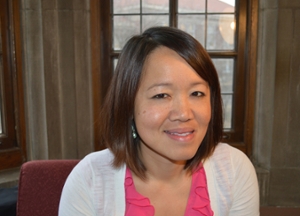
Monica Trieu is an Associate Professor in the School of Interdisciplinary Studies at Purdue University, where she focuses on the intersection of race, ethnicity, and immigration with particular emphasis on children of immigrants. Her scholarly work bridges sociology and Asian American studies through critical examination of identity formation and systemic inequalities. Education: Ph.D. in Sociology, University of California, Irvine (Asian American Studies emphasis) Master's in Sociology, University of California, Irvine Research Focus: Professor Trieu's expertise spans International Migration, Post-1960s Immigrants and Refugees, 1.5 and Second-Generation Identity, Transnational Ties, and Historical/Contemporary Asian American Experiences. Her scholarship critically analyzes internalized racism, regional identity formation (particularly in the Midwest), and the psychological impacts of anti-Asian violence during the pandemic. She employs intersectional frameworks to explore how refugee experiences, cultural adaptation, and transnational connections shape ethnic identity among Southeast Asian Americans and other immigrant communities. Publication Trends: Her 2013-2024 publications reveal evolving engagement with contemporary crises—from pandemic-induced mental health challenges and anti-Asian violence to structural invisibility of Midwest Asian American communities. While maintaining core focus on identity negotiation among second-generation immigrants, her recent work expands into comparative analyses of Asian American/Latina/o transnational patterns and refugee resettlement experiences, demonstrating methodological versatility across ethnographic, survey, and media analysis approaches. Professional Impact: As author of Identity Construction among Chinese-Vietnamese Americans: Being, Becoming, and Belonging (2009) and publications in Journal of Ethnic and Migration Studies and Journal of Asian American Studies , Trieu has established herself as a key voice in Midwest Asian American scholarship. Her research directly informs institutional responses to rising anti-Asian sentiment and contributes foundational frameworks for understanding regional ethnic identity formation beyond coastal enclaves.