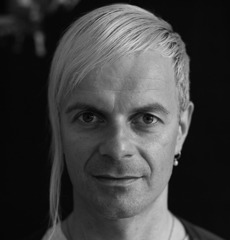
Prof. Dr. Oliver Müller is a Professor at the Department of Philosophy, University of Freiburg, and serves as Vice Dean of the Faculty of Philosophy. His academic journey includes a doctorate from Humboldt University Berlin (2005) and a habilitation in Philosophy (2012). Müller leads research on Philosophical Anthropology, Philosophy of Technology, and Ethics, with a focus on human-machine interactions and Anthropocene ethics. He supervises doctoral and postdoctoral researchers across projects like livMatS and BrainLinks-BrainTools. Research interests span neuroethics, transhumanism, and socio-technological systems, emphasizing ethical frameworks for emerging technologies. Publications explore AI ethics, drone warfare, and phenomenological embodiment, reflecting interdisciplinary engagement with neuroscience and environmental philosophy. Honors include the MTZ Bioethics Award and Heisenberg Fellowship. Müller directs participatory discourse initiatives bridging art and science, fostering public engagement with technological ethics. His work advances critical dialogues on human enhancement and ecological responsibility in the digital age.
Shigeru Uesugi is Professor in the School of Creative Science and Engineering, Faculty of Science and Engineering, Waseda University. He directs interdisciplinary research that fuses mechanical engineering, human–robot interaction, and philosophy of technology to create co-creative interfaces, sports-assist devices, and mediated communication systems. Education: Ph.D. in Engineering, Waseda University Research Interests: Uesugi’s work centres on Human Interface & Interaction Design , Mediated Communication , and Being Design . He explores how technology can extend human bodily perception and foster co-creative relationships between users and machines, merging insights from robotics, sports science, and philosophy. Recent articles analyse embodied interaction in shared virtual spaces, remote collaboration via tangible interfaces such as networked “Lazy Susan” tables, and full-body rocking systems that create a sense of togetherness over distance. His publications reveal a steady focus on designing hardware–software hybrids that make remote partners feel co-present. Scientific Awards: 14th Okawa Thesis Award, Honorable Mention (2004) Human Interface Society Paper Award (2004) Grants & Projects: JSPS KAKENHI (A) “Comprehensive research on the relationship between scientific/technological innovation and human society” (2023-2026) JSPS KAKENHI Challenging Research “Transformations of intentionality and responsibility via artifacts” (2022-2025) JSPS KAKENHI “Fascia tension-propagation suit for motor-function enhancement” (2020-2023) Labs & Teams: He leads the Human-being Design Engineering Laboratory whose members develop co-creative interfaces, sports-training devices, and rehabilitation tools. The group maintains the website www.wesugi.mech.waseda.ac.jp and collaborates with the Waseda Research Institute for Science and Engineering.
Florian 'Floyd' Mueller is a Professor of Future Interfaces at Monash University in Melbourne, Australia, where he directs the award-winning Exertion Games Lab within the Department of Human-Centred Computing (ranked among the top 20 HCI departments globally). Previously, he held positions at RMIT University, Stanford, University of Melbourne, Microsoft Research, MIT Media Lab, Fuji-Xerox Palo Alto Labs, Xerox Parc, and Australia's CSIRO. Mueller is a member of the prestigious ACM SIGCHI Academy, an honorary group recognizing leaders who have made substantial contributions to Human-Computer Interaction (HCI). Professor Mueller's research focuses on the intersections between technology, the human body, and play. He originated the concept of "Exertion Interface," arguing that we should not just design "easy-to-use" interactions when "hard-to-use" interactions can also be beneficial. His work spans movement-based interactions, whole-body interfaces, uncomfortable interactions, somaesthetics, and exertion games. Mueller's research methodology often employs research through design, design ethnography, and autoethnography to explore these novel interaction paradigms, incorporating mixed-reality, augmented reality, virtual reality, electronic muscle stimulation, biosensors, wearables, and drones. His recent publications demonstrate a continued focus on bodily interactions and human-computer integration, with particular emphasis on emerging subfields like WaterHCI and SportsHCI, brain-computer interfaces, and gustosonic (taste and sound) experiences. Mueller's work has evolved from foundational exertion game concepts to more sophisticated explorations of human-computer integration where technology becomes seamlessly woven into the fabric of human experience. Professor Mueller's contributions have been widely recognized with numerous awards including: Inaugural honouree of the Australian Design Centre's Design Honours Tall Poppy award for "intellectual and scientific excellence" 10 "Best Paper Honorable Mentions" (top 5%) from premier HCI conferences 2 "Best Paper" awards (top 1%) at CHI PLAY and CHI Shortlisted for the European Innovation Games Award (alongside Nintendo's WiiFit) Nokia Mindtrek Ubimedia Award Mueller has successfully secured some of Australia's largest and most competitive research grants, achieving a remarkable 14% success rate on Australian Research Council Discovery Project applications. He has served as General co-Chair for CHI PLAY'18 and CHI'20, becoming the first Australian-based researcher to spearhead HCI's highest-ranked publication outlet, and is currently General co-Chair for CHI'24. He is Associate Editor for tier A journals including Elsevier's IJHCS (International Journal of Human-Computer Studies) and ACM's IMWUT (Interactive, Mobile, Wearable and Ubiquitous Technologies). As director of the Exertion Games Lab, Mueller leads a research team whose innovations have been experienced by over 20,000 users across 3 continents and featured on the BBC, ABC, Discovery Science Channel, and Wired magazine. The lab has produced groundbreaking work in bodily interfaces, co-founding the CHI PLAY conference series and establishing new research directions in SportsHCI and WaterHCI through recent "Grand Challenges" papers. Mueller's lab continues to push boundaries with projects exploring brain-to-brain interfaces, lucid dreaming induction, and novel gustosonic experiences.
Dr. Karen Cochrane is an Assistant Professor at the University of Waterloo, specializing in Human-Computer Interaction (HCI) with a focus on wearable and tangible computing for mental health and accessibility. Her research integrates soma design, autoethnography, and design fiction to address the needs of underrepresented communities, particularly those with disabilities. Key projects include developing assistive technologies for queer/crip identities, accessible gaming wearables, and tactile interfaces for sensory exploration. She explores embodied experiences through multidisciplinary approaches, blending traditional craft practices with modern computational tools. Her work prioritizes participatory design methodologies, collaborating with occupational therapists, disabled communities, and neurodivergent individuals to co-create inclusive technologies. Recent innovations include VARitouch (a haptic feedback device), Breathing Scarf (for emotional regulation), and adaptive switches for children with motor disabilities. Her research extends into sensory narratives, exploring how fabric and data can articulate bodily experiences through projects like Sensory Data Dialogues and Queer/Crip Body Mapping. While no formal grants or awards are listed, her publications reflect a strong focus on ethical technology, accessibility, and embodied interaction. Current projects emphasize the intersection of wearable tech with identity expression, mindfulness practices, and neuromotor rehabilitation. She actively designs prototypes that bridge clinical needs with creative technology solutions, though specific lab affiliations or team collaborations are not detailed in available texts.
Alexander Müller-Rakow is a Researcher and PhD Candidate at the Design Research Lab at Berlin University of the Arts. His work explores the interplay between embodied interfaces , digital sovereignty , and social design , focusing on bodily movements as a medium for musical and interactive technologies. Education: Industrial and Interaction Design (University of Applied Science Magdeburg, University of Bergen) Current Roles: Research Scientist (Design Research Lab), Lecturer (Hochschule für Kunste Bremen, others) His research spans haptic technology , textile-integrated sensors , and experimental interfaces , often intersecting with digital justice and material interactions . Early-career publications include collaborations on capacitive sensing and urban design interventions , reflecting his interdisciplinary approach. As part of the Design Research Lab, he contributes to projects addressing inclusive digital futures , smart urban mobility , and collaborative tools , aligning with the lab's mission for ecologically sustainable design .
Wolfgang Mayer is a Professor for Performative Practice at the State Academy of Fine Arts Stuttgart , teaching collaborative artistic processes. He co-founded the art group Discoteca Flaming Star (DFS) in 1998 with Cristina Gómez Barrio, focusing on performative works that challenge memory and institutional frameworks. 1990–1995: Studied at Academy of Fine Arts Munich 1996–1997: DAAD scholarship at School of Visual Arts NYC 2005–2006: Whitney ISP participant Mayer’s research integrates performative practice , body theory , and collaborative art . His works interrogate memory , feminist narratives , and public space dynamics through sculptures , performances , and experimental music . Recent projects like Momentum:synthesize.r (2024) and Love Any Out of (90 Seconds) End (2023) explore temporal structures and emotional labor . Scientific honors include: 2013 Fundacion Estrenos Grant 2006–2007 Pollock-Krasner Scholarship 1993 Salzburg Summer Academy scholarship He emphasizes non-formalized artistic development through Sound & Body modules, public space interventions , and critical response protocols . Mayer’s DFS collective has shown globally at institutions like The Kitchen , Whitney Museum , and Tate Modern , often collaborating with figures like Rita McBride and Jeremiah Day.
Maarten Coëgnarts is an Assistant Professor in Film Studies at the University of Antwerp and a Fellow of the Society of the Cognitive Studies of the Moving Image (SCSMI) . His research focuses on embodied cognition , conceptual metaphor theory , and non-verbal meaning-making in cinema , with a particular emphasis on Stanley Kubrick’s work. University of Antwerp, Film Studies, Faculty Member Research Interests Coëgnarts explores how embodied mental schemas shape cinematic perception and creation. His work bridges cognitive linguistics, neuroscience, and film theory to analyze abstract concepts in films through visual, auditory, and editing techniques . Key areas include sensory-motor grounding of emotions , spatio-temporal dynamics in art cinema , and subjectivity in narrative . Recent Publications His 2023–2022 articles examine sound analysis via container schemas , motion vectors , and temporal logic in films , while 2016–2020 works address emotional causality and metaphorical perception . He co-edited the 2023 Baltic Screen Media Review special issue on "Cinematic Minds in the Making" . Scientific Recognition Fellow, SCSMI Books He authored Film as Embodied Art: Bodily Meaning in the Cinema of Stanley Kubrick (2019) and co-edited Embodied Cognition and Cinema (2015). His work highlights filmmakers as "conceptual artists" who leverage non-verbal cinematic tools to convey abstract ideas.
University of Illinois Urbana-ChampaignUnited States
Robb W Lindgren is a Professor at the University of Illinois at Urbana-Champaign with appointments in Curriculum and Instruction and Educational Psychology . He serves as Associate Dean for Research in the College of Education and holds affiliations with the National Center for Supercomputing Applications (NCSA) , Beckman Institute for Advanced Science and Technology , and Center for Social & Behavioral Science . His research focuses on Embodied learning through gesture and physical interaction Design of mixed/augmented reality educational systems Collaborative STEM education with immersive technologies Recent publications highlight his work in: Biochemistry simulations using haptic feedback (2024) VR-based spatial reasoning for astronomy education (2023) Metaverse learning environments with theory-driven design (2023) Climate change simulations with full-body tracking (2022) His research group explores how physical movement and gestural interfaces shape scientific understanding and conceptual change. Key collaborations include work with Jee Hyang Park , Jun Kang , and Thomas Kim , focusing on Gesture-mediated collaboration XR learning analytics Agency in embodied design
Alice Haynes is a Digital Futures Postdoctoral Fellow at KTH Royal Institute of Technology, working on the Felt Connections project under the Division of Media Technology and Interaction Design . She collaborates with Prof. Kristina Höök and Associate Prof. Iolanda Leite to create shape-changing textile interfaces that foster meaningful bodily interactions for children and adults. Education PhD in Engineering Mathematics, University of Bristol (2022) Specialization in Soft Robotics and Haptic Interfaces Her research blends soft robotics, e-textiles, and soma design to develop tactile technologies that prioritize bodily engagement over traditional visual/auditory interfaces. Current work explores: first-person design for scoliosis, symmetry-asymmetry dynamics in bodily interactions, and soma-driven methods that emphasize felt experiences. Key article trends include shape-changing textiles (SMA-actuated smocking, machine embroidery), emotional/therapeutic applications (anxiety relief, social touch), and multisensory integration (audio-tactile mappings, biosignal interaction). Scientific Contributions Recipient of Digital Futures Postdoctoral Fellowship Co-design methodologies for child-centered technology Material-driven evaluation frameworks for e-textiles Embodied interaction paradigms through haptic cushions Alice teaches Human-Computer Interaction Research Seminars (DH2632) and Media Technology and Interaction Design (DM2601) , while actively seeking Master's students for collaborative thesis work.
Norwegian University of Science and TechnologyNorway
Dag Svanæs is a Professor of Human-Computer Interaction (HCI) at NTNU’s Department of Computer and Information Science. His research focuses on embodied interaction, emphasizing the physical, bodily, and social dimensions of human-computer interaction. He developed a usability laboratory for simulating multi-user, multi-device scenarios, particularly in healthcare contexts. His theoretical framework draws heavily from Maurice Merleau-Ponty’s phenomenology, exploring how perception and action shape interaction. Education: PhD in HCI from NTNU (2000). His research areas include interaction design, user-centered methods, and healthcare IT systems design. Key projects include the UNITY-Things IoT framework and exergame development for balance training in seniors. Research Highlights: Svanæs pioneered participatory design methodologies in healthcare IT, emphasizing end-user involvement through role-play and prototyping. His work on pandemic policy critiques and lockdown strategies demonstrates interdisciplinary collaboration between HCI and public health. Publications: Over 50 peer-reviewed articles in venues like Computer Supported Cooperative Work , Frontiers in Computer Science , and IEEE Transactions . Recent work addresses exergame design, pandemic response systems, and embodied interaction theory. Grants & Labs: Built NTNU’s Health Informatics Usability and Design Lab. Collaborates with academic and healthcare institutions on projects like the NSEP (Norwegian Center for Electronic Patient Records).
Dr Belinda Middleweek is a Senior Lecturer at the University of Technology Sydney , affiliated with the School of Communication and serving as Teaching and Learning Lead for Journalism . She currently acts as Higher Degree Research Coordinator in the Faculty of Arts and Social Sciences. Educational background: PhD in Journalism, University of Sydney (2007) BA (First Class Honors), University of Sydney (2002) Her research explores intersections between human-technology interaction , digital intimacy , and journalism/media studies . Key themes include: bodily engagement with AI, gendered technology positioning, media representation of technology, affective technology bonds, and ethical implications of digital intimacy. She co-authored Real Sex Films: The New Intimacy and Risk in Cinema (2017) and authored Feral Media? The Chamberlain case, 40 years on (2021), which re-examined Australia's most significant media-trial dynamics. Recent publications analyze: touch in journalism (2025), pre-digital sleuthing (2025), and data privacy in sexual health tech (2025). These works explore sensory news practices, historical public investigations, and gendered data ethics in biometric devices. Scientific recognition: Erasmus Mundus Scholarship (2018) Dean’s Teaching Awards (2024, 2013) Heroic Award for Outstanding Contribution (2023) As an educator, she leads journalism curriculum development and has 8 current/postgraduate HDR supervisees. Her industry experience includes senior roles at Sunrise, Today Tonight, and documentary production for multiple networks. Leadership roles: Teaching and Learning Lead for Journalism (2020–present) Acting HDR Coordinator (2025–present) UTS Expert Working Group on Human Rights and AI (2020)
Dr. Abby Tabor is a researcher within the Faculty of Health and Applied Sciences (HAS) at the University of the West of England (UWE Bristol). Her work focuses on the theoretical understanding of aversive bodily symptoms, particularly pain, with an emphasis on embodied perspectives and active inference frameworks. She investigates how body-world interactions shape perception and action, especially in contexts such as limb fracture, amputation, and pediatric prosthetics collaboration with the NHS. Her research bridges clinical practice, neuroscience, and rehabilitation, aiming to improve treatment outcomes and patient well-being. Abby’s research interests include the interplay between perception and action in pain contexts, the role of environment in bodily experiences, and the application of advanced technologies to enhance prosthetics and pain management. Her work often involves interdisciplinary collaborations, combining insights from neuroscience, psychology, and clinical medicine. Her recent publications explore biomechanical and psychological pathways in pain, the efficacy of aerobic exercise in pain reduction, and methodological innovations in pain research. While no specific awards are listed, her contributions to prosthetics and chronic pain studies highlight her impactful work. No student advising or grant details are provided in the text. Abby is affiliated with UWE’s HAS faculty and is actively involved in NHS partnerships for translational research.
Airi Lampinen is an Associate Professor in Human-Computer Interaction at the Department of Computer and Systems Sciences , Stockholm University , where she co-leads the Stockholm Technology & Interaction Research (STIR) group. She also holds a Docent title in Social Psychology at the University of Helsinki and is a faculty member of the cross-disciplinary Digital Futures research center. Teaching: Design & Information Society course (Masters program) Supervision: Bachelors/Masters theses in HCI/CSCW Her research focuses on interpersonal and economic aspects of networked platforms , including gig work dynamics in the Global South, ethical considerations in autonomous systems, and the role of intimacy in digital technologies. Current projects include the Swedish Research Council (VR) funded Shared Uses of Intimate Technology and WASP-HS project Ethics as Enacted Through Movement . Key themes across her publications include: Platform-mediated labor relations Ethics in algorithmic systems Intimate technology use cases Care practices in digital contexts Account sharing dynamics Community-led technological initiatives Contact: airi@dsv.su.se , airi@iki.fi
Lindah Kotut is an Assistant Professor at the University of Washington's Information School, where she investigates the convergence of Human-Computer Interaction (HCI), Indigenous Knowledge systems, and privacy/cybersecurity. Her work centers on amplifying marginalized voices through technology design, particularly focusing on communities with limited access to storytelling tools and those facing systemic inequities in digital spaces. Her research explores how unwritten stories and indigenous knowledge can reshape ethical technology development, addressing critical gaps in privacy frameworks, cybersecurity practices, and algorithmic accountability. Kotut employs community-centered methodologies like Griot-Style research to co-design tools that empower marginalized groups while challenging dominant narratives in computing. Current projects examine financial technology disparities, climate action AI, and bodily autonomy in surveillance contexts. Recent publications reveal a consistent trajectory toward socio-technical justice , with work spanning mobile financial services, social media surveillance, and indigenous knowledge preservation. Her 15 most recent articles demonstrate interdisciplinary reach across CHI, GROUP, and CSCW venues, with growing emphasis on climate technology and stakeholder-driven AI governance. Best Paper, Honorable Mention Award (ACM GROUP 2023) Best Paper, Honorable Mention Award (ACM CHI 2022) Best Poster Award (ACM GROUP 2020) Outstanding STEM Dissertation Award (2021) Kotut actively mentors PhD and masters students through the iSchool program, with current advisees including NSF Graduate Research Fellow Amelia Lee Doğan. Her lab recruits students with technical programming skills or qualitative research expertise for projects at the HCI-privacy-indigenous knowledge intersection. Funding supports undergraduate summer internships via CRA DREU and DUB REU programs, with recent work examining AI for sustainability and financial technology ethics. She leads a research lab focused on contextual canaries and speculative design for marginalized communities, with ongoing projects examining smartphone sharing ethics, indigenous knowledge preservation, and algorithmic fairness. Recent keynote engagements include the MHCI+D Immersion Studio on 'Stories of Agency and Power.'
Overview Gualtiero Volpe is a Professor affiliated with the Department of Informatics at the University of Genoa, Italy. His research focuses on Human-Computer Interaction (HCI), Affective Computing, and Multimodal Interaction, with particular emphasis on analyzing social interactions, embodied cognition, and expressive movement qualities in contexts such as music performance and education. He has collaborated extensively with researchers like Antonio Camurri, contributing to interdisciplinary projects that bridge computer science, cognitive science, and the arts. Research Interests Analysis of human movement and affect through computational methods Design of multimodal interactive systems for education and healthcare Investigation of laughter and social dynamics in human interactions Development of technologies for music performance and collaborative creativity Key Contributions Volpe's work spans over 140 publications in top-tier venues such as IEEE Transactions on Affective Computing, ACM Conference on Human Factors in Computing Systems (CHI), and International Conference on Multimodal Interaction (ICMI). His research has led to innovations in: Automated analysis of movement qualities using machine learning Sonification platforms for exergames and rehabilitation Embodied interaction frameworks for children's education Computational models of group cohesion and synchronization Recent Trends in Publications Recent studies emphasize the integration of cognitive science principles into movement analysis and the application of multimodal systems to address challenges in post-pandemic social interaction (e.g., digital commensality). His work on 'Embodied Multisensory Training' and 'Hybrid Co-Working in Industry 5.0' highlights a growing focus on real-world applications of HCI research. Awards & Grants No specific awards or grants are explicitly mentioned in the provided data, though his prolific publication record and leadership in collaborative projects suggest sustained academic recognition and funding support. Labs & Teams Volpe is part of the EyesWeb XMI research group at the University of Genoa, developing open-source platforms for real-time multimodal interaction analysis. He collaborates with institutions like the University of Trento and Goldsmiths, University of London on projects related to music technology and social robotics.