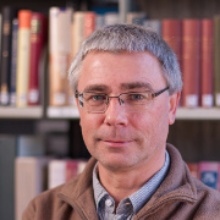
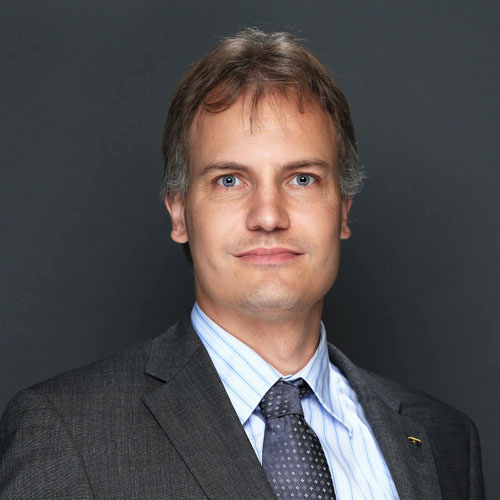
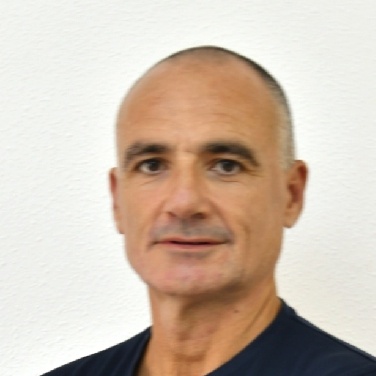
Jens von Wolfersdorf is a Professor at the University of Stuttgart's Faculty of Engineering, Department of Mechanical Engineering. His research focuses on advanced thermal management systems for high-speed aerospace applications, particularly in the areas of heat transfer, fluid dynamics, and combustion. He specializes in experimental and numerical methods for analyzing complex flows in rotating and stationary cooling channels, transpiration cooling for rocket engines, and turbulence modeling. His work integrates cutting-edge techniques such as thermochromic liquid crystal (TLC) measurements, particle image velocimetry (PIV), and computational fluid dynamics (CFD) to validate novel cooling configurations. Key projects include the COOREFLEX-Turbo initiative and contributions to the European ATLLAS-II program for high-speed vehicle materials. Recent studies emphasize rotational heat transfer effects in two-pass cooling channels, additive manufacturing of ribbed cooling structures, and validation of coupled FEM-CFD frameworks. His research addresses challenges in aerospace thermal protection, turbine blade cooling, and scramjet combustor efficiency. Publications span over 15 years, with a focus on transient heat transfer, flow visualization, and material characterization for transpiration-cooled systems. Collaborations involve experimental facilities for high-speed flows and advanced thermal measurement systems.
Nicolas Binder is a Professor and Head of the Turbomachinery and Propulsion Research Group at ISAE-SUPAERO . His research focuses on turbomachinery aerodynamics, unsteady flow analysis, and innovative propulsion systems for aerospace applications. Member of EuroTurbo executive committee ASME Member Associate Editor, Journal of Turbomachinery Research expertise in off-design operations and windmilling flows Research Interests : Aerodynamics of turbomachinery in severe off-design conditions Unsteady flow dynamics in turbines Innovative propulsion methods including magneto-hydrodynamics Flow analysis techniques for compressors and fans Recent publications (2024-2021) emphasize transient flow modeling in turbines, windmilling operation optimization, and variable geometry turbine performance. Articles span experimental validation of numerical models, shock wave interactions, and novel propulsion concepts like plasma-thrusters for drones.
Dr. Mathijs Hofmijster is an Assistant Professor affiliated with the Faculty of Behavioural and Movement Sciences, Physiology Department at Vrije Universiteit Amsterdam, as well as the Amsterdam Movement Sciences (AMS) and the Institute for Brain and Behavior Amsterdam (IBBA). His research focuses on biomechanics and physiology in sports performance, particularly in rowing and cycling. Key areas include power output measurement, neuromuscular adaptations, and training optimization. He teaches courses such as 'Moving Matters in Health' and supervises graduate research in elite athlete performance. Research Interests: Rowing biomechanics and power output analysis Neuromuscular fatigue and training adaptations Para-cycling performance and adapted physical activity Instrumentation for sports performance monitoring Recent work highlights include a 2024 scoping review on elite para-cycling performance and advancements in blade force measurement techniques (2019). His articles explore topics ranging from muscle morphology in Olympic rowers (2018) to real-time feedback systems improving training compliance (2017). He has supervised one PhD thesis and maintains active collaborations in sports science, contributing to UN Sustainable Development Goals related to health and well-being.
Budapest University of Technology and EconomicsHungary
Tamás Benedek is an Associate Professor at the Department of Fluid Mechanics, Budapest University of Technology and Economics (Faculty of Mechanical Engineering). His research focuses on aeroacoustics, computational fluid dynamics (CFD), and turbomachinery design optimization. He has published extensively on axial and radial flow fans, noise reduction techniques, and vortex dynamics. Education: Ph.D. in Fluid Mechanics (2018, BME) M.Sc. in Fluid Mechanics (2012, BME) Research Interests include: Tip leakage vortex quantification in axial fans Phased array microphone techniques for noise source localization CFD simulation of aeroacoustic phenomena Industrial fan design optimization for contaminated gas flows Acoustic duct design and flow-induced noise control Beamforming methods for rotating machinery diagnostics Publications highlight his work on: URANS simulations for vortex dynamics Hybrid CFD-experimental noise modeling Statistical analysis of turbulent flow effects on noise Blade geometry influence on aerodynamic loss coefficients Flow separation mechanisms in ducted systems Acoustic-transparent duct design Contact: benedek.tamas@gpk.bme.hu
Markus Peer Rumpfkeil is a Full-Time Professor and the Hans von Ohain Endowed Chair in the School of Engineering's Department of Mechanical and Aerospace Engineering at the University of Dayton. As the aerospace program director, he specializes in computational fluid dynamics (CFD), uncertainty quantification, and multidisciplinary design optimization. He holds a Ph.D. from the University of Toronto and a Diplom (B.Sc./M.Sc.) in Physics from Humboldt University of Berlin, with research experience at the Max-Planck Institute. Education: Ph.D., University of Toronto Institute for Aerospace Studies (2008) Diplom Physik (M.S./B.Sc. Physics), Humboldt University of Berlin (2004) Research Focus: His work emphasizes uncertainty quantification applied to CFD problems, multi-fidelity surrogate modeling, and aeroelastic design optimization. Key areas include flutter analysis, robust optimization under mixed uncertainties, and hypersonic vehicle design. Publications: Over 80 peer-reviewed articles highlight his contributions to topics like multi-fidelity optimization frameworks, surrogate model construction (e.g., sparse polynomial chaos, kriging), and exergy-based analysis of hypersonic systems. Recent work extends to turbulence effects in turbine flows and robust control systems for missiles. Affiliations: He serves as an Associate Fellow of the AIAA and on the Scientific Committee for the International Conference on Computational Fluid Dynamics (ICCFD). He also contributes to educational initiatives like the Thrust Vectoring Design Project. Teaching: Courses include Fluid Mechanics, Computational Fluid Dynamics, and Introduction to Flight, reflecting his dedication to undergraduate and graduate education.
Alessandro Nitti is an Assistant Professor in the Department of Mechanics, Mathematics & Management at Politecnico di Bari, Italy, specializing in Fluid Dynamics (ING-IND/06). His research integrates computational methods and biomechanics to study complex fluid-structure interactions, cardiac electrophysiology, and bio-inspired robotics. Position: Assistant Professor Department: Mechanics, Mathematics & Management Email: alessandro.nitti@poliba.it His research spans Fluid Dynamics (e.g., vortex-induced vibrations, valvular leaflet motion), Cardiac Electromechanics (e.g., myocardial activation, electrophysiology coupling), and Isogeometric Analysis (e.g., thin shell modeling, mixed collocation methods). He also explores Swarm Robotics through collective intelligence models. Recent publications highlight trends in Fluid-Structure Interaction (e.g., energy harvesting, jellyfish locomotion), Biomedical Engineering (e.g., aortic valve turbulence, cardiac muscle simulation), and Computational Methods (e.g., immersed boundary techniques, isogeometric shell models). These works often involve interdisciplinary approaches combining Biomechanics , Electrophysiology , and Multiphysics Simulation .
Steve Gorrell is a Professor in the Department of Mechanical Engineering at Brigham Young University (BYU), College of Engineering. He holds a Ph.D. in Mechanical Engineering from Iowa State University (2001), an M.S. from Virginia Tech (1990), and a B.S. from BYU (1988). Prior to his academic career, he served as a Senior Aerospace Engineer at the Air Force Research Laboratory (AFRL) from 1989 to 2007, where he conducted advanced research in propulsion and turbomachinery. Ph.D., Mechanical Engineering, Iowa State University, 2001 M.S., Mechanical Engineering, Virginia Tech, 1990 B.S., Mechanical Engineering, Brigham Young University, 1988 His research is centered on experimental and computational fluid dynamics (CFD), with a strong focus on turbomachinery systems including compressors, turbines, and fans. He investigates unsteady flow phenomena such as stator-rotor interactions, inlet distortion, wake-shock dynamics, and cavitation. His work integrates high-fidelity CFD simulations with experimental techniques like Particle Image Velocimetry (PIV) to validate models and improve design methodologies. He also contributes to engineering education, particularly in collaborative and multi-university design projects. The most recent publications highlight a consistent trend in high-fidelity, time-accurate CFD analysis of unsteady flows in turbomachinery. Key themes include blade-row interactions, inlet distortion transfer, vortex dynamics, and feature extraction in simulations. His work frequently appears in ASME and AIAA journals and conferences, emphasizing both experimental validation and computational innovation. Notable awards include the Department of the Air Force Award for Civilian Achievement (2007), AIAA Associate Fellow (2007), AFRL Scientific/Technical Achievement Award (2006), and multiple honors for engineering education and collaboration (2013–2015). He also received the NASA Group Achievement Award (2003) and the Dayton-Cincinnati Aerospace Science Symposium Best Turbomachinery Paper (2002). Department of the Air Force Award for Civilian Achievement, 2007 AIAA Associate Fellow, 2007 AFRL Scientific/Technical Achievement Award, 2006 NASA Group Achievement Award, 2003 Best Paper, Dayton-Cincinnati Symposium, 2002 Outstanding Faculty Award, BYU ME, 2015 Best Overall Award, ASME IAM3D Challenge, 2014 AFOSR Summer Faculty Fellowship, 2013 Steve Gorrell has advised numerous graduate students on theses related to CFD, compressor and turbine design, and flow simulation. He has served as a principal investigator or collaborator on various research grants, particularly in high-performance computing and propulsion systems. His professional service includes editorial roles (Associate Editor, ASME, 2014–2018), committee leadership in AIAA and ASME, and extensive peer review for NSF, DOE, and other agencies. He has been actively involved in multi-university collaborative education initiatives, such as the PACE program. He leads a research group focused on computational and experimental fluid dynamics in turbomachinery, often collaborating with national labs and industry partners. His team employs advanced CFD solvers and data mining tools to extract meaningful features from complex simulations. The integration of computational science with engineering education remains a key component of his lab’s mission.
Knoek van Soest is an Assistant Professor at Vrije Universiteit Amsterdam, affiliated with the Faculty of Behavioural and Movement Sciences, the Biomechanics department, and the IBBA and AMS-Sports institutes. His research focuses on biomechanics, muscle mechanics, and computational modeling of movement across species and sports contexts. Research interests include animal locomotion (birds/dinosaurs), human sports performance, and paleobiomechanics. Contributed to studies on Tyrannosaurus rex gait, swimming biomechanics, and rowing blade efficiency. He has supervised 8 PhD theses and maintains editorial roles in journals like Medicine and Science in Sports and Exercise. Collaborates internationally with paleontologists and sports scientists. Active in open-access publishing and dataset sharing via platforms like figshare.
Prof. José Arturo Abraldes Valeiras is an Associate Professor at the University of Murcia’s Faculty of Sports Sciences, Department of Physical Activity and Sport. His research focuses on aquatic rescue, swimming performance, sports safety, and biomechanical analysis. He earned his PhD in Physical Education from the Universidade da Coruña in 2002, with a thesis on lifeguarding and aquatic sports. With over 18 years of teaching experience, he leads the Movement Sciences and Sport research group and collaborates internationally with institutions like the Universidade do Porto. His work includes over 35 JCR-indexed publications, 150+ indexed articles, and 30+ authored books. Key areas include lifeguard training, rowing biomechanics, and sports pedagogy. His recent studies explore wetsuit impacts on swimming, online education adaptations, and multidomain interventions for healthy aging. Advising and Grants: While no specific students or grants are listed, his extensive publications and international collaborations highlight significant academic contribution. He actively participates in conferences and contributes to sports safety standards. His lab, part of the Movement Science and Sport group, focuses on applied sports science and performance optimization.
Dr. Takafumi Nishino is a Senior Research Associate in the Department of Engineering Science at the University of Oxford. He holds a BEng and MEng from Kyoto University and a PhD in Aerodynamics from the University of Southampton. His career includes a NASA Postdoctoral fellowship (2007-2010), postdoc roles in Oxford, and a Lectureship at Cranfield University before joining Oxford permanently. His research focuses on theoretical fluid mechanics and offshore renewable energy, particularly wind and tidal-stream energy systems. Key achievements include developing multi-scale flow models for tidal turbines and extending these to wind farms through collaborations with the UK Met Office. Research interests include wind farm aerodynamics, turbine wake dynamics, two-scale momentum theory, and vortex instability control. He leads the Flow Physics and Modelling Group and contributes to the Multi-Wind project addressing large-scale wind energy challenges. Awards include the NASA Postdoctoral Program fellowship and Osborne Reynolds PhD Competition Finalist recognition. Current work emphasizes coupled turbine/farm optimization using hybrid momentum-theory/NWP models. He also investigates fundamental fluid dynamics phenomena like boundary layer transitions and stall mechanisms in aero/hydrofoils.
Massachusetts Institute of TechnologyUnited States
Masha Folk is the Charles Stark Draper Career Development Professor of Aeronautics and Astronautics at the Massachusetts Institute of Technology (MIT). She holds a Ph.D. from the University of Cambridge and has extensive industry experience at Rolls-Royce as an Aerothermal Specialist and Turbine Aerodynamicist. Her research focuses on sustainable aerospace technologies, particularly gas turbine aerodynamics and sustainable propulsion systems, with a goal to accelerate carbon-neutral aviation. Education: Ph.D. in Energy, Fluids and Turbomachinery, University of Cambridge (2020) M.Res. in Energy, Fluids and Turbomachinery, University of Cambridge (2015) M.S. in Aerospace Engineering, Purdue University (2014) B.S. in Aerospace Engineering, Ohio State University (2010) Research Interests: Her work emphasizes gas turbine aerodynamics, sustainable propulsion systems, and technology transfer to real-world applications. Key topics include combustor turbulence effects on turbine performance, aerothermal design optimization, and climate change mitigation strategies for aviation. Publications: Her recent work explores multifidelity optimization of combustor turbulence, boundary layer dissipation, and turbine loss mechanisms. These studies highlight advancements in computational fluid dynamics and experimental validation of turbine systems. Awards: 2021 ASME Gas Turbine Award for Most Outstanding Technical Paper 2019 ASME/IGTI Turbomachinery Committee Best Paper (GT2019-90307) 2015 Zonta International Amelia Earhart Fellowship Lab Affiliation: Gas Turbine Lab at MIT, focusing on experimental and computational studies of turbine aerodynamics and sustainable propulsion systems.
Nicole Key holds the Avrum and Joyce Gray Professorship in Entrepreneurship and Innovation and serves as Associate Head for Graduate Studies at Purdue University's West Lafayette School of Mechanical Engineering. She is also a Professor of Aeronautics & Astronautics (by courtesy). Her research focuses on aerothermal aspects of turbomachinery, axial/radial compressor performance, and experimental fluid mechanics. Key earned her B.S., M.S.E., and Ph.D. in Mechanical Engineering from Purdue University in 2000, 2002, and 2007, respectively. Her notable contributions include pioneering work on centrifugal impeller design, blade row interaction effects, and stall inception in compressors. She leads the High Speed Compressor Research group and has authored over 10 influential papers in journals like ASME Journal of Turbomachinery and AIAA Journal of Propulsion and Power. Awards: ASME Fellow (2017), ISABE Best Paper Award (2016), ASME Turbo Expo Best Paper Award (2016), and 17+ other accolades. Grants: Active in securing funding for propulsion and turbomachinery research. Labs/Teams: Directs the High Speed Compressor Research laboratory at Purdue.
Michael Wilson is a Senior Lecturer in the Department of Mechanical Engineering at the University of Bath, serving as Director of Undergraduate Studies and Director of Postgraduate Taught Programmes. His research focuses on computational analysis of internal flow and heat transfer in rotating disc systems, particularly in gas turbine engine cooling. He holds a BSc (Hons) in Pure Mathematics (1982) and a PhD in Engineering (1986) from the University of Bath. Research interests include turbine-disc cooling, rotating flow dynamics, and validation of computational models for gas-turbine cooling systems. He has collaborated internationally with institutions like IRPHE, Marseille, and Tokyo University of Science on turbulence modeling and rotating flow simulations, supported by Royal Society exchange programs. His work contributes to UN Sustainable Development Goals related to clean energy and industrial innovation. Wilson has led/co-investigated 8 projects, including EPSRC-funded initiatives on turbine efficiency improvements, rim seal dynamics, and purge flow effects. Notable collaborations include industrial partnerships with Rolls-Royce and Siemens through Knowledge Transfer Partnerships. His research outputs include 88 peer-reviewed articles, with recent work addressing secondary flow analysis in turbine blade-rows and flow instabilities in gas turbine seals. As an academic leader, he supervises computational research and promotes technology transfer between academia and industry. His contributions span experimental measurements, computational fluid dynamics (CFD), and anisotropic turbulence modeling in rotating systems.
Dr. Stephen Tullis is an Associate Professor at the Department of Mechanical Engineering , McMaster University . His research integrates fluid mechanics and CFD with applications in nuclear thermalhydraulics , metallurgical flows , sports hydrodynamics , and wind turbine aerodynamics . Research interests include: Complex flows with multiphase, heat transfer, and chemical interactions Modeling of CANDU reactor corium dynamics and molten salt reactors Hydrodynamic optimization of rowing, canoe, and sailing equipment Vertical axis wind turbines with dynamic stall analysis Particulate flow modeling and turbulent combustion Recent publications focus on nuclear accident containment , metallurgical process optimization , and sports biomechanics through coupled fluid-structure simulations. The Fluids Research Lab under his supervision develops advanced synthetic turbulence generation methods and investigates fluid-structure interaction in both industrial and biological systems. Contact: stullis@mcmaster.ca