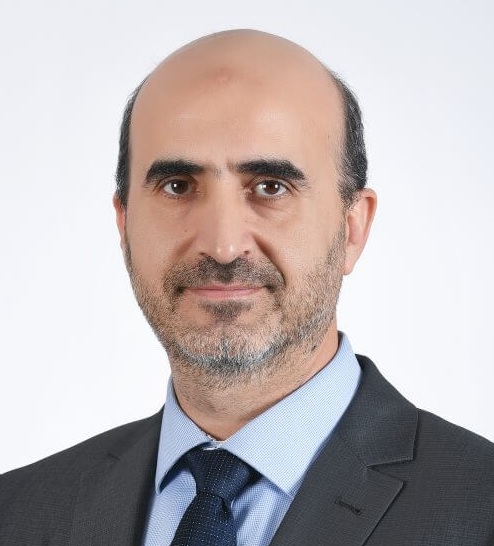
Joel Cariolleمشاهده پروفایل
پژوهشگر ارشد
Joel Cariolle is a Research Fellow at Ferdi Center for Studies and Research on International Development, with strong affiliations to CERDI (Centre d'Études et de Recherches sur le Développement International) at Université Clermont Auvergne. He completed his doctoral studies at the University of Auvergne - Clermont-Ferrand I in 2013 with a thesis examining the complex relationship between export instability and corruption. Dr. Cariolle's research spans multiple critical areas in development studies, with particular focus on digital technology challenges for sub-Saharan Africa, regional integration in Francophone Africa, economic vulnerability, and corruption dynamics. His work demonstrates how digital infrastructure like internet access and mobile technology impacts business resilience during crises, agricultural markets, political perceptions, and financial inclusion across the African continent. His research shows that corrupt strategies may serve as informal risk-coping mechanisms when formal financial markets and state capacity are limited. His publication record reflects consistent productivity with numerous high-impact articles in reputable journals, including Revue Economique, Journal of Comparative Economics, and The Journal of Development Studies. Recent publications (2023-2025) show a strong emphasis on digital technology's role in African development, examining topics from submarine cable infrastructure to digital identification systems. Dr. Cariolle's research methodology combines rigorous quantitative economic analysis with deep contextual understanding of African development challenges. His work often involves constructing and analyzing economic indices, conducting empirical tests of economic relationships, and examining policy implications for development practitioners and policymakers. His current research addresses timely issues including digital identification systems (balancing inclusion promises with exclusion risks), internet infrastructure impacts on agricultural markets, and the relationship between digital technology and political perceptions in Africa. This work demonstrates both continuity with his foundational research on economic vulnerability and adaptation to emerging technological trends affecting developing regions.