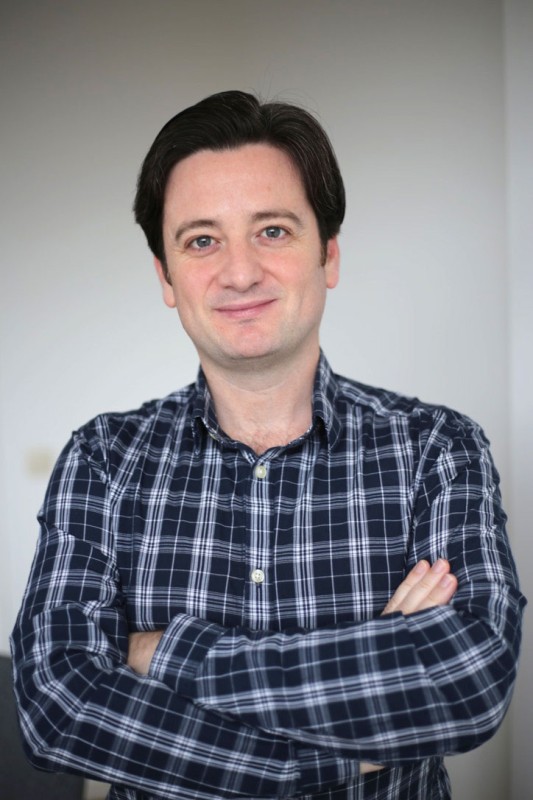
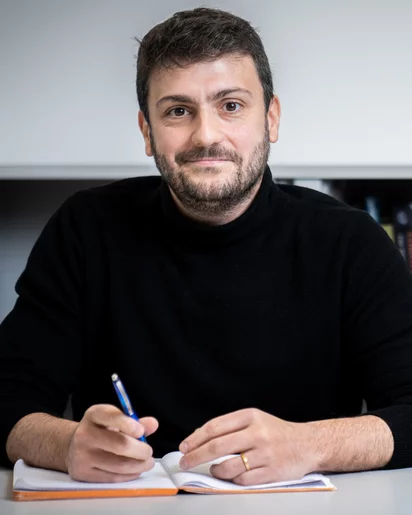
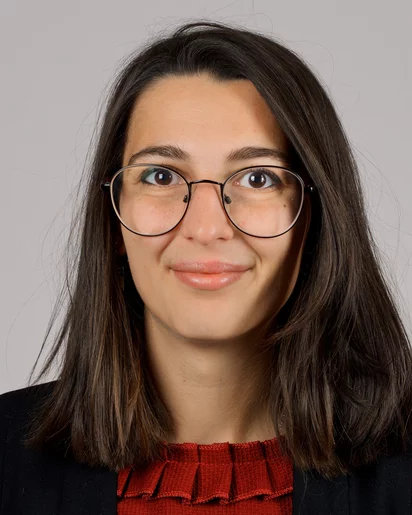
Prof. Dr. Gonzalo Guillén Gosálbez is a Full Professor at the Department of Chemistry and Applied Biosciences , ETH Zürich. He holds a PhD in Process Systems Engineering (UPC, 2005) and has held academic positions at Imperial College London (Reader), University of Manchester (Senior Lecturer), and Universitat Rovira i Virgili (Assistant/Associate Professor). His research focuses on Sustainable Chemical Processes , integrating life cycle assessment, optimization techniques, and planetary boundary analysis to evaluate and design low-carbon technologies. Current position: Full Professor, ETH Zürich (2019–present) Prior roles: Imperial College London (2016–2019), University of Manchester (2014–2016), URV Spain (2008–2014) Education: PhD (UPC, 2005), MEng/BEng (University of Murcia) His research explores CO2 valorization , green methanol synthesis , circular marine fuels , and planetary boundary compliance in energy and chemical systems. Recent work emphasizes machine learning for process modeling, single-atom catalysis , and decentralized ammonia production . Scientific contributions include 15+ peer-reviewed articles (2023–2025) in journals like Nature Chemical Engineering , ACS Sustainable Chemistry & Engineering , and Energy & Environmental Science . Key themes: Optimization of hybrid fossil/renewable carbon systems Environmental impacts of energy transitions Catalyst design for sustainable chemistry Life cycle assessment of emerging technologies Awarded UPC Top Doctoral Student Award and Top National Student Award , he combines process systems engineering with sustainability metrics to address global challenges in chemical and energy systems.
Prof. Jeroen Anton van Bokhoven is a Full Professor at ETH Zurich's Department of Chemistry and Applied Biosciences and Head of the Laboratory for Catalysis and Sustainable Chemistry at Paul Scherrer Institute. His research focuses on establishing structure-performance relationships in heterogeneous catalysts to enable sustainable chemical processes through advanced catalyst design. Education: B.Sc. in Chemistry, Utrecht University (1995) Ph.D. in Inorganic Chemistry and Catalysis (with honours), Utrecht University (2000) Research Focus: Van Bokhoven's group pioneers operando characterization techniques, particularly X-ray absorption spectroscopy and scattering methods, to study catalysts under realistic reaction conditions. Key research thrusts include methane conversion to value-added products (methanol, methyl esters), zeolite catalysis for olefin production, and design of stable catalysts for high-temperature oxidation processes. His work bridges fundamental surface science with industrial applications in sustainable energy and chemical manufacturing. Scientific Recognition: Swiss Chemical Society Werner Prize (2008) Academic Leadership: Van Bokhoven leads a multidisciplinary research group spanning ETH Zurich and Paul Scherrer Institute, supervising doctoral candidates and postdoctoral researchers. His group maintains strategic partnerships with industrial catalyst manufacturers and operates specialized facilities for in situ spectroscopy at the Swiss Light Source synchrotron. Current projects address carbon dioxide utilization, biomass conversion, and fundamental mechanisms of catalyst deactivation. Research Infrastructure: The group leverages state-of-the-art capabilities at the Laboratory for Catalysis and Sustainable Chemistry (PSI), including custom operando cells for XAS, XPS, and electron microscopy under reactive gas environments, enabling atomic-scale observation of catalytic transformations.
Dr. Imad El Haddad serves as Group Head of the Molecular Cluster and Particle Processes group at the Laboratory of Atmospheric Chemistry (LAC), part of the Center for Energy and Environmental Sciences at Paul Scherrer Institute (PSI), Switzerland, since 2018. Previously, he held positions as Tenured Scientist and Deputy Head (2018-2019), Senior Scientist in the Smog Chamber group (2015-2018), and Postdoctoral Fellow (2011-2015) at PSI. His research aims to quantify how anthropogenic emissions alter atmospheric pollutant composition and impact Earth's climate and public health through molecular-level analysis using advanced mass spectrometry techniques. His academic background includes: Ph.D. in Atmospheric Chemistry, University of Provence, Marseille (2007-2011) Master's in Environmental Sciences (with distinction, rank 1/9), University of Provence (2006-2007) Master's in General Chemistry (with distinction, rank 1/10), Saint-Joseph University of Beirut (2005-2006) Bachelor of Science in Chemistry (with distinction, rank 1/14), Saint-Joseph University of Beirut (2002-2005) El Haddad's work centers on molecular fingerprinting of atmospheric aerosols , utilizing mass spectrometry (GC/MS, HPLC/APCI-MS2, HPLC/ESI-MS2) to identify primary and secondary molecular markers. He conducts smog chamber experiments to characterize emissions from wood burning, traffic, and cooking processes, determining secondary organic aerosol potential and oxidation state evolution. His group also studies in-cloud aqueous-phase aging and collaborates with global modelers to link aerosol composition to climate forcing and health outcomes like oxidative stress. Recent publications (2025-2024) reveal three dominant trends: (1) rigorous molecular-scale analysis of secondary aerosol formation under varying humidity/temperature, (2) source apportionment breakthroughs in diverse regions (India, Europe, Arctic) using 14C and AMS data, and (3) quantification of health-relevant aerosol properties such as oxidative potential through DTT assays. High-resolution mass spectrometry is a consistent methodological thread across these studies. His scientific awards include: MENRT research fellowship from French ministry of research (2007-2010) Excellence Scholarship (top 1% student, University of Saint Joseph, 2005) Distinction Prize (best student, University of Saint Joseph, 2005) As Group Head, El Haddad oversees the Molecular Cluster and Particle Processes group's research direction and mentorship of junior scientists. While specific grant details are absent from the text, his leadership in multi-institutional publications (e.g., CERN CLOUD, iCUPE) implies active grant management and international collaboration. The group's work bridges laboratory simulations, field deployments, and health/climate modeling to address air pollution complexities. The Molecular Cluster and Particle Processes group develops cutting-edge online/offline mass spectrometers for 1 Hz-resolution atmospheric analysis. They deploy instruments in laboratory smog chamber experiments and global field studies, focusing on molecular marker identification, emission source characterization, and aging process quantification. Collaborations with biochemists and climate modelers extend their impact beyond pure aerosol physics into health risk assessment and policy-relevant climate science.
Swiss Federal Institute of Technology in LausanneSwitzerland
Meire Ellen Gorete Ribeiro Domingos is a Lecturer and Postdoctoral Researcher at École Polytechnique Fédérale de Lausanne (EPFL), affiliated with the School of Engineering (STI) and Industrial Process and Energy Systems Engineering (IPESE) department. She works on process modeling, techno-economic and environmental analyses, and optimization of energy conversion systems, particularly in biorefineries, hydrogen production, and industrial decarbonization. Education PhD in Chemical Engineering, Polytechnic School of the University of Sao Paulo (2022) BSc in Chemical Engineering, University of Brasilia (2017) Research Interests Exergy and energy integration of chemical/industrial processes Modeling and optimization of energy systems Decarbonization via renewable energy integration Techno-economic and environmental analysis of industrial processes High-temperature heat pumps and carbon capture Multi-time scale optimization for industrial-urban systems Publication Trends Focus on decarbonization pathways (2023-2025) Black liquor gasification for integrated chemical/fuel production (2019-2022) Renewable energy and solid oxide cells for industrial-urban symbiosis (2024-2025) Development of decision-support tools like ROSMose (2023-2024) Life cycle assessment and CO2 management strategies Thermal integration and process simulation for sustainability Laboratory & Teams Industrial Process and Energy Systems Engineering (IPESE), EPFL Valais Wallis SCI-STI-FM and SCI-STI-JVH research groups EPFL School of Engineering (STI)
Dr. Chiara Pischetola is a researcher at the Paul Scherrer Institute (PSI), specializing in catalysis and sustainable chemistry. She is affiliated with the Laboratory for Catalysis and Sustainable Chemistry, focusing on advanced catalytic processes for environmental and energy applications. Her research spans CO2 hydrogenation, methanol production, selective hydrogenation of alkynols, and tandem catalytic reactions. Key methodologies include gas-phase processing, bimetallic catalysts, and hydrogen transfer systems. Recent work explores LDH memory effects, perovskite-supported copper catalysts, and biomass-derived feedstocks. Notable findings include the role of alumina in Ag/ZnO catalysts, mechanistic insights into benzylideneacetophenone synthesis, and innovations in hydrogenation without external H2 supply. Publications emphasize eco-friendly processes using Au-Cu, Pd-Ni, and Fe-ZSM-5 catalysts. Her work addresses carbon capture utilization, sustainable chemical synthesis, and pollution control through heterogeneous catalysis. Current projects focus on optimizing catalyst structures and reaction conditions for industrial scalability.
Prof. Dr. Oliver Kröcher is the head of the Laboratory for Sustainable Energy Carriers and Processes at the Paul Scherrer Institute (PSI) and an Adjunct Professor at the École polytechnique fédérale de Lausanne (EPFL) since 2013. His professional leadership includes chairing the Swiss Competence Center for Energy Research (SCCER BIOSWEET) from 2014–2021 and co-developing a highly efficient DeNOx system for diesel engines, which earned him two major awards in 2005. Education : PhD in Chemical Engineering from ETH Zurich (1994–1997); Chemistry studies at the University of Würzburg (1988–1993) Research Focus : Oliver Kröcher specializes in heterogeneous catalysis for sustainable energy systems, including CO2 conversion , biomass valorization , and DeNOx technologies . His work spans supercritical fluid chemistry , sol-gel synthesis of hybrid catalysts, and industrial process development for catalytic systems in energy applications. Scientific Contributions : His early research on supercritical CO2 hydrogenation and sol-gel derived catalysts laid the foundation for modern CO2 utilization technologies. Later work focused on heterogeneous gas-phase reactions (propene to acrolein, methanol to methyl mercaptan) and catalyst quality control for industrial production plants. Awards : Swiss Technology Award 2005, Special Environmental Prize 2005 (ABB Schweiz AG) Additional Roles : Chief Editor of Frontiers in Fuels since 2022, member of the Extended Energy Commission of the Swiss Academies of Sciences since 2018, and active participant in international advisory boards for catalysis and bioenergy research.
Dr. Fabian Abiusi is a post-doctoral researcher in Sustainable Food Processing at ETH Zurich's Institute of Food, Nutrition and Health, part of the Department of Health Sciences and Technology (D-HEST). His work focuses on developing innovative bioprocesses to convert industrial food by-products into high-quality microalgal biomass using mixotrophic cultivation strategies. His research emphasizes enhancing microalgae productivity through oxygen-balanced systems and improving protein bioaccessibility via in vitro digestion models and cell disruption techniques. His academic background includes a PhD (details unspecified) followed by postdoctoral research at ETH Zurich. Key research themes include acidophilic microalgae (e.g., Galdieria sulphuraria), photobioreactor optimization, and leveraging extremophilic organisms for sustainable food production. He has contributed to projects like the MAB2.0 initiative integrating algae into wastewater treatment systems. Abiusi's publications highlight advancements in mixotrophic cultivation, protein bioaccessibility assessment, and utilization of volcanic microalgae for nutritional applications. Though no awards are explicitly listed, his work aligns with emerging trends in circular bioeconomy and alternative protein sources. His research group collaborates on lab-scale to pilot-scale systems, aiming to bridge gaps between microbial biotechnology and food industry applications.
Western Switzerland University of Applied SciencesSwitzerland
Marti Roger is an Ordentlicher Professor (Full Professor) of Organic Chemistry and Process Chemistry at the University of Applied Sciences and Arts Western Switzerland (HES-SO), specifically at the Haute école d'ingénierie et d'architecture de Fribourg (HEIA-FR). He is a member of the ChemTech Institute of Chemical Technologies and holds a leadership role in research and education in sustainable chemistry. His academic career includes positions at ZHAW Winterthur/Wädenswil (2004–2009) and HEIA-FR since 2009. Education: B.Sc. in Chemistry from Technikum Winterthur and ETH Zurich, followed by a Ph.D. under Prof. Dr. D. Seebach at ETH Zurich. Postdoctoral research at Sandoz Pharma USA and industrial experience at Carbogen AG in pharmaceutical development and scale-up. Research focuses on synthetic organic chemistry, green chemistry, process development, and polymer science. Key projects include biodegradable facemasks (Public Mask project), smart hydrogels for tissue engineering, and sustainable biofuels from PHA. He leads or collaborates in HES-SO-funded projects addressing environmental challenges in materials and energy sectors. Teaching responsibilities include B.Sc. courses in organic chemistry (aromatic compounds, carboxylic acids, organometallic reactions) and M.Sc. courses in process chemistry and polymer applications. He emphasizes flow chemistry education and sustainable process design. Notable achievements include scaling up diformylxylose production from biomass, designing mini-CSTR reactors for oxidation reactions, and developing biodegradable polymers for medical use. His work balances academic innovation with industrial relevance, guided by life-cycle assessments for environmental impact minimization. Labs/Teams: Active in ChemTech Institute and collaborates with partners like Hepia, iTEC, and VS-Instituts. Projects span from bio-based materials to CO2-neutral fuels and eco-concretes.
Dr. Tilman Schildhauer is a Senior Scientist at the Paul Scherrer Institute (PSI) in Switzerland, affiliated with the Laboratory for Sustainable Energy Carriers & Processes. He has held leadership roles in Swiss IEA Bioenergy Task 44 and coordinated the Energy System Integration platform ESI. Education: PhD in Chemical Engineering (ETH Zürich, 2001), Diploma in Chemical Engineering (University of Dortmund, 1996). Research Interests: Focus on thermochemical processes for energy storage and biomass conversion, including methanation for synthetic natural gas (SNG) and Power-to-Gas, methanol synthesis, fluidized bed hydrodynamics, gas cleaning, process chain analysis, heat/mass transfer in reactors, and multifunctional reactor design. Publication Trends: Recent work emphasizes fluidized bed reactors for methanation, techno-economic-environmental assessments of Power-to-X, sulfur poisoning/regeneration in catalysts, and carbon negative biofuel synthesis. His studies span chemical reaction engineering, reactor design, and sustainable energy systems. Scientific Recognition: Watt d’Or award (2018, 2009) for methanation projects Collegium Helveticum fellowship (2000/2001) Grants & Collaborations: Involved in IEA Bioenergy Task 44, leading Swiss flexible bioenergy initiatives, and collaborative projects with institutions like ETH Zürich and Technical University of Delft. Labs & Teams: Works at PSI’s Energy System Integration platform, leading methanation research and advising on catalytic processes.
Robin Lewis Modini is a Tenured Staff Scientist at the Paul Scherrer Institute (PSI) in Switzerland, working within the Laboratory of Atmospheric Chemistry since 2012. He leads research on atmospheric aerosols with expertise in aerosol optics, health impact mechanisms, and climate interactions. His position evolved from Tenure-Track Scientist (2016-2020) to Tenured Staff Scientist (2020-present), following postdoctoral work at EPFL (2012-2016) under Prof. Satoshi Takahama and Scripps Institution of Oceanography (2010-2012) under Prof. Lynn Russell. Education includes: PhD in Physics from Queensland University of Technology, Australia (2007-2010) with thesis on marine aerosol water uptake under Prof. Zoran Ristovski Bachelor of Applied Science with Honours in Physics from Queensland University of Technology, Australia (2002-2005) His research centers on aerosol health effects through oxidative potential measurements (SNSF project), in situ characterization of black carbon optical properties (ACTRIS/EUROCHAMP), and bridging observational gaps between ground-based and remote sensing data (BISAR project). Key methodologies involve the Single Particle Soot Photometer (SP2), machine learning applications, and field campaigns at Jungfraujoch and Zeppelin Observatory. Current work emphasizes combustion aerosol toxicity and Arctic aerosol-cloud interactions. Recent publications (2022-2025) show consistent focus on instrument validation, oxidative potential quantification, and black carbon behavior across environments. Trends include advancing real-time health-relevant metrics (e.g., dithiothreitol assays), refining optical property measurements (CAPS monitors, polar nephelometers), and analyzing transcontinental pollution transport (Africa-Amazon, Bolivia-Andes). International collaborations through ACTRIS and EUROCHAMP underpin high-impact work in Aerosol Science and Technology, Atmospheric Chemistry and Physics, and Nature Communications. No scientific awards were mentioned in the provided text. Modini directs SNSF-funded health impact studies and participates in European projects (ACTRIS, EUROCHAMP, BISAR) examining aerosol optical properties and oxidation processes. His AC/BC project conducted black carbon measurements in Arctic clouds at Svalbard's Zeppelin Observatory. While he served as postdoc adviser at EPFL and Scripps, no current advisees are listed. Notable grants include Swiss National Science Foundation support for aerosol health research and European infrastructure funding for chamber studies. He operates within the Aerosol Physics Group at PSI's Laboratory of Atmospheric Chemistry, utilizing SP2 photometers and custom polarimetric instruments. The group conducts field campaigns across Switzerland (Jungfraujoch), Bolivia (La Paz), Southern Ocean (Antarctic Circumnavigation Expedition), and Arctic regions, with international teams including ETH Zurich and UC San Diego collaborators. Current efforts focus on machine learning integration for aerosol-cloud interaction modeling and health metric development.
Swiss Federal Institute of Technology in LausanneSwitzerland
Jeremy Luterbacher is a Tenure-Track Assistant Professor at École Polytechnique Fédérale de Lausanne (EPFL) and leads the Laboratory of Sustainable and Catalytic Processing. His research focuses on biomass conversion, catalytic processes, and sustainable materials development. Education: BS/MS in Chemical Engineering (EPFL, 2005-2007), PhD in Chemical and Biomolecular Engineering (Cornell, 2012). Postdoctoral Training: Swiss National Science Foundation Scholar at University of Wisconsin-Madison (2012-2014). His work specializes in lignin valorization, green solvent design, and catalytic strategies for renewable resource utilization. Recent articles highlight advancements in aldehyde-stabilized lignin, computational solvent screening, and multi-fidelity optimization frameworks. Scientific Honors: ERC Starting Grant (2017) University Latsis Prize (2019) Sustainable Chemistry & Engineering Lectureship (ACS, 2021) He has developed methods for biomass fractionation, enzyme immobilization, and sustainable polymer synthesis, with applications in biofuel production and eco-friendly materials.
Dr. Daniel Prati is a plant population biologist and postdoctoral researcher at the University of Bern's Institute of Plant Sciences, Department of Plant Ecology. His research focuses on ecological genetics, life-history evolution, and species interactions, particularly in the context of belowground interactions of non-indigenous invasive species. He is a project leader involved in the Biodiversity Exploratories initiative, studying plant diversity mechanisms and coexistence in grassland ecosystems. Combining observational and experimental approaches, his work utilizes field and common garden studies to address ecological dynamics under environmental pressures like drought and land-use changes. He is affiliated with the University of Bern, where his role emphasizes collaborative, large-scale research projects. His contributions span over 100 publications, covering topics such as biodiversity effects on ecosystem resilience, land-use impacts on plant communities, and the interplay between plant traits and environmental conditions. Research interests include understanding how biodiversity influences ecosystem functioning, particularly under extreme conditions like drought, and the role of invasive species in altering ecological interactions. His work bridges theoretical and applied ecology, informing strategies for biodiversity conservation and sustainable land management.
University of Applied Sciences and Arts Northwestern SwitzerlandSwitzerland
Dr. Alan Pérez is a Researcher at the University of Applied Sciences and Arts Northwestern Switzerland (FHNW), affiliated with the School of Life Sciences and the Institute for Chemistry and Bioanalytics. His work focuses on chemical engineering and biotechnology, particularly in process intensification, sustainable biomass processing, and liquid membrane technologies. He has contributed to research on deep eutectic solvents for pulping, lactic acid fermentation optimization, and advanced separation systems for bio-products. His research interests span environmental science and biochemical engineering, with a strong emphasis on developing sustainable solutions for industrial biotechnology. Key projects include integrating liquid membranes into fermentation processes and studying phase equilibria in chemical systems. Dr. Pérez has authored/co-authored multiple peer-reviewed publications in journals such as Biomass Conversion and Biorefinery , Frontiers in Chemistry , and Chemical Engineering and Processing . His work addresses challenges in renewable resource utilization and process efficiency.
Fiseha Tesfaye is an Adjunct Professor (Metallurgical Thermodynamics) at Åbo Akademi University's Faculty of Science and Engineering, affiliated with the Laboratory of Molecular Science and Engineering. He also serves as a Process Metallurgist at Metso Metals Oy and holds editorial roles at JOM (Springer Nature). He holds a Ph.D. in Metallurgy and M.Sc. in Materials Processing Technology from Aalto University. His research focuses on metallurgical thermodynamics, circular economy of materials, and renewable energy production, emphasizing sustainable metal recovery and low-carbon technologies. He has published over 100 peer-reviewed works and edited multiple research books. His expertise includes pyrometallurgy, recycling processes, and EMF-based thermodynamic studies. Key achievements include advancing solid-state EMF techniques and contributions to circular economy frameworks. Awards include the 2018 TMS Young Leader Award and Springer Nature editorial honors (2025). Dr. Tesfaye supervises undergraduate/postgraduate students and teaches courses like Chemical Thermodynamics and Inorganic Materials. He leads major projects such as GLCE (greener metal extraction) and innovative e-waste recycling initiatives. His work addresses UN SDGs related to sustainable consumption and climate action.
Emmanuel Frossard is a Full Professor at the Department of Environmental Systems Science at ETH Zurich, Switzerland. His research focuses on nutrient efficiency in agricultural systems, particularly phosphorus, nitrogen, zinc, and cadmium dynamics across soil-fertiliser-plant interfaces and semi-natural ecosystems. He integrates advanced techniques like isotope tracing (33P, 15N), NMR spectroscopy, ICP-MS, and molecular methods in laboratory, greenhouse, and field experiments. His work emphasizes sustainable nutrient management strategies to enhance food security while preserving soil health. As President of the Swiss National Research Program on soil (NRP 68), he drives national soil research initiatives. The group also explores nutrient cycling in agroecosystems, aquaponics, and climate-impacted environments like subarctic treelines and vineyards. Recent publications highlight his interdisciplinary approach to nutrient modeling, fertilizer efficiency, trace metal dynamics, and climate adaptation in crops like winter wheat and yams. Collaborations extend to Stanford University (2013) and institutions in West Africa, the Amazon, and Europe.