João Ferreira is an Assistant Professor at the Faculty of Biotechnology, Universidade Católica Portuguesa, and a Researcher at the Centre for Biotechnology and Fine Chemistry (CBQF). He coordinates the ERASMUS+ program and previously led the MSc program in Biomedical Engineering. His research focuses on biotechnological engineering applications in health and food sectors, including hydrocolloids, micro/nanoemulsions, and dairy technology. Education: PhD in Biological and Medical Sciences (1998). Research interests span bio/macromolecule interactions, controlled-release systems, and industrial process energetics. He leads projects like VIIAFOOD (food innovation) and BioShoes4All (bioeconomy). Recent publications emphasize hemodialysis applications of chitosan and fluid dynamics studies. His work bridges academic research with industrial collaboration.
Morten Ambye-Jensen is an Associate Professor in the Department of Biological and Chemical Engineering at Aarhus University, specializing in biorefinery technology and sustainable protein production. His work focuses on optimizing green biorefining processes for agricultural residues to produce high-value products like biochar, proteins, and bio-based materials while minimizing environmental impact. Key research interests include: Development of integrated biorefinery systems for grasses and legumes Protein extraction from residual biomass for food and feed applications Life cycle assessment of bio-based technologies Waste-to-resource valorization strategies Climate-smart agricultural practices He leads or collaborates on major projects such as Green Valleys 2.0 (2023-2025) and ENTRANCE (2022-2025), which aim to create circular bioeconomies and reduce reliance on imported soybeans. His research also explores energy-efficient processing techniques and biochar applications in agriculture. Notable achievements include advancing fractionation technologies for alfalfa and grass-clover biomass, and demonstrating how pyrolysis integration can enhance biorefinery energy efficiency while producing valuable biochar.
Prof. Dr. Stephan Schiemann is a faculty member at Leuphana University of Lüneburg specializing in Sports Science and Health Sciences . With over 122 publications and active research in physical education, strength training, and rehabilitation, his work focuses on biomechanics, muscle adaptation, and digital health interventions. Key Research Areas: Strength training, flexibility protocols, youth athlete development, inclusive sports, and digital health applications Projects: KITA GUT & GESUND, RoBaTaS (Rollstuhlbasketball), HeaLinGo (health-language integration) Research Trends Recent publications analyze: Strength-performance correlations across sports (basketball, cross-country skiing) Long-term stretching effects on muscle hypertrophy Measurement error differentiation in ultrasound diagnostics Comparative training methods for plantar flexors His work bridges theoretical development with practical applications in school sports and rehabilitation.
Kevin T. Vaughan is an Associate Professor in the Department of Biological Sciences at the University of Notre Dame, with a research focus on the cell biology of cancer and neurodegenerative diseases. He is a member of the Harper Cancer Research Institute and conducts mechanistic studies on mitosis, organelle transport, and cholesterol trafficking. Research Interests: Cell Biology of human diseases Mitosis and cell cycle regulation Neurodegeneration, particularly Niemann-Pick Type C disease Cancer therapeutics and combinatorial drug treatments Cholesterol transport mechanisms Cytoplasmic dynein function in cellular dynamics His research employs mass spectrometry and animal models to investigate novel regulatory pathways in mitosis and to develop new therapies for pancreatic and breast cancer. The lab has discovered a new cholesterol transport pathway disrupted in NPC disease and is exploring potential corrective strategies. Recent Research Trends: Dr. Vaughan's recent publications emphasize the role of cytoplasmic dynein in mitotic processes, kinetochore dynamics, and organelle transport. His work bridges fundamental cell biology with translational applications in cancer and rare genetic disorders. Key themes include motor protein regulation, mitotic spindle assembly, and intracellular trafficking defects in disease. Scientific Affiliations: Member, Harper Cancer Research Institute Faculty, College of Science, University of Notre Dame Advising and Research Support: As a principal investigator, Dr. Vaughan leads a research laboratory focused on cellular mechanisms of disease. He collaborates on interdisciplinary projects related to cancer therapeutics and neurodegeneration. His lab receives institutional support through the University of Notre Dame and the Harper Cancer Research Institute, enabling studies in both basic and applied biomedical research. Laboratory and Team: The Vaughan Laboratory is based in the Galvin Life Science Center and conducts research on mitotic regulation and cholesterol transport. The team utilizes biochemical, cellular, and imaging approaches to study disease mechanisms and test novel therapeutic strategies in model systems.
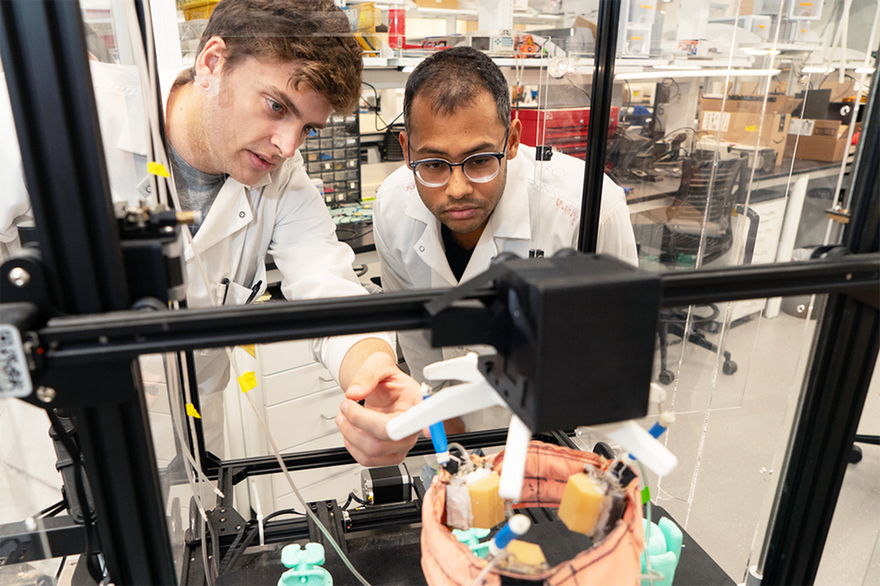
Victoria Webster-Wood is an Associate Professor at the College of Engineering , Carnegie Mellon University , where she leads the Biohybrid and Organic Robotics Group (B.O.R.G) . Her research integrates organic materials into robotics as structures, actuators, sensors, and controllers for biohybrid robots and prosthetics. Education: Ph.D., Mechanical Engineering, Case Western Reserve University (2017) M.S., Mechanical Engineering, Case Western Reserve University (2013) B.S., Mechanical Engineering, Case Western Reserve University (2012) Research Interests focus on biohybrid robotics , biologically inspired systems , soft robotics , additive manufacturing , biomechanics , and computational modeling . Her work spans applications in medical robotics , micro/nano manufacturing , and environmental monitoring . Scientific Awards include being named to ASME’s 2025 MechE Watch List and awarded MIT Technology Review’s 35 Innovators Under 35 (2023) . Collaborations involve projects like neurodegenerative disease therapy tools and soft robotic tactile sensors for manufacturing , supported by the Manufacturing Futures Institute and NextManufacturing Center .
Dr. Gary K. Owens is a Professor in the Department of Molecular Physiology and Biological Physics at the University of Virginia , with a secondary appointment in the Department of Medicine, Division of Cardiology. He serves as Director of the Robert M. Berne Cardiovascular Research Center and leads groundbreaking research on vascular smooth muscle cell (SMC) dynamics in atherosclerosis. His work challenges conventional paradigms about SMC roles in plaque stability and thromboembolic events. Primary Affiliation: University of Virginia Key Titles: Robert M. Beirne Professor of Cardiovascular Research, Professor, Director of CVRC Research Themes include: Cardiovascular Biology Atherosclerosis Pathogenesis Smooth Muscle Cell Plasticity Epigenetic Regulation Inflammatory Signaling Tumor Metastasis Mechanisms Publication Trends (2015–2024) reveal expertise in Nature Medicine and Circulation studies, focusing on SMC gene regulation (Klf4/Oct4), plaque stability, and cross-talk between vascular cells and tumors. His work demonstrates that SMCs account for >80% of advanced lesion cells and that Klf4 inhibition reduces metastasis by >70%. Lab Leadership includes mentoring PhD students Anita Salamon and Victoria Milosek , alongside senior scientists and postdocs. Collaborations span with Dr. Gwen Randolph (Washington University) and Dr. Rosey Kaplan (NIH) on IL1β signaling and metastasis.
Kimberly A. Gray is the Roxelyn and Richard Pepper Family Chair in Civil and Environmental Engineering and a Professor of Civil and Environmental Engineering (courtesy appointment in Chemical and Biological Engineering) at Northwestern University's McCormick School of Engineering . She holds a Ph.D. in Geography and Environmental Engineering from Johns Hopkins University, an M.S. in Civil Engineering from the University of Miami, and a B.A. in Biology from Northwestern University. Ph.D.: Geography and Environmental Engineering, Johns Hopkins University M.S.: Civil Engineering, University of Miami B.A.: Biology, Northwestern University Gray's research spans environmental chemistry , applied ecology , and urban sustainability . She focuses on synthesizing photo-active nanomaterials (e.g., TiO2-based composites) for water/air treatment and resource recovery, while investigating their ecotoxicological impacts. Her work includes NSF-funded projects on stormwater management in low-income communities and climate-resilient urban systems . She also collaborates with the Chicago Legal Clinic to address environmental justice. Recent publications highlight her expertise in nanomaterials for environmental applications , ecotoxicology under light exposure , and green infrastructure modeling . Her articles often intersect climate action , materials science , and sustainable urban design . NSF Presidential Young Investigator Award McCormick Excellence Award in Research, Teaching and Citizenship Sigma Xi Distinguished Lecturer Aldo Leopold Leadership Fellow Gray mentors numerous Ph.D. and Master's students, including Carolyn Wilke and Yechan Won , and has led large collaborative teams on projects like the NSF LEAP-HI initiative. Her lab integrates environmental catalysis with ecosystem services to address global challenges in water scarcity , energy systems , and urban sustainability .
Professor Paul Fletcher is a Principal Investigator at the Institute of Metabolic Science, University of Cambridge, and holds the Bernard Wolfe Health Neuroscience Fund. He is affiliated with the Department of Psychiatry and collaborates with Professors Steve O’Rahilly, Sadaf Farooqi, Fiona Gribble, and Frank Reimann. His research bridges neuroscience and psychiatry to explore higher-level perceptual and learning processes shaping decision-making and behavior, particularly in relation to obesity and mental disorders. Academic Rank: Professor University: University of Cambridge School: Institute of Metabolic Science Department: Psychiatry Fletcher employs functional neuroimaging, behavioral studies, and pharmacological perturbations (e.g., dopamine agonists/antagonists) to investigate reward-related brain processes and their role in food choice, obesity, and psychiatric conditions like psychosis. His work emphasizes the integration of the brain with metabolic/endocrine signals and external environments. Key trends in his publications include predictive coding , delusions , neuroimaging , and virtual reality applications in mental health. Recent studies focus on anxiety , foraging behavior , schizophrenia , and health interventions . Scientific Awards Bernard Wolfe Health Neuroscience Fund Wellcome Trust Senior Clinical Fellow Fletcher’s research is funded by Wellcome and the Bernard Wolfe Fund, with collaborations spanning psychiatry, psychology, and clinical neuroscience. His work addresses mental health , obesity , and neurocognitive mechanisms of decision-making, supported by recent publications in top-tier journals.
Kohei Nakajima is an Associate Professor at the Department of Intelligent Mechano-Informatics, Graduate School of Information Science and Technology, The University of Tokyo. He holds concurrent positions at the Department of Creative Informatics and the Next Generation Artificial Intelligence Research Center (AI Center). As an Endowed Chair in Advanced Artificial Intelligence Education, he leads the Physical Intelligence Lab, which focuses on the intersection of soft robotics, nonlinear dynamics, and physical computing. His research interests center on Physical Reservoir Computing (PRC), a paradigm that exploits the natural dynamics of physical systems for computation, with applications in soft robotics, spintronics, and quantum machine learning. Nakajima's work demonstrates how physical systems can inherently process information without traditional digital computation, leveraging phenomena like chaos, bifurcations, and embodied intelligence. Nakajima's publications reveal a strong focus on understanding how physical systems can perform computational tasks. His recent work spans from biological applications (jellyfish cyborgs, ostrich-inspired robotics) to fundamental theoretical advances in reservoir computing. The research demonstrates how physical phenomena can be harnessed for information processing, with implications for energy-efficient computing and novel robotic control paradigms. As the organizer of the Reservoir Computing Seminar, Nakajima has built a vibrant research community exploring the nature of information processing across disciplines. His lab actively recruits graduate students and postdocs, indicating strong research momentum and institutional support for his work in physical intelligence.
Dr. Tamas Mona is a Postdoctoral Research Associate in the Department of Plant Sciences at the University of Cambridge , affiliated with the Epidemiology and Modelling Group . His work focuses on environmental suitability models for large-scale epidemiological forecasting, particularly in wheat rust outbreaks across Africa, the Middle East, and Asia. Collaborations include the UK Met Office, CIMMYT, and institutions in Ethiopia, Kenya, Bangladesh, and Nepal. PhD in Environmental Sciences (2019), Eötvös Loránd University MSc in Meteorology (2013), Eötvös Loránd University BSc in Physics with Meteorology (2011), Eötvös Loránd University Research interests integrate meteorological applications with epidemiological models to predict crop disease outbreaks. Key projects involve tracking transmission pathways for stem rust pathogens and analyzing how irrigation creates green bridges for intercontinental pathogen spread. Publications emphasize environmental science and computational epidemiology . Current collaborations span Sub-Saharan Africa (EIAR, ATI, KARLO) and South Asia (BWMRI, NARC) through initiatives like the Global Food Security IRC . Modeling frameworks developed by Mona contribute to policy advisory systems for emerging pest threats, aligning with DEFRA and UK government strategies.
Katherine Berthon is a postdoctoral Research Fellow at the Department of Zoology, University of Cambridge. Her work focuses on urban biodiversity, agroecology, and invasive species impacts. University: University of Cambridge Department: Zoology Academic Rank: Research Fellow Her research emphasizes: Urban Ecology and biodiversity conservation Regenerative agriculture practices Invasive species management (notably myrtle rust) Pollinator dynamics and green infrastructure Recent publications highlight trends in: Designing urban habitats for arthropods Green roof integration in cities Climate-resilient agricultural systems Policy frameworks for biodiversity-sensitive urban design
Associate Professor Michael Jack is a faculty member in the Department of Physics at the University of Otago, specializing in sustainable energy research that bridges theoretical physics with practical applications. His work focuses on transforming energy systems through innovative approaches to renewable integration and nanoscale energy conversion. His academic foundation includes undergraduate studies at the University of Canterbury and postgraduate work at the University of Auckland, followed by postdoctoral positions at Hiroshima University, Tokyo Institute of Technology, NTT Basic Research Laboratories, and Rice University. After serving as Science Leader of Clean Technologies at Scion until 2014, he joined the University of Otago as a Senior Lecturer before advancing to Associate Professor. Professor Jack's research spans two critical domains: smart energy systems for grid flexibility and nanoscale energy conversion using molecular motors. His team develops mathematical frameworks to optimize renewable integration through technologies like EVs and energy storage, while exploring thermal fluctuations in biological nanomachines to inspire next-generation energy-efficient technologies. This work contributes significantly to Active Matter research and sustainable energy transitions. His 2024-2025 publications reveal a concentrated effort on New Zealand's energy challenges, employing interdisciplinary methods from statistical physics to machine learning. Key themes include electric vehicle integration, residential energy demand modeling, and hydrogen transportation systems - all addressing the urgent need for low-carbon energy solutions through rigorous quantitative analysis. Professor Jack leads a collaborative research group working with the Centre for Sustainability (CSAFE), University of Canterbury, and Scion's Dr. Katharine Challis. His teaching portfolio includes EMAN 308 Thermoprocesses 2, EMAN 403 Linear Systems and Control Theory, and EMAN 405 Energy Practice (which he coordinates), preparing students for energy system challenges through hands-on practice.
Robert Gore, MD is a Clinical Assistant Professor in the Department of Emergency Medicine at SUNY Downstate College of Medicine. He earned his medical degree from SUNY Buffalo in 2002 and completed his residency training at Cook County Hospital in Chicago, IL. Dr. Gore's professional interests focus on Youth Violence prevention, Resident Education methodologies, International Health initiatives, and Diversity in medical practice. His research spans multiple disciplines including emergency medicine, respiratory medicine, immunology, and global health. Analysis of Dr. Gore's publication history from 2002-2024 reveals a strong focus on respiratory conditions (particularly asthma), immunology, and clinical education. His recent work has concentrated on severe asthma treatments, biologic therapies, and health disparities in global contexts. He has contributed to significant studies including the UK Severe Asthma Registry and clinical exome sequencing projects for immune phenotypes. Dr. Gore maintains active clinical and research engagement across multiple medical specialties, with publications appearing in high-impact journals including Nature, Journal of Allergy and Clinical Immunology, and European Respiratory Journal.
Terry A. Wheeler is a Professor at Texas A&M AgriLife Research in the Department of Plant Pathology and Microbiology , based in Lubbock. Her work focuses on managing soilborne pathogens affecting cotton, including nematodes and fungal diseases like Verticillium and Fusarium wilt. Research Interests : Identification and management of cotton plant pathogens Testing chemical/biological seed treatments for nematode control Systems-based projects analyzing tillage, irrigation, and crop rotation effects on pathogens Publication Trends : Recent articles emphasize cotton variety resistance to nematodes/fungal wilts, field trial methodologies, and integrated pest management strategies across Texas High Plains production systems. Scientific Contributions : Conducted multi-year variety screening trials for bacterial blight and wilt resistance Developed nematode management protocols for cotton producers Provided extension resources for regional pest/disease control Education : B.S. in Plant Science, Worcester Polytechnic Institute M.S. in Plant Pathology, Texas A&M University Ph.D. in Plant Pathology, North Carolina State University
Joel Johnson is a Professor in the Department of Earth Sciences at the University of New Hampshire. He teaches courses in Earth History, Structural Geology, Sedimentology, Geotectonics, Geological Oceanography, and research-focused classes. With a Ph.D. in Geological Oceanography from Oregon State University and an M.S. in Structural Geology & Tectonics from the University of Illinois at Urbana-Champaign, his research spans gas hydrate systems, sedimentology, and methane cycling in marine environments. Ph.D., Geological Oceanography, Oregon State University M.S., Structural Geology & Tectonics, University of Illinois at Urbana-Champaign B.S., Geology, University of Minnesota Duluth His work examines gas hydrate dynamics in settings like Hydrate Ridge (Cascadia margin) and Svyatogor Ridge (Fram Strait), focusing on crustal processes , fluid flow mechanisms , and authigenic carbonate formation . Studies in the Gulf of Mexico and Indian continental margins analyze hydrate accumulation controls, while Arctic lake research explores methane emission temperature sensitivity and microbial influences . Collaborative projects include 3D seismic analysis , tectonic stress modeling , and monsoon-driven sedimentation in the Bay of Bengal and Andaman Sea. Recent publications highlight earthquake-enhanced carbon cycling in deep sediments (2023), primary deposition controls on gas hydrate reservoirs (2022), and crustal-scale methane systems in Arctic regions (2022). His 15 most recent articles span 2023-2014, emphasizing gas hydrate systems , methane seepage , sedimentary diagenesis , and tectonic influences on fluid flow. Subfields include authigenic carbonate formation , 3D seismic imaging , isotopic geochemistry , and late Quaternary climate reconstructions . Contact: Joel.Johnson@unh.edu