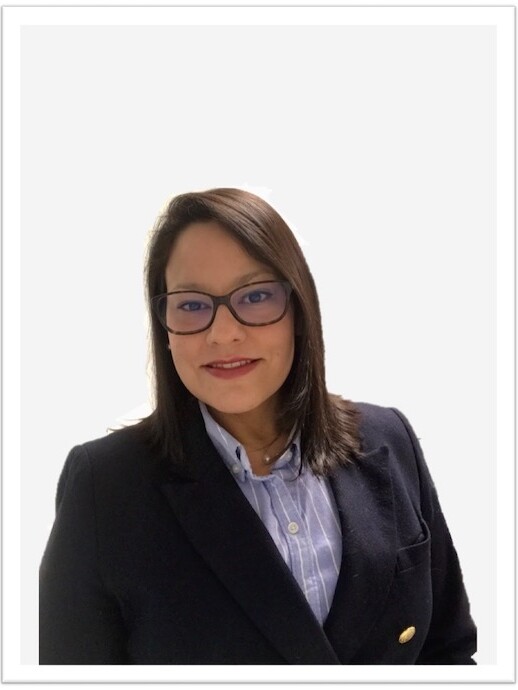
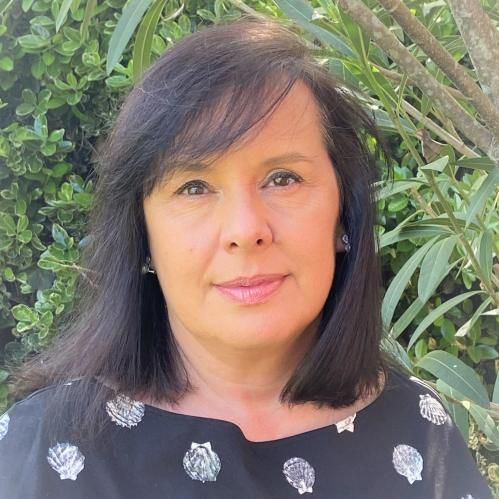
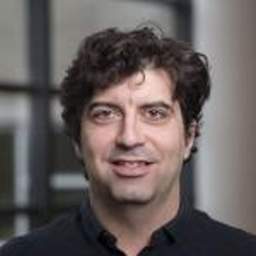
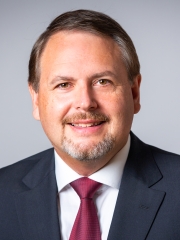
Elif Nuroglu is Professor in the Faculty of Economics and Administrative Sciences at Turkish-German University. Her research examines international economics, trade modeling, green growth strategies, and Balkan economic development. She applies econometric methods including gravity models to analyze trade patterns, regional integration, and post-pandemic economic restructuring. Key publications explore the economic implications of COVID-19, competitive dynamics between Turkey and Germany in the Balkans, and methodological advances in trade modeling. Research consistently addresses development challenges in Southeast Europe while analyzing global economic transformation processes. Nuroglu contributes policy analysis to media outlets including Anadolu Agency and serves on the Board of Trustees of the International University of Sarajevo.
Dhanay Cadillo Chandler is a Researcher at the University of Turku’s Faculty of Law and a Visiting Professor at LUISS School of Law (Italy). She holds a Ph.D. from Hanken School of Economics (2014), a Master’s in Foreign Trade from Universidad Carlos III de Madrid, and a law degree from MonteÁvila University in Venezuela. Her work focuses on the intersection of intellectual property rights, public health policies, and international trade law. Key professional affiliations include: Post-Doctoral Researcher at Turku Institute of Advanced Studies (2018–2019) Collaborator on the Academy of Finland’s Constitutional Hedges of Intellectual Property (CONST-IP) project Course instructor for Intellectual Property, International Law, and Law & Information Society at the University of Turku Research interests emphasize: Human rights dimensions of patent law Access to medicines in developing nations Corporate social responsibility in pharmaceutical industries TRIPS Agreement implementation flexibility Biotechnology patent frameworks Recent scholarship addresses: Covid-19 vaccine distribution challenges in the Andean Community EU compulsory licensing conflicts during health crises Interplay between bioeconomy and sustainable development Teaching responsibilities include doctoral-level courses on international intellectual property law and technology governance.
Jayanta Sarkar is an Associate Professor of Economics at the School of Economics & Finance, Queensland University of Technology (QUT). His research focuses on health economics, development economics, behavioral economics, and macroeconomic modeling. He has authored/co-authored over 20 publications since 2006, with recent work addressing behavioral epidemiology frameworks for pandemics, vaccine demand drivers, and the economic implications of policies like daylight saving time. His research interests span child health programs, occupational economics, inflation dynamics, and public policy evaluation. Notable projects include analyses of child labor persistence in declining poverty contexts, parental preferences in health interventions, and Nobel laureate career longevity patterns. He collaborates frequently with institutions like QUT and co-authors such as Dipa Sarkar, Uwe Dulleck, and Benno Torgler. His publications appear in journals like PLoS ONE, Economic Modelling, and Health Economics. While no scientific awards are explicitly listed, his work has been cited across diverse topics including epidemiology, behavioral economics, and urban economics.
Dr. Sean Pascoe is an Adjunct Professor at Queensland University of Technology (QUT) in the School of Economics & Finance. He holds a PhD from the University of Portsmouth and is a Senior Principal Research Scientist at CSIRO's Division of Marine and Atmospheric Research, leading the Marine Resource Economics Team since 2006. His research focuses on bioeconomic modeling of fisheries, spatial management strategies, and the economics of marine biodiversity conservation. Key contributions include analysis of maximum economic yield in fisheries, coral bleaching impacts, and marine park benefits. He has authored over 130 publications and received prestigious awards like the CSIRO Medal (2009) and Newton Turner Award (2012). Dr. Pascoe supervises PhD/Masters students in fisheries, aquaculture, and marine conservation economics. His work integrates socioeconomic objectives with environmental management, addressing challenges such as offsets for fisheries impacts and recreational fishing valuation.
John Cranfield is an Associate Dean (External Relations) and Professor in the Department of Food, Agricultural and Resource Economics at the Ontario Agricultural College (University of Guelph). He holds a PhD from Purdue University and undergraduate/master’s degrees from the University of Guelph. His research focuses on consumer behavior and demand analysis in food systems, including studies on food traceability, country-of-origin labeling, and the economic impacts of food safety concerns like BSE (mad cow disease). He has also explored topics such as ethnic food markets, long-term BMI trends in settler societies, and the economic implications of animal welfare standards in poultry production. Education: Bachelor's and Master's in Agricultural Economics, University of Guelph PhD in Agricultural Economics, Purdue University Research Interests: Consumer decision-making in food purchasing Impact of information on market choices (e.g., labeling, certifications) Economic analysis of agricultural policies and trade regulations Historical trends in nutrition and body metrics Ethics in food production and animal welfare His work frequently bridges economic theory with applied policy analysis, addressing issues such as food safety perceptions, trade barriers, and the valuation of ethical production practices. Recent studies highlight trends in consumer preferences for traceable food products and the economic consequences of climate stress on livestock systems. Grant and Industry Collaboration: Cranfield collaborates with industry stakeholders on projects funded through agricultural commodity boards and government initiatives, focusing on maximizing returns from research and marketing investments. His research has informed policy debates on labeling requirements and food safety protocols. Labs/Teams: He contributes to interdisciplinary teams at the University of Guelph’s Food, Agricultural Resource Economics (FARE) research group, evidenced by publications in FARE Share newsletters.
Dr Isaac Towers is a Senior Lecturer in the School of Physical, Environmental and Mathematical Sciences at UNSW Canberra. His research spans mathematical ecology, wildfire modeling, nonlinear dynamics, and combustion science, with a focus on developing mathematical models to understand complex natural phenomena. Dr Towers' research interests primarily focus on: Mathematical ecology and population dynamics Wildfire spread prediction and fire risk modeling Nonlinear dynamics and pattern formation in ecological and physical systems Combustion waves in competitive exothermic reactions Network-based analysis of microbial communities His recent publications demonstrate a strong trend toward interdisciplinary research that bridges mathematics with environmental science and ecology. Many of his papers focus on developing stochastic models for wildfire spread that incorporate environmental variables like wind patterns and fuel accumulation. Other work applies mathematical modeling to understand plant trait distributions in response to precipitation and other environmental drivers. His earlier work focused more on nonlinear optical phenomena and combustion waves, showing an evolution in research interests toward ecological applications. Dr Towers has supervised numerous graduate students working on diverse projects including: Sahar Masoudian: Stochastic modelling of bushfire spread Zakir Hossine: Understanding differential abundance in microbial ecology using community structure Luis Mijangos Aruajo: Genetics for Forecasting and Managing Biodiversity Rashed Saifuddin: Developing realistic models for stressed ecosystems Hamizah Safuan: Mathematical Analysis of Population Growth Subject to Environmental Change (2014 Ria de Groot Prize Winner) At UNSW Canberra, Dr Towers teaches undergraduate courses in linear algebra and discrete mathematics, including Mathematics 1A, Engineering Mathematics 1A, and Introduction to Discrete Mathematics.
Maite Moreira is a Professor of Chemical Engineering at the University of Santiago de Compostela , affiliated with the Higher Technical School of Engineering and the Center for Interdisciplinary Research in Environmental Technologies (CRETUS) . She holds a PhD in Chemical Engineering from the same university, with a thesis focused on biobleaching processes using fungi peroxidases (1997). Her research spans bioprocess engineering, wastewater treatment, life cycle assessment, and circular economy frameworks. Education: BSc in Chemical Engineering (1992), MSc (1994), PhD (1997) from University of Santiago de Compostela. Postdocs at Wageningen Agricultural University (Netherlands) and University of Arizona (USA). Research Focus: Development of bioreactors for micropollutant removal, valorization of agro-industrial waste, sustainability assessments of biofuels, and nanotechnology applications in environmental engineering. Research Interests include: - Fermentation processes for enzymes and probiotics - Biodegradation of pharmaceuticals and pesticides using white-rot fungi - Nanomaterial-based systems for wastewater treatment - Life cycle assessment (LCA) and circular economy metrics Her recent work emphasizes multi-criteria approaches for bioeconomy strategies and sustainability assessments of biofuels like black liquor-based fuels. Over 140+ publications and multiple patents (e.g., magnetic nanoparticle-based reactors) reflect her innovation in environmental biotechnology. Awards: Pescaenverde Technology Transfer Award (2018) Best Oral Presentation at International LCA Conference (2018) Aquaenvec BEST LIFE Environment Project (2015) Teaching & Leadership: - Leads the BIOGROUP research team in environmental biotechnology - Teaches graduate courses in Environmental Engineering and Bioprocesses - Supervises doctoral/MS students in sustainability and biotechnology projects Current Projects: - Multiscale Ocean models for climate risk mitigation (MORAI) (2024-202X) - NANAQUA: Nanomaterials in water treatment (EU-funded, 2024)
Esther Callcott is a Senior Lecturer in Veterinary Technology at Charles Sturt University, School of Agricultural, Environmental and Veterinary Sciences. She serves as the Head of Discipline for the Bachelor of Veterinary Technology program, leading academic operations and managing a partnership with Goulburn Ovens TAFE to integrate Certificate IV in Veterinary Nursing into the degree. She is actively engaged in teaching, research, and industry advocacy. Education: PhD in Medical Biochemistry, Charles Sturt University (2019) Graduate Certificate in Learning and Teaching in Higher Education, Charles Sturt University (2022) Bachelor of Medical Sciences (Honours), Macquarie University (2009) Certificate IV in Veterinary Nursing, TAFE NSW (2009) Her research and teaching focus on medicinal biochemistry, biodiscovery, and clinical competency development . She emphasizes student learning through simulation in surgical and ultrasound techniques. Her research investigates natural bioactive compounds—particularly polyphenols from pigmented rice and marine algae—for their role in reducing oxidative stress, inflammation, and metabolic disease risk. She employs laboratory, animal, and human clinical trials to evaluate nutraceuticals and functional foods. The recent research articles reflect a strong trend in veterinary education innovation, diagnostic ultrasound protocols, and natural therapeutics . Her work bridges veterinary technology training with public health, biosecurity, and interdisciplinary collaboration. She is also active in community outreach and media engagement to promote the role of veterinary technologists. Scientific Awards: 3-Minute Thesis Runner Up (2018) Best Student Presentation (2018) Teaching Academy Grant Awardee (2025) Successful Grant: Evaluation of macroalgal species in marine oyster ecosystems (2023) Esther Callcott has supervised Honours and PhD students and currently mentors HDR candidates. She has led multiple grant applications, both successful and unsuccessful, in areas spanning veterinary parasitology, marine biotechnology, and functional nutrition. Her work is supported by collaborations across institutions and industry. She is involved in several labs and research teams, including projects on canine ultrasound diagnostics, algal bioactives, and veterinary simulation models . She collaborates with researchers from Murdoch University, industry partners, and government bodies. Her team, 'Paws for a Purpose,' engages in community events to promote animal welfare and public health awareness.
Michael Walsh is a senior academic and researcher at the Gulbali Research Institute, affiliated with Charles Sturt University, where he contributes significantly to agricultural sciences, particularly in weed management and sustainable cropping systems. His work supports global sustainability goals, especially in food security and responsible land use. His research interests center on herbicide resistance , weed detection , and harvest weed seed control , with a strong emphasis on innovative, technology-driven solutions. He explores the integration of digital agriculture, including AI and image-based systems, to enhance precision farming and long-term weed control strategies. Recent publications highlight a shift toward machine learning and decision support tools in weed management, with a focus on Australian grain production. His influential review articles provide comprehensive insights into 50 years of weed science, identifying future opportunities for scalable, sustainable solutions in large cropping systems. Weed Science Herbicide Resistance Precision Agriculture Digital Weed Detection Integrated Weed Management Sustainable Cropping Systems Michael Walsh has been cited over 2000 times with an h-index of 25, reflecting substantial scholarly impact. He serves as a registered supervisor, mentoring emerging researchers in agricultural science. His collaborative network spans national and international institutions, focusing on bioeconomic modeling, agroecosystem resilience, and technological innovation in weed control. He leads research on tools like the Avena Integrated Management (AIM) system, aiming to transform weed management practices in grain farming.
Alina Rossa is a Researcher at the Institute of Economics, University of Hohenheim, since August 2023. Her work focuses on bioeconomic sustainability, particularly the economic implications of renewable energy generation and bio-based resource utilization. Education: Bachelor's in Business Administration, Master's in Bioeconomy (University of Hohenheim) Her research spans: Profitability analysis of renewable energy in agriculture Bio-based resource integration in construction Economic modeling of sustainable practices
Dr. Ana Maria Raluca Gherman is a Recognised Researcher (R2) at the National Institute for Research and Development of Isotopic and Molecular Technologies (INCDTIM) in Cluj-Napoca, Romania. She works in the Department of Isotopic and Molecular Technologies as part of the Complex Molecular and Biomolecular Systems research team. Her educational background includes: MSc in Biophysics and Medical Physics (2013) from Babeș-Bolyai University, Cluj-Napoca, Faculty of Physics PhD in Physics (2023) from Babeș-Bolyai University, Cluj-Napoca, Doctoral School of Physics Dr. Gherman specializes in molecular and chemical physics with a focus on advanced spectroscopic techniques and computational methods. Her research integrates experimental approaches with theoretical modeling to address complex problems in biomolecular systems. Her primary research interests span molecular physics, chemical physics, computational chemistry, vibrational spectroscopy (particularly Raman spectroscopy), molecular docking, and multivariate analysis. She applies these techniques to pathogen identification, biomolecular characterization, and receptor-ligand interactions, with applications in drug development and medical diagnostics. Dr. Gherman has been actively involved in multiple significant research projects focused on pathogen detection using advanced spectroscopic methods: High-throughput nanoscreening platform for SERS monitoring of antibiotics' activity on antibiotic-resistant pathogens (2020-2022) Development of a microfluidic portable device for pathogen's rapid SERS detection (2017-2018) Pathogenic microorganisms' rapid detection and identification using high sensitive Raman spectroscopy (2015-2017) Increasing technological and knowledge transfer capacity in the field of bioeconomics (2016-2021) Her research demonstrates a consistent focus on developing innovative, rapid diagnostic methods for pathogen identification that could significantly improve clinical outcomes, particularly for antibiotic-resistant infections. She has collaborated extensively with Babeș-Bolyai University while conducting her research at INCDTIM. The methodologies she develops are notable for being rapid, label-free, cost-effective, reliable, portable, and ultrasensitive, with potential applications in point-of-care diagnostics for sepsis and other infectious diseases.
Francisco Javier Garcia Cutrin is a Full-Time Professor at the Department of Mathematics, College of Marine Sciences, University of Vigo. He holds a PhD from the University of Vigo (1993) with a thesis on "Núcleo y equilibrio en economías con N-tipos de agentes" , advised by Dr. Carlos Hervés Beloso. His research spans Mathematical Analysis , Game Theory , Economics , and Operations Research , focusing on continuum economies, social cost analysis, and fishery management. His recent publications (2015–2021) address climate change impacts , bioeconomic models , and EU fisheries policy . Notable works include "Robust Harvest Control Rules" (2015) and "Climate change and Forest disturbances in Europe" (2021). His contributions integrate economic theory with real-world policy challenges , emphasizing sustainability and stakeholder engagement. He collaborates with institutions like the Interuniversity Research Center for Economics, Business Administration, and Society (ECOSOT) and applies aggregation functions and mathematical modeling to marine and environmental economics. His work appears in journals such as Mathematical Social Sciences and Extracta Mathematicae .
Emad Yaghmaei is a Senior Researcher at the Faculty of Technology, Policy and Management at Delft University of Technology. Additionally, he serves as Managing Director of YAGHMA B.V., blending academic research with practical consulting in innovation management. His work focuses on the intersection of science, technology, and society, particularly for emerging technologies like Artificial Intelligence (AI), with an emphasis on integrating ethical values, Sustainable Development Goals (SDGs), and Responsible Research and Innovation (RRI) frameworks into industrial contexts. Research Interests: Responsible Innovation Performance Management, RRI, Embedding Social/Ethical Values into Technology, SDG Assessment, Technology Ethics. His publications highlight the application of RRI in diverse sectors such as nanotechnology, ICT, and biotechnology, with a focus on metrics, stakeholder engagement, and policy alignment. Notably, he explores synergies between technology assessment and RRI, as well as frameworks like PRISMA and SUPER MoRRI for ethical innovation. He also contributes to understanding cybersecurity ethics and value conflicts.
Dr. Peter Michael Link is a Senior Lecturer at the University of Hamburg's Institute of Geography and an associated member of the Cluster of Excellence CliSAP. His affiliations include leadership roles in geographical societies such as the Arbeitskreis 'Geographie der Meere und Küsten' (AMK) and former board membership in the Association of American Geographers' Coastal and Marine Specialty Group. His research examines: Climate change impacts on land use and conflict/cooperation dynamics in Africa Socio-economic consequences of renewable energy development in Northern Germany Integration of security aspects into climate impact models Coupling of optimization techniques with Geographic Information Systems Primary geographical focus areas include the Nile River Basin and Northern German coastal regions. He leads research within the Climate Change and Security research group and specializes in human-environment interactions using quantitative modeling approaches.
Baiba Rivza is a Professor at the Faculty of Economics and Social Sciences, Latvia University of Life Sciences and Technologies. Her affiliations include: Professor at Latvia University of Life Sciences and Technologies Regular contributor to the International Multidisciplinary Scientific GeoConference SGEM Her research explores three interconnected domains: Sustainability Transitions : Develops frameworks for circular economies, municipal sustainability metrics, and green competitiveness strategies. Recent work includes creating a Circular Economy Index for municipalities and analyzing ESG implementation pathways. Digital Transformation : Investigates digitization impacts across agriculture, public administration, and business innovation. Key studies examine paperless governance benefits, bioeconomy digitalization risks, and precision farming adoption barriers. Regional Development : Focuses on rural economies through business incubator modeling, gastronomic heritage tourism, and pandemic-era employability solutions. Cross-border comparative analyses (e.g., Latvia-Lithuania) inform policy recommendations. Her publications show strong emphasis on: Practical applications for public administration and business innovation Methodological development of assessment tools and metrics EU policy alignment, particularly regarding green transitions