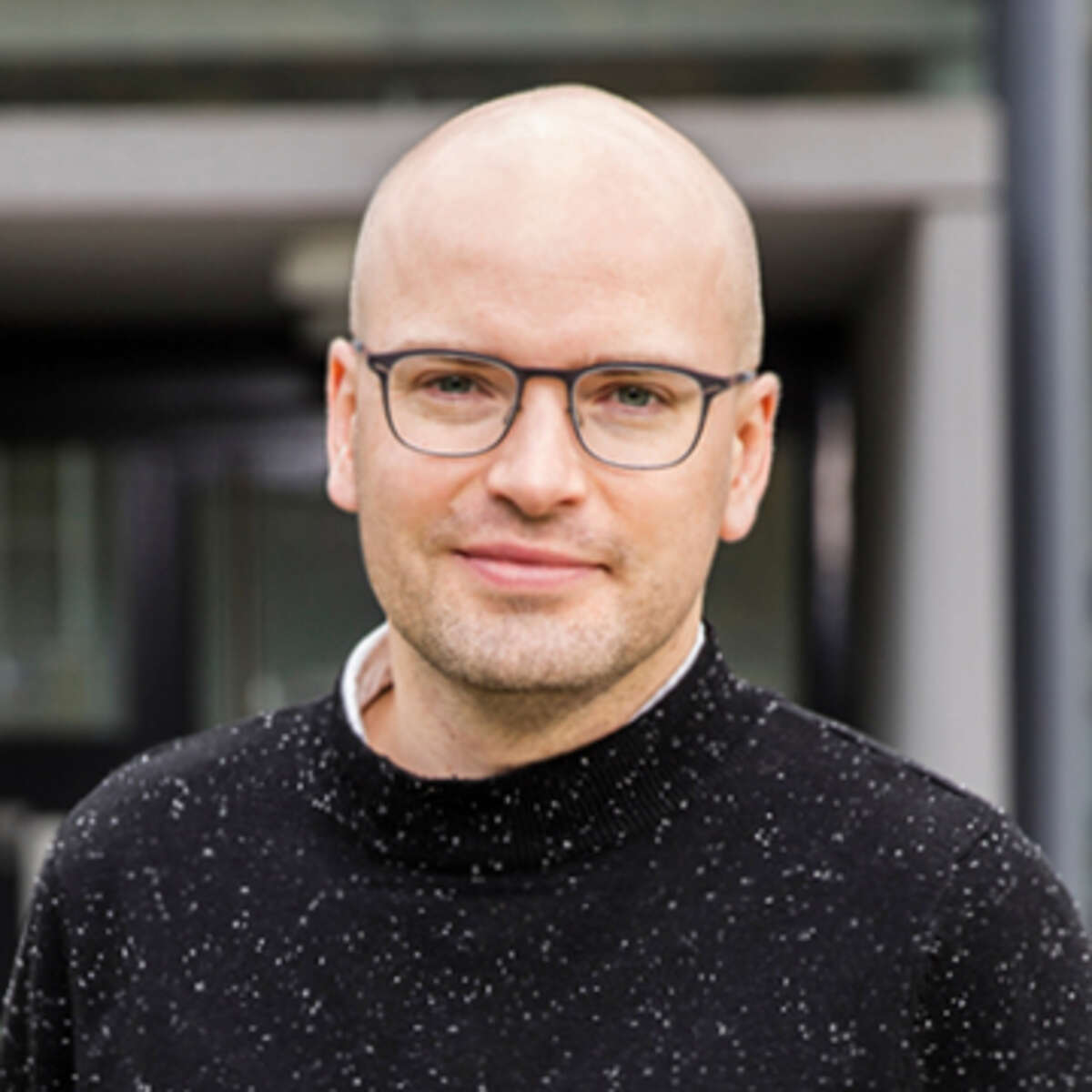
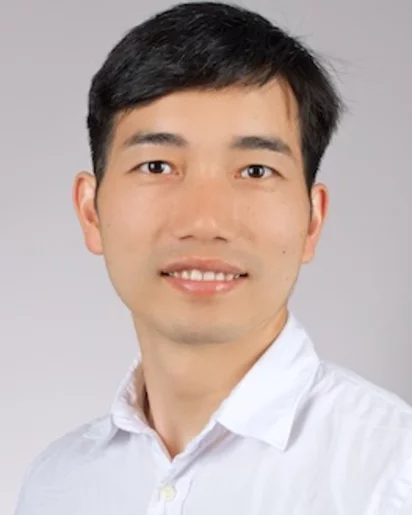
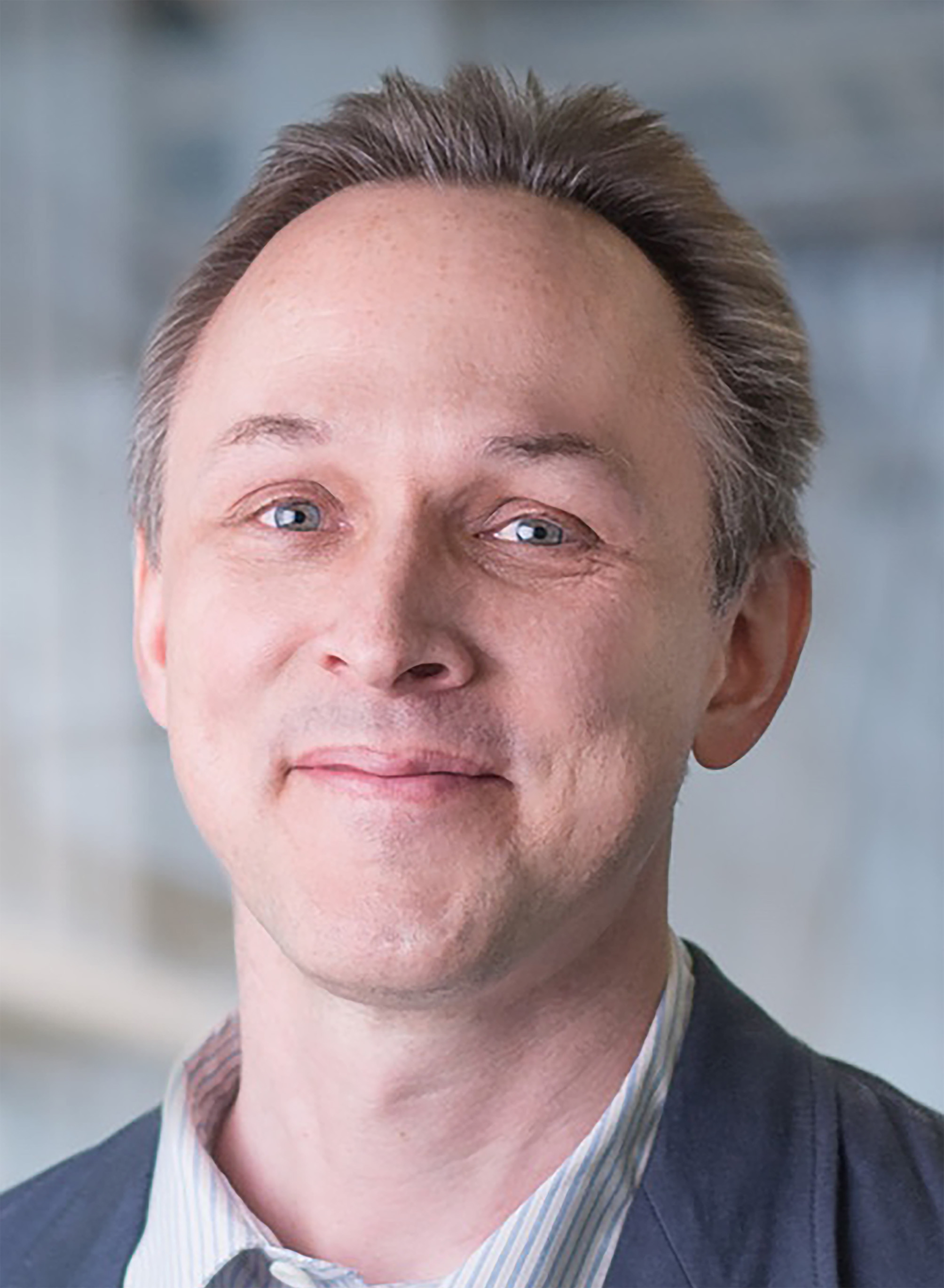
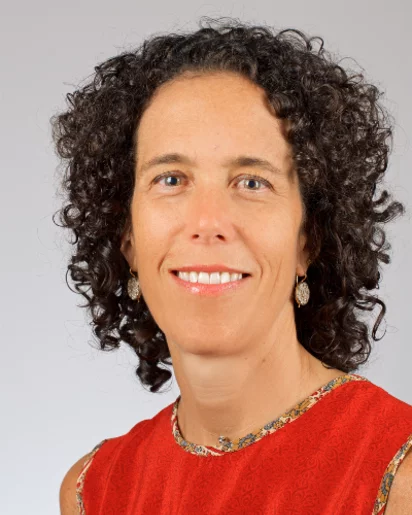
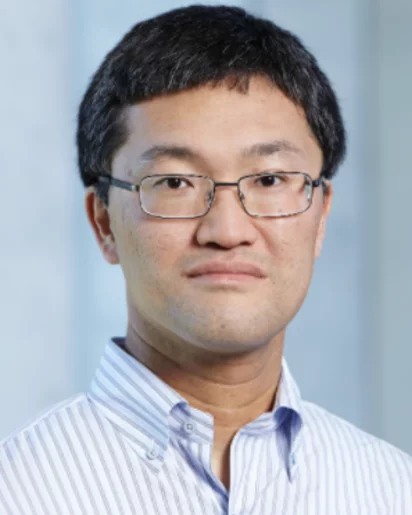
Prof. Knut Drescher is an Associate Professor at the Biozentrum, University of Basel , leading a research group focused on bacterial biofilms , swarming , and microbial multicellularity . Previously, he served as a Professor of Biophysics and Max Planck Research Group Leader at Philipps-Universität Marburg (2015-2021) and conducted postdoctoral research at Princeton University. Research Interests: Physical and biological mechanisms of biofilm formation Cell-cell interactions in microbial communities Antibiotic resistance in biofilms Hydrodynamics of bacterial swarms Evolution of cooperation in multispecies biofilms Development of bioimaging software (BiofilmQ, BacStalk) Scientific Awards: 2023: SNSF Consolidator Grant 2019: Heinz Maier-Leibnitz Prize (DFG), VAAM Research Prize, IUPAP Young Scientist Prize 2016: ERC Starting Grant Advising & Grants: Advises PhD and Master's students in microbiology, biophysics, and bioinformatics Secured major grants from ERC , HFSP , and DFG
Daniel Sage is a Lecturer and Scientific Advisor at École polytechnique fédérale de Lausanne (EPFL) , affiliated with the Biomedical Imaging Laboratory (LIB) under the College of Engineering (STI) and School of Life Sciences (SV) . He specializes in bioimage informatics , structured-illumination microscopy , and deep learning applications for biomedical imaging. His work spans algorithm development for single-molecule localization microscopy (SMLM) , fluorescence imaging , and 3D reconstruction . His research group has developed open-source tools like FlexSIM for light inhomogeneity correction, DeepImageJ for integrating deep learning in ImageJ, and Steer'n'Detect for orientation-accurate template detection. His publications focus on correcting multiple-blinking artifacts in PALM, optimal transport metrics for SMLM evaluation, and contextual feature analysis for xenograft cell classification. He mentors PhD students and contributes to interdisciplinary education through courses such as Bioimage Informatics and Fundamentals of Image Analysis , emphasizing practical software solutions and Java programming for bioimage processing. His collaborations include institutions like Howard Hughes Medical Institute and Centre National de la Recherche Scientifique (CNRS) .
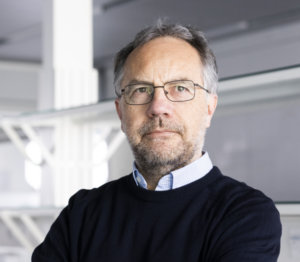
Ueli Grossniklaus is an Ordinary Professor at the University of Zurich within the Faculty of Mathematical and Natural Sciences , affiliated with the Department of Plant and Microbiology . His work focuses on plant developmental biology, particularly epigenetic and genetic mechanisms governing reproduction and adaptation. Key Courses: Epigenetics, Plant Biology Workshop, Group Seminars on Current Research Laboratory Techniques: Advanced methods in plant cell mechanics, transcriptomics, and genome editing Research Interests span plant epigenetics, reproductive biology, and the interplay between environmental stress and genetic regulation. He investigates: Mechanistic control of gametogenesis and fertilization Epigenetic contributions to plant adaptation Evolutionary implications of asexual reproduction Biophysical forces in plant cell growth Publication Trends (2025–2018) reveal expertise in: Arabidopsis and fern model systems Epigenetic regulation (DNA methylation, histone dynamics) Apomixis and hybrid seed failure mechanisms Biomechanics of pollen tubes and carnivorous plants Genome editing tools (CRISPR) and long-read sequencing Scientific Collaborations include interdisciplinary projects on: Microfluidic devices for plant cell analysis Gene drive ecology and ethics 3D imaging of plant reproductive structures Advising and Grants focus on mentoring through research internships in developmental biology, genetics, and systems biology. His lab engages in: Epigenetic response to environmental stress Cell wall mechanics in reproduction Computational modeling of plant growth Laboratory Teams integrate plant biologists, bioengineers, and computational scientists to study: Mechanistic gene regulation Evolutionary developmental biology Microrobotics for cellular force measurement
Nicolas Chiaruttini is a Lecturer and Scientist at École Polytechnique Fédérale de Lausanne (EPFL), affiliated with the School of Life Sciences. He serves in the BioImaging and Optics Core Facility (PTBIOP) and contributes to doctoral education through the EDMS - Teaching program. Institution: École Polytechnique Fédérale de Lausanne (EPFL) School: School of Life Sciences Department: BioImaging and Optics Core Facility Roles: Scientist, Lecturer Office: AI 0140, Building AI, Station 15, 1015 Lausanne, Switzerland Contact: +41 21 693 96 29 | nicolas.chiaruttini@epfl.ch ORCID: 0000-0003-4722-6245 Unit Websites: BioImaging and Optics Core Facility , EDMS Program His research and professional interests center on bioimaging, optics, and image processing, particularly in the context of life sciences and micro/nano-sciences. These areas are reflected in his dual role supporting advanced imaging technologies and teaching in doctoral programs. He teaches the course Image Processing for Life Science , which integrates computational techniques with biological imaging applications. While no recent publications or awards are listed in the provided text, his work is aligned with interdisciplinary research at the intersection of engineering, physics, and biology. Nicolas Chiaruttini is actively contributing to both research infrastructure and academic education at EPFL, demonstrating a commitment to advancing scientific methodology and training the next generation of researchers in quantitative imaging and analysis.
Gioele La Manno is an Assistant Professor (tenure track) at the École Polytechnique Fédérale de Lausanne (EPFL), affiliated with the School of Life Sciences (SV) and the Department of Life Sciences Engineering. He leads the Unité du Prof. La Manno (UPLAMANNO) and holds roles in teaching and doctoral education within the SSV-ENS and Programme doctoral Biologie computationnelle et quantitative . His research focuses on single-cell genomics, cellular heterogeneity, and systems biology approaches to study developmental and neural systems. La Manno’s educational background includes a strong foundation in computational and quantitative biology, reflected in his teaching of courses like Biological data science I: statistical learning and Scientific literature analysis in neuroscience . His lab explores interdisciplinary methods combining genomics, epigenomics, and machine learning to dissect cell fate decisions and tissue organization. He actively contributes to doctoral programs, supervising over a dozen PhD students and advising theses on topics ranging from nervous system development to drug sensitivity profiling. His work bridges basic research with translational applications, such as clinically compliant cell cryopreservation for regenerative medicine. La Manno collaborates across EPFL’s Life Sciences Engineering ecosystem, leveraging state-of-the-art technologies like mass spectrometry imaging and single-cell RNA velocity modeling. His lab’s recent studies address lipidome dynamics, glial diversity in the CNS, and the molecular regulation of midbrain dopaminergic neurons.
Jinghui Luo is a Research Professor and Principal Investigator at the Paul Scherrer Institute's Laboratory for Multiscale Bioimaging in Switzerland. Her research focuses on neurodegenerative diseases, particularly amyloid protein aggregation mechanisms. Luo's team investigates amyloid oligomers using nanopore engineering, cryo-electron microscopy, and single-molecule techniques to understand their role in Alzheimer's and Parkinson's diseases. Key research areas include α-synuclein phase separation, tau protein dynamics, and metal ion interactions with amyloid proteins. Her recent work demonstrates strong emphasis on protein oligomer characterization, liquid-liquid phase separation phenomena, and developing innovative trapping methods for single-molecule analysis. Publications consistently integrate structural biology with biophysical approaches. Luo has received prestigious awards including the NIH Director's Early Independence Award and Siebel Scholarship. She currently mentors six graduate students and postdoctoral researchers in her laboratory.
Aleksandra Radenovic is a Full Professor at École Polytechnique Fédérale de Lausanne (EPFL) holding multiple positions across the institution. She is a Full Professor at the Laboratory of Nanoscale Biology (LBEN) within the School of Engineering (STI), a Full Professor in Teaching at the School of Life Sciences (SV), and a Full Professor in Teaching at the School of Engineering (STI). Additionally, she serves as Co-Director of both the IBI-STI and IBI-SV administrative units, and is a Member of both the STI School direction and SV School direction. Dr. Radenovic received her PhD from the University of Lausanne in 2003, where she worked with Prof. Dietler in the Laboratory of Physics of Living Matter. Prior to that, she studied physics at the University of Zagreb from 1994-1999, and completed her baccalaureate at a Classical gymnasium in 1994. She conducted postdoctoral research at the University of California, Berkeley from 2004-2007 in the group of Prof. Liphardt. Her research focuses on single molecule biophysics, with particular emphasis on developing techniques and methodologies based on optical imaging, biosensing, and single molecule manipulation. Her laboratory works on three major research directions: (i) developing and using nanopores as platforms for molecular sensing and manipulation, particularly solid-state nanopores in glass nanocapillaries and 2D-material membranes; (ii) studying biomolecular function, especially protein and nucleic acid interactions, using force-based manipulation techniques like optical tweezers and Anti-Brownian Electrokinetic traps; and (iii) developing super-resolution optical microscopy based on single molecule localizations for quantitative cellular imaging. Her work bridges physics, engineering, and biology to create innovative tools for understanding molecular processes at the nanoscale. Analysis of her recent publications reveals a strong focus on nanofluidics, 2D materials (particularly MoS 2 and hBN), nanopore sensing, super-resolution microscopy, and the development of novel instrumentation for biophysical applications. Her research demonstrates increasing interdisciplinary collaboration, integrating materials science, nanotechnology, and biological applications to address fundamental questions in molecular biophysics. Dr. Radenovic has received numerous prestigious awards and grants, including: 2021: ERC Advanced Grant 2021: Optica Fellow 2016: CCMX Materials challenge award 2015: SNSF-ERC Consolidator Grant 2010: ERC Starting Grant 2003: SNSF Fellowship She has successfully advised numerous PhD students whose research spans single molecule biophysics, nanofluidics, and optical techniques. Her laboratory, the Laboratory of Nanoscale Biology (LBEN), is well-equipped for advanced biophysical research, with capabilities in nanopore fabrication, optical trapping, super-resolution microscopy, and 2D materials characterization. Dr. Radenovic has secured significant research funding through competitive grants, including multiple ERC grants, which have supported her innovative research program at the intersection of physics, engineering, and biology.
Professor Jeffrey W. Bode serves as Full Professor at the Department of Chemistry and Applied Biosciences at ETH Zurich, Switzerland, and maintains a secondary affiliation with the Institute of Transformative Biomolecules at Nagoya University, Japan. His internationally recognized research laboratory develops novel chemical reactions that operate under physiological conditions, bridging synthetic organic chemistry with biological applications. The Bode Research Group specializes in creating chemical methodologies that function in water and biological environments, including proteins, cells, and tissues. Their major research thrusts include acylboronate chemistry (particularly potassium acyltrifluoroborates or KATs), protein synthesis through ketoacid-hydroxylamine (KAHA) ligation, synthetic fermentation for drug discovery, and SnAP chemistry for N-heterocycle synthesis. These innovations enable applications in wound healing, drug delivery, cellular encapsulation, and artificial tissue development. The group's work on chemoselective ligation reactions has fundamentally advanced amide bond formation without traditional coupling reagents. Recent publications demonstrate a strong trajectory toward automated synthesis platforms, protein engineering, advanced bioconjugation techniques, and applications in chemical biology. The group has successfully commercialized SnAP chemistry through Sigma Aldrich and developed KAHA ligation into a robust method for synthesizing large proteins. Their research consistently focuses on creating molecules inaccessible through existing technologies, with particular emphasis on physiological compatibility and biological relevance. Professor Bode leads an international research team of approximately thirty PhD students and postdoctoral researchers from twenty different countries. The Bode Research Group maintains extensive collaborations across disciplines, contributing significantly to chemical biology, medicinal chemistry, and materials science. Their laboratory is equipped with advanced automation platforms for organic synthesis and maintains strong connections with pharmaceutical and biotechnology industries for translational applications of their chemical methodologies.
Professor Pascal Fua is a distinguished faculty member at EPFL (Swiss Federal Institute of Technology) in the School of Computer and Communication Science. He joined EPFL in 1996 and currently serves as Head of the Computer Vision Laboratory (CVLAB). His extensive research spans multiple cutting-edge areas in computer vision and geometric deep learning, with applications ranging from 3D reconstruction to medical imaging and aerodynamic optimization. Dr. Fua's research interests encompass Computer Vision, 3D Reconstruction, Shape Modeling, Geometric Deep Learning, Medical Image Analysis, Augmented Reality, Motion Recovery, Surface Mesh Processing, and Aerodynamic Shape Optimization. His work demonstrates a remarkable ability to bridge theoretical computer vision with practical applications across diverse domains. His research has evolved from traditional geometric computer vision techniques to incorporating deep learning approaches for 3D modeling, with recent focus on differentiable rendering, implicit surface representations, and applications in medical imaging and engineering design. His publication record shows a consistent trajectory of high-impact research, with recent work focusing on differentiable iso-surface extraction, geometric deep learning for aerodynamic shape optimization, and novel approaches to 3D reconstruction. His work spans both theoretical advances in computer vision algorithms and practical applications in medical imaging, autonomous driving, and computational fluid dynamics. IEEE Fellow Multiple ERC Grants recipient Associate Editor of IEEE Transactions for Pattern Analysis and Machine Intelligence Throughout his career, Professor Fua has mentored numerous PhD students who have gone on to make significant contributions in computer vision and related fields. His laboratory has established collaborations across multiple disciplines, including medical imaging, aerospace engineering, and neuroscience, demonstrating the broad applicability of his research. His current work continues to push the boundaries of geometric deep learning and 3D vision, with particular emphasis on making these techniques more practical and applicable to real-world engineering and medical problems.
Federica Marone Welford is a Beamline Scientist at the TOMCAT beamline of the Swiss Light Source (SLS) at the Paul Scherrer Institute (PSI) . She holds an Earth Sciences degree with a focus on seismology and a PhD in seismology from ETH Zurich , following a postdoctoral fellowship at the Berkeley Seismological Laboratory . Her work centers on advancing tomographic reconstruction algorithms, mitigating artifacts, and optimizing computational infrastructure for high-speed X-ray imaging at the TOMCAT beamline. Research Focus: X-ray tomography methodology, data compression, real-time reconstruction systems, and applications in paleontology, earth sciences, additive manufacturing, and energy research. Collaborations: Engages with global researchers and industry partners, particularly in battery/fuel cell analysis and laser powder bed fusion. Teaching: Lectures at ETH Zurich on X-ray imaging techniques. Publications highlight her contributions to X-ray scattering tensor tomography, dynamic process visualization, and computational advancements in imaging systems.
Prof. G.V. Shivashankar is a Full Professor of Mechano-Genomics at ETH Zurich and holds a joint appointment at the Paul Scherrer Institute (PSI), Switzerland. He previously served as Deputy Director of the Mechanobiology Institute (MBI) at the National University of Singapore (NUS), where he also held the IFOM-NUS Chair Professorship. His research focuses on nuclear mechanics, genome regulation, and cancer diagnostics, integrating optical imaging, machine learning, and functional genomics. Educated at The Rockefeller University (PhD, 1994–1999) and with postdoctoral training at NEC Research Institute, he has led groundbreaking studies on nuclear mechanogenomics and mechano-driven cell fate transitions. Awards include the Birla Science Prize (2006), Swarnajayanthi Fellowship (2007), and EMBO membership (2019). His work bridges disciplines, exploring how mechanical forces influence nuclear architecture and gene regulation. He leads the Laboratory of Multiscale Bioimaging at PSI, collaborating with IFOM in Milan. Current projects include developing nuclear biomechanical markers for early cancer diagnosis and AI-driven analysis of chromatin dynamics. Grants include support from the Mechanobiology Institute, Ministry of Education (Singapore), and the IFOM-MBI Joint Lab. Notable achievements include detecting chemoresistant cancer cells via chromatin biomarkers and reprogramming fibroblasts for tissue regeneration. His lab actively mentors students and collaborates globally on mechanobiology applications in health and disease.
Professor Takashi Ishikawa is a distinguished researcher and Group Leader at the Paul Scherrer Institute (PSI) in Switzerland, where he heads the Laboratory for Multiscale Bioimaging within the PSI Center for Life Sciences. His work focuses on the structural biology of eukaryotic flagella and cilia using advanced electron cryo tomography and microscopy techniques. Dr. Ishikawa's research program centers on understanding the 3D molecular architecture and functional mechanisms of flagellar/ciliary components, particularly dynein motor proteins. His laboratory employs cutting-edge cryo-EM methodologies to visualize biological macromolecules and organelles in their native hydrated states, enabling three-dimensional reconstructions at increasingly higher resolutions. The team's work has revealed critical insights into the molecular arrangement of dyneins and other proteins on microtubule doublets, the structural basis of dynein power stroke, and the mechanisms underlying flagellar/ciliary bending motion. His research has significant implications for understanding ciliopathies—diseases caused by defects in flagella/cilia—which affect multiple organ systems including respiratory tracts, reproductive systems, and the brain. The fundamental insights gained from studying these natural nanomachines also inform the development of artificial nanoscale devices and systems. Dr. Ishikawa has established numerous collaborative research projects with groups across various disciplines, including biochemistry, biophysics, and medical research. His laboratory serves as a hub for structural biology research at the intersection of cell biology and nanotechnology, training the next generation of scientists in advanced imaging techniques.
Emiliya Poghosyan is a Senior Scientist at the Paul Scherrer Institute (PSI) in Switzerland, affiliated with the Laboratory for Multiscale Bioimaging and the Electron Microscopy Facility. Since 2018, she provides user support, training, and manages advanced electron microscopy equipment while developing biological imaging methodologies. Her educational background includes: Bachelor of Science in Physics (with honours) from Yerevan State University Master's Degree in Nano-biophysics from Technical University of Dresden PhD in Cryo-electron microscopy from ETH Zurich Postdoctoral work on single particle cryo-EM of membrane proteins at University of Basel Her research focuses on cryo-electron microscopy techniques, structural biology, and membrane protein imaging. Recent publications highlight advancements in ptychography tools, X-ray tomography, and deep learning applications for electron microscopy. She actively contributes to method development and facility management. Scientific achievements include DAAD Long-Term Fellowships (2010-2012), PSI Research Grants (2021), and SDSC Collaborative Data Science Projects. She is a member of the Swiss Society for Optics and Microscopy (SSOM) and has delivered lectures at the University of Zurich (PHY 427). Teaching roles span multiple international cryo-EM schools and hands-on training programs since 2018, emphasizing practical microscopy education.
Vera Slaveykova is a full professor in Environmental Biogeochemistry and Ecotoxicology at the Department of F.A. Forel for Environmental and Aquatic Sciences and the Institute for Environmental Sciences at the University of Geneva. She has held leadership roles including Director of the Department and President of the School of Earth and Environmental Sciences. She currently serves on the National Research Council of the Swiss National Science Foundation and represents the University of Geneva in the UNEP Global Mercury Partnership. She is also the Specialty Chief Editor for Biogeochemical Dynamics in Frontiers in Environmental Science. Research Interests: Her work centers on the behavior and impacts of trace elements, nanoparticles, and microplastics in aquatic systems. Key areas include: Speciation and bioavailability of trace elements and nanoparticles Aquatic toxicology of inorganic contaminants, nanoparticles, and microplastics Transcriptomics and metabolomics in environmental stress responses Community ecotoxicology and biodiversity in aquatic ecosystems Publication Trends: Her recent articles (2023–2025) show a strong focus on mercury speciation and transformations, nanoplastic and nanoparticle toxicity, eco-corona formation, and advanced analytical techniques like single-cell Raman spectroscopy and asymmetric flow field-flow fractionation. There is a clear emphasis on mechanistic understanding of pollutant-organism interactions across multiple biological levels. Scientific Leadership: She plays a major editorial and advisory role in environmental science, particularly in mercury research and nanoparticle ecotoxicology. Advising and Grants: She has supervised numerous doctoral students whose theses focus on mercury cycling, nanoparticle bioaccumulation, and ecotoxicological methods. Her research is likely supported by Swiss and international funding bodies, given her leadership in national science councils and global partnerships. Labs and Teams: She leads a research group focused on biogeochemical dynamics and ecotoxicology, collaborating with experts in analytical chemistry, microbiology, and environmental engineering, particularly through the Institute for Environmental Sciences and the F.A. Forel Department.
Maurizio Molinari is a Group Leader at the Institute for Research in Biomedicine (IRB) in Bellinzona, Switzerland, since October 2000. He earned his PhD in Biochemistry from ETH-Zurich in 1995 and conducted postdoctoral research at the University of Padua and ETH-Zurich. His work focuses on protein folding, quality control, and degradation mechanisms within the endoplasmic reticulum (ER), with implications for rare diseases and Alzheimer’s pathology. Affiliation: IRB Bellinzona, Adjunct Professor at EPFL since 2008 Education: PhD in Biochemistry (ETH-Zurich, 1995) Dr. Molinari’s research explores the ER-phagy pathway , proteostasis , and lysosomal degradation as failsafe mechanisms during ER stress. His studies link these processes to neurodegenerative diseases , myelin maintenance , and rare genetic disorders . Recent publications highlight his contributions to allosteric enzyme modulation , organelle fragmentation , and computational tools for autophagy quantification . He received the Friedrich-Miescher Award in 2006 for his work in molecular biology. Scientific Networks: European Research Council (ERC), Rare Diseases Platform (Switzerland) Leadership Roles: Advisory Board, Centro Malattie Rare della Svizzera italiana