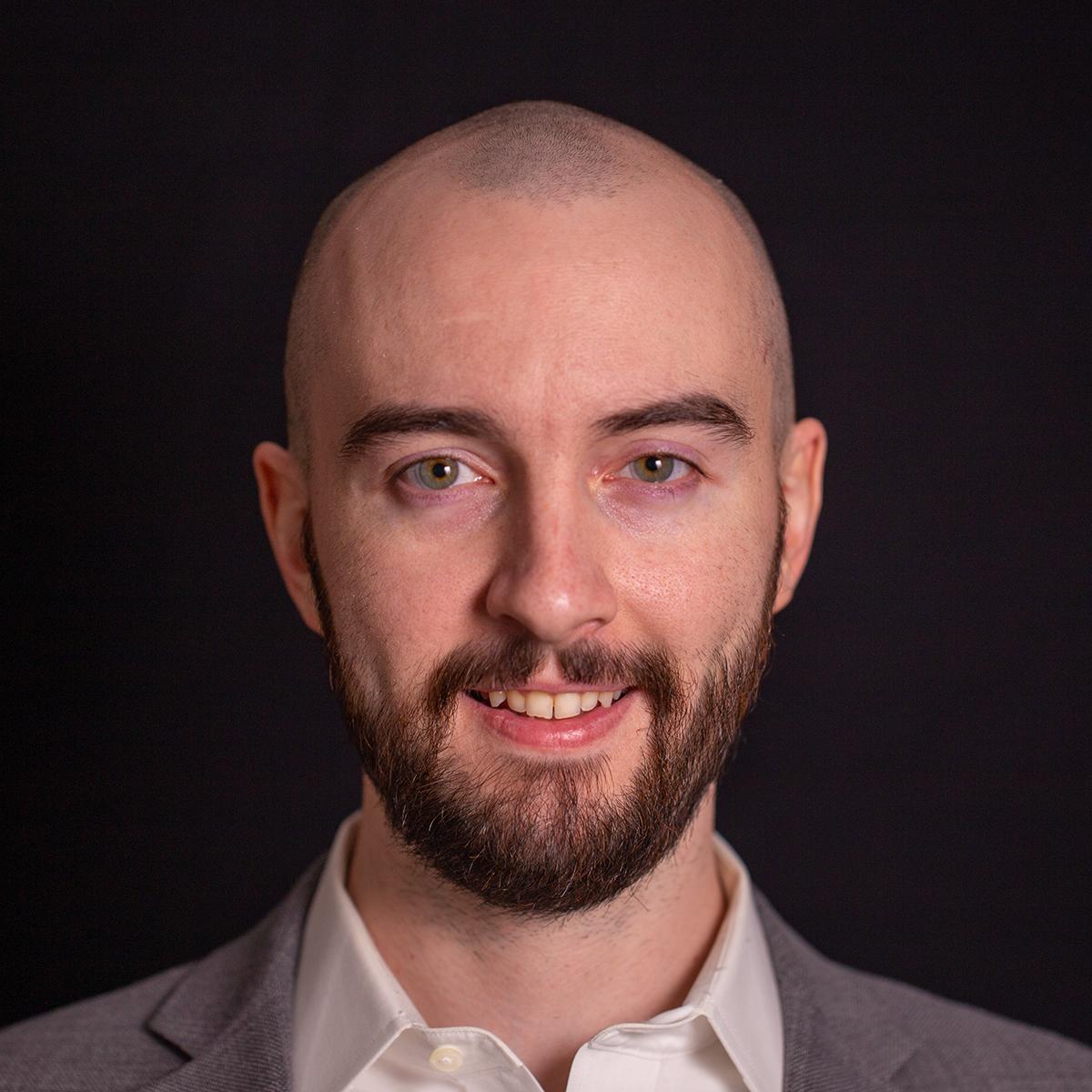
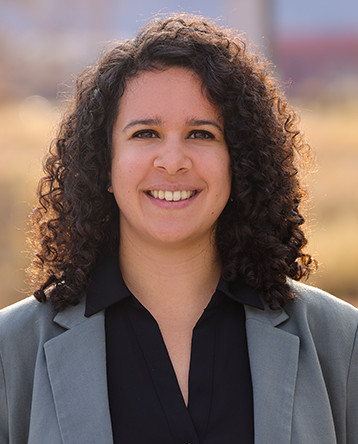
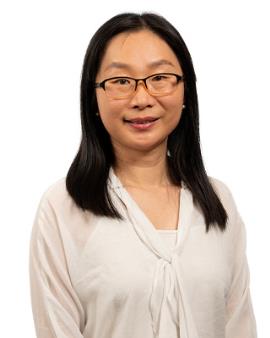
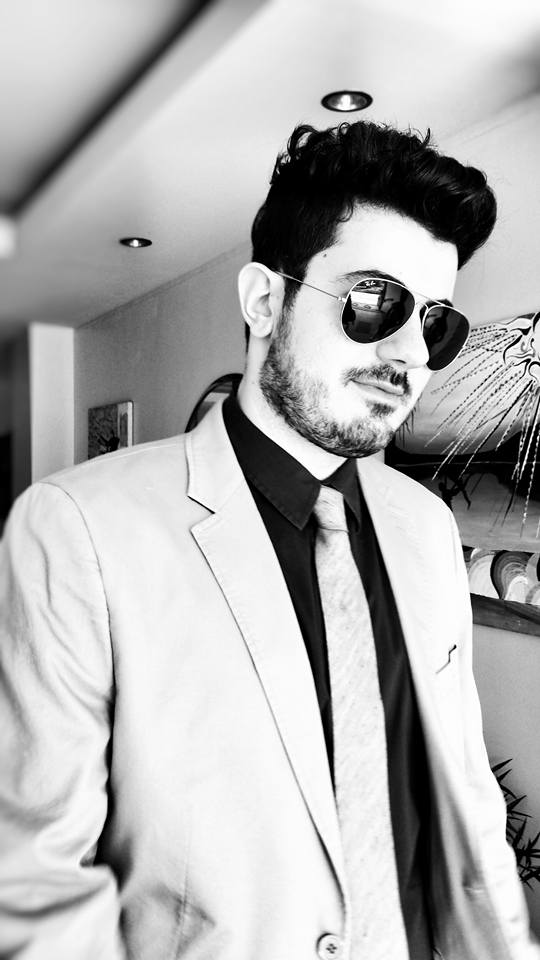
Matthew T. Flavin is an Assistant Professor in the School of Electrical and Computer Engineering at Georgia Institute of Technology, leading the Flavin Neuromachines Lab. He holds a B.S. from UIUC (2015), M.S. and Ph.D. from MIT (2017, 2021), and conducted postdoctoral research at Northwestern University. His research focuses on neural mechatronics, wearable bioelectronics, and extended reality for healthcare applications, emphasizing haptic interfaces, bio-integrated devices, and patient care solutions. Education: B.S. Electrical Engineering, University of Illinois at Urbana-Champaign, 2015 M.S. Electrical Engineering, MIT, 2017 Ph.D. Electrical Engineering, MIT, 2021 Research interests include haptics, neuroengineering, flexible electronics, and therapeutic biomedical applications. Key achievements include developing wearable sensors for molecular flux monitoring and haptic devices for sensory substitution. He has received NIH and Draper Laboratory awards. His lab collaborates on interdisciplinary projects at the intersection of engineering and biosciences. Grants and advising: Actively recruiting PhD students and postdocs. Lab locations in Van Leer Building and Bunger-Henry.
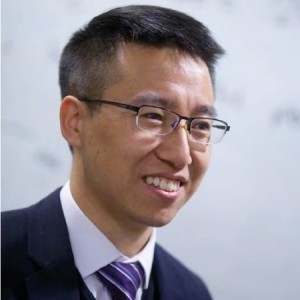
Ketao Zhang is a Senior Lecturer in Robotics at the School of Engineering and Materials Science, Queen Mary University of London, and serves as the Industrial Engagement Lead of the Centre for Intelligent Transport. He is also affiliated with the Centre for Advanced Robotics, where he leads research in aerial robotics, soft robotics, and bio-inspired design. Senior Lecturer in Robotics, Queen Mary University of London Industrial Engagement Lead, Centre for Intelligent Transport Research Affiliation: Centre for Advanced Robotics Research Group: Robotic Systems Dr. Zhang's research focuses on advanced robotic systems, particularly in the domains of aerial robotics, soft robotics, kinematics, and reconfigurable mechanisms. His work integrates origami-inspired design, bio-inspired locomotion, and additive manufacturing to develop innovative robotic solutions. Key interests include screw theory, reconfigurable parallel manipulators, soft actuators and sensors, and morphable soft-bodied robots. His research themes are highly interdisciplinary, bridging mechanical engineering, materials science, and autonomous systems. The recent publications of Dr. Zhang span high-impact journals and conferences, with a clear trend toward aerial additive manufacturing, soft-actuated systems, and reconfigurable UAVs. His work often involves multi-robot coordination, bio-inspired design, and novel actuation mechanisms. Themes such as electroadhesion, variable stiffness, and 3D printing with drones are recurrent, indicating a strong focus on autonomy, adaptability, and real-world deployment. ERC SyG 2023: Multi-sensor Eversion Robot for Intelligent Endoscopic Microsurgery NERC: EMPreSS – Methane Monitoring with UAVs Innovate UK: Human-Augmented Robotics for Precision Viticulture Royal Society: Electroadhesion for Perching UAVs Royal Society: Bio-inspired Quadruped Locomotion EPSRC: Core Equipment for Robotics Research Dr. Zhang has secured substantial research funding from major UK and EU agencies, supporting interdisciplinary projects with applications in healthcare, environmental monitoring, and agriculture. He collaborates extensively with researchers such as Kaspar Althoefer, Lei Su, and Mohamed Thaha. While student advising details are not publicly listed, his active grants and publications suggest mentorship of PhD and postdoctoral researchers. His lab focuses on intelligent transport systems, aerial robotics, and soft robotic platforms, contributing to both fundamental mechanism design and applied autonomous systems.
Pinar Zorlutuna is the Roth-Gibson Professor of Bioengineering and Director of the Bioengineering Graduate Program at the University of Notre Dame, within the College of Engineering and the Department of Chemical and Biomolecular Engineering. She leads a dynamic research lab focused on bio-inspired systems for disease modeling and regenerative medicine. Research Interests: Her work centers on tissue engineering, genetic engineering, and micro/nanotechnology to create biomimetic models of human tissues. Key areas include aging, cancer (particularly breast), and cardiovascular disease. Her lab investigates cell-cell and cell-matrix interactions, with emphasis on extracellular vesicles, the cardiac microenvironment, and 3D bioprinting. The recent publications highlight a strong trend toward modeling age-related disease progression, especially in cardiac and breast tissue. Many studies explore how aging alters the extracellular matrix and vesicle cargo, influencing disease outcomes and drug responses. Another major theme is bio-inspired computing, with research on cardiac muscle cell-based networks for biocomputing and memory systems. Elected to the American Institute for Medical and Biological Engineering (AIMBE) College of Fellows National Academy of Sciences Kavli Fellow Roth-Gibson Professor of Bioengineering Member, NIH CSR Cellular and Molecular Technologies Study Section NSF CAREER Award NSF EFRI BEGIN Award Dr. Zorlutuna advises graduate students and leads major federally funded grants focused on aging heart models and cardiac biocomputing. Her lab, the Zorlutuna Lab, develops innovative tools such as 3D bioprinted tissue models, microfluidic devices, and bio-oscillatory networks. Future work includes advancing real-time diagnostic platforms, personalized tissue models, and implantable biocomputational systems.
Dr. Steven Grainger is Director of Learning & Teaching in the School of Mechanical Engineering and Program Coordinator for Mechatronic Engineering at the University of Adelaide. With industry experience prior to academia, he joined the university in 2007 following a 10-year lecturing position at Glasgow Caledonian University. His international academic engagements include visiting lectureships in Oman, Russia, Germany, and Australia. His research focuses on: Nanopositioning systems and piezoelectric actuator modeling Autonomous robotics with emphasis on underwater vehicles Bio-inspired systems and constructive neural networks Multi-robot coordination strategies Publication analysis reveals strong emphasis on mechatronic systems (45%), bio-inspired algorithms (30%), and mechanical fault diagnosis (25%). Recent works demonstrate increasing focus on biologically-inspired robotics and multi-agent systems. Research collaborations span nine institutions across Australia, UK, and Sweden including the Australian Maritime College and Lund University. As Program Coordinator, he oversees mechatronics curriculum development and supervises postgraduate research. Laboratory activities integrate computational modeling with hardware implementation for autonomous platforms.
Dr. Arif Malik is an Associate Professor of Mechanical Engineering at the University of Texas at Dallas (UTD) since 2015 and Director of the Center for Computational Research and Advanced Manufacturing (CRAM). He holds a PhD in Mechanical Engineering from Wright State University (2007) and has extensive industry experience, including roles in process engineering and co-founding a manufacturing software startup. His research focuses on computational mechanics for advanced manufacturing, uncertainty analysis, and reliability-based design optimization, with notable contributions in laser shock peening, additive manufacturing, and fluid-structure interaction. Education: PhD in Mechanical Engineering, Wright State University (2007) MS in Electrical Engineering, Wright State University (2001) BS in Mechanical Engineering, Wright State University (1994) Research Interests: Computational modeling for advanced manufacturing processes Residual stress analysis and laser-based surface engineering Uncertainty quantification in manufacturing systems Fluid-structure interaction in micro-air-vehicle wing design Awards: NSF CAREER Award (2015) Best Organizer of ASME Manufacturing Science and Engineering Conferences (2013, 2015) Air Force Research Lab Summer Faculty Fellowship (2010–2015) Labs/Teams: Director of CRAM, which focuses on computational modeling and experimental validation for advanced manufacturing, laser processing, and bio-inspired fluid-structure interaction. Engages undergraduate and graduate researchers in projects like Engineering Brighter Futures for Autism, combining 3D printing with community outreach.
Simon X. Yang is a Professor and Head of the Advanced Robotics and Intelligent Systems Laboratory at the University of Guelph, School of Engineering. He holds a Ph.D. in Electrical and Computer Engineering from the University of Alberta and is a Fellow of the Canadian Academy of Engineering. His expertise spans robotics, intelligent systems, control systems, sensors, and bio-inspired intelligence. Dr. Yang has authored numerous publications and serves as Editor-in-Chief/Associate Editor for international journals, as well as a grant panel member for NSERC and CIHR. Prof. Yang’s research focuses on real-time sensing, robotic teleoperation, neural networks, fuzzy systems, and applications in agriculture, transportation, and environmental monitoring. He has pioneered bio-inspired algorithms for path planning, multi-robot systems, and industrial automation. His work includes innovations in underwater robotics, drone coordination, and smart agriculture technologies. Dr. Yang teaches graduate-level courses on advanced control systems, soft computing, and robotics, as well as undergraduate courses in neuro-fuzzy systems and engineering design. He actively participates in organizing international conferences and has developed the PIGRGB-Weight dataset for livestock monitoring. Professional Highlights: Editor-in-Chief roles, NSERC grant panel, and leadership in robotics research Labs: Advanced Robotics and Intelligent Systems Lab Awards: Fellow of Canadian Academy of Engineering His lab’s innovations include a biomimetic gecko-inspired robot for microgravity environments and a bionic ray robot with high motion performance. Current projects address challenges in smart farming, infrastructure health monitoring, and autonomous systems safety.
Sarah Dalesman is a Lecturer in the Department of Life Sciences at Aberystwyth University, where she also serves as the Scheme Coordinator for the Marine and Freshwater Biology degree and Student Experience Lead. She holds a PhD in behavioural ecology from the University of Plymouth and has held postdoctoral fellowships at the University of Calgary and the University of Exeter, funded by Alberta Innovates - Health Solutions and the Leverhulme Trust, respectively. PhD, University of Plymouth – Behavioural ecology of pond snails Postdoctoral Fellowship, University of Calgary – Neurobiology of stress and memory Leverhulme Trust Early Career Fellowship, University of Exeter Dr. Dalesman’s research focuses on animal cognition, particularly in invertebrates such as pond snails ( Lymnaea stagnalis ), where she investigates individual differences in cognition, memory formation, and the effects of environmental stressors. She also explores sentience in gastropods and extends her work to canine cognition, driven by her interest in dog training and behaviour. Her interdisciplinary research bridges neuroethology, ecology, and conservation, with implications for understanding cognitive evolution and environmental impacts on learning. Her recent publications highlight trends in cognitive ecology, microbiome-brain interactions, and bio-inspired robotics, showing a strong integration of molecular, behavioural, and ecological approaches. She has led externally funded projects on cognitive complexity in gastropods and memory formation under environmental change. Scientific Awards and Recognition Fellow of the Higher Education Academy (HEA) Leverhulme Trust Early Career Fellowship Postdoctoral Fellowship from Alberta Innovates - Health Solutions Dr. Dalesman has supervised research students and is open to MRes and PhD candidates in animal cognition and behaviour. She has served on the editorial boards of Animal Behaviour and Animal journals. Her work contributes to UN Sustainable Development Goals related to life on land, clean water, and responsible consumption. She is actively involved in public engagement, with her research featured in major media outlets, blogs, and social platforms. She is a member of the Athena Swan committee at Aberystwyth University, promoting gender equality in STEM.
Dr. Yara Almubarak is an Assistant Professor in the Department of Mechanical Engineering at Wayne State University's College of Engineering. She earned her Ph.D. (2021), M.S. (2018), and B.S. (2016) in Mechanical Engineering from The University of Texas at Dallas. Her research explores biomimetic robotics and advanced materials , with focus areas including: Bio-inspired soft robots for underwater applications Artificial muscle development Smart material systems Additive manufacturing and material analysis techniques She teaches core engineering courses including ME4500 (Mechanical Engineering Design II) and ME5500 (Advanced Engineering Design), with upcoming special topics courses in mechanical engineering.
Nils Bausch is a Course Leader in the Department of Science and Engineering at Southampton Solent University. He holds a PhD from the University of Portsmouth and a Diplom Ingenieur (FH) in Mechatronics from FH Aachen. His academic roles include teaching engineering modules across foundation, undergraduate, and postgraduate levels, with a focus on project supervision and applied engineering. Affiliations : Southampton Solent University; Department of Science and Engineering Professional Memberships : Chartered Engineer (CEng), Member of Institution of Engineering and Technology (MIET), Fellow of the Higher Education Academy (FHEA) Research interests span embedded systems, additive manufacturing, corrosion detection, nuclear power plant control, and AI-driven technologies. Nils has secured grants from GCRF, EPSRC, and Innovate UK, and has authored over 40 peer-reviewed publications. His work includes studies on intelligent systems for powered wheelchairs, corrosion monitoring of offshore wind turbines, and advanced control methodologies for nuclear reactors. Key Research Themes : Smart home and assistive technologies Sensor systems and IoT applications Robust control engineering for critical infrastructure Material degradation analysis in marine environments Recent articles focus on wavelet-based control systems for nuclear reactors, corrosion detection in offshore wind turbines, and bio-inspired UAV control algorithms. Awards include prestigious engineering certifications reflecting his industry-academia collaboration. Nils serves as an external examiner for UK higher education programs and actively contributes to professional registration processes through the IET.
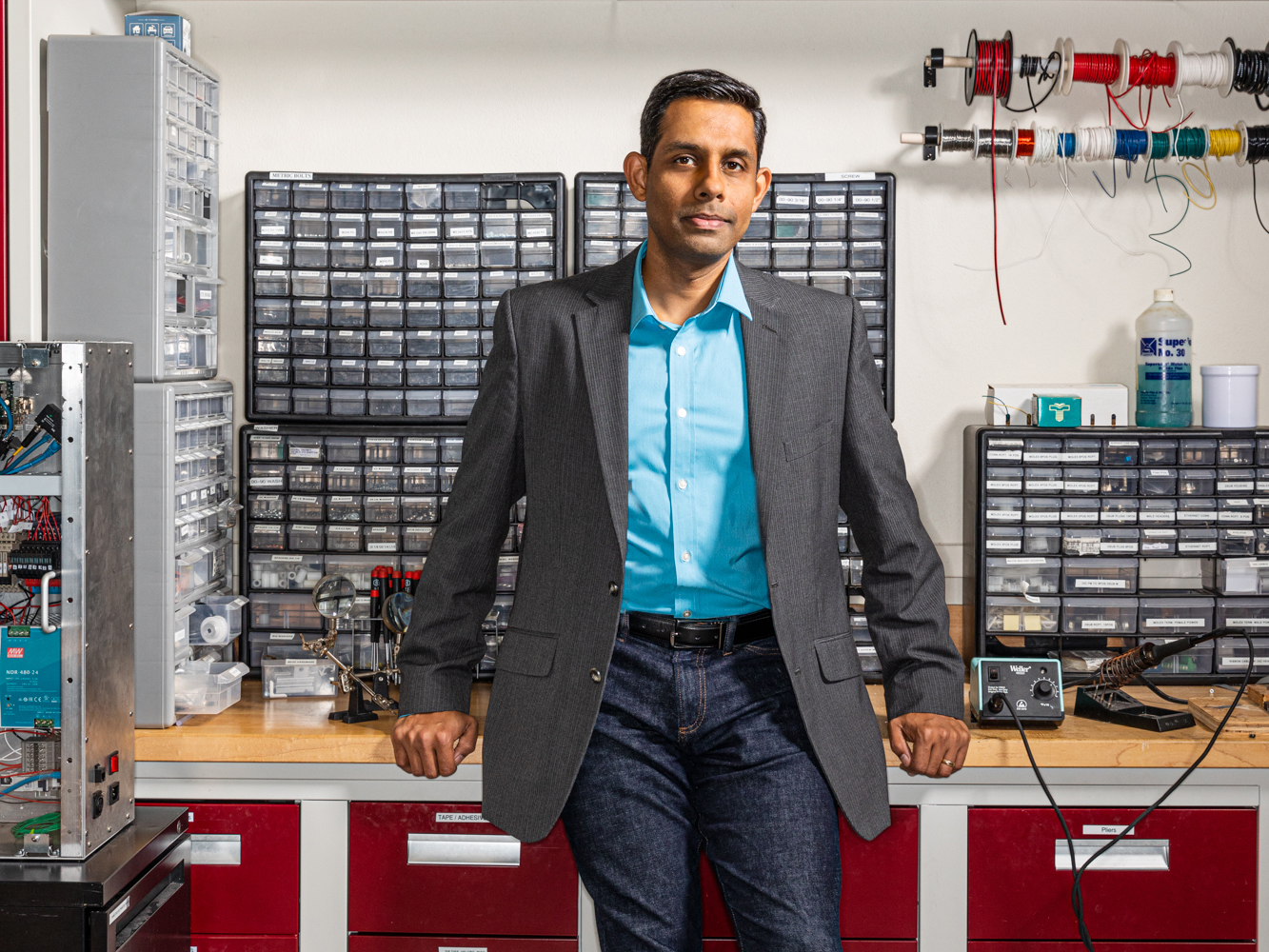
Ashish Deshpande is a Professor at the University of Texas at Austin, holding the Carroll D. Simmons Centennial Teaching Fellowship and Cockrell Family Regents Chair in Engineering. He is affiliated with the Department of Mechanical Engineering within the Cockrell School of Engineering. His research focuses on Robotics and Intelligent Mechanical Systems, Biomechanical Engineering, and Advanced Manufacturing, emphasizing exoskeleton design, human-robot interaction, and rehabilitation robotics. His work integrates biomechanical principles with robotic systems to enhance rehabilitation therapies, particularly for stroke patients and individuals with neuromuscular impairments. Key projects include the Harmony exoskeleton, BaRiFlex gripper, and novel bio-inspired actuators. He explores topics like stiffness modulation, kinematic control, and energy efficiency in wearable robotics. Recent publications (2023–2025) highlight advancements in exoskeleton design, control algorithms for multi-joint systems, and human-centric robotic interfaces. His research bridges engineering and clinical applications, aiming to improve motor recovery and functional independence through innovative robotic solutions. Dr. Deshpande's contributions also include frameworks for adaptive motor learning, curriculum design in robotic training, and methodologies for assessing human-robot interaction dynamics. His work addresses challenges in variable stiffness actuation, soft robotics, and sensor integration for precision control.
Ophelia Bolmin is an Assistant Professor in the Department of Mechanical Engineering at Carnegie Mellon University (CMU), within the College of Engineering. She leads the Mechanisms Inspired by Nature for Dynamics (MIND) Lab, where her research focuses on bio-inspired mechanical systems for dynamic tailoring with applications in aerospace, micro-robotics, and prosthetics. Her research interests include structural dynamics, biomechanics, physiology, multi-scale modeling, design, and manufacturing. She applies biology-oriented insights to engineering problems to accelerate technological innovation. Key areas of focus include: Additive manufacturing Finite-element modeling Vibrations and dynamic systems Bio-inspired design Systems modeling and simulation Nanoparticles and biological engineering Ophelia Bolmin's work is inherently interdisciplinary, bridging mechanical and aerospace engineering with biological systems. Although no publications are listed in the source text, her research direction emphasizes dynamic behavior in biological systems and the translation of these principles into engineered solutions. She has not been mentioned as receiving any scientific awards in the provided material. Ophelia mentors students through her MIND Lab and is actively involved in research grants and development, though specific grants and advisees are not listed. Her lab, the MIND Lab, serves as the central hub for innovation in bio-inspired dynamics, combining experimental and computational approaches to discover new science and develop advanced technologies.
Qian Mao is an Assistant Professor in the Department of Math/Computer Sci. at Whitworth University, joined in 2020. Specializes in Deep Learning, Cyber Security, and Wireless Networks. Holds dual Ph.D.s in Electrical Engineering (University of Alabama) and Traffic Information Engineering & Control (Tongji University). Research focuses on intelligent wireless networks, network coding, UAV communication systems, and steganography. Active in publishing on topics like deep learning applications, jamming countermeasures, and UAV protocols. Education: Ph.D. in Electrical Engineering (UA), Ph.D. in Traffic Information Engineering (Tongji), M.S. (Shanghai Ship & Shipping Research Institute), B.S. (Nanjing University of Aeronautics and Astronautics) Research interests blend machine learning with network systems, particularly in optimizing UAV swarm networks and securing wireless communications. Key contributions include adaptive transport layer control strategies and steganographic techniques. Over 20 peer-reviewed publications since 2015, with recent work exploring bio-inspired multi-beam transmission and ARMA model-based social media forecasting. Publications highlight interdisciplinary approaches to network security, data hiding, and autonomous systems. Current focus includes DL-driven network traffic analysis and UAV protocol design for computation-heavy applications.
Erikas Simanaitis is a Doctoral Assistant at the Laboratory of Intelligent Systems (LIS) within the School of Engineering at the Swiss Federal Institute of Technology Lausanne (EPFL), actively pursuing his Doctoral program in robotics, control, and intelligent systems. His research centers on Robotics, Control Systems, and Intelligent Systems, with emphasis on autonomous robotic platforms and adaptive control algorithms. The Laboratory of Intelligent Systems specializes in evolutionary robotics, bio-inspired control systems, and machine learning applications for physical robots, operating at the intersection of mechanical engineering and artificial intelligence. Based at the MED 1 1612 facility on EPFL's Lausanne campus, Mr. Simanaitis contributes to LIS's experimental research in soft robotics and swarm intelligence. His work supports the laboratory's mission to develop next-generation robotic systems capable of complex decision-making in unstructured environments.
David Gruber is a Distinguished Professor of Biology and Environmental Sciences at the City University of New York, with affiliations at Baruch College and the CUNY Graduate Center. He is also the Founder and President of Project CETI, a nonprofit interdisciplinary initiative focused on decoding sperm whale communication using advanced machine learning and robotics. His work bridges marine biology, climate science, animal communication, and bio-inspired technology. Education and Professional Background: Ph.D. in Biology (specific institution not mentioned in text) Postdoctoral training likely in marine molecular biology or biophysics (inferred from research) National Geographic Explorer and Emerging Explorer (2014) Principal Investigator, Project CETI (Audacious Project, 2020) Research Interests: David Gruber's research is deeply interdisciplinary, focusing on the intersection of marine life and technology. He investigates biofluorescence and bioluminescence across diverse species—from corals and eels to sharks and sea turtles—discovering over 200 glowing organisms. His lab explores the molecular basis of these phenomena, identifying novel fluorescent proteins with potential biomedical applications. A major focus is animal communication , particularly in sperm whales, where he applies AI and natural language processing to decode vocalizations. He also studies coral resilience to climate change and deep-sea ecosystems. Recent Research Trends: Gruber’s recent publications reveal a strong shift toward integrating artificial intelligence with marine bioacoustics. His team uses convolutional neural networks to classify sperm whale clicks and identify individuals with high accuracy. There is a growing emphasis on unsupervised machine translation to interpret non-human communication, suggesting a future where interspecies dialogue may be possible. His work increasingly combines soft robotics, genomics, and real-time underwater sensing to enable non-invasive study of fragile deep-sea life. Scientific Awards and Recognition: National Geographic Emerging Explorer (2014) Multiple National Geographic Grants (2010–2020) Audacious Project Funding for Project CETI (2020) Leader in the global movement for ocean conservation and interspecies communication Advising and Grants: As a principal investigator and professor, Gruber mentors students and early-career scientists in marine biology, genomics, and bio-inspired technology. He has secured significant funding from National Geographic and other sources to support deep-sea exploration, coral research, and whale communication studies. His grants emphasize innovation in wildlife technology , including the development of gentle, on-whale sensors and soft robotic samplers. These projects often involve collaboration with engineers, computer scientists, and conservationists, reflecting his commitment to interdisciplinary science. Labs and Teams: Gruber leads a multidisciplinary research group that collaborates with the Harvard Microrobotics Laboratory, the Dominica Sperm Whale Project (led by Shane Gero), and institutions worldwide. His lab develops cutting-edge tools such as the 'shark-eye camera' and soft robotic grippers for delicate marine organisms. Project CETI brings together over 50 scientists from more than 15 institutions, forming one of the largest collaborative efforts in cetacean communication research.
Dr. Carlo Tiseo is an Assistant Professor in Engineering (Engineering and Design) at the School of Engineering and Informatics, University of Sussex, UK, where he has been faculty since October 2021. His research lies at the intersection of robotics, control systems, and computational neuroscience, with applications in medical and industrial domains. He previously held postdoctoral research positions at the University of Edinburgh and Nanyang Technological University. He earned his PhD in 2018 from Nanyang Technological University, Singapore, and both his Laurea (BSc) and Laurea Magistrale (MSc) in Biomedical Engineering from Università Campus Bio-Medico di Roma, Italy, in 2009 and 2012, respectively. He is a licensed professional engineer in Italy (since 2013). His research interests include: Human-robot interaction and collaboration Adaptive and bioinspired control systems Teleoperation and haptic feedback Legged and dexterous robotics Rehabilitation and assistive technologies Impedance and passive control frameworks His recent publications (2021–2024) reflect a strong focus on robust, safe, and dexterous robot control in uncertain environments. Key themes include fractal impedance control, dual-arm tele-cooperation, motion adaptation, and locomotion stability. His work combines theoretical control frameworks with practical implementation in medical and industrial robotics, emphasizing model-free and adaptive methods to enhance robustness. He has not received any named scientific awards or fellowships as per the provided information. Dr. Tiseo has been actively involved in teaching at the University of Sussex, delivering courses such as Mechanics of Mechanisms & Robots , Wearable Technologies , and Engineering Mechanics . He has collaborated with numerous researchers but no formal advisees are listed. He leads research in robot interaction control and is developing frameworks for safer, more adaptive robotic systems in unstructured environments. He is affiliated with research groups including TRL@Sussex and previously ECR@UoE and RRIS@NTU. His lab focuses on developing controllers for human-like robotic behavior, including projects on fractal impedance, locomotion planning, and multi-contact teleoperation.